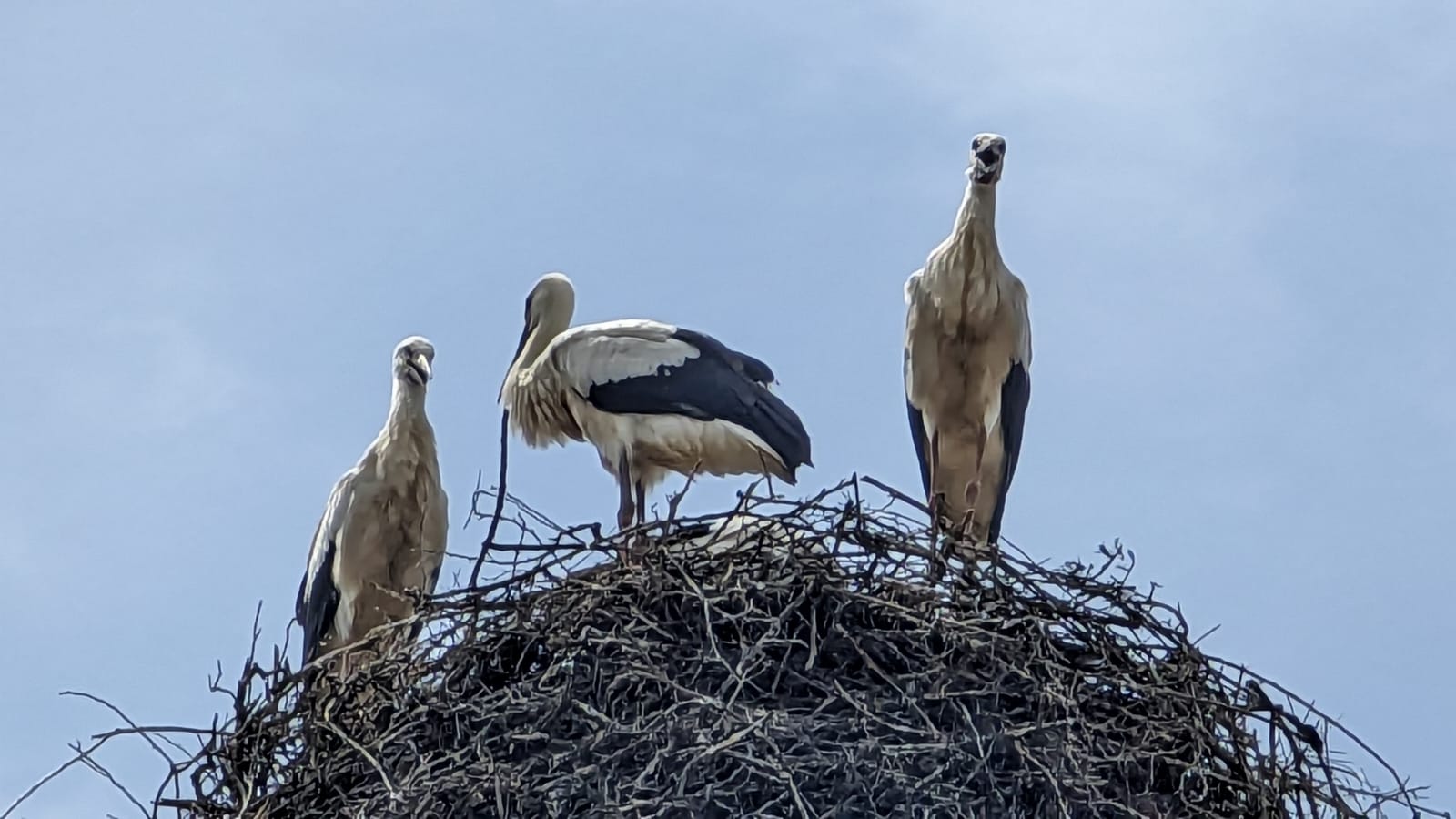
 I looked forward to seeing many things on my recent trip to the Balkans with Overseas Adventure Travel on their adventure Eastern Balkans Discovery: Bulgaria and Romania. But some things caught me by surprise, which is the joy in travel. One of the big surprises on this trip was seeing storks in both countries, nestled in pairs on rooftops.
Storks play a part in Romanian life, especially in Saxon Transylvania where we saw them in nests and saw them in flight. However, before we saw them in Dracula territory, we saw them in Bulgaria first, most notably on the way to the magnificent Rila Monastery. We saw them on roof tops as we were driving, but there is the small village of Kocherinovo between the Rila Monastery and Sophia, where they can be found in the village square. In fact, in Bulgaria their numbers have been increasing, while in Northern Bulgaria their numbers have been decreasing.
The white stork migrates to the region in March each year. Their nesting presence on rooftops is considered good luck, with some believing they will provide advance warning to homeowners in the event of a fire. Further, there is a superstition that accounts for the life experience that awaits depending on if you see them on a rooftop (a trip awaits), on the ground (a prosperous year), or even depending how many you see (two or more means you will be with your beloved; a single stork means you will be alone all year). They are a symbol of spring, purity, abundance, and normalcy since they arrive at the end of long and sometimes harsh winters.
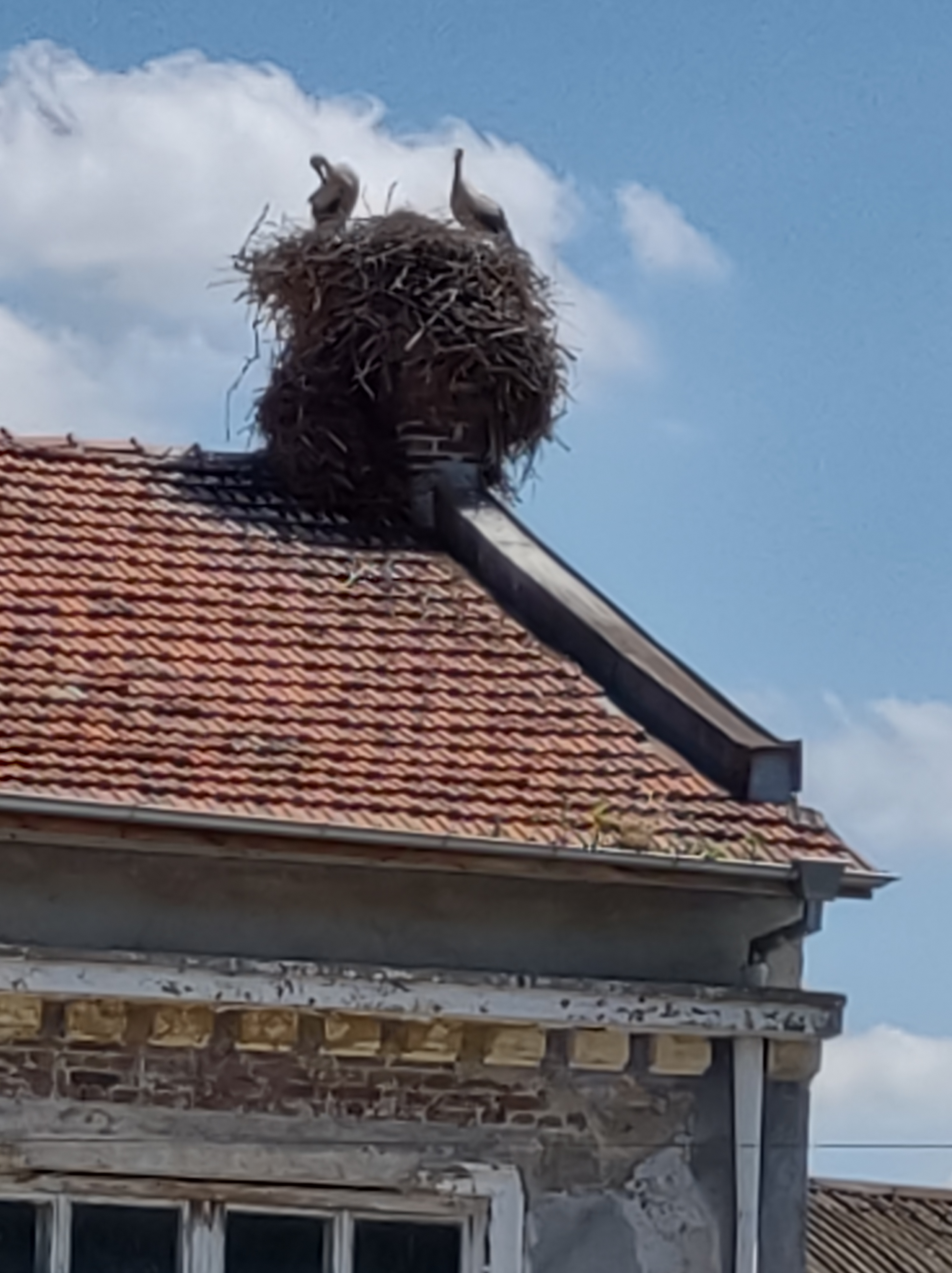 Since I saw my initial pair on a rooftop, a marvelous trip awaited me, which I happened to be currently on. They have been in Europe since the Middle Ages but have been pushed out of the large cities. They have found a happy nesting place in Romania however, where between five and six thousand stocks reside. There are an equal number in Bulgaria. There are enough wooded areas in this part of Europe to make it ecologically friendly for them to live and thrive. Saxon villages have fields in which they like to feed, and are heavily forested. As a result of Saxon efforts to live in forested areas, every village has at least five or six nests of storks.
Storks have had a positive connotation since Roman times, which makes sense given that Romans were once rulers of Romania. Their legend goes back as a positive superstition as far as Aristotle, in fact. And the agricultural origins of the bird has given them this status; as a killer of snakes, and prosperity for the crops. Other ancient writers have given them the legendary status of “avenger of adultery.” And while we all understand the myth of the storks bringing babies, there is also one where the storks helped sons and daughters with looking after their elderly parents.
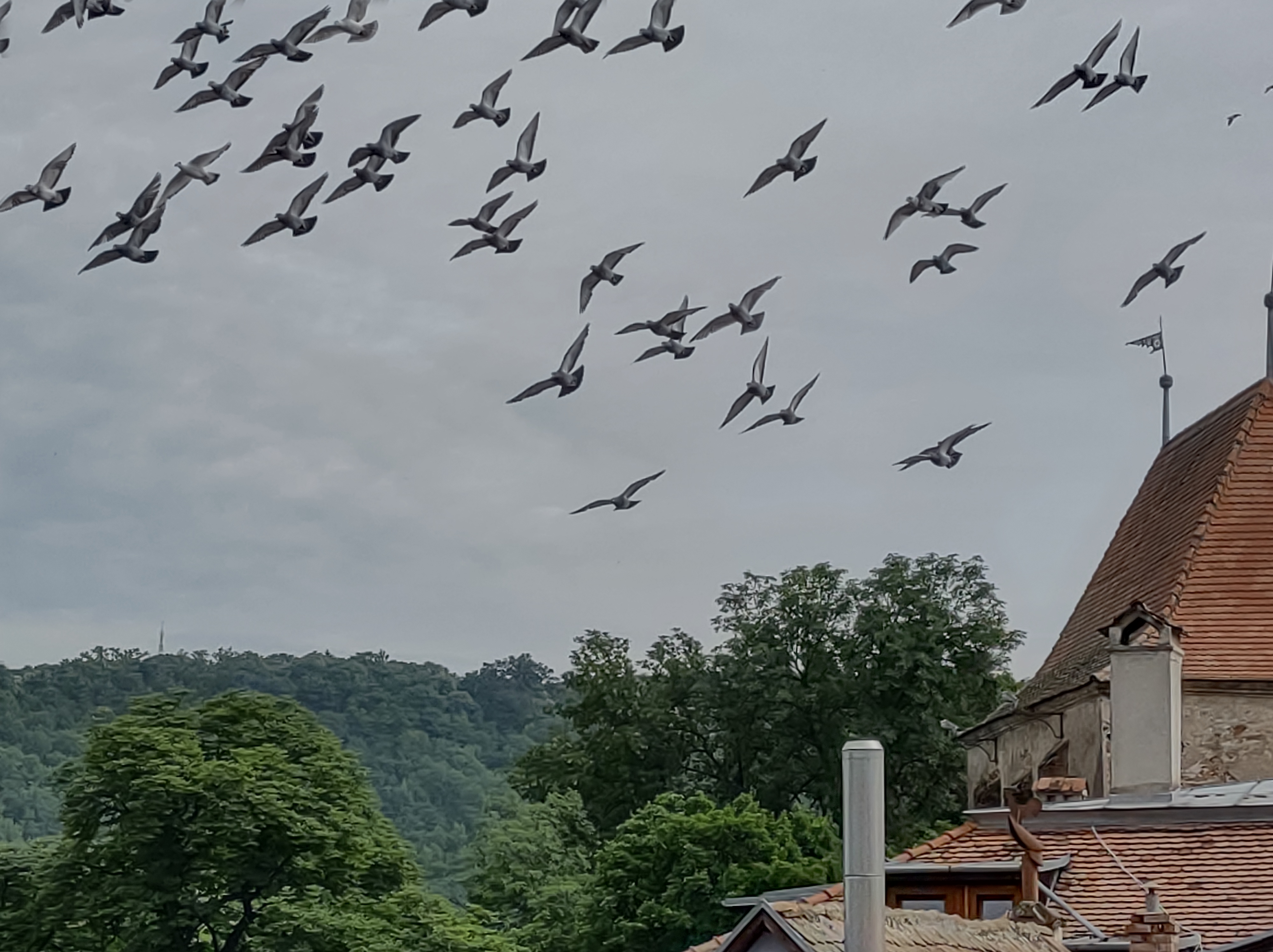 These celebrated white birds have been perched on Eastern Balkan rooftops overlooking the Romans, Ottomans, Astro- Hungarians, and even the Nazis. The nests where they have observed this history are made of branches local to the region, and the pairs separate and migrate, only to return again for nesting season. Considering their folklore, history, and place in society, they are truly representative of the culture. And yes, these wonderous creatures are a beauty when be seen in flight.
All photos Jann Segal
 Travel the World with Passion