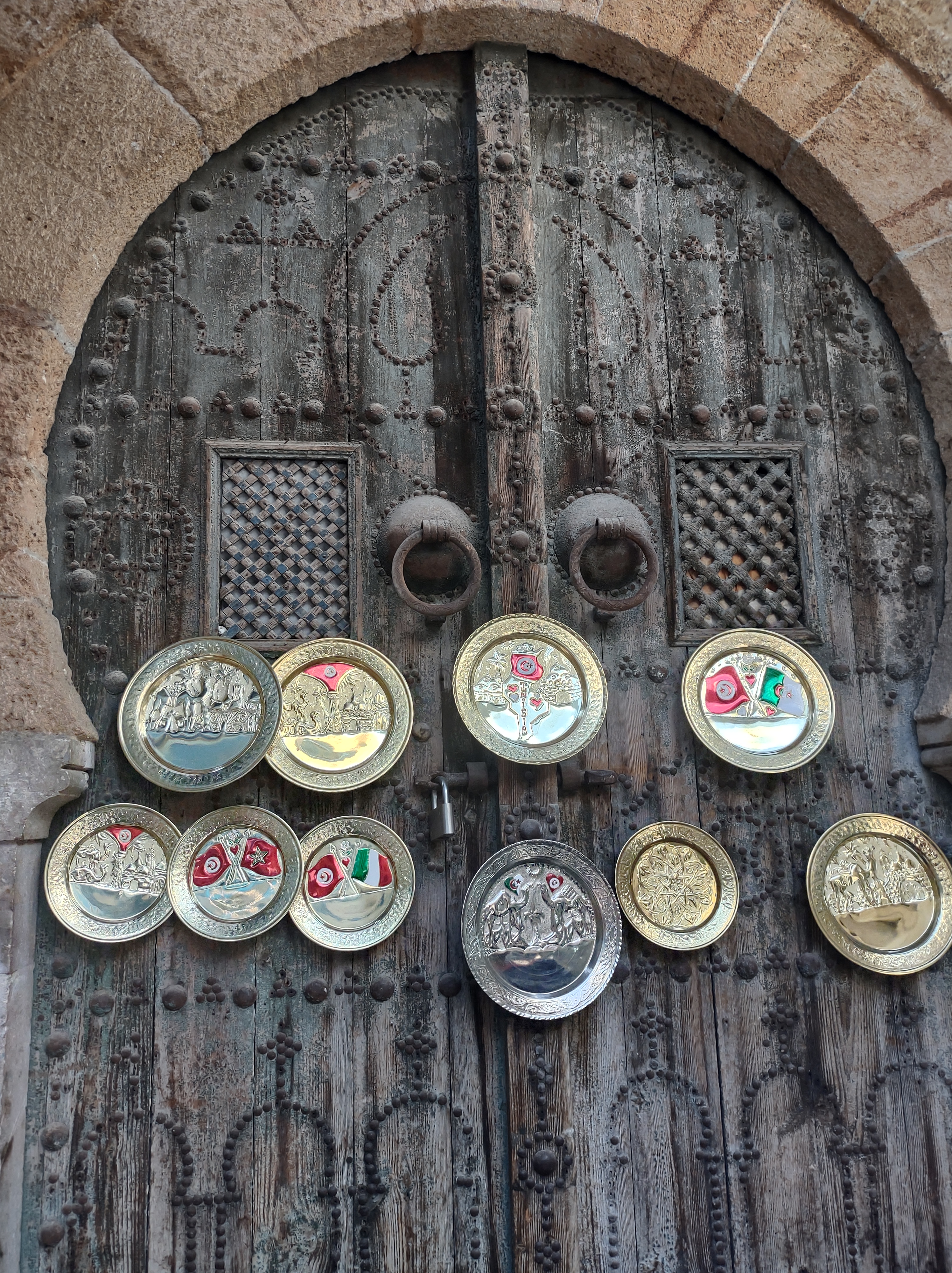
 North Africa is a part of the world with many colors. I was reminded of this on my recent trip with Overseas Adventure Travel, Tunisia: From the Sahara to the Mediterranean. This was at least my fifth time in North Africa, and when I visit countries like this, I dwell on the bright colors of the Sahara sunset, the palm trees in the middle of a desert oasis, the Mediterranean, and the warmth of the people I want to call my friends. There is a beauty in Islamic art that I treasure as much as the head rub one medina salesman gave me when I finally said, “Okay, $125 for the painting then.” It’s all an experience I will never forget. OAT trip leaders are highly skilled and knowledgeable, and mine on this trip had many ” cousins” who livened up my shopping experiences. I feel all the richer for having come to Tunisia.
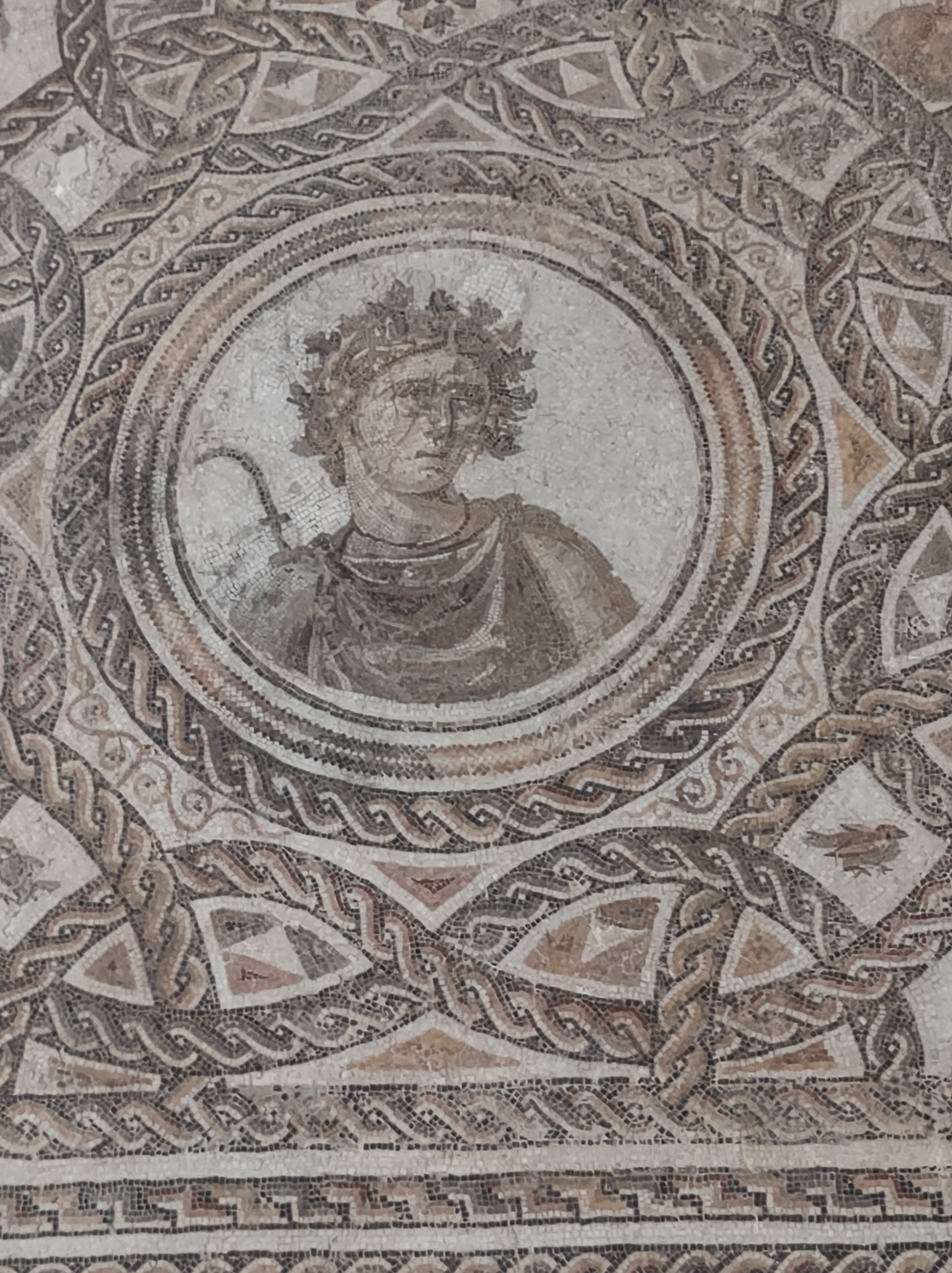 Two experiences that added to this richness were supposed to happen on the same day, but scheduling didn’t permit it. One was a most unexpected visit to the Bardo museum, which just opened the second week of our tour for the first time in over two years. It houses the best kept mosaics in all of Tunisia, and it can be argued they are the best preserved and largest collection of Roman mosaics in the world. Terrorist activity forced them to shutter the Bardo, but today a new mosaic greets you as you walk in, yet the upstairs is still closed. Nonetheless, seeing these antique art forms in near pristine condition, and in a museum that is representative of all Tunisia, added a dimension to the trip that rivaled even the sunsets at the Sahara. The Bardo is considered one of the most pre-eminent museums in all North Africa and is considered second only to the Egyptian Museum in Cairo. It was a real treat to be the first group of OAT travelers to go there upon reopening.
The mosaics themselves were stunning. Most were so perfectly preserved, it would have been otherwise impossible to believe they came from Ancient Greek and Roman Africa, in addition to some from what is considered the Islamic period, and some excavated from ancient Carthage. There is jewelry there as well, and in past times, even some Judaica. Those items may have been removed or are not currently on display because ISIS claimed responsibility for the terrorist attacks in the past. In any event, as much as I would have enjoyed seeing ancient Judaica, I didn’t find any.
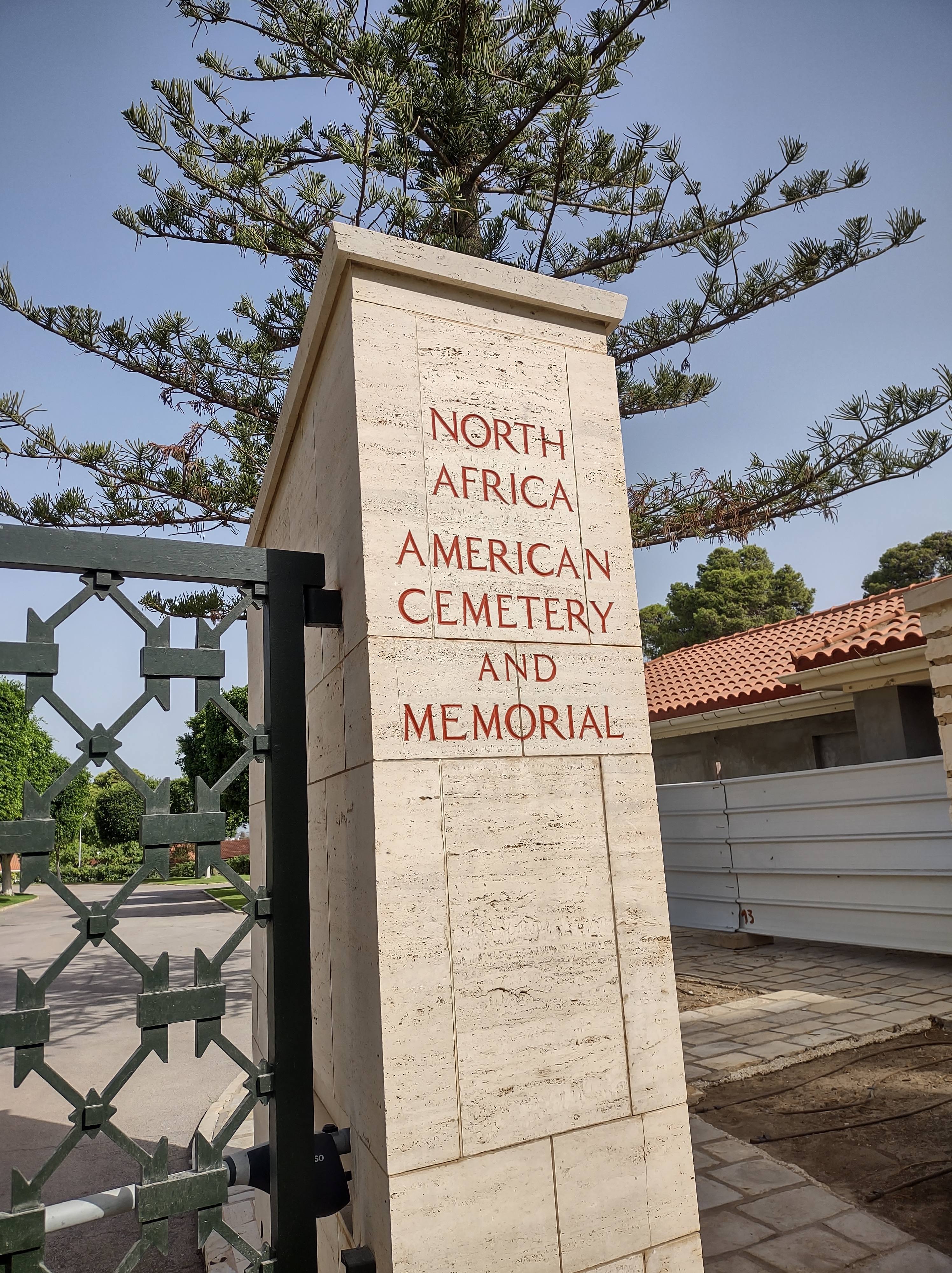 The American Cemetery of North Africa was supposed to be part of the program, but had to be dropped, so I went on my own after the tour before flying home. It was in fact where most US soldiers killed in North Africa were buried including the 60% whose families wanted their remains sent back home This was very personal for me, since my uncle died in Tunisia in 1944 in a car accident according to the War Department letter my grandmother received from President Roosevelt. I described our family situation to the American curator in charge. Since my uncle isn’t buried there, but was returned home to Los Angeles, he couldn’t do as much research as I had on my own, but he did try to find out what unit my uncle had been in hoping for more information. I saw the wartime maps constructed in typical Tunisian mosaic style, and literally every place we went on the tour had been occupied by forces during World War Two.
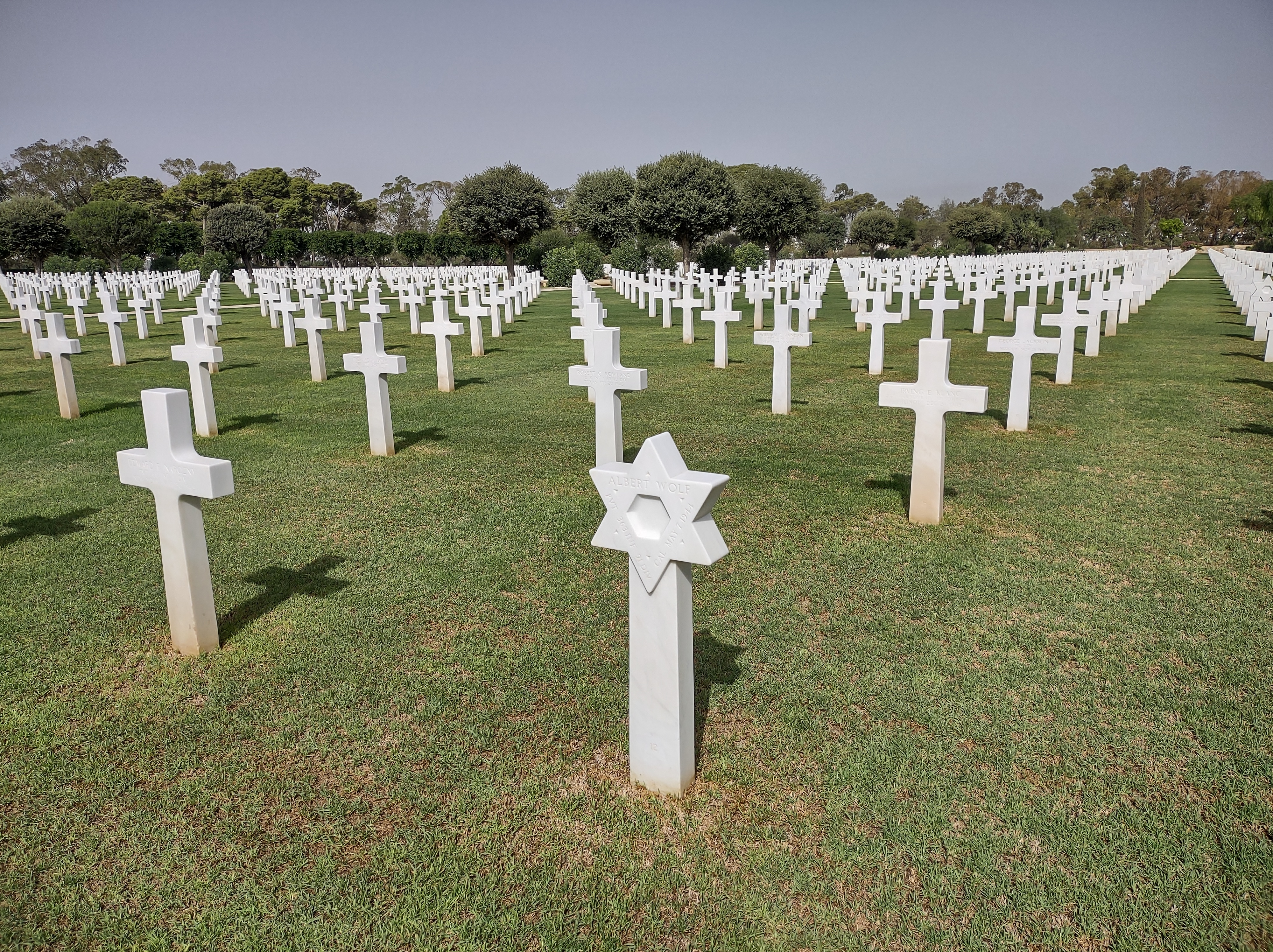 This cemetery is unique in that it represents all of Africa and those killed during the war, and honors those who died but weren’t buried there. The US military paid all the costs, either for burial or repatriation. Those buried there were done so at the request of the families since they honored the ” band of brothers,” something not done today. I heard this at the US cemetery outside of Florence, Italy as well. These cemeteries are sponsored by the Battle Monuments Commission worldwide. As time marches on, the curator explained that primarily older travelers visit the cemetery, since they have a greater connection to World War Two. However, 2,841 Americans are buried there, and 3,724 are listed as missing in action on a wall which overlooks the cemetery. As the MIAs are recovered, their names are scratched from the wall, but I was told that represents a very small number of the missing. When I told the curator that my uncle had been killed in a car accident, he said that most of the men buried there had not died in battle, but rather an unfortunate incident during the war as my uncle had experienced.
Visits like the two that came at the end of my tour of Tunisia are the treasures that world travel provides us. We can come not only face ot face with ancient mosaics in one of the best museums in the world for it, but also with a part of American history and even an anonymous tomb for fallen soldiers that we can never see at home. I especially relished the small chapel that paid homage to both Christian and Jewish fallen soldiers. All countries have division in their history, America as well. It was refreshing to be in an area however small, where inclusion was remembered.
 Travel the World with Passion