I really admire the spirit of Bulgaria. I noticed this immediately when I took the trip Eastern Balkans: Bulgaria and Romania with Overseas Adventure Travel. Maybe it was the spirit of wisdom for which the city Sophia, Bulgaria is so aptly named. This could have been one of the messages a pigeon was imparting to me while I was there eating a pizza in a pedestrian area. A bird had landed on my lap not once but twice, looked me in the eye like a wise old pidgeon, then flew away. His ancestors carried messages during the war. This one was for me.
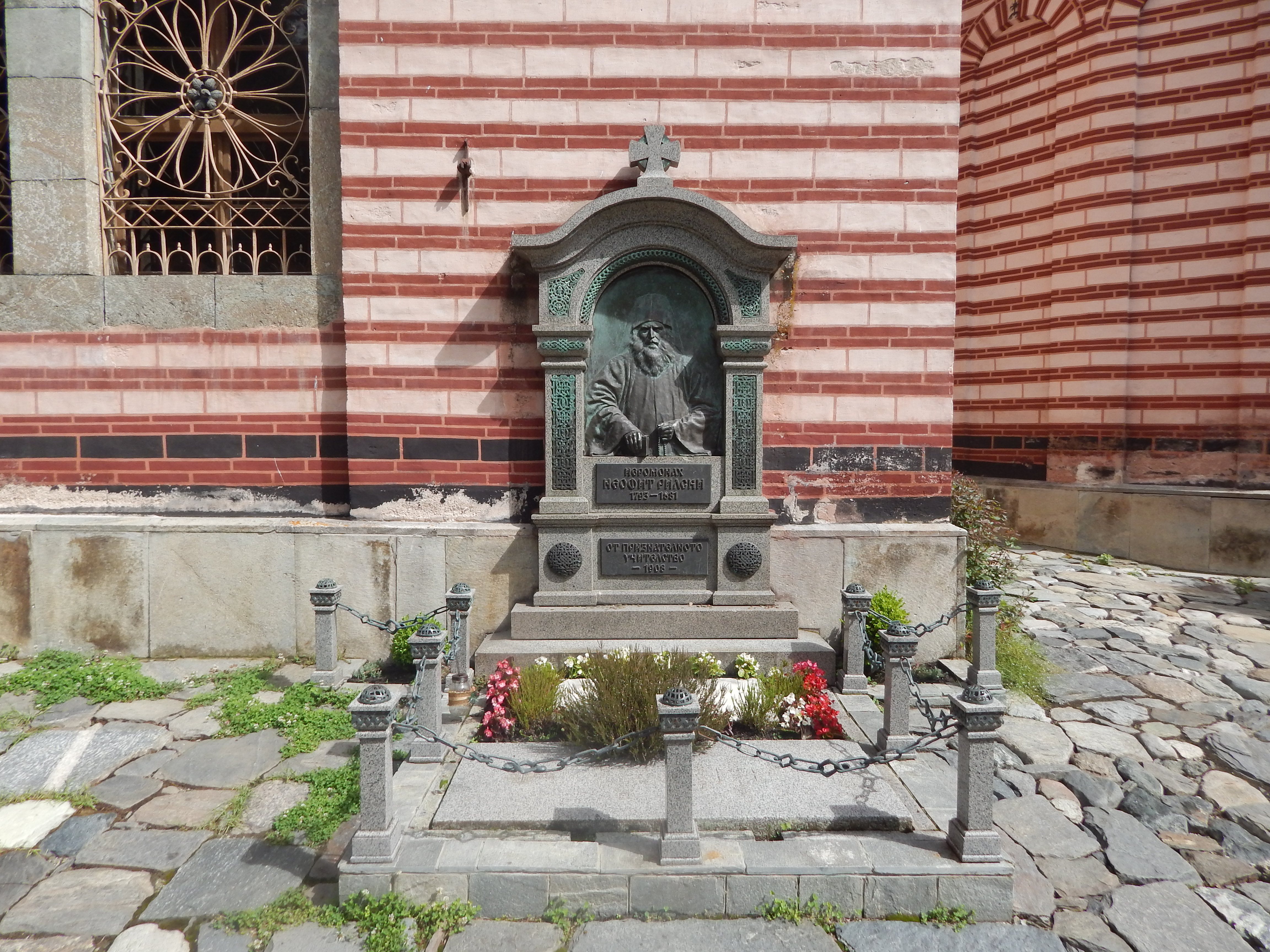 Part of the spirit of Bulgaria is encompassed in the Rila Monastery, a two-hour drive outside of Sophia. The hills were green and lush the day our group went there; unauthorized sunshine filled our entire day as we drove past storks on residential rooftops and gazed in amazement at the richly painted exterior of this glorious monastery.
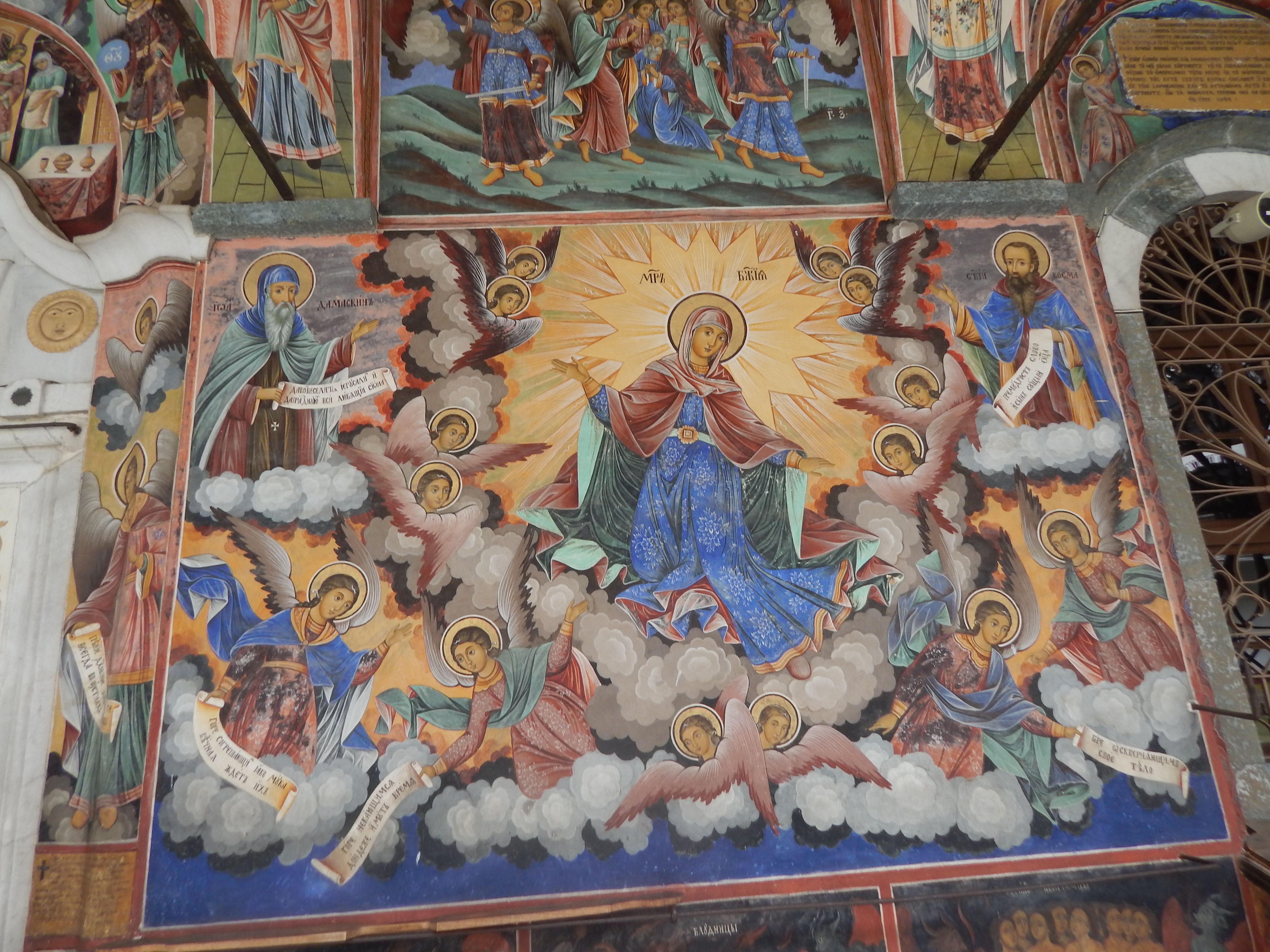 The monastery really spoke to me such that I left offerings in honor of my parents. The frescoes on the exterior are extraordinarily beautiful, but nothing compared to the inside. I’d been joking on the trip during church visits that ” I’ve used up my minutes,” as my interest had waned upon seeing the churches. Not this one. This is the monastery that once housed the remains of the King of Bulgaria who refused to hand his Jewish population to Hitler during the war. He saved hundreds of thousands of lives on the spot, and of course so many more down through the generations. His remains have been moved to an unknown location. This monastery moved me so much, I was even disappointed when it was time to leave the church.
 The Rila Monastery is considered to have had both cultural and historical importance; revolutionaries against the Ottoman empire would hide out there, and the monks are considered saviors of the country because of their writing, and how they taught others to write. Writing and open expression were considered keys to the country’s essential and eventual freedom. Writers and sculptures of them are scattered throughout Sophia and other parts of the region, such as Serbia.
 I rarely feel a church or monastery truly captures the spirit of a country I visit, but the Rila Monastery was an exception. It’s the largest and most famous Eastern orthodox monastery in Bulgaria, and is named after its founder, Ivan of Rila, and is in the Rila Valley. It was thought to have been named after St. John of Rila, who was really a hermit and lived nearby in a cave. It has been supported and respected by all Bulgarian rulers, and hundreds of thousands of pilgrims make their way there annually, as much as 900,000 in a single year. Pope John Paul made his way there in 2002, and today tourists go there regularly since Bulgaria has made the tourist radar.
 Why did it feel so special to me? I have no idea, except that in some destinations we feel the call of history while traveling. Religious sites such as Hindu temples anywhere in the worlds provide the same experience for me, almost like a calling. Perhaps it was a combination of the stunning Moorish style arches and architecture on the exterior, combined with the dramatic and seemingly eternal hand painted murals and frescoes on the exterior of the buildings that drew me in.
Rila was one the first Eastern Orthodox painted monasteries I’d seen, and the region is rich with other painted monasteries we passed and stopped in along the way. We passed as many as 17 monasteries at one point. We also passed a number of Lutheran churches, much less ornate of course because of the Reformation and how Catholic churches in some cases were made less ornate when they became Lutheran. The Black Church in Braslav is an example of this, one of several we saw on the trip.
 This entire region is filled with monasteries, churches, fortresses, castles, and even synagogues. Driving past thriving fields of both sunflowers and wheat reminded me of the current events in nearby Ukraine, and how the world is being deprived of those harvests as other countries like Romana and Bulgaria try to grow as much as they can. But Eastern Orthodox painted monasteries, especially the Rila Monastery, were a revelation to me. I’ve definitely not “used up all my minutes” in historical and religious sites as beautiful as this one was and will look forward to seeing more in future trips to the Balkans and Eastern Europe.
All Photos Jann Segal
 Travel the World with Passion