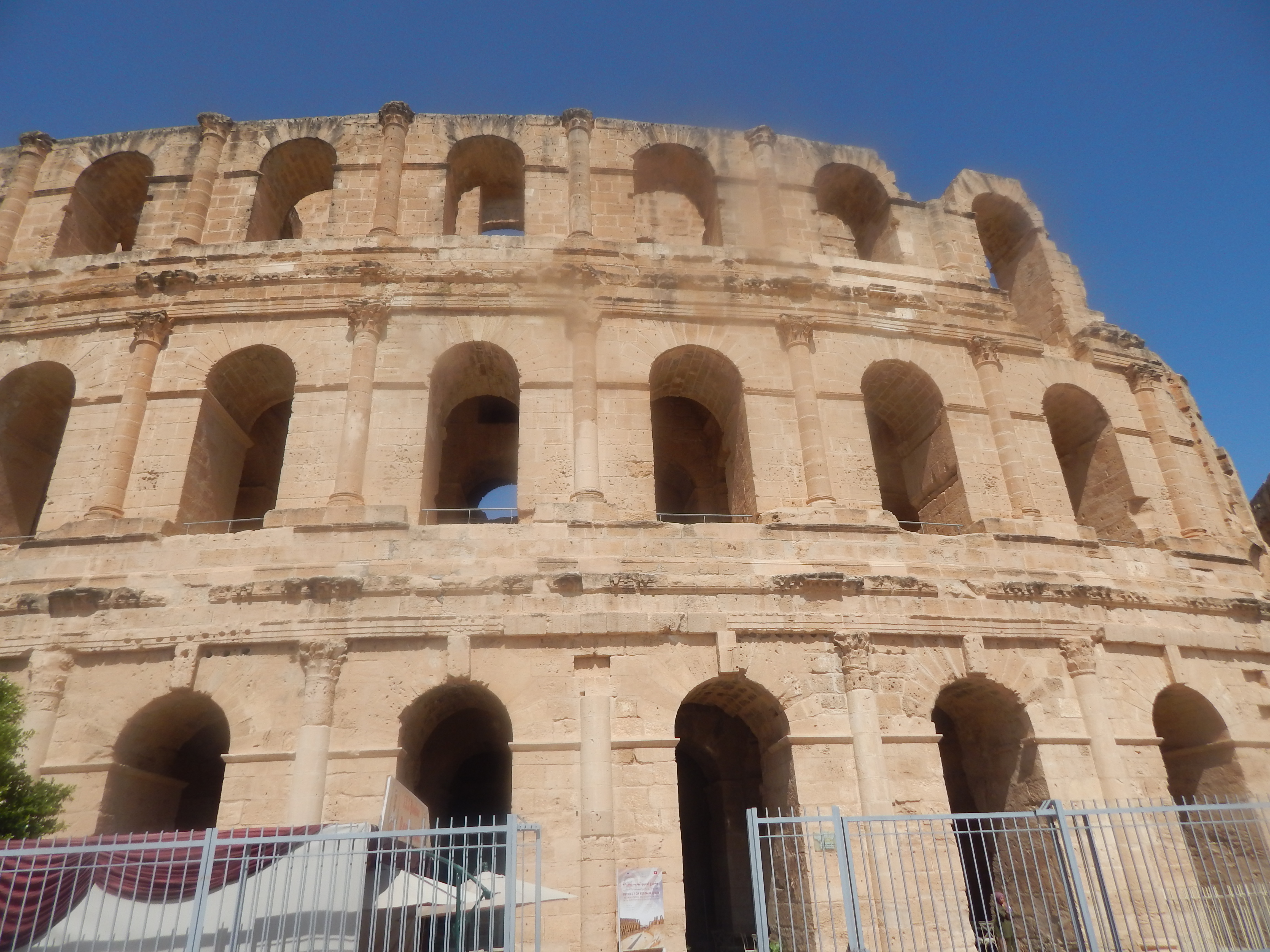
 Tunisia, like so many other countries, can be many things to many people. For this traveler, it came as a unique surprise, a varied geography I was delighted to experience and astonished to see, all at once. There may be other parts of the world which combine the Mediterranean, the Sahara, salt pans in the desert, a desert Oasis, Roman ruins and Roman amphitheaters, some of the best mosaics in the world as well as beautiful, inlaid and intricate Islamic architecture and art, but I have only seen this particular combination in Tunisia. The icing on the cake for me was that I got to use my fractured French, even if all I could muster up was listening in on conversations, or a few phrases in conversation here and there. Who knew that Tunisians believe that Americans only drink red or white wine and no rose? Ah, the joy of eves dropping.
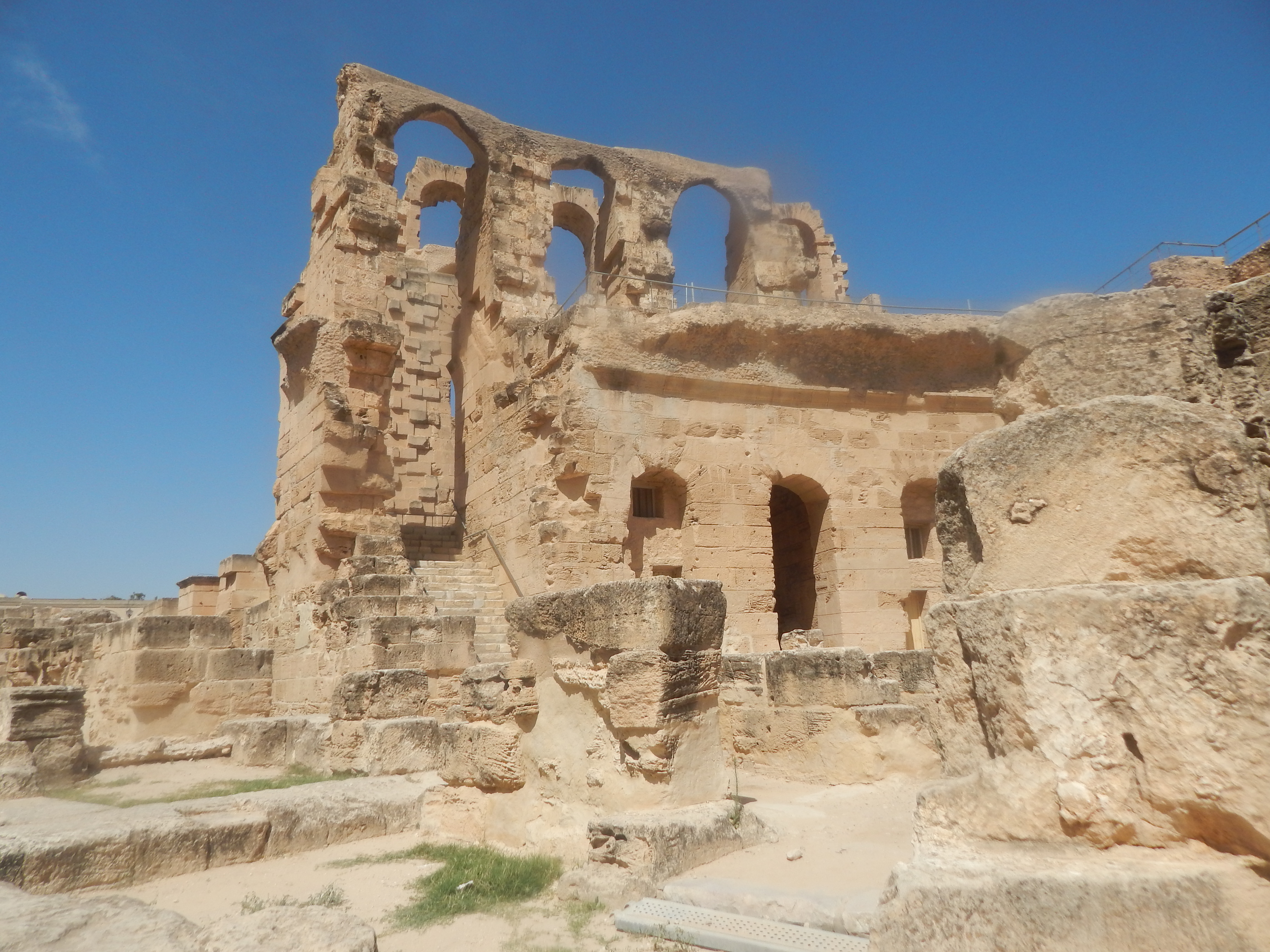 Part of the beauty for me when I took the Overseas Adventure Travel trip Tunisia: From the Sahara to the Mediterranean, was being able to see such well-preserved mosaics and the archeological site of El Jem. El Jem (or El Djem) is the ancient Roman city of Thysdrus which was overcome by revolt in ancient times, around the third century AD. However, when the name changed to El Jem isn’t well documented. The area was well known for olive oil production. The nearby amphitheater is considered one of the most well preserved in the world and hosted many gladiator’s games in Roman times. However, Thysdrus was first Punic, then Roman, then finally Tunisian with the name we know today.
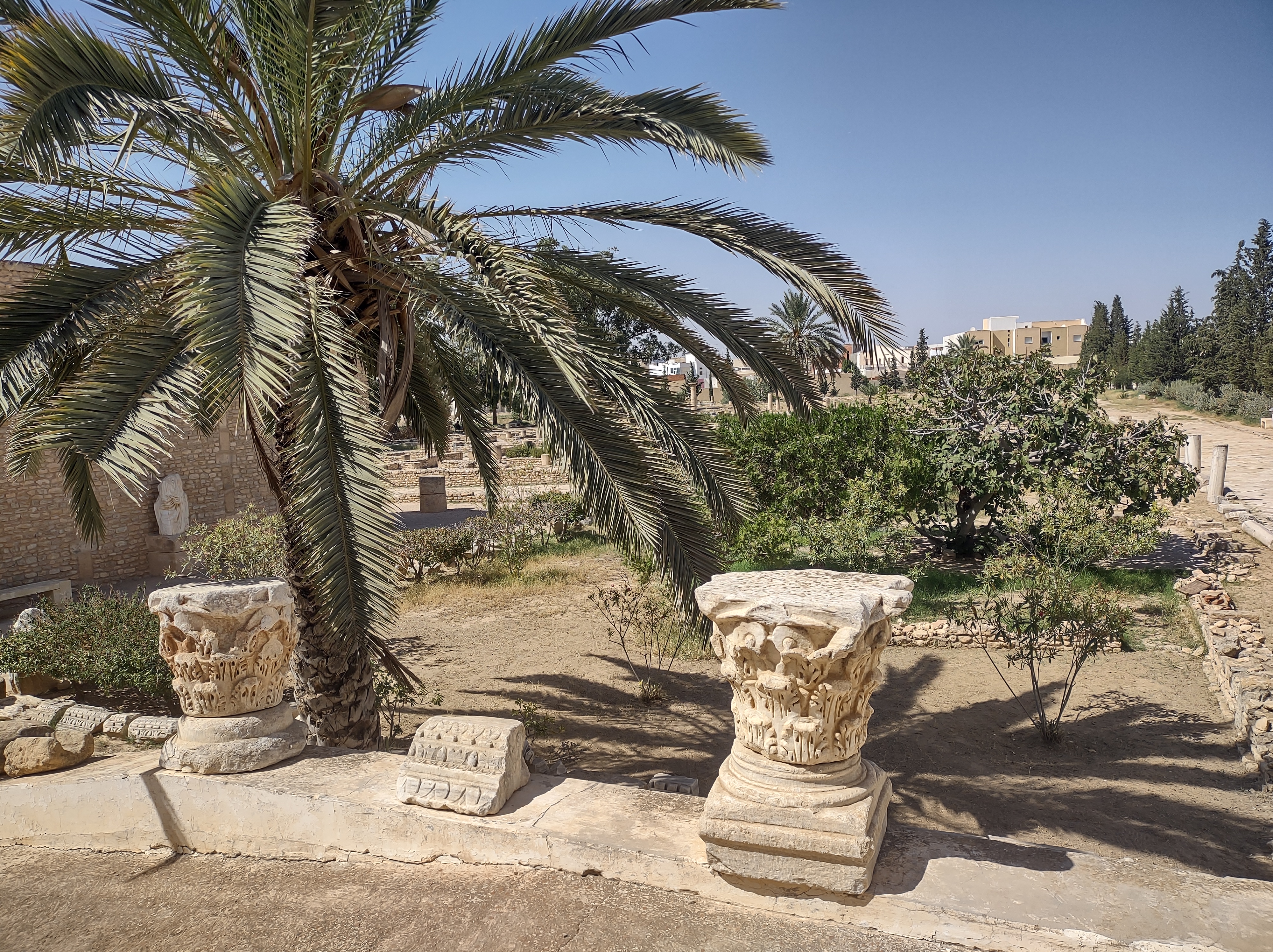 After our visit to the impressive amphitheater, walking past amusing and colorful street vendors who wanted to sell us coke, water, and claimed to be the bus driver’s cousin, we went to the El Jem Archaeological Museum and Gardens. Only the Colosseum in Rome is larger than the one in El Jem, but both are equally as impressive. In fact, the Roman ruins and influence in Tunisia was another travel surprise. And because of the proximity to the tip of Sicily, Tunisians frequent Italy, while there is an entire Italian speaking Tunisian population in Sicily. So, the influence continues in modern times.
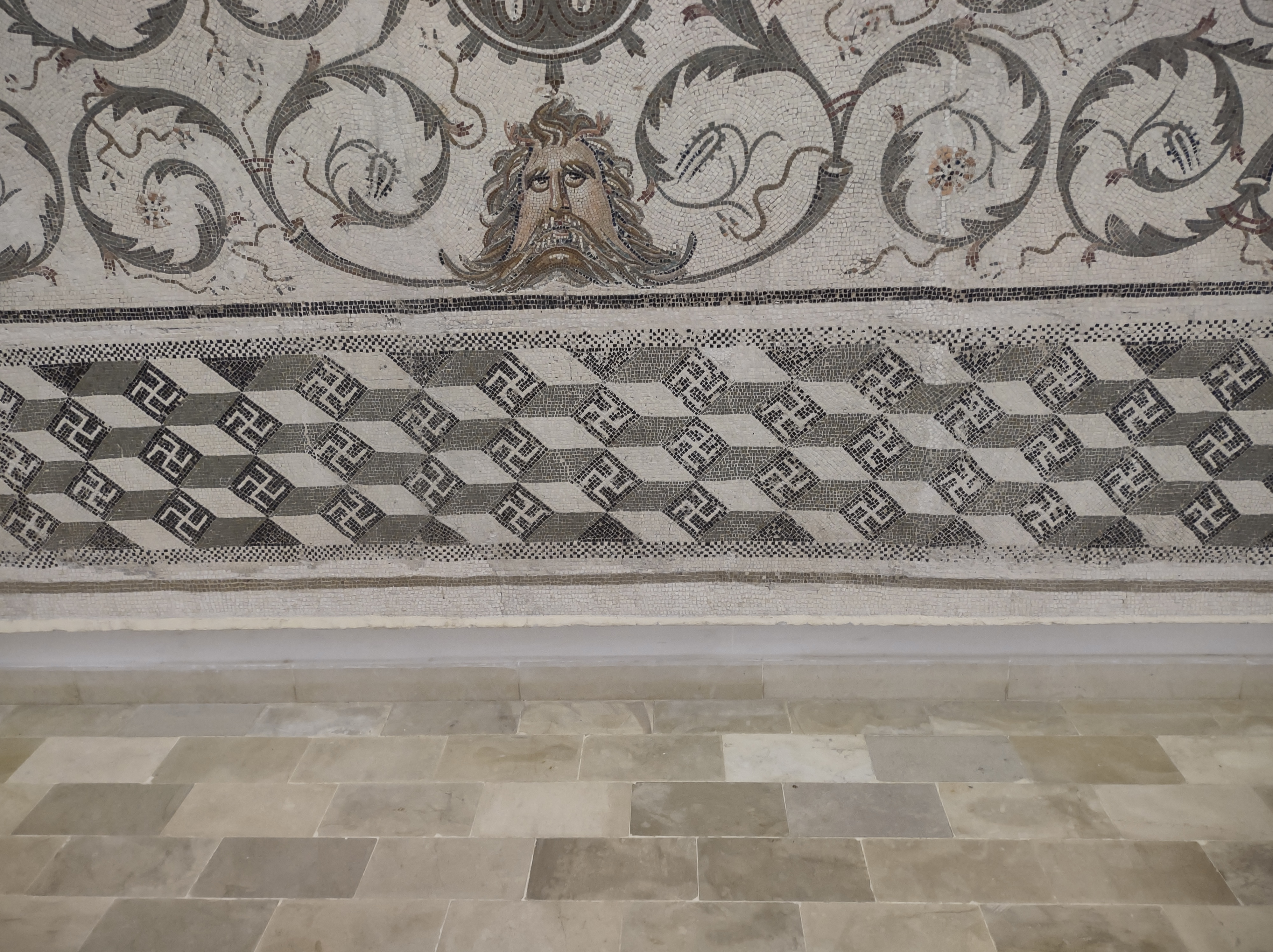 The Bardo hadn’t reopened yet (although it did later that week), so we were told we were seeing the most well preserved mosaics in Tunisia. Once the Bardo reopened that week, I’d say El Jem was among the most well preserved! But regardless, it was certainly a treat to see such a beautiful and well-presented exhibition of ancient mosaics on both the floors and gracing the walls. I finally needed to know where these beauties came from and what became of that area. Of course, when I asked I was unaware that several of the ancient villas which were home to many of the mosaics were right outside of the walls of the museum! So, it was another delightful treat to walk among the gardens and the ruins of the villas.
 Since our trip leader was passionate about art and it’s place in Tunisian history, he brought the mosaics to life with his enthusiasm. I had seen Roman ruins in Morocco, but didn’t fully understand how they fit into the history, except that ” the Romans sure got around.” In Tunisia, thanks to the well preserved Roman ruins and mosaics that were more impressive with each one we saw and experienced, I understood better how Roman culture was at the root of Tunisian society and history. Like a fine bottle of wine (red, white or rose) each encounter with these antiquities enabled my knowledge and understanding – especially because of what I saw in El Jem – to age and grow better with time.
All Photos Jann Segal
 Travel the World with Passion