 When I went to Tunisia with Overseas Adventure Travel, one of the prominent sites I immediately wanted to see was the Medina in Tunis. Having been to Morocco twice and being completely enchanted with the snake charmers in the Marrakech Medina, not to mention the ancient authenticity of the souks in the Fez Madina, I was curious how the Medina in Tunis compared.
I was originally going to go there independently on one of my two extra days, but I was advised by my hotel that they were empty on Sunday, and Monday not a lot better. So, I went mid-week with our group. I instantly observed the differences between the Madina in Tunis and those I had experienced in Morocco.
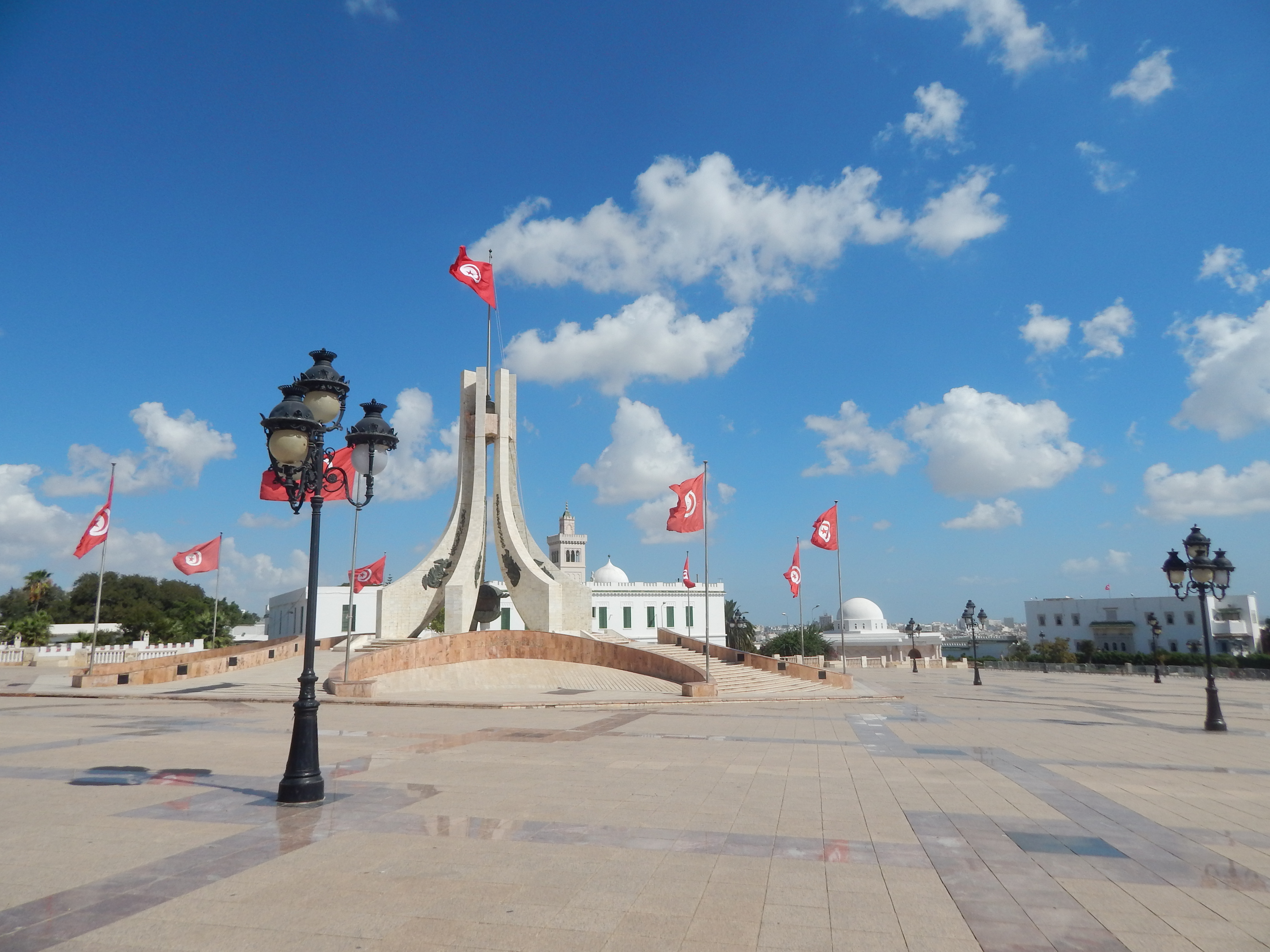 First, the Medina in Tunis is practically surrounded by government buildings, and other less official buildings, but buildings intended to do the work of the city, nevertheless. When there is a Tunisian flag on the building that’s a government building, photography is prohibited. Other buildings can also have a Tunisian flag flying that isn’t a government building, so taking pictures is acceptable for those buildings. We passed a wide array of these buildings on the way into the Medina. The architecture is big and bold yet intricate with unique inlaid work on these massive structures a well. Because of the history of Ottoman Empire rule in Tunisia, the ever present Tunisian flag looks like the Turkish flag, but in reverse colors. Apparently, Tunisia designed the flag first, then Turkey used a similar design but reversed the colors.
The Medina contains some 700 buildings, Including mosques, Madrassas, government buildings, fountains and other monuments, and was founded in 696. It gradually developed and grew during the Middle Ages. The Medina itself is laid out with a North/South and East/West axis, with socioeconomic factors playing a part in who lived in which part of the Medina. It’s 670 acres in size, with over 100,000 inhabitants.
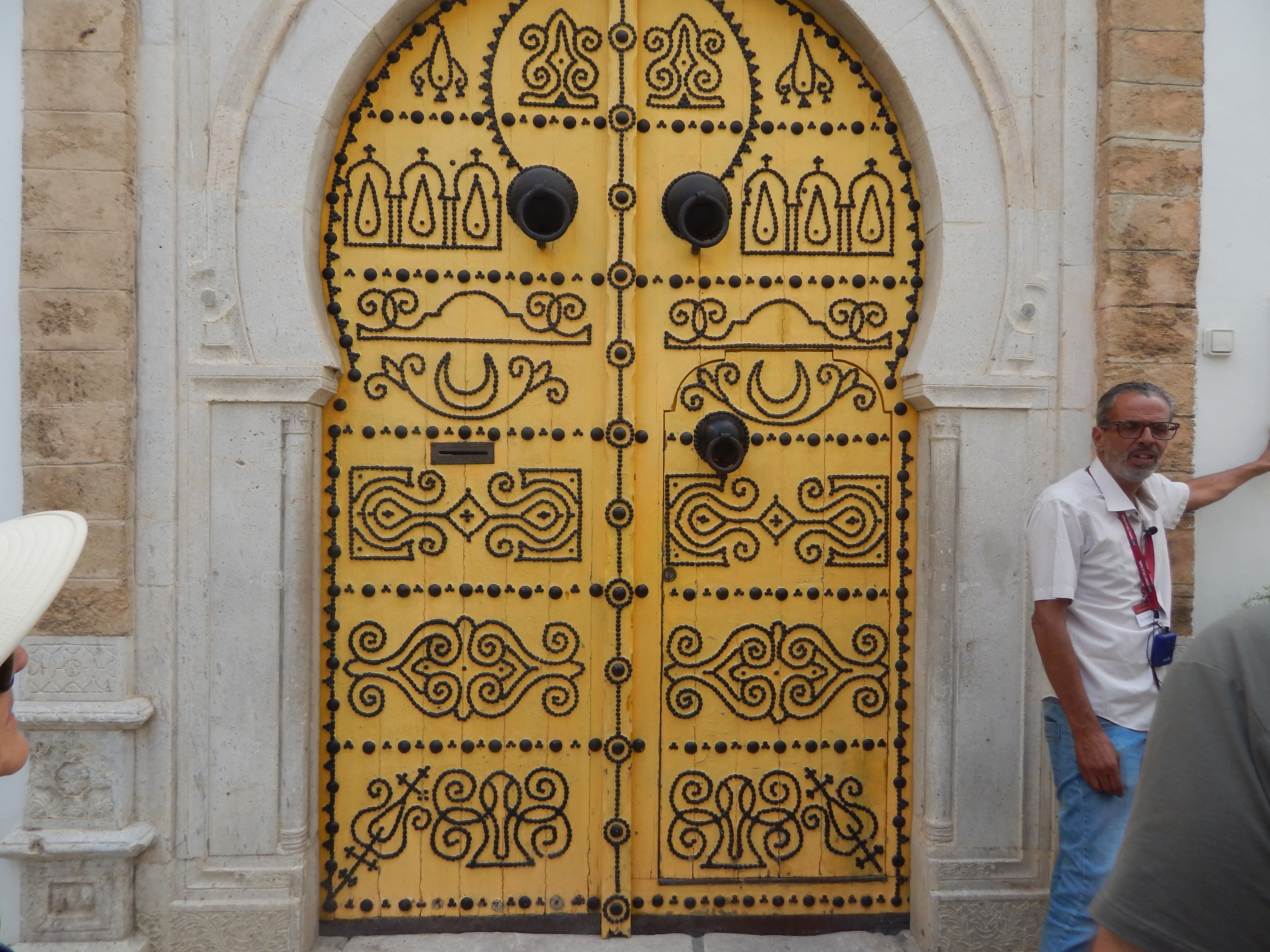
 It was striking to me how modern the Medina was, and it was pretty much all white, with colorful doors along the way in striking primary colors with unique designs and door knockers. In fact, all the medinas I saw in Tunisia were white. Some of the souks looked like souks as I would expect to see in an ancient Medina, but then there were sections that were as modern as could be, such as the jewelry section. Tunisians purchase their wedding rings at this souk, and if they get a better price from a competing store, I believe they are allowed to return the purchase. Selling in any medina is extremely competitive, with everyone claiming to be someone’s cousin to get a better price. But all this is typical for North Africa, and after all the haggling is over, everyone comes out feeling they are the winner (whether they were or not). I personally enjoy this charming custom when I’m travelling through North African countries.
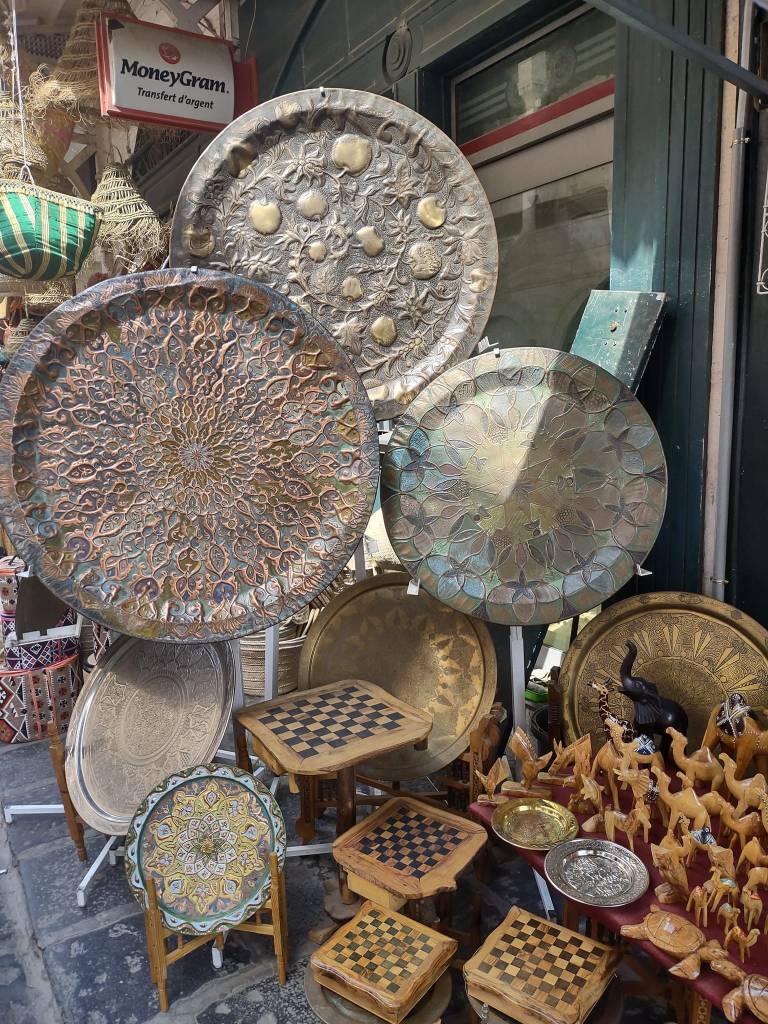
 I saw people pushing hand carts around, and whole sections for perfumes, handbags, and brass and silver colored platters with the artisans openly working outdoors and wanting to show their handiwork. OAT specializes in having controversial topics, and our discussion was held inside a restaurant in the Medina, about women’s issues in Tunisia. I was especially impressed because our trip leader periodically inserted a male point of view in some of the answers our female speaker gave. It was enlightening to learn how liberal Tunisia is compared to the rest of the Muslim world. Apparently, a number of people are emigrating to Tunisia from other Muslim countries to live in a more liberal society, or as a staging ground on the way to Europe. So, Tunisia is a breath of fresh air for many, including weary travelers from the United States.
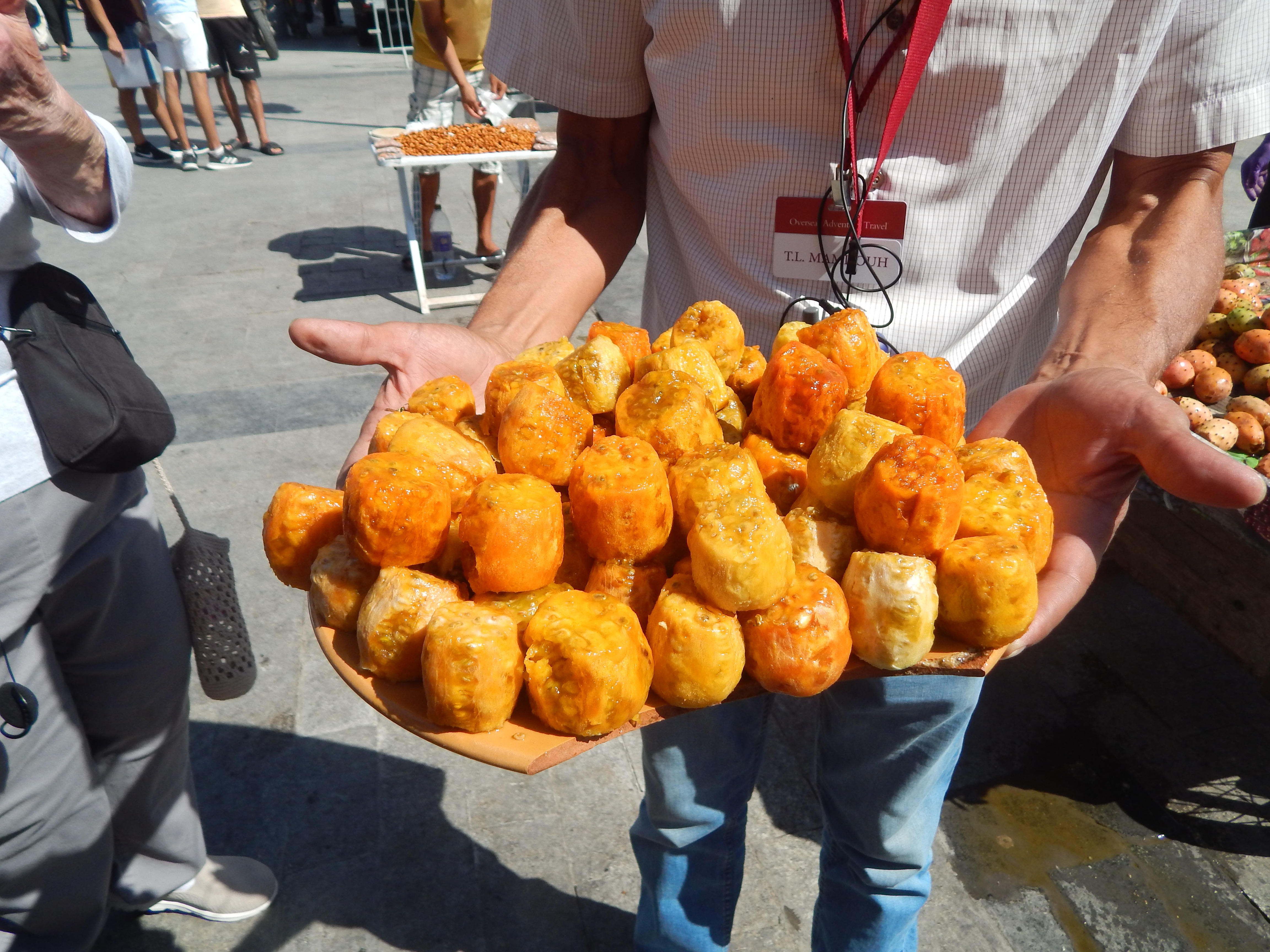
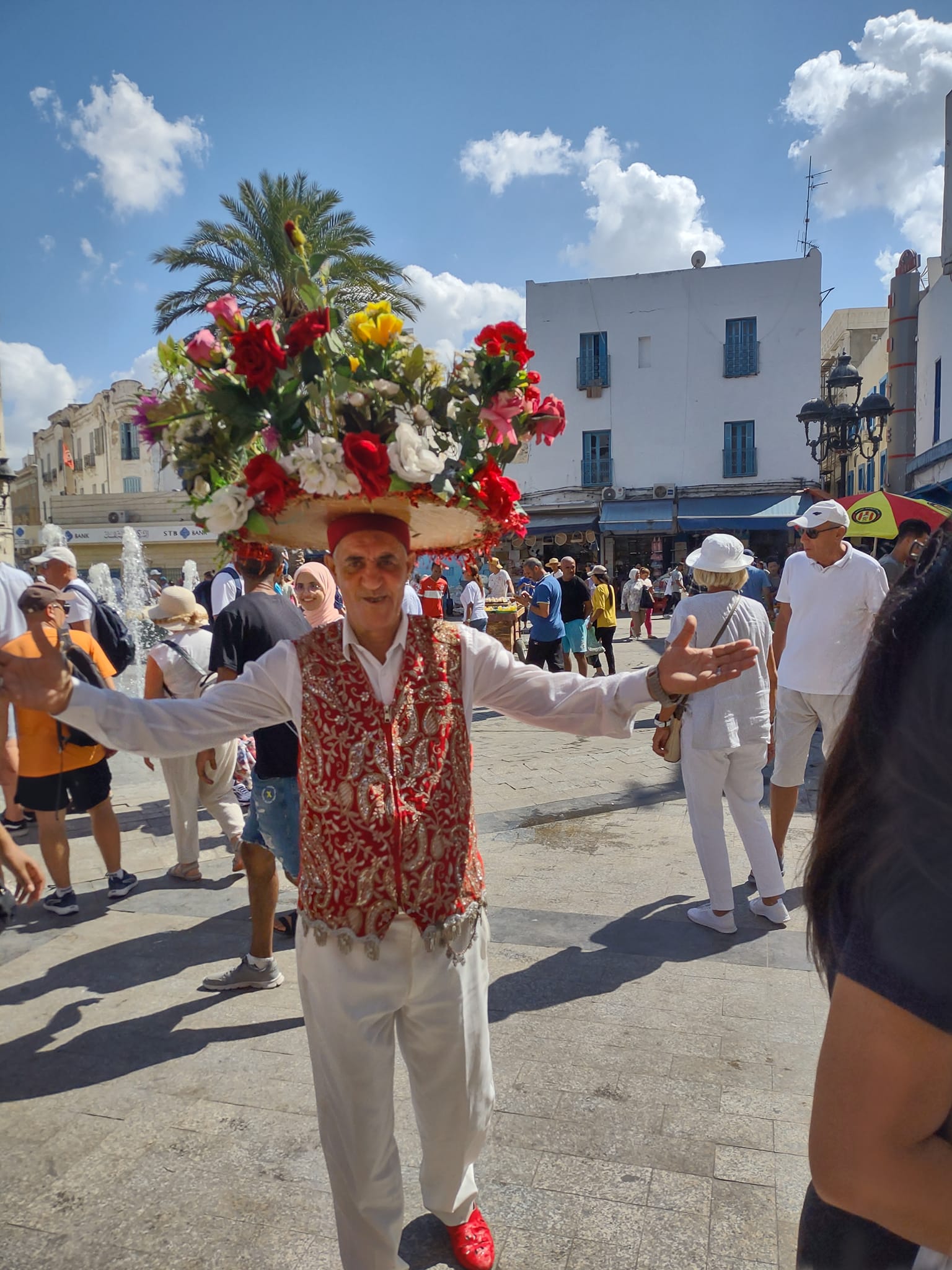
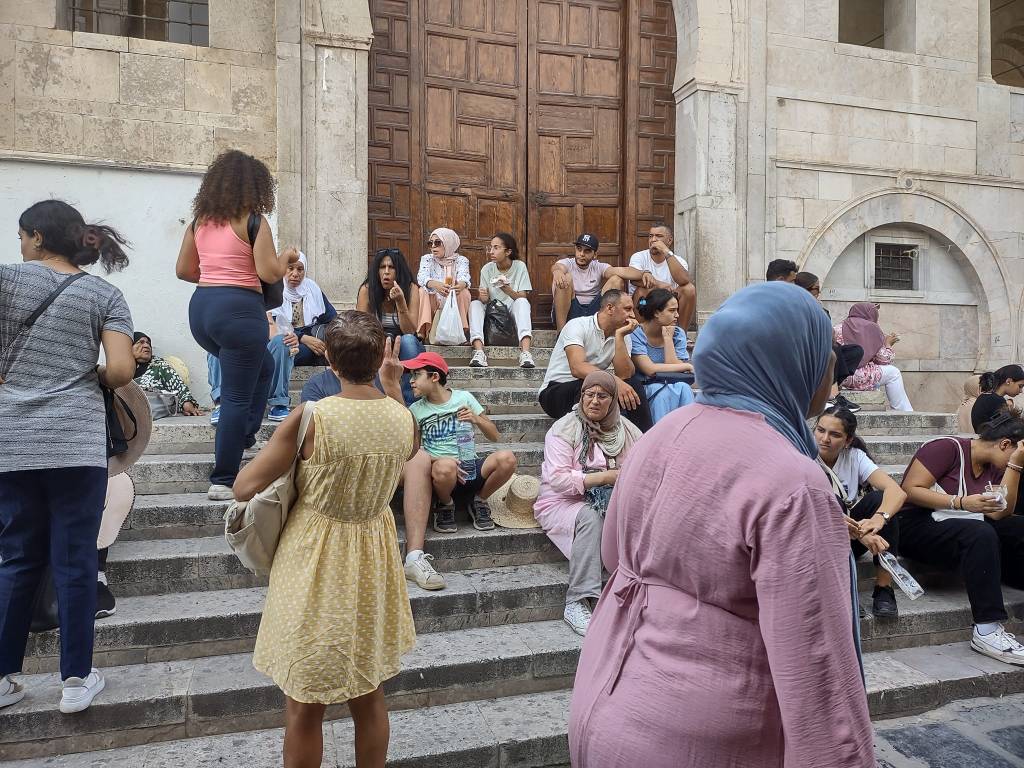
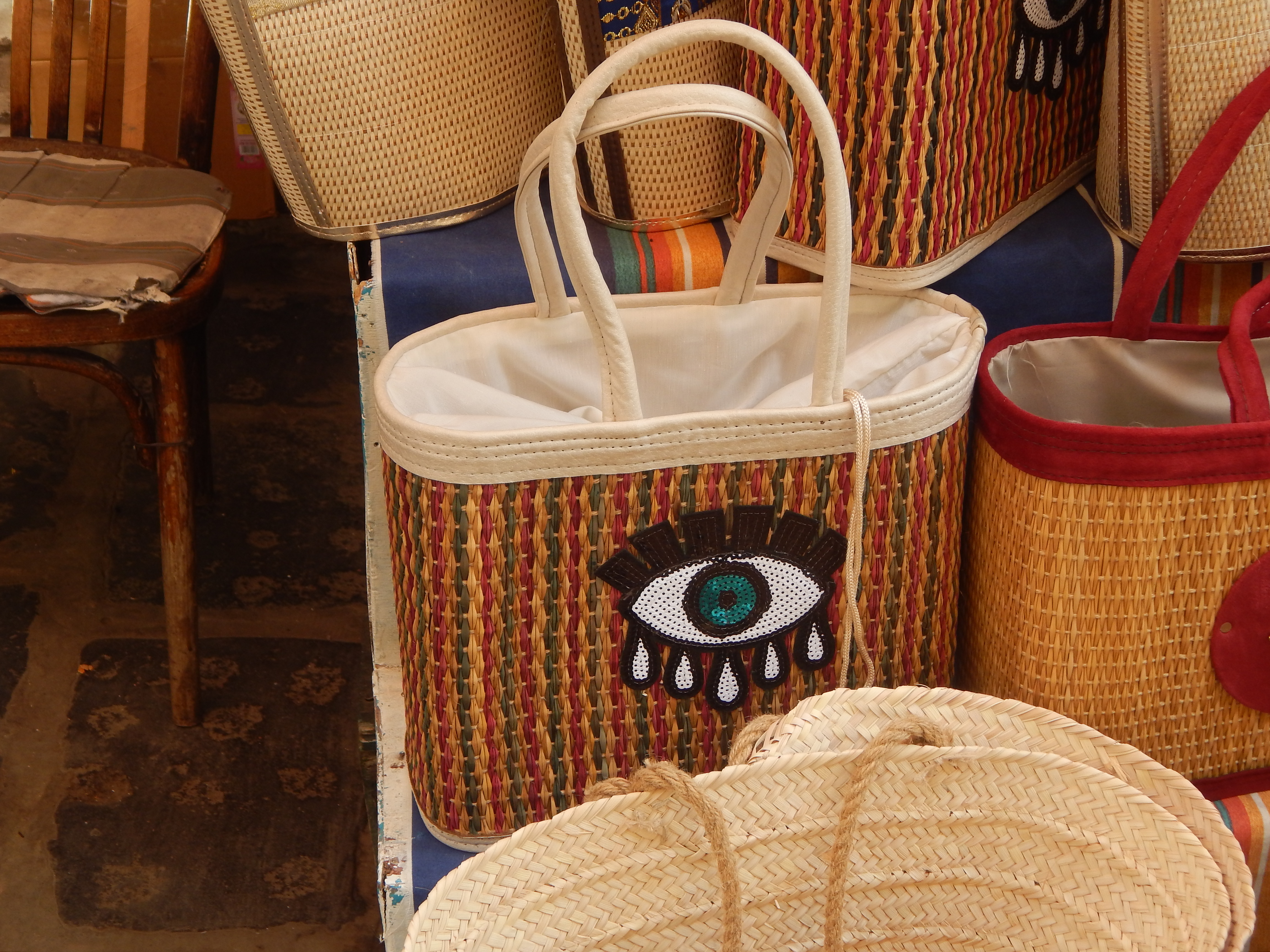 In Fez, Morocco I saw donkeys rounding the bend of a narrow souk in the Medina; in Marrakech it was the ever present snake charmers, and even a Beatles themed restaurant in the middle of the hussle and bustle, with a Moroccan version of the Beatles crossing Abbey Road. In Tunisia, the stand out for me were the shops selling baskets and purses with a single eye staring out, which is the Tunisian version of being “against the evil eye”. And in a giant square in the middle, were independent vendors, one selling sweet prickly pear bites, the fruit of the Tunisian cactus. Some of the experience had a party or circus like atmosphere, while not that far away students were sitting on steps gazing at their cell phones.
 The area in and around the Medina could almost be like the Jerusalem of Tunisia, since we passed by a mosque, a church, and a synagogue during our walk around the area. “We must learn to live together as brothers or perish as fools,” Dr. Martin Luther King Jr once said. Walking though the Medina in Tunis with the smell of spices everywhere, bread vendors selling their days load on wooden carts, the people going on about their daily business or engaged in a headlock of conversation, and me and my group walking past all this in addition to institutions of religion as well as of learning, I saw people living together as one. While there is no mistaking the fact that Tunisia is a Sunni Muslim country, it’s always a great reminder when traveling that people have lived together in harmony in the past. Present days may not always feel as hopeful depending on current events, but it gives us something to strive for in the future.


 Travel the World with Passion