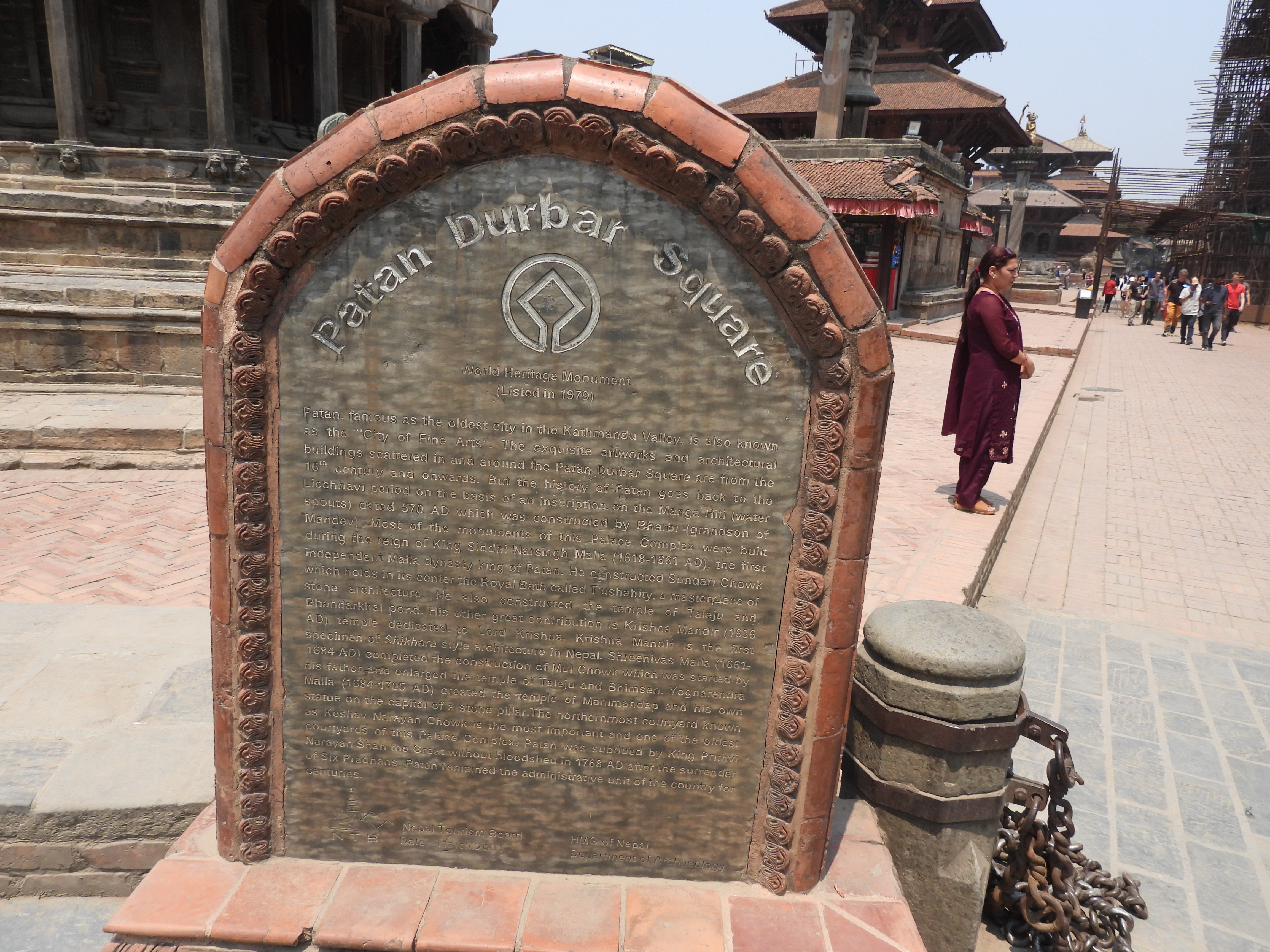
 My trip to Nepal with Overseas Adventure Travel, Nepal and the Mystical Himalayas, had many fascinating surprises. I also took the Northern India post trip, which added to the allure of what we saw and experienced. Aside from meeting in India reincarnated monks and fornicating monkeys, we met a living goddess in Patan, Nepal. I never knew such women existed.
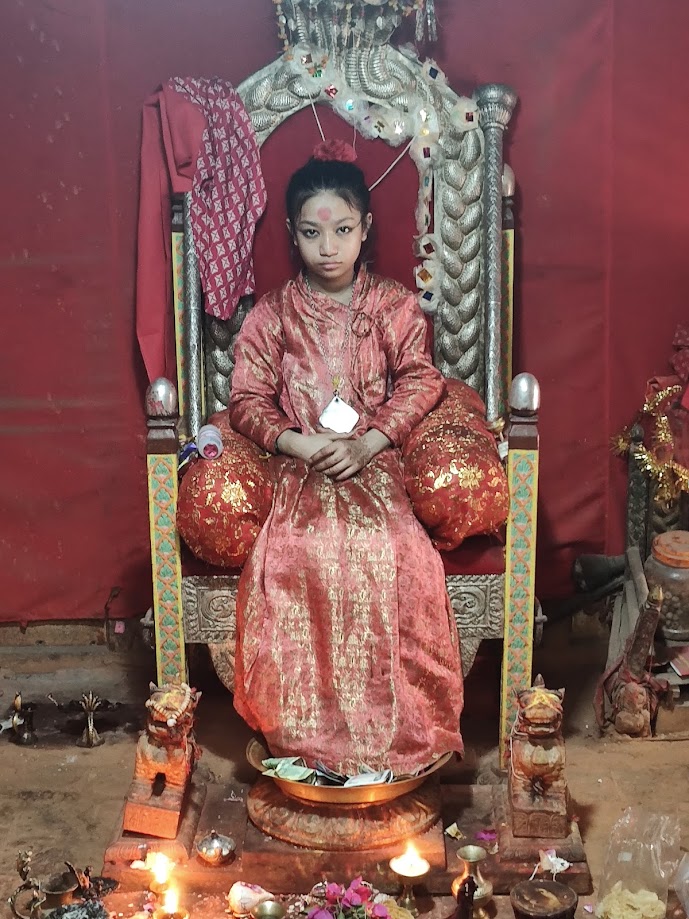 The young woman we met is referred to as a Kumari, which means princess in Sanskrit. Its part of Nepali religious tradition, and the young girl is typically selected from a Buddhist community. This practice is most common in the Kathmandu Valley, where there are eleven living goddesses. We saw the one we met in Patan, a UNESCO World heritage site. The practice of selecting a Kumari takes place when the girl is a prepubescent virgin, and she remains a living goddess until she officially reaches puberty. We also met a past Kumari, a girl who was selected to be a living goddess until she had her first menstrual cycle. Living goddesses cannot leave their homes until they are retired and must eventually learn to blend in with society. This includes ultimately trying to live a normal life, get married, and have children.
Blending in with society after having lived such a life – which includes not even being able to touch the ground and being carried everywhere they are allowed to go outside – can be quite difficult for them. There is a legend that once a man marries a former Kumari, he will die young. My guess was that several men had in fact died young after having married a former Kumari, but this of course had nothing to do with the fact that they had married a former living goddess. My trip leader confirmed my speculation, but it still created social problems for many of them once they tried to blend into society and make friends. He commented to us afterwards that he didn’t consider that a normal life for a child and would never want his children to experience it.
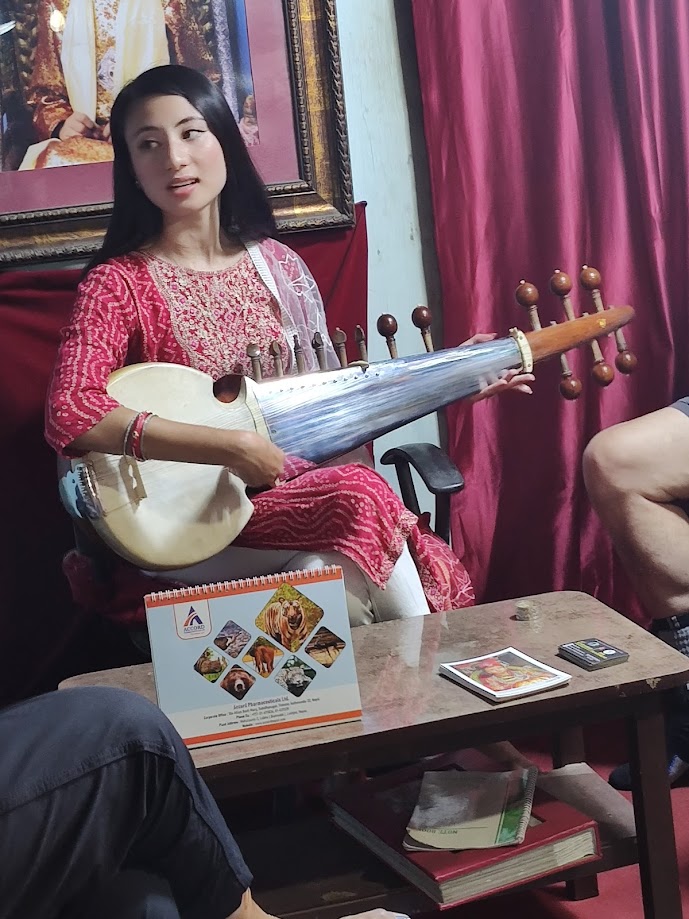 The Kumari can be quite beautiful. The former Kumari we met spoke five languages and played multiple stringed instruments. I likened it to a beauty pageant winner given the opportunities they had after they had retired. In this case, the mothers of both the current and past living goddesses were good friends, and both families lived in the same building. The current living goddess blessed us all, although she was not allowed to speak. Her mother spoke on her behalf as she quietly sat there on her throne. Her mother told us it was an honor for her daughter to be chosen.
The Kumari are worshipped and revered by those who follow both the Hindu and Buddhist traditions and have since the 17th Century when one Kumari held the title for three decades, quite a departure from today’s practice. There are legends and even controversies surrounding the Kumari. You can read more about them and the different traditions they observe here .
Unique experiences like this are the reason we travel; it may not be a living goddess that the traveler remembers. But on a trip as well designed as this one, with both cultural and natural components, there are highlights that will stand out for everyone, albeit different ones. On the last day of the post trip in New Delhi, when six of us were enjoying our last lunch before a late-night flight home, we talked about what the highlights were for us. For some it was the river rating. For some it was the hiking or seeing Annapurna Base Camp. But for me, it was the deep dive into the culture, going out of my way to see and experience all seven UNESCO World Heritage sites in Kathmandu (the trip only allows for seeing three of them), and the people we met along the way.
All photos by Jann Segal
 Travel the World with Passion