When I traveled with Overseas Adventure Travel on their trip Nepal and the Mystical Himalayas, we had three terrific days trekking in the foothills of the Annapurna region of the Himalayas. But before we did that however, we were treated to one or two flyovers of the Himalayas themselves: Mt Everest, Annapurna Base Camp, or both.
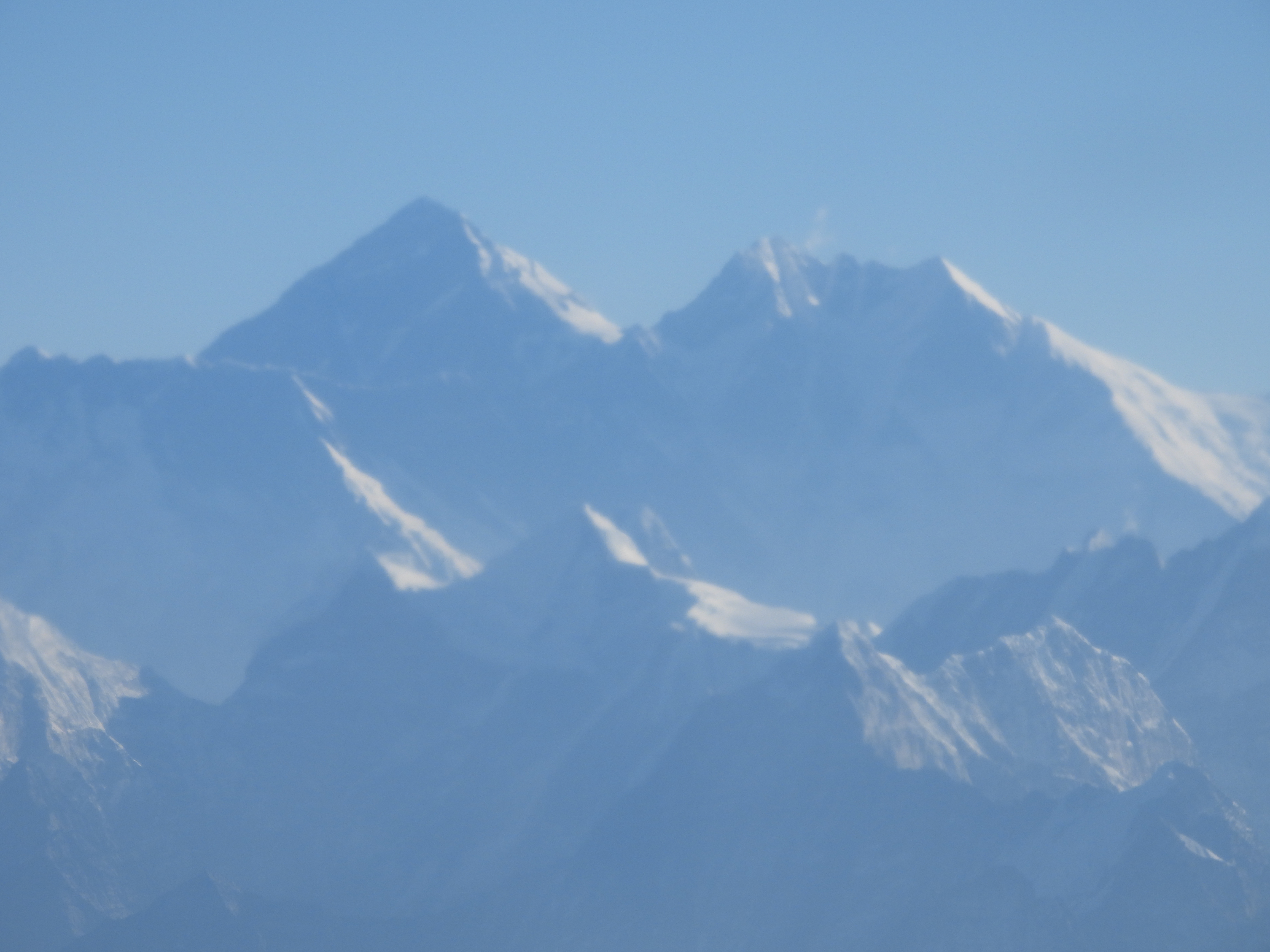 I decided to join the majority of the group for the one-hour flyover to see Mt Everest and other Himalayan peaks. It was a good flyover and interesting, and we all had window seats. We weren’t even sure which peak was Everest because it was all so beautiful, and we had clear skies. The flight crew walked by and helped point out the peaks.
Afterwards, we met a women named Maya Sherpa. She came from a family of mountain folks, but only she became a Sherpa. Sherpa is the name of the tribe. She has summited Everest four times, and even K2 in Pakistan, and she’s done much of it with groups of women. It’s big business in Nepal and some have gone up and down so many times they don’t even need to accumulate. One man went from Base Camp to the summit in six hours running! But it’s an amazing spirit of bravery that creates such a calling in people, and of course the love of the challenge. The Sherpas must even climb up and down at night in snowy and windy conditions.
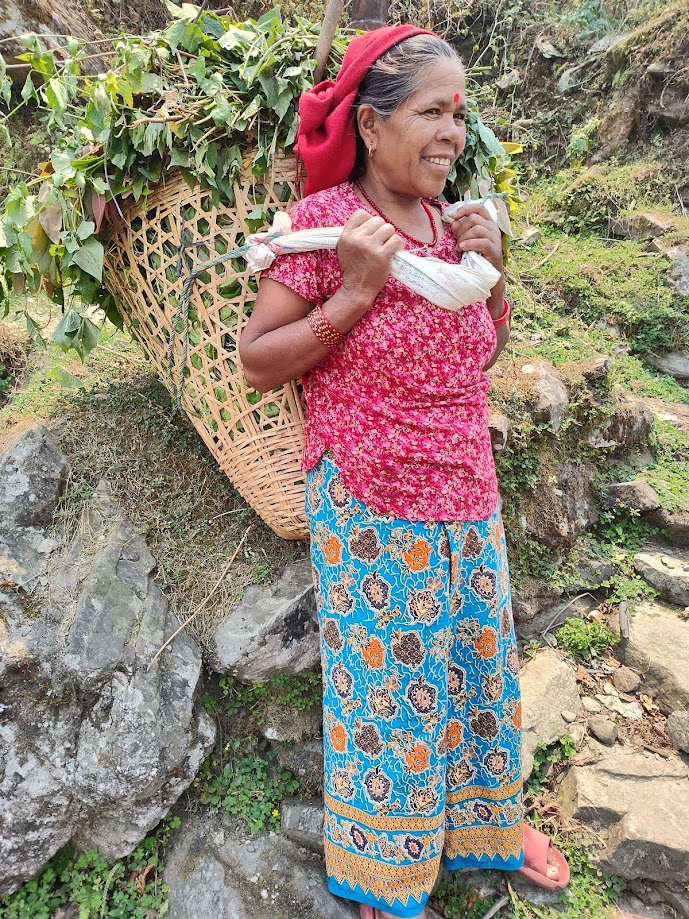 My days in this part of Nepal were rife with wildfires, controlled burns, and local cooking. The beautiful wheat and rice fields we passed while trekking were in the midst of the strong haze. The day we left for our three-day trekking adventure, we trekked for three miles, and local women carried our luggage to the lodge where we stayed for three nights. It was quite a sight as they trekked onward carrying baskets and wearing flip flops, hiking better than many of us did. They thought it was silly to pose in photos with us when we sat for a break. But we got great photos of local life along the way to this quaint and peaceful part of the world.
One unusual site was the vultures winging overhead. With so much smoke and fire, animals were obviously becoming casualties and the vultures were circling to eat their prey. The sunrises and sunsets were supposed to be beautiful, but they were impacted by the smoke and haze as well.
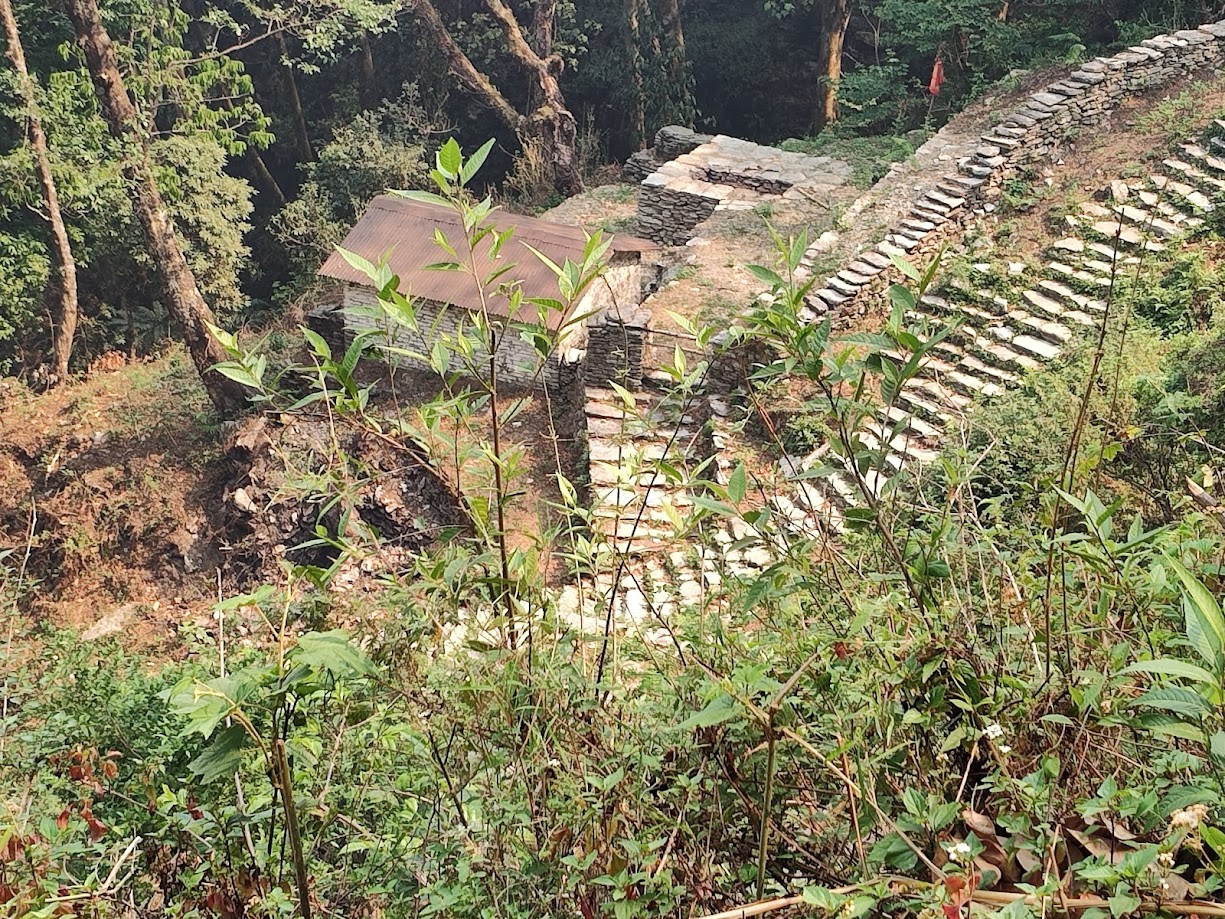 The following day was a storybook day for Nepal trekking and small villages. We saw so much! We visited a local family and school, but when your purpose in trekking is to see how the local people live, it was perfect. We were also happy as we trekked to see that the Grand Circle Foundation had paid for a pathway of steps from the main road to make life easier for the local community. The community of women we met at one stop were the wives of migrant workers, who were working in any one of several countries and were sending money back home. The women supported each other as a community of mothers and were very tightly knit. After we finished our vegetarian lunch with them and had gone inside their homes, we could hear the women all singing as we walked away. It was a wonderful, spontaneous moment for us to hear their joy as we momentarily stopped trekking.
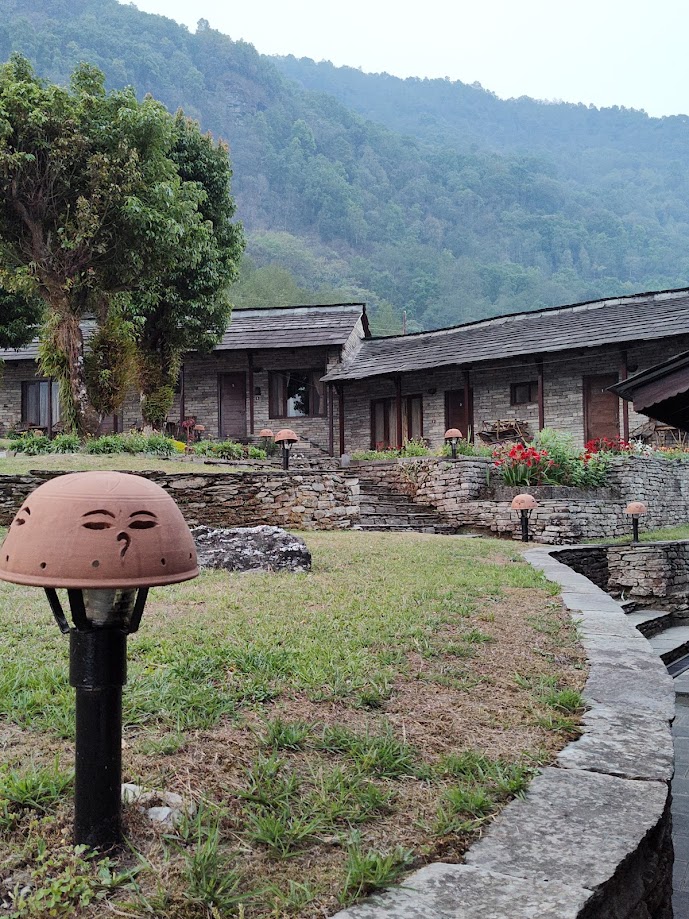 Our mountain lodge was a lovely place to see nature do its work. When I sat outside the following morning I saw a bee busy pollinating several plants. It did not matter that I was there. It went from flower to flower, bush to bush, flew away, then returned. There were beehives close by and fresh, natural honey was frequently served. But the bees ignored me (for a change!) which reminded me that we as travelers are just passing through nature’s glory. We are observers and students. Which is exactly what I was doing in the Annapurna region.
But even as learners among nature’s bounty, we are also reminded that we aren’t in control. The wildfires that surrounded Annapurna were a stark reminder of that. They are probably as natural and predictable (these days) as the bees flitting from flower to flower. Fires can also be a positive force in nature even though humankind finds them destructive. We do not like bee strings either, but we enjoy honey and the flowers that bees pollinate. Nature provides us with so many opportunities and positive ways to view and enjoy it.
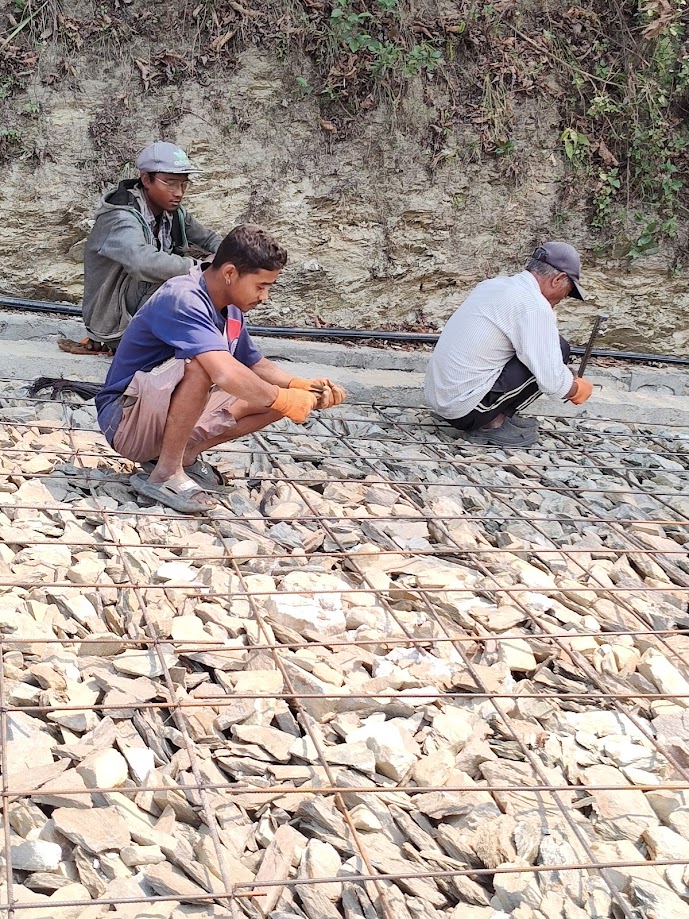 We hiked down from the Annapurna region on our last morning, and the Annapurna peak was visible for a change before breakfast. We also briefly saw Fishtail Mountain before the clouds covered both. But it was a glorious ending to our three nights there, and we trekked to our waiting bus in under two hours., passing men building roads by hand. Annapurna means sustenance, and it is part of a Hindu legend, named after the Hindu goddess of nourishment. It literally means ” everlasting food,” which can be very much the case as water runs from this part of the Himalayas into the Annapurna Valley. We drove twice past the Seti River (where we would later raft and camp), and water levels were then low until the monsoon season began. That is when the cycle of nature begins anew, rice growing season starts, the fires end, and sustenance would again fill this part of Nepal. Annapurna.
All photos Jann Segal
 Travel the World with Passion