I took the Overseas Adventure Travel trip Nepal and the Mystical Himalayas, as well as the post trip to Northern India. My day in New Delhi before we left for the cities of Amritsar and Dharamsala on the post trip was the kind of day travel was made for. At least for me, since my trip leader devised an alternative itinerary because the group New Delhi program was a repeat from some of what I saw on the OAT Heart of India trip ten years prior, and I had other things I wanted to see.
Upon arrival and driving around New Delhi I was instantly struck at how lush, green and modern New Delhi had become. I even saw skyscrapers among the greenery. This part of India is still rich in stark contrasts, but it’s striving to become more and more modern and will likely be even more vibrant in ten more years. But my private car and driver provided a culturally rich day to say the least in a current New Delhi with an abundantly rich history that kept me busy all day.
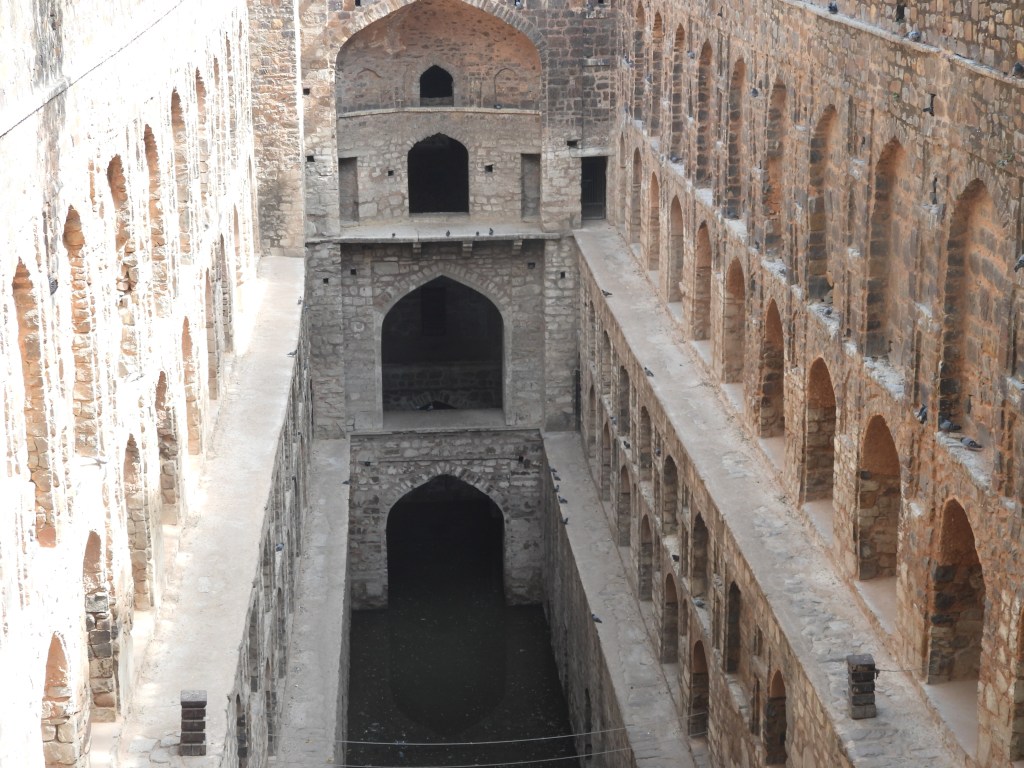
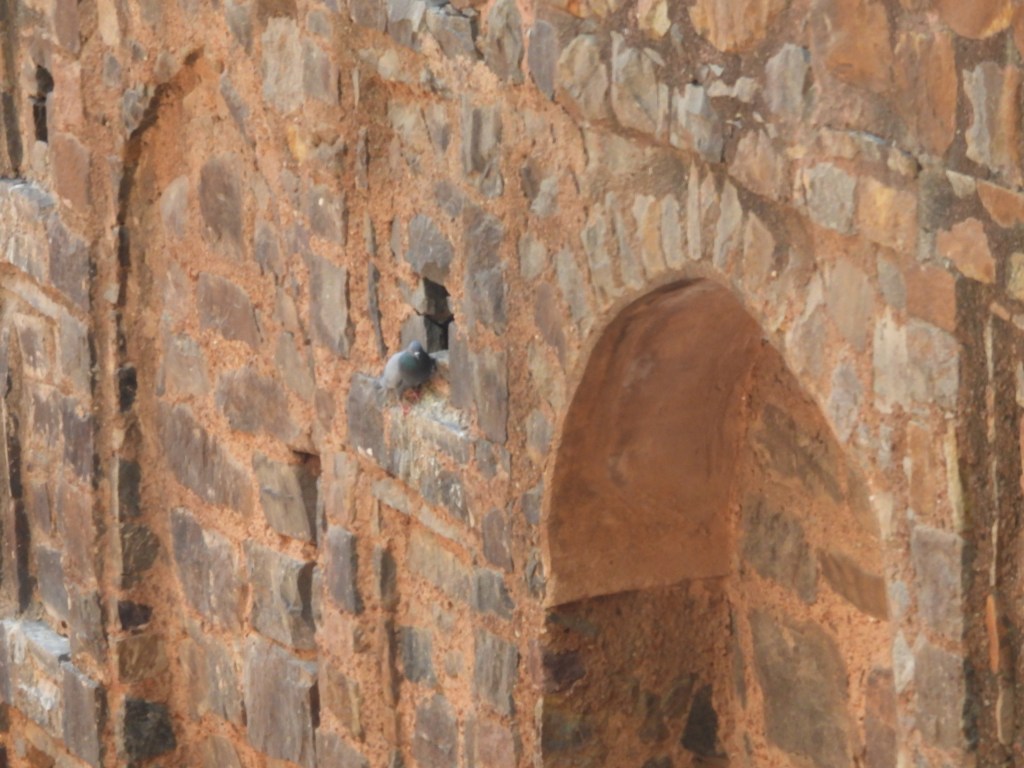
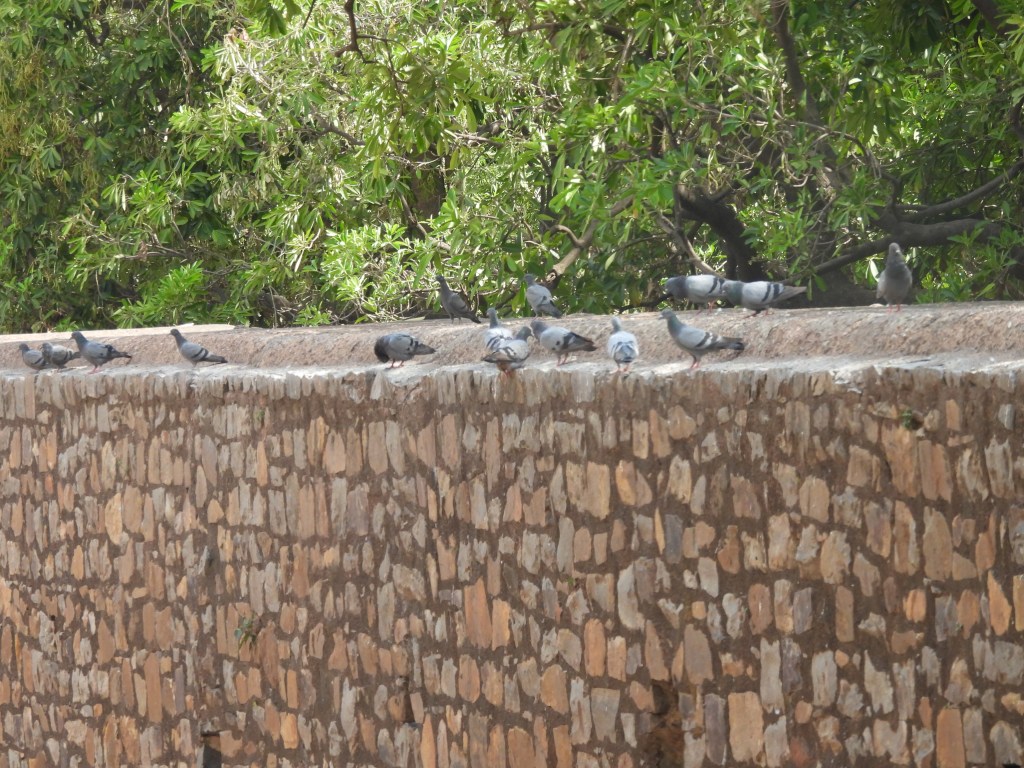
The first place we went was to see an ancient step well near the hotel called Agrasen Ki Baoli. It’s got 103 steps total that lead from the steps to the water it holds, and was built in two different phases. It was believed to be built by King Agrasen, then rebuilt around the 14th C. My guide said it was built in two different parts, about 8 centuries apart. Huge winged birds were flying overhead and landing on the step well walls, some pigeons as well, and it created quite an effect as I looked at this ancient step well, a repository for water in days gone by. The geometric shapes in Indian step wells always amaze me.
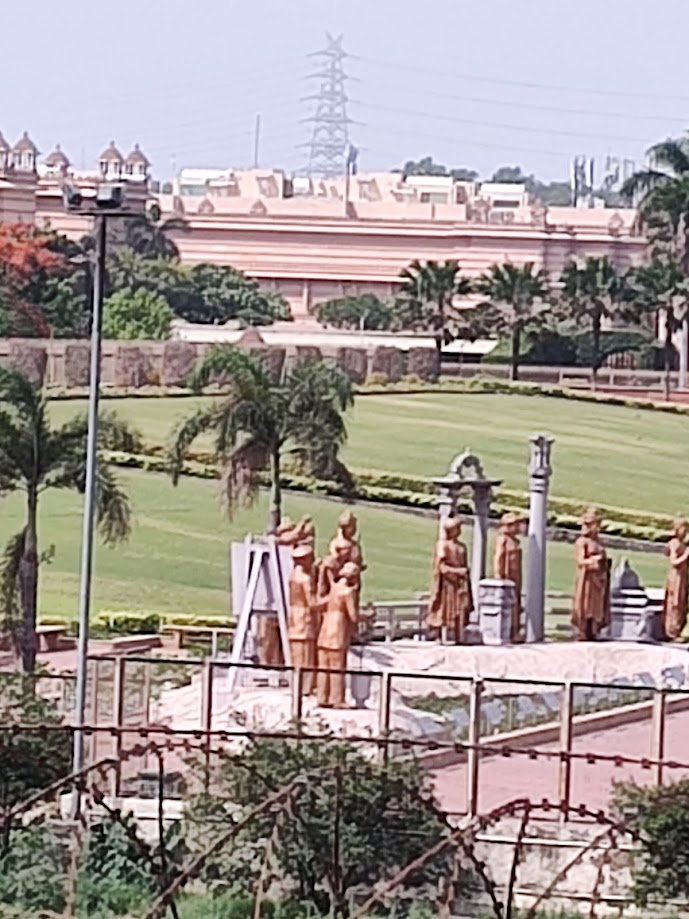 We had a lot of ground to cover based on my interests, so next we went to a relatively new Hindu temple, Aksardam Temple. I honestly think it’s the most beautiful Hindu temple I’ve ever seen. I was blown away. And I had been inside Hindu Temples for seven weeks prior in three Asian countries including other parts of India. The Hindu name is Swaminarayan Akshardham at New Delhi. It is is a Mandir . It translates into an abode of God, a deeply spiritual lace.
 The temple is magnificently beautiful and modern with Hindu deities throughout, was built in 2005 and it took five years to build. We were there in time for the morning service, which was one which filled me with joy, positivity, and rich glowing energy. Cameras weren’t allowed inside the temple grounds, and photos from the street outside don’t even do it justice. The beautiful grounds were well kept up as can be seen by the photo I took through the fence of the people working on them. Once inside the temple grounds, I was struck at how the bottom of the temple was surrounded by sculptures of elephants in various stages of life. I figured that because so many temples and other parts of India were built on the backs of elephants, this was a tribute to them. But the intricate sculptures of all the Hindu deities as we entered the main temple were so beautiful it took my breath away, and I had a lot to compare it to on this trip. Wealthy businessmen paid to have this temple built in a five-year span, and it’s part of a small sect of the Hindu community that also extends to New York. The interior gardens looked beautiful from afar, but we were unable to see them up close because some sort of boat ride wasn’t running for a few hours. But I loved the whole experience inside the temple. Unlike other Hindu temples, after the service the priest doesn’t give a blessing, often signified by a red dot on the forehead.
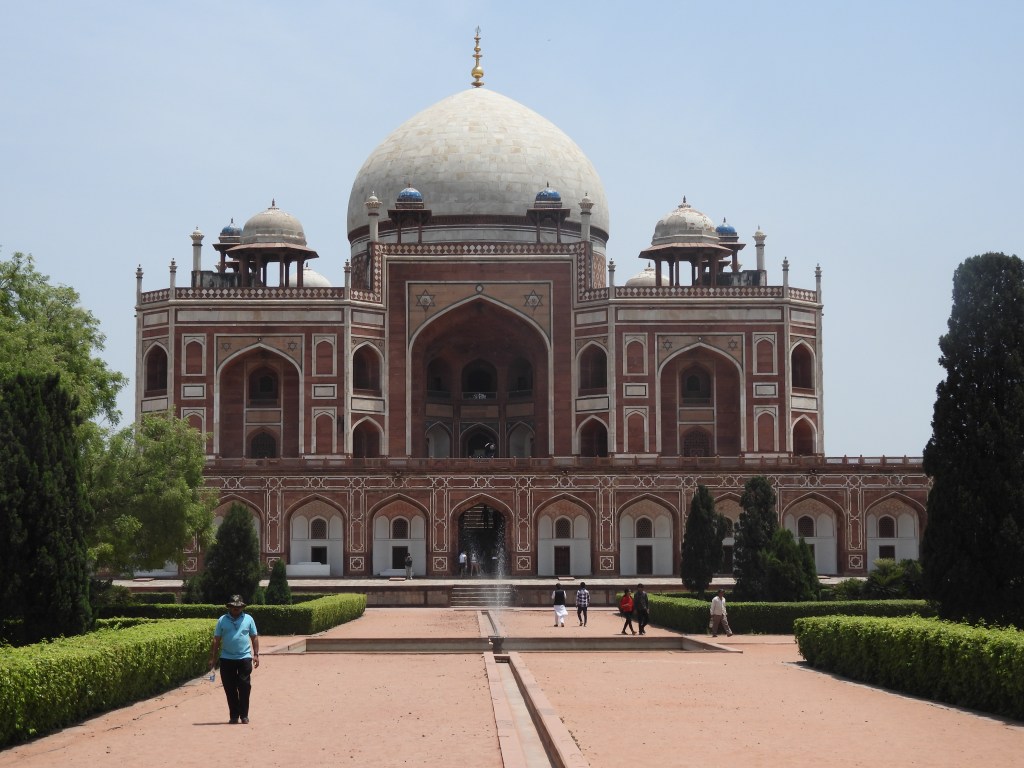
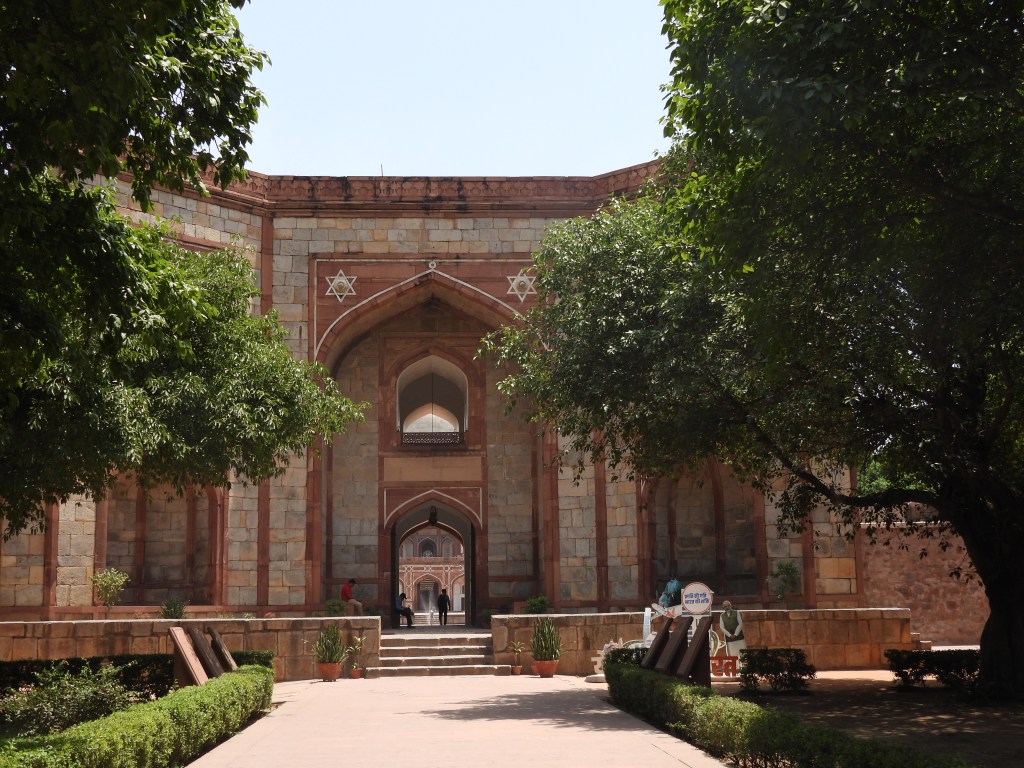
Next was Humayun Tomb, the inspiration for the Taj Mahal. I first learned about this tomb when then Secretary of State Hillary Clinton visited the site while on official business. The Mogul Humayun buried in the tomb died from complications after a fall. His wife had this tomb built in his memory. That dynasty of Moguls in turn went on to build even more memorials based on this modification of Islamic architecture; the Taj Mahal, which we all know is a monument to the love of one Mogul’s wife; a baby Taj in Agra, and a baby Taj I saw on this trip in Aurangabad five hours North of Mumbai. Both baby Taj monuments were built by the children of the man buried in Humayun’s tomb in a tribute to their late parents. This whole family is responsible for some of the great architectural wonders in India. There is a whole complex of tombs in the surrounding gardens, which are a complex of gardens, apparently based on the Islamic Quaran and the concept of going to paradise after death.
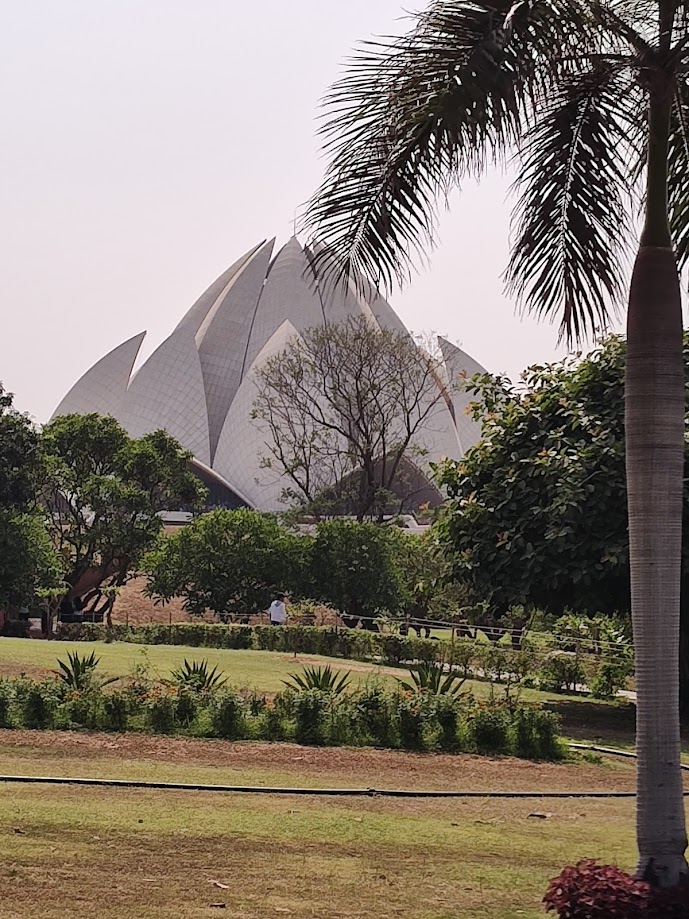 We finished the day off with a quick visit to the Lotus Temple, which is a meditation site for the Bahai faith, an offshoot of Islam. It was over 100 degrees that day, so after over seven hours of sightseeing I was too tired to do one of the recommended museums, the Craft Museum But I did enjoy a brief and silent meditation in the Lotus Temple. The Craft Museum will have to wait for another visit.
 Before leaving for home after going to the Punjab and Himalayan states further North on the post trip, we returned to New Delhi in an early morning flight and had a full day to do what we wanted. The group decided to go to the National Gallery of Modern Art, a beautiful building with modern art exhibits and a beautiful sculpture garden.
If you have two extra days, and enjoy museums, I would suggest going to the museums on a different day from seeing the monuments. Each set of activities can be easily enjoyed with a lunch at a nice restaurant. I ordered a chicken biryani for lunch in New Delhi knowing it would be my last Indian dish after two months of eating Eastern food. I was rewarded by having it served to me in a clay pot, and it set me back for under ten dollars. Others had ordered salads and continental food, but not me – I wanted to savor my final moments on the Indian subcontinent. It was perfection, with only a little bit of spice. They don’t make their food spicy in the North, so I will live with those beautiful memories, and look forward to a spicy return.
 Travel the World with Passion