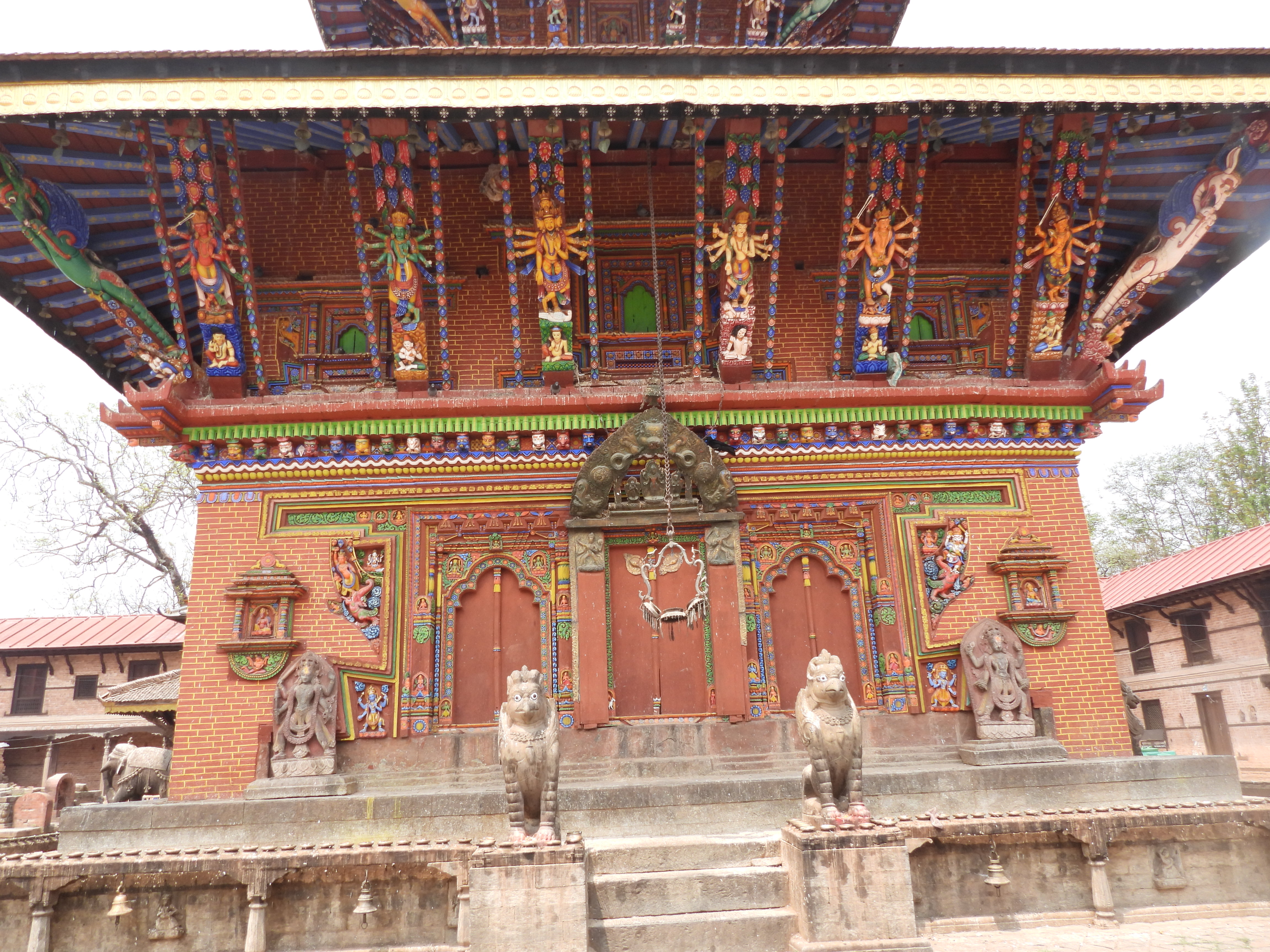
 I recently took the Overseas Adventure Travel trip, Nepal and the Mystical Himalayas, and had the opportunity to spend a full week in Kathmandu. It’s an experience nobody should miss. Anyone planning a trip like this would do themselves a favor by arriving a few days early to see all seven UNESCO world heritage sites and then some. The temples I saw even on the drive from the airport were quite different from any I’d seen in Asia, were thousands of years old, and magnificent. Red is a dominant color in temples there, which symbolizes happiness. They are often trimmed in gold to symbolize wealth. Any visit to these sites with a knowledgeable guide will certainly provide a wealth of information and a great first introduction to the country.
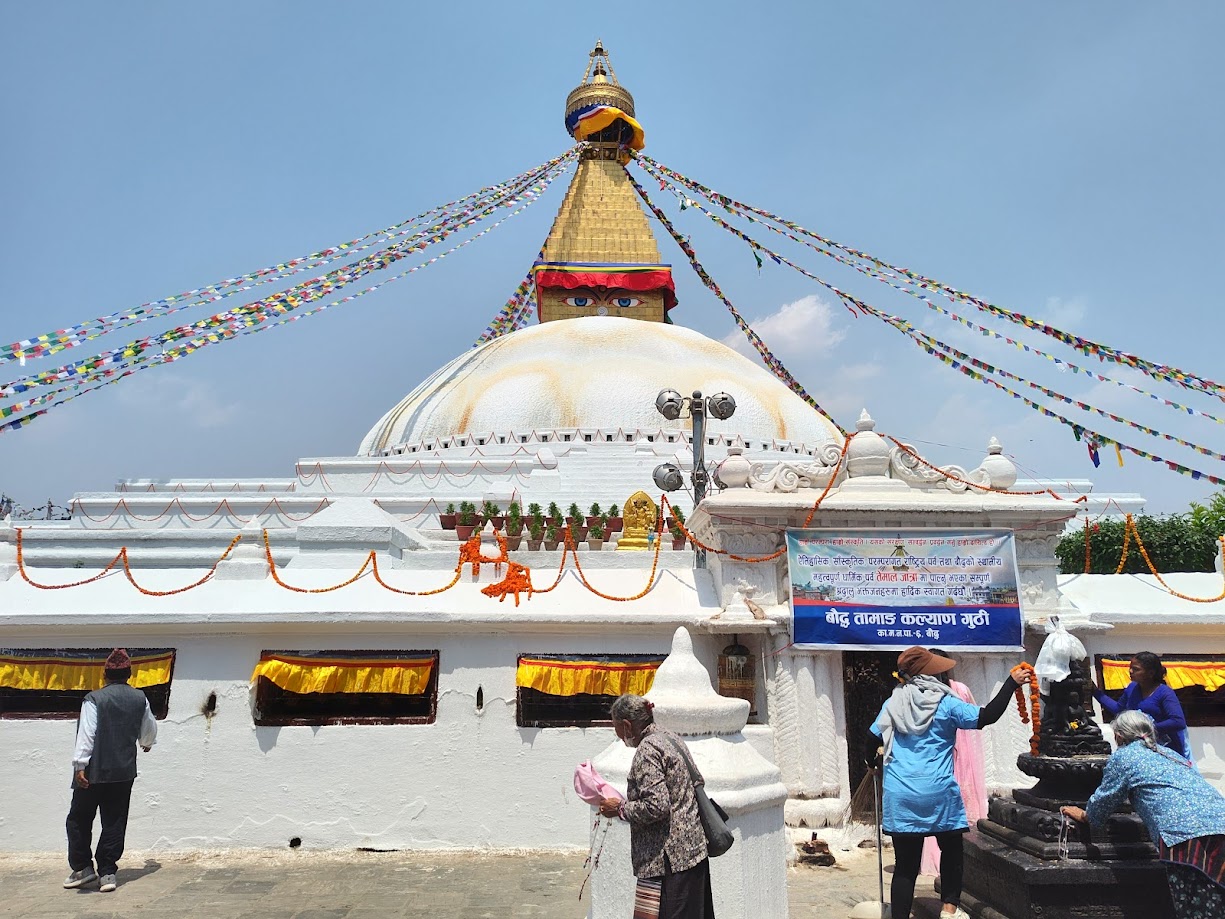 OAT goes to three of three UNESCO sites – Patan Dubar Square, the Bouddhanath Stupa, and Pashupatinath Temple. The latter temple we were not allowed to enter as non-Hindus but stood across the Bagmati River and watched the cremations take place. The cremation ghat is a tributary of the Ganges. Cremations take place 24 hours a day there, and our trip leader explained the various stages of the process as we stood across the river and watched it.
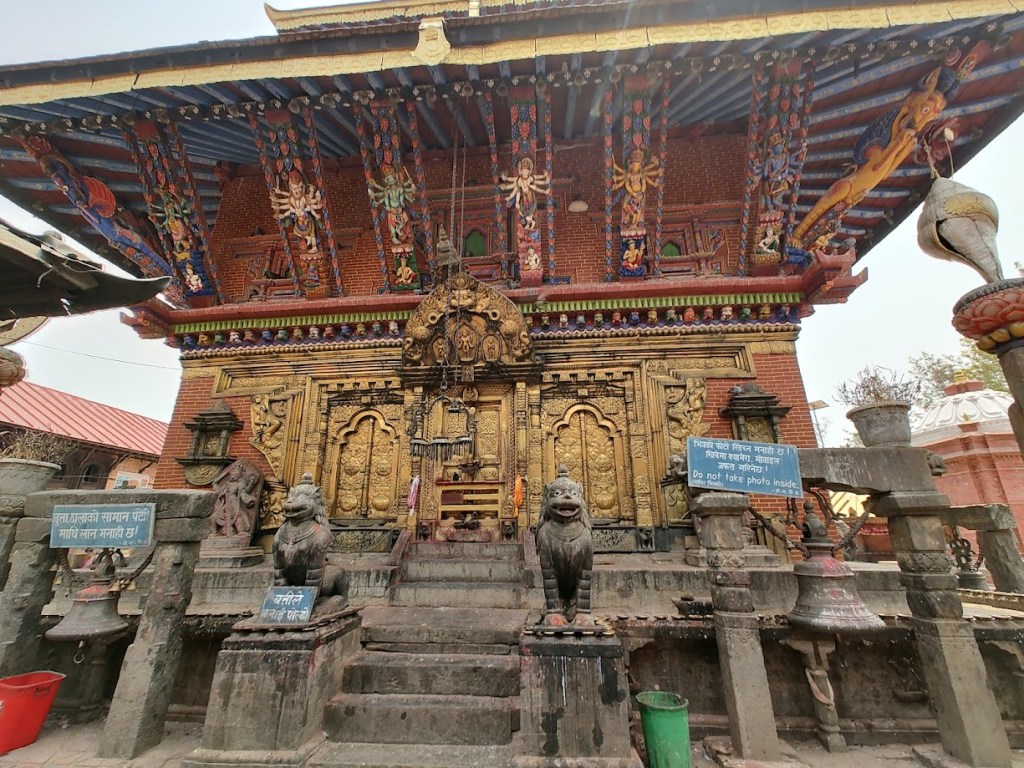
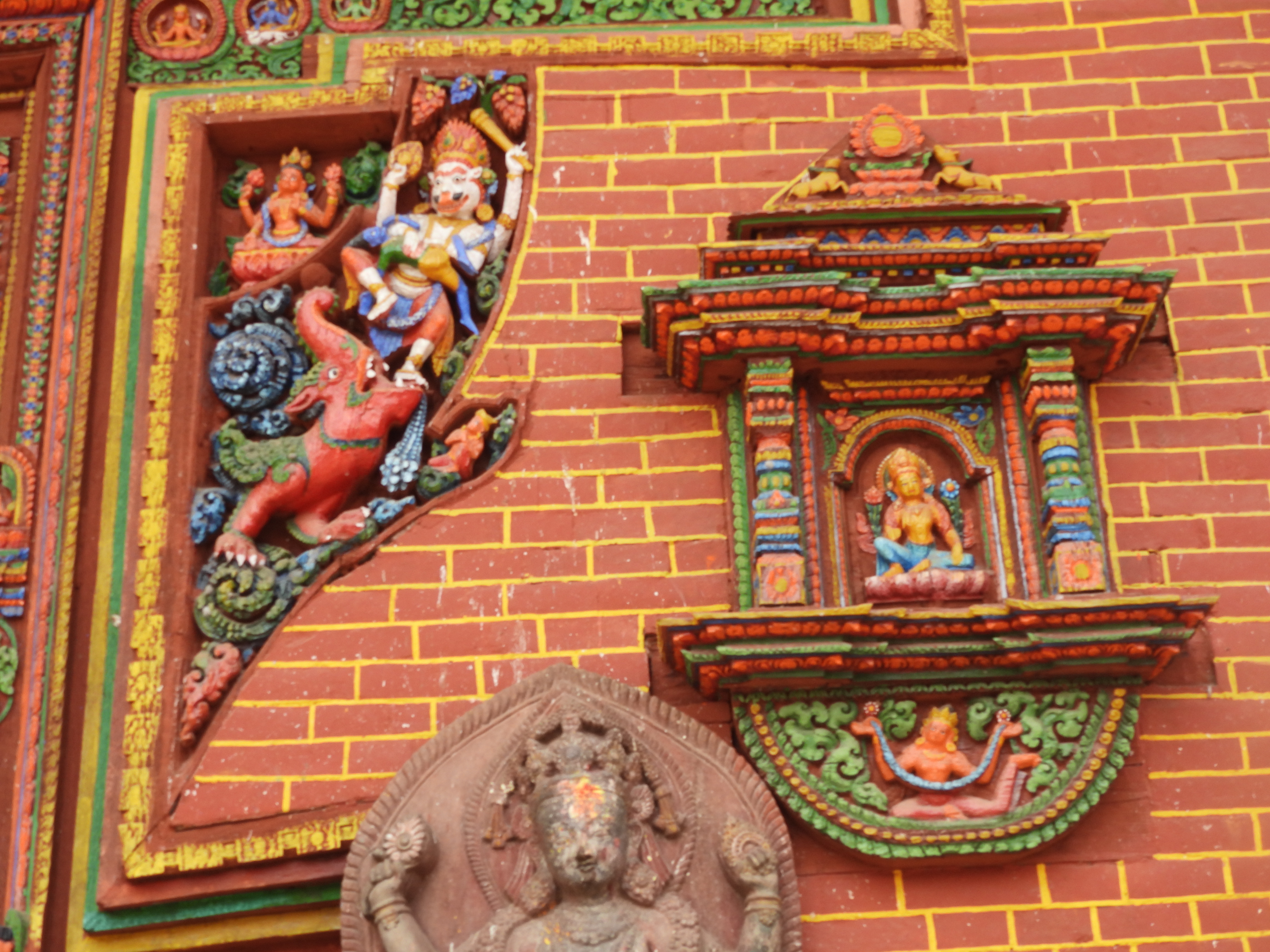 The first site I visited independently was Changunarayan, about twenty miles east of Kathmandu, and it’s considered the most ancient pilgrimage site in the Kathmandu Valley. The main temple is so sacred we were not allowed inside, but I was blessed by the monk as pigeons flew inside the temple. They are considered a bird of peace and good luck. A goat looked on, chosen by the community not to be sacrificed, so the creature will live out his days in the area by the temple.
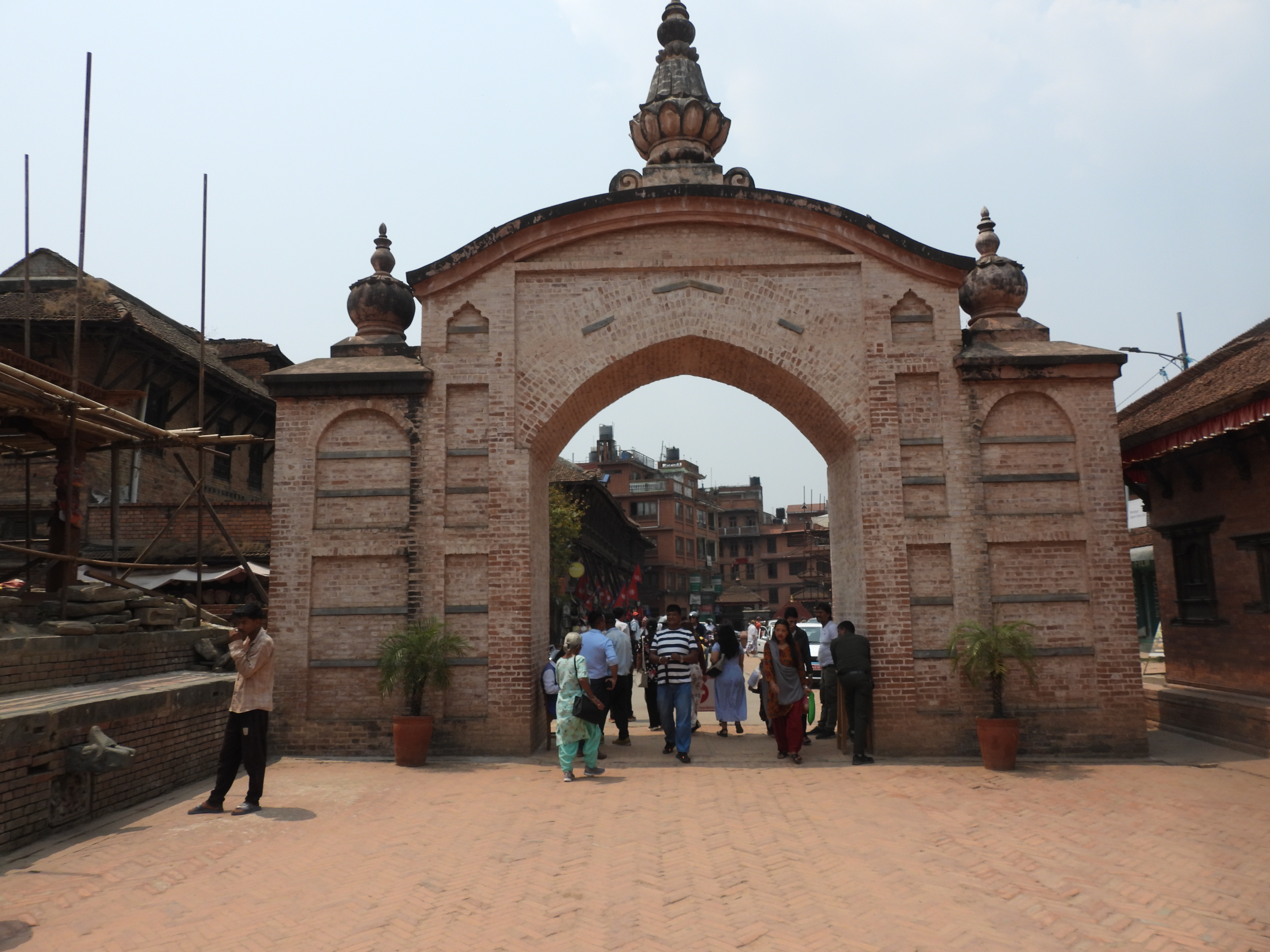 Kathmandu Valley is in a constant state of construction after the 2015 earthquake. We passed by some new homes and roads being built, and of course saw the devastating effects of the earthquake in the next UNESCO World Heritage site Bhaktapur, seeing the activities of rural living along the way. The Old city of Bhaktapur dates to the early 8th century. There are four squares in this complex with 154 temples in total, and several ponds. Over 90,000 people live there. The main square is Durbar Square, and I was overcome by all the damage still showing and the construction still going on. Many other temples had already been repaired, in what I understood was a worldwide relief and restoration effort. The other squares worth visiting are Pottery Square, Taumadhi Square, and Dattatraya Square.
Hindu new year celebrations were still ongoing when I was there, for the year 2081. Everyone was dressed in festival attire, many wearing red saris everywhere. One of the best moments of the day was watching a family celebrate their child’s six-month birthday, and photographers were hired to take photos of the family. That baby was so miserable it was funny to watch. The family appreciated tourists taking photos as well, and I finally went up to the baby and tickled her which made her smile. It was a precious local experience, and the family seemed to laugh as well.
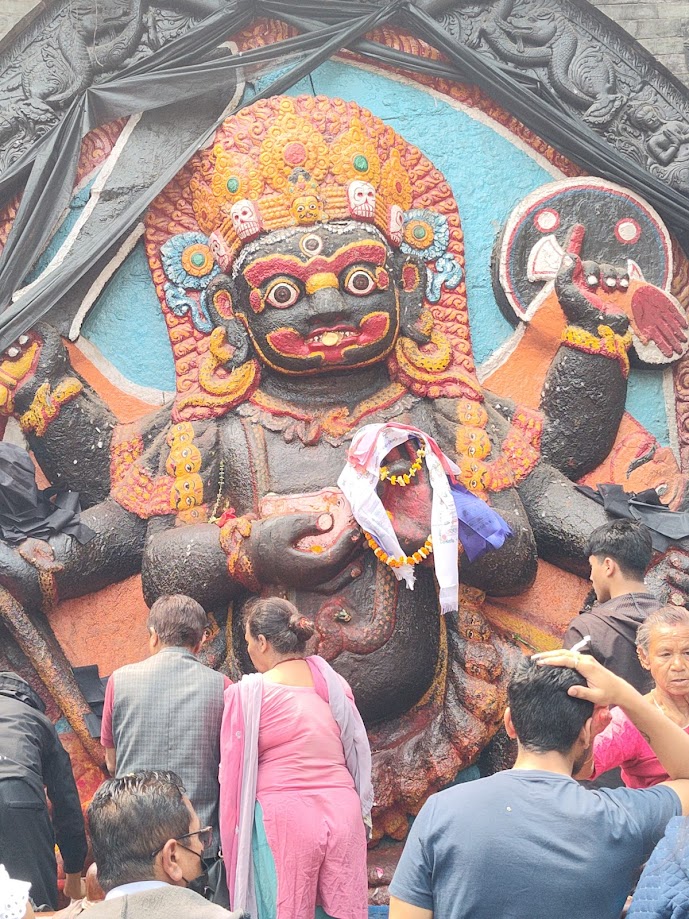
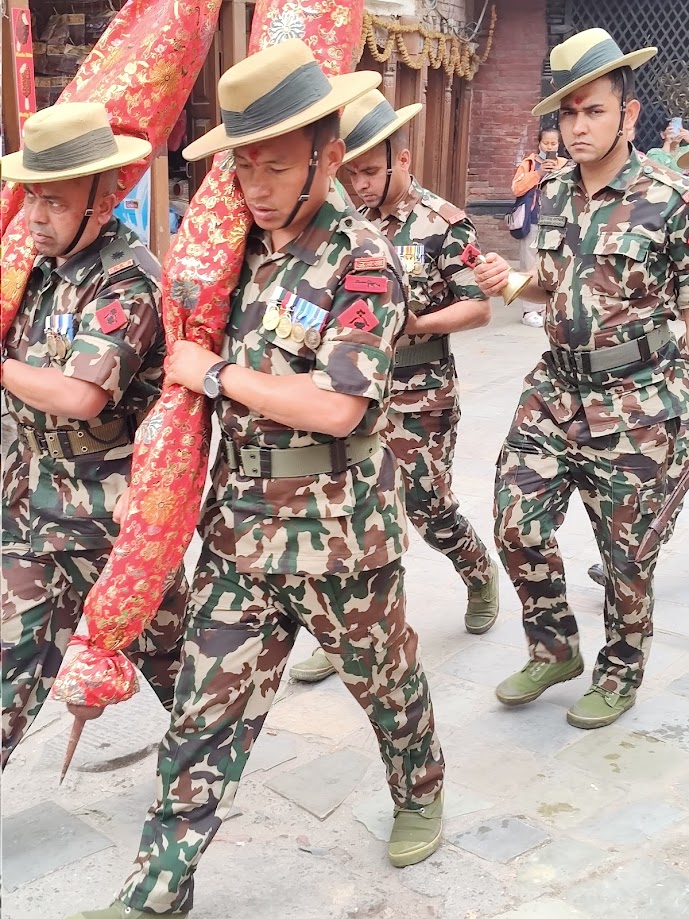
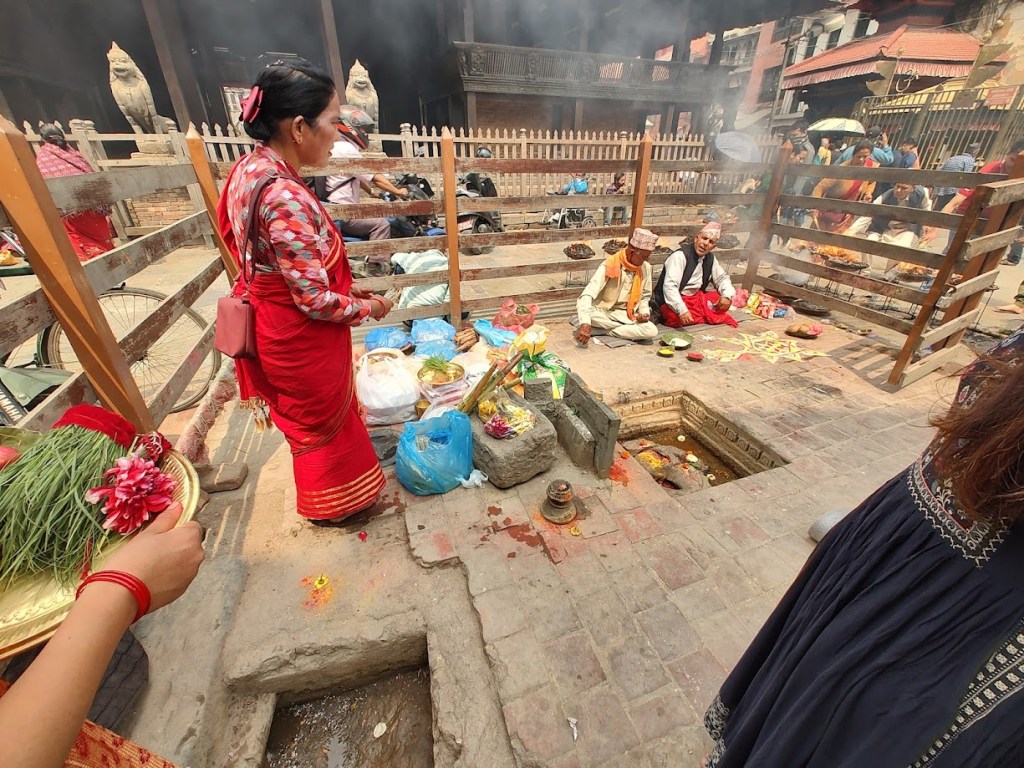

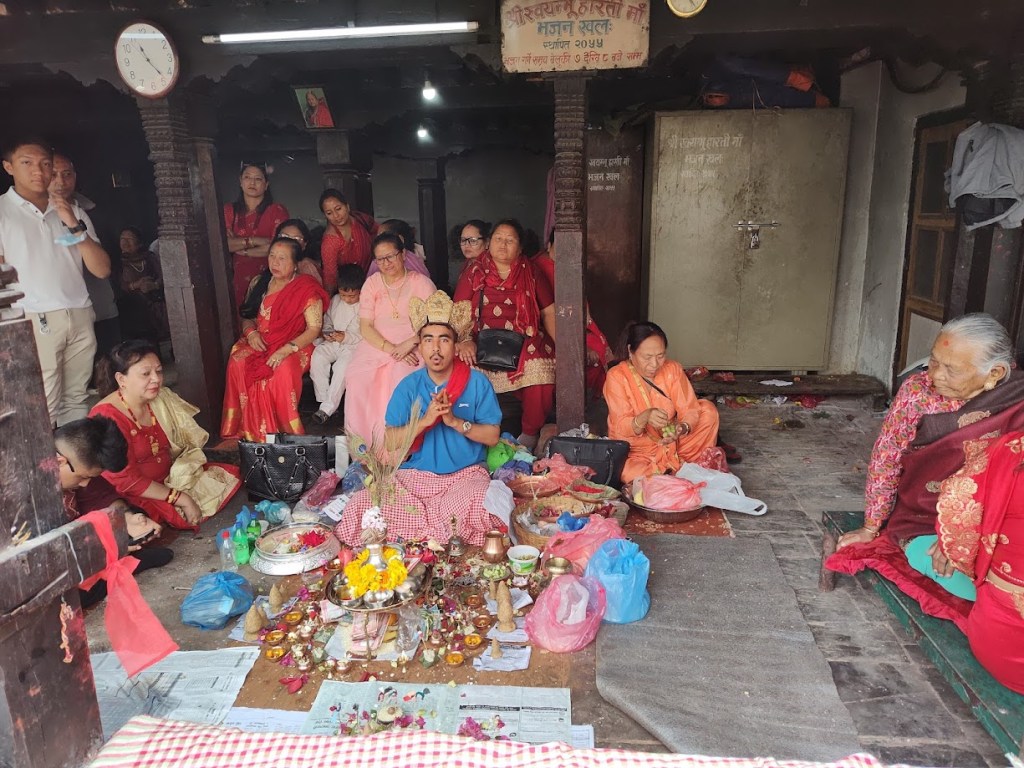
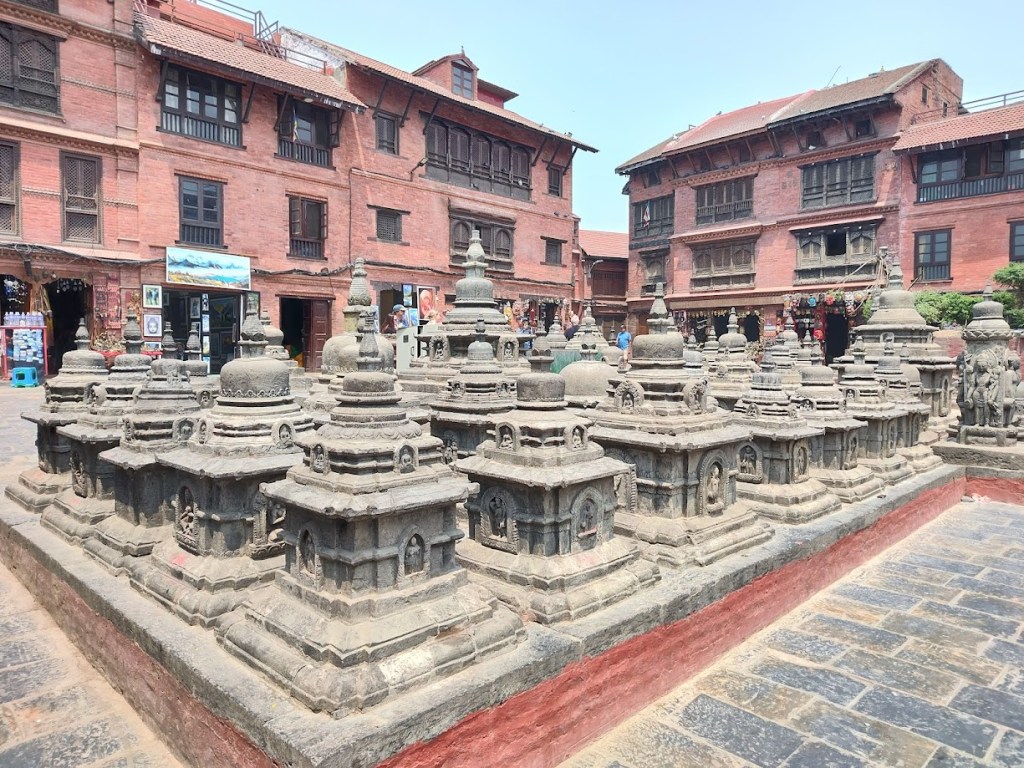
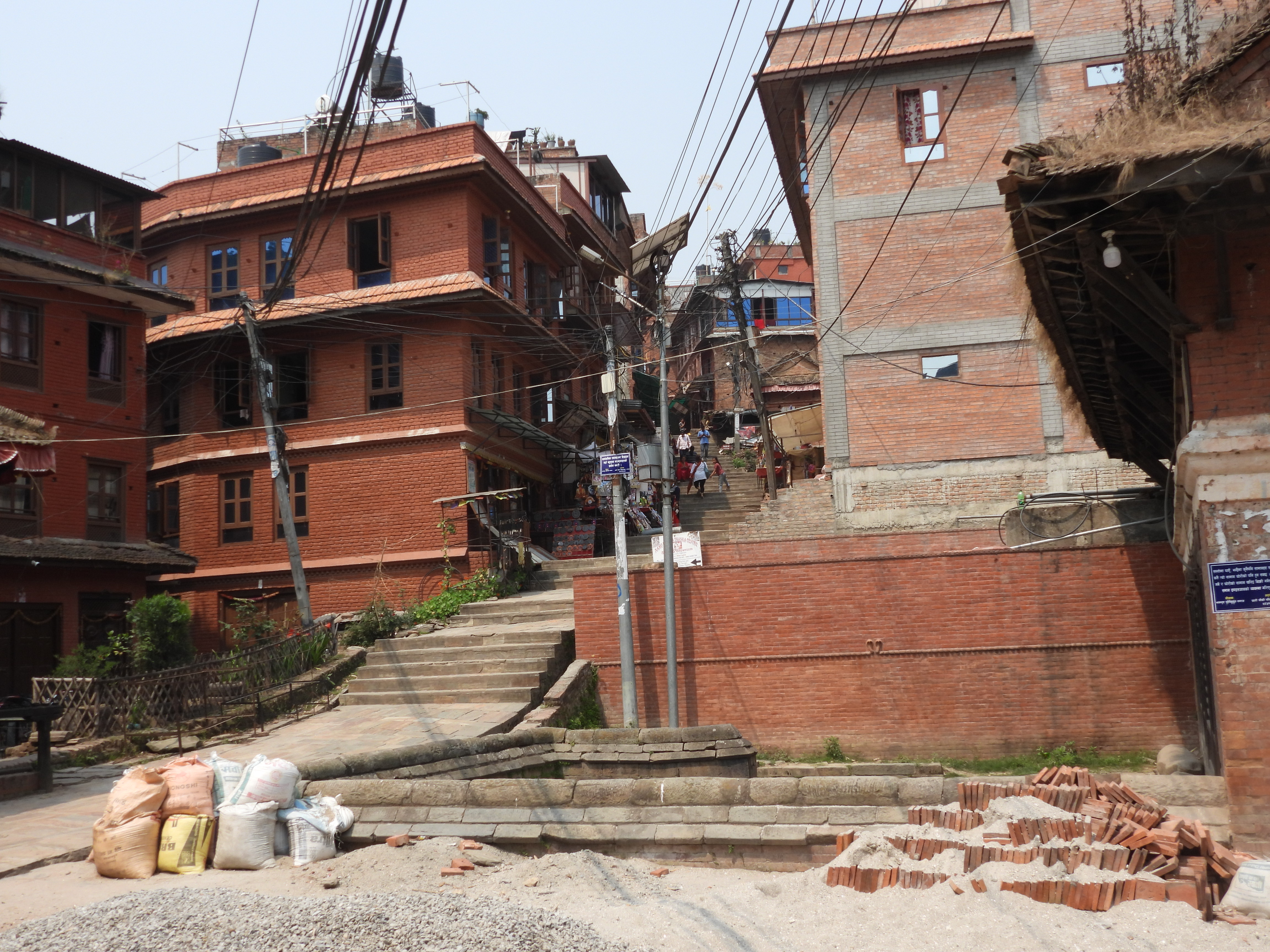 I could have spent all day in Bhaktapur, and in some temples explored in greater depth. My local guide said it takes three days to see it all. But despite the damage I saw, the temples were beautiful. One was terra cotta, one had models posing on the outside in bright red saris. They were all different yet worked in harmony together, much as the Hindu and Buddhist religions do. One interesting fact I learned is that one sect of Buddhism believes that after you are reincarnated eight times, on the ninth reincarnation you become Buddha.
The following day my visit to two more UNESCO world heritage sites was more incredible yet because the Hindu and Buddhist new year celebrations were continuing, and so much of that was on display in the mornings when I was there. My OAT trip leader was available to be my guide that morning, and he made it special.
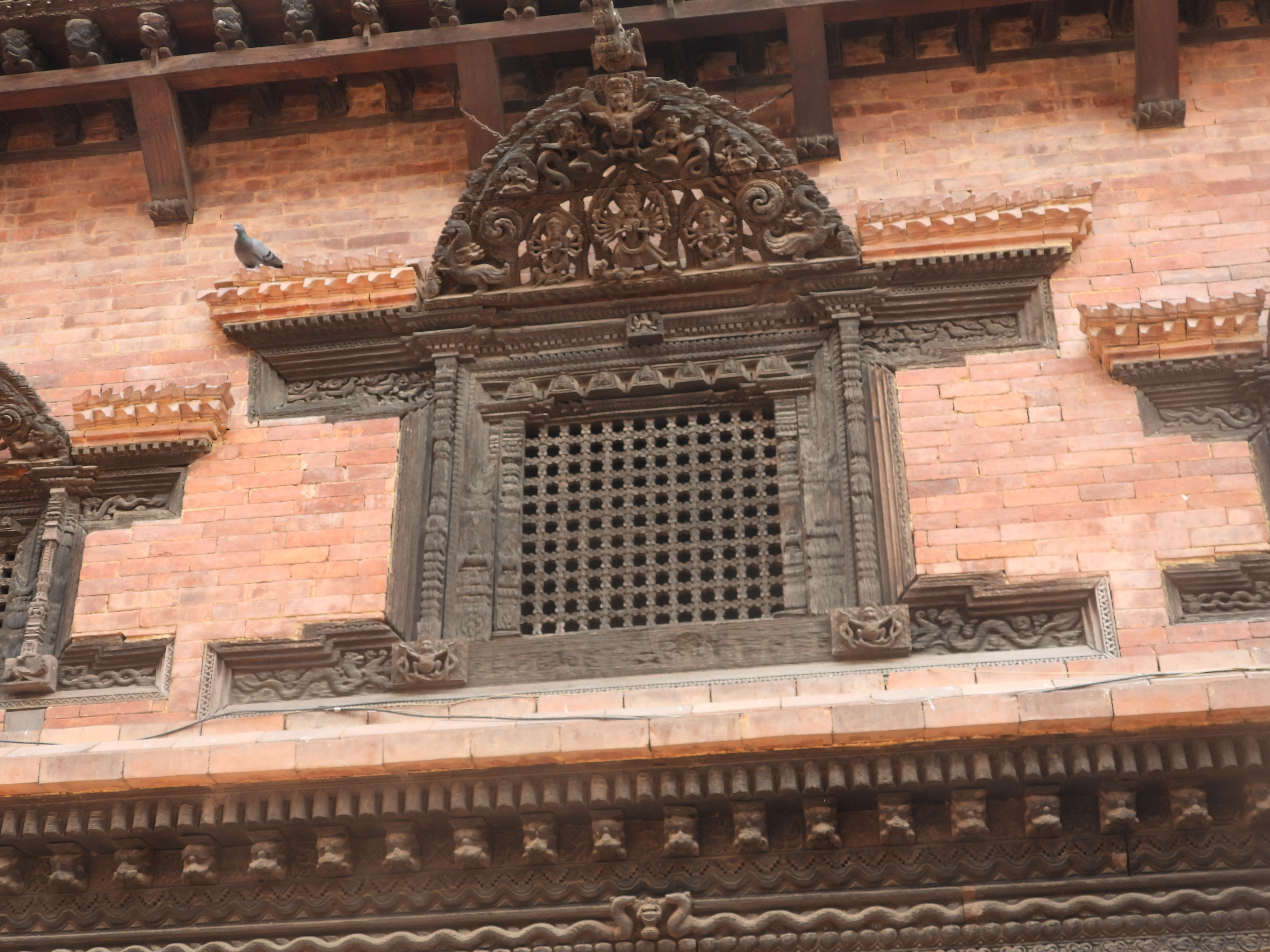 First, we went to Dubar Square. There are four by that name in Kathmandu, one I saw previously in the old city outside of Kathmandu that had suffered so much earthquake damage. The Dubar Square I saw this time was right in Kathmandu. Back in the 60s and 70s Kathmandu was popularly mentioned in several songs because there was a thriving drug culture there, right in Dubar Square. The drug culture has gone, but apparently one can still buy a hash pipe on that street and other paraphernalia. I was more interested in the temples and all the rituals that were going on around me, which completely consumed my interest. The first temple I examined closely was huge, and apparently made from a single piece of wood. The wood window carvings were a piece of art unto themselves. I was completely in my travel element as parades walked by, people stopped in various shrines and temples for blessings, gave offerings, lit candles, drew colorful painted signs of celebration on the ground as I have seen in other Hindu celebrations, and so much more. There were over 50 temples in this Dubar Square. I learned that all five senses are recognized in Hinduism, and we saw that at one shrine where my guide explained all that to me as so many candles were being lit everywhere. We even saw a Hindu carving also made of a single piece of wood.
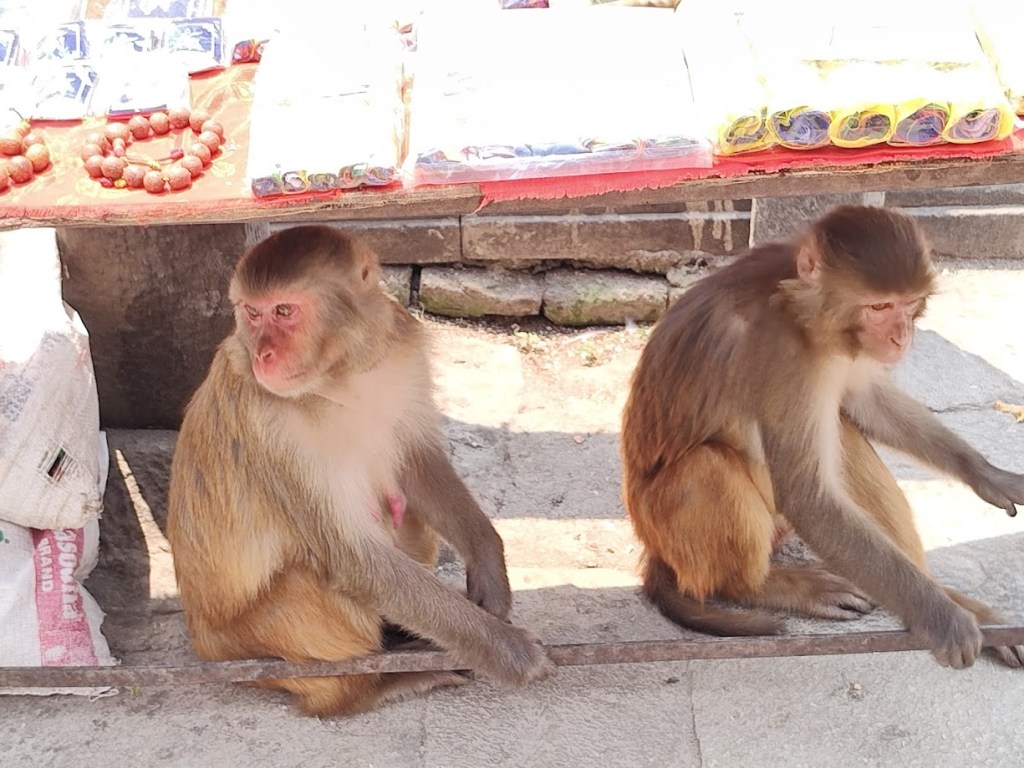
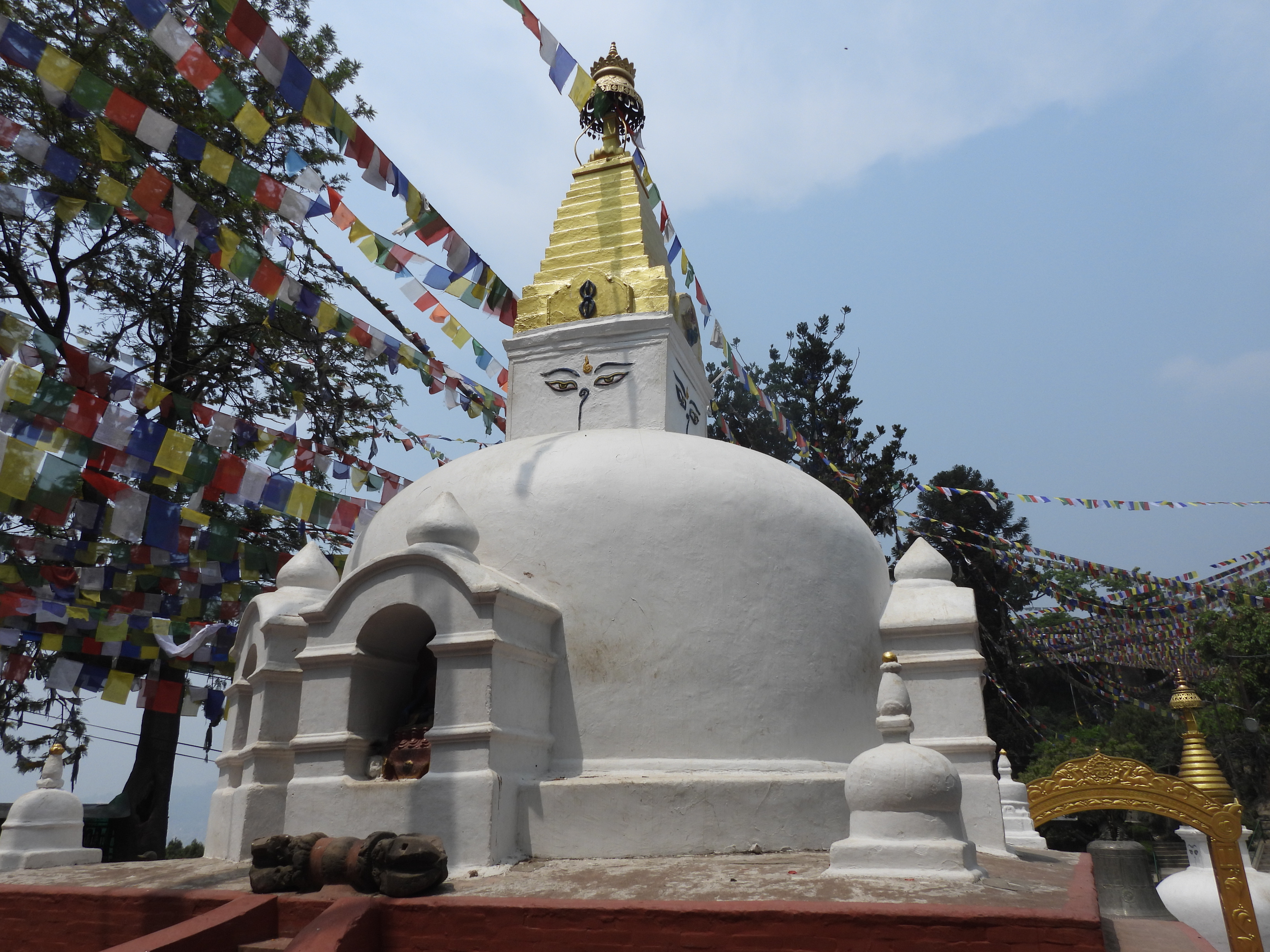 After that we went to the Monkey temple, which is Buddhist, but I saw signs of both Buddhism and Hinduism at both sites. And yes, there were monkeys everywhere! Many monkeys! Just as Hinduism recognizes all five senses, Buddhism and the five colors of the prayer flags represent the five elements of the earth. There are eyes looking at you everywhere, sometimes one eye, sometimes two. This is probably some version of being against the evil eye, or some form of protection.
 One recommendation I’ve had from several sources was to go to the tourist hub called Thamel. The Thamel area goes on for blocks with stores, travel agencies, and restaurants. While walking I took out my phone at one white Stupa and used Maps.me to get to the Kathmandu Guest House, recommended by a cousin. It’ was fantastic. In the middle of all that chaos is a quiet hotel with three art galleries, close to an area called the Garden of Dreams, but with its own beautiful garden, a lovely outdoor restaurant, and more. There was an art biennale called the 2024 Spiritual Edition. The nearby Garden of Dreams was peaceful and tranquil, it’s open from 9 until 9, and seniors get in for half price (I was even asked for ID). It has six pavilions, a restaurant, tranquil gardens everywhere, and was built by an English general in the 1920s . It’s privately run now.
After that I went to the Palace Museum, the former residence of the former King and his family who were assassinated on the palace grounds in 2001. None survived, and I believe they named the airport after his father. I had never heard of this palace massacre, but security was tight all over and even cell phones weren’t allowed inside. It was much like a White House tour, with the China room, private offices, dining rooms for various dignitaries, and the beautiful gardens where the bullet holes have been preserved in honor of those who died. There was plenty of art inside as well, and of course beautiful sculptures and other art of Hindu deities lined many shelves as I walked by. A Hindu prayer was playing over the loudspeaker as I entered and exited the grounds, which added to my sense of awe and the overall ambience.
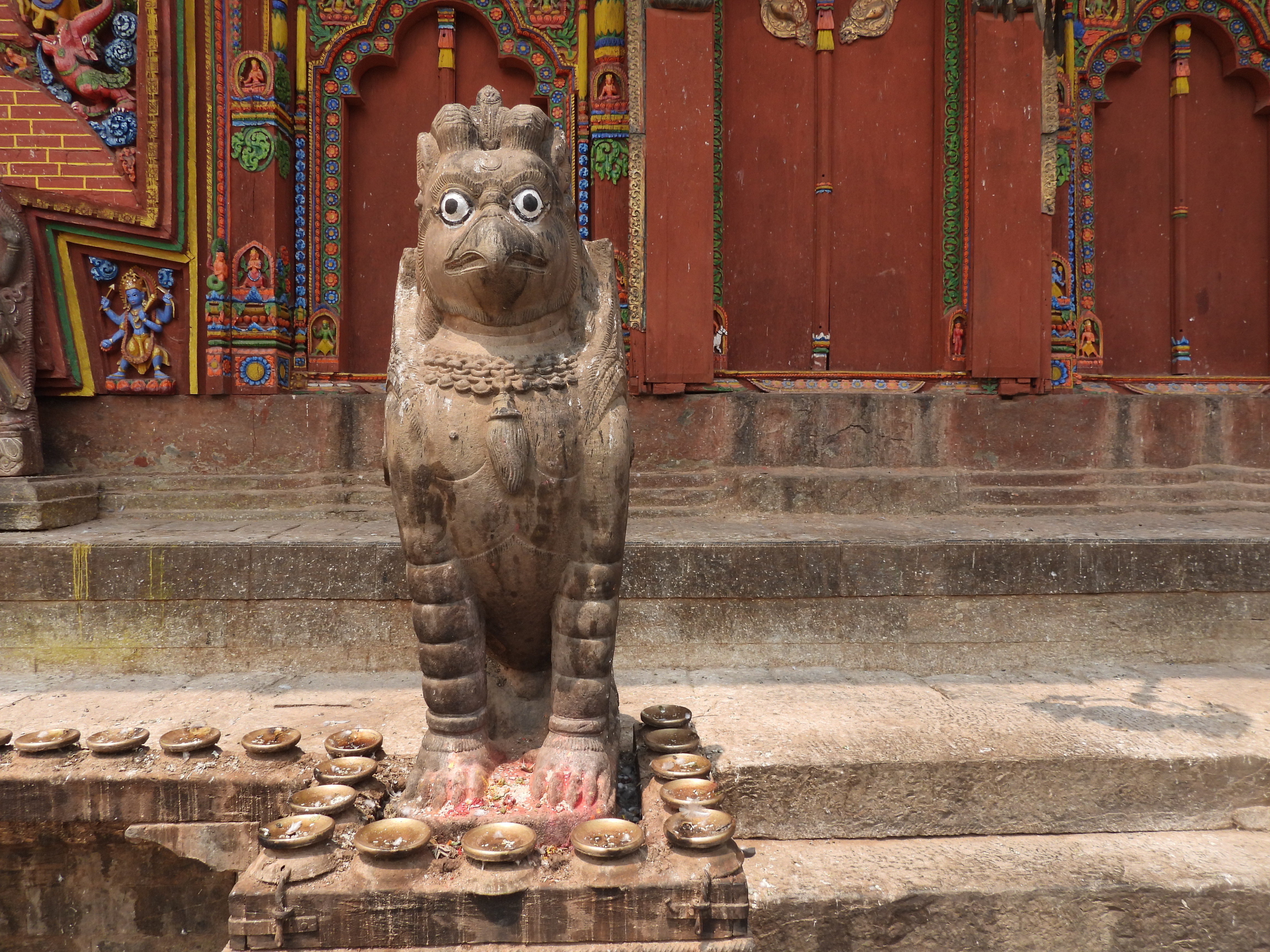 Many people also recommend the National Museum in Kathmandu. I was on a two-month trip and had been to two other National Museums, one in Mumbai, India, and one in Colombo, Sri Lanka. For me, the National Palace Museum was a perfect way to learn more about the country’s history after having already seen the antiquities of the seven world heritage sites there. If you have extra time to add to a trip to Nepal, I highly recommend spending serious time in Kathmandu. You won’t be disappointed. Namaste!

 Travel the World with Passion