 Pianist Herbie Hancock once said that music is an art form that transcends language. As a former guitarist for over a decade I learned this on my first trip to Europe as a teenager one August, when I picked up my guitar and sang for over a hundred fellow students under skies that were aglow with falling stars in France’s Loire Valley. The students who could not speak English could certainly sing it.
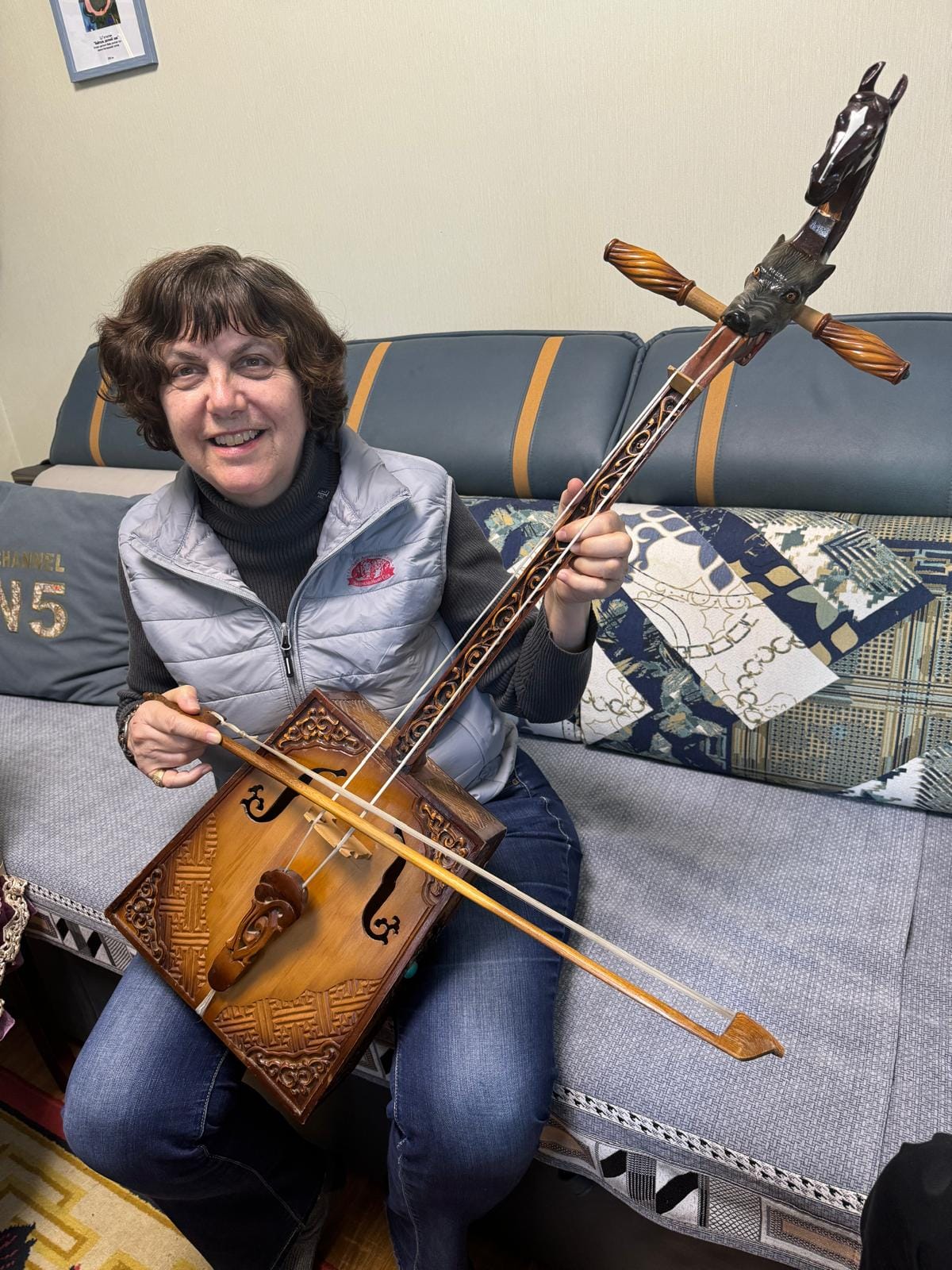 Everywhere I have traveled, from Tuscany, where I visited Pavarotti s house, to Zanzibar, where I stopped by Freddie Mercury’s childhood home, and many points in between, music has enhanced all my travels. So, it was once again in Mongolia, on the Overseas Adventure Travel Trip Mongolia and the Gobi Desert, where I learned about the unique two stringed instrument, the horse head fiddle. I was even fortunate enough to pick one up and see how it played at a home hosted dinner, where our host was a music teacher.
 This instrument, also called the morin khuur in Mongolian, is considered the national symbol of the country. This traditional bowed stringed instrument has only two strings and no frets, which is unlike most stringed instruments. Yet it is part of the country s intangible cultural heritage according to UNESCO. In Mongolian, the name means “horse fiddle.” The strings are made from the hair of a horse’s tail, or sometimes nylon.
 The larger of the two strings, the “male “ string, is made of 130 pieces of horse hair, while the “female” string only 100. The frame is covered with camel, goat, or sheep skin. All the animal’s parts used in the instruments production are routinely found in Mongolia.
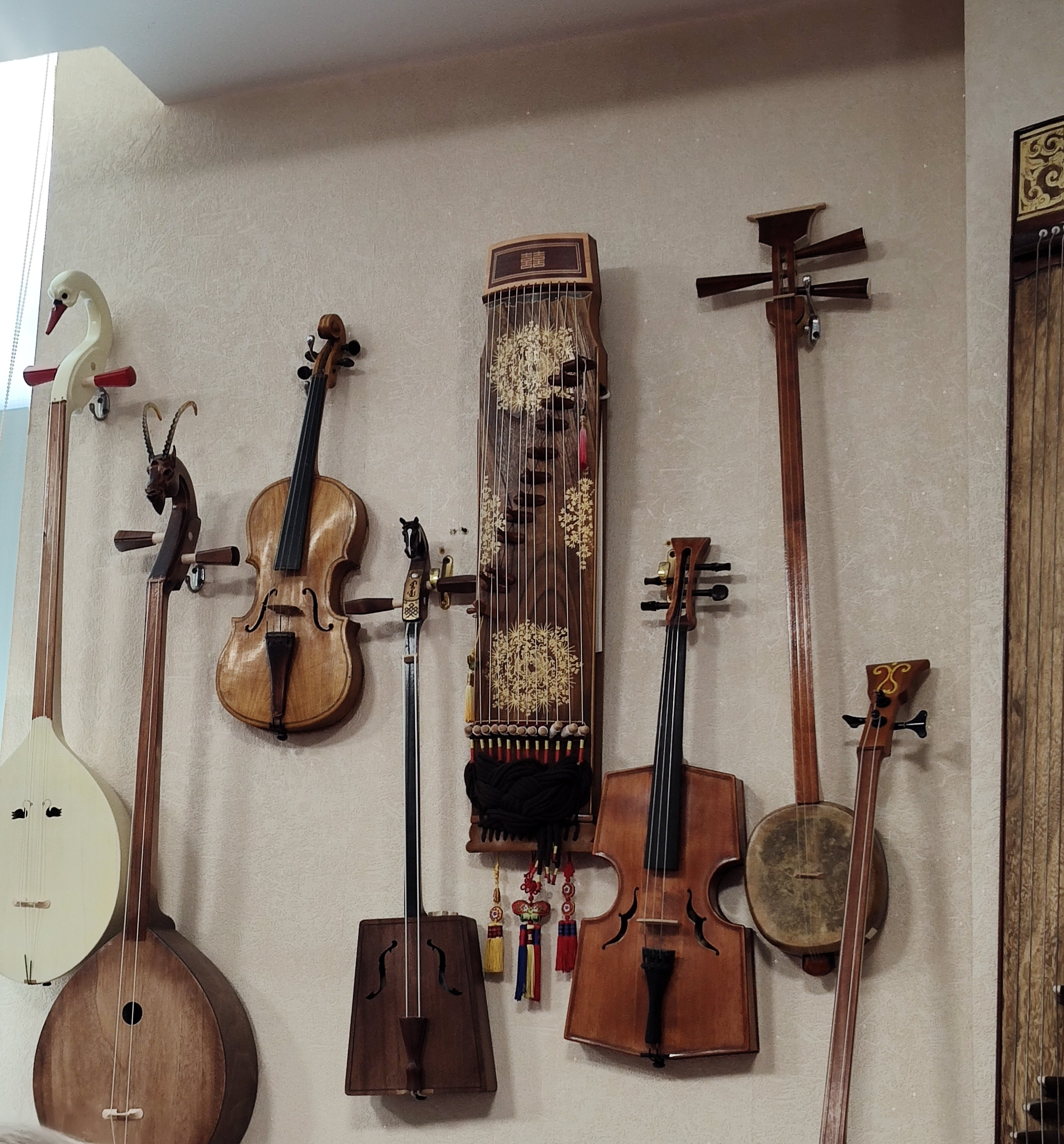
 Part of the trip’s program includes a visit to a small shop where they make their unique horse head fiddle in Ulaanbaatar. We saw it being handcrafted in various stages of production and were treated to a live performance after by a local musician. What intrigued me was that we saw more than just their traditional instrument there; we saw regular fiddles, drums, and all manner of other instruments, likely in for repair. Mixed in with the horse head fiddles were the employees’ signs of modern life, like purses hanging with the fiddles, soda cans, and everything else to indicate that the traditional and modern were definitely part of life in Mongolia.
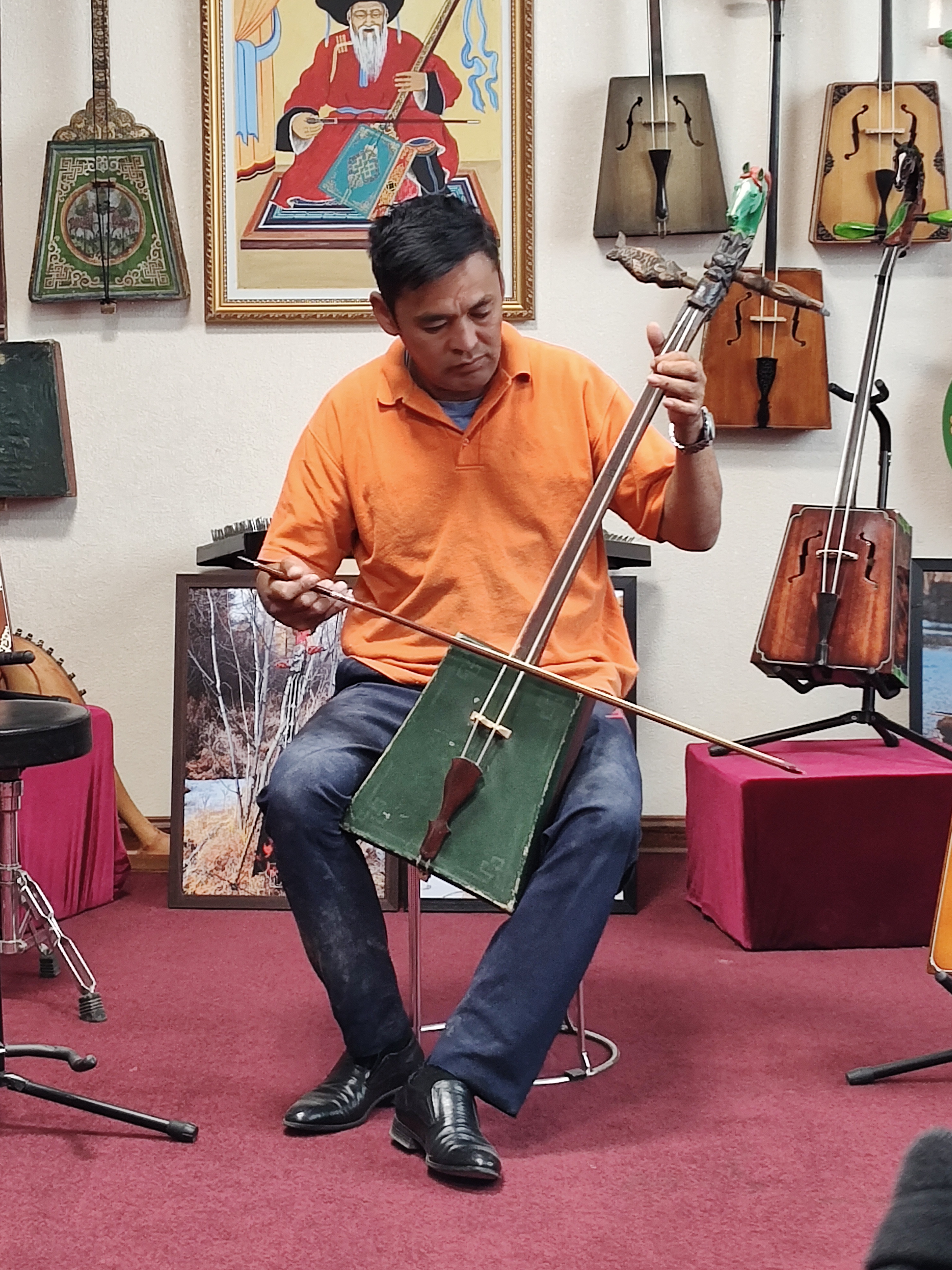 We saw a professional musical production by a local troupe of artists as part of the trip as well, and that included a performance of the horse head fiddle as well as the traditional throat singing. I later learned at the home hosted dinner that night where the host was himself a musician and music teacher, that finger placement is actually in between the two strings for a deeper and richer sound. The more intricately designed instruments have designs along the front of the neck, so those can be used as frets. After dinner I got to hold the instrument and bow and see how it played. Part of how the sounds are made comes from the fingers placed underneath the strings rather than on top of them, and it didn’t appear to matter where along the neck of the fiddle my fingers were in terms of the notes.
Like any other musical instrument, beginner grade fiddles are made of a lower quality of materials the performance grade fiddles. However, after hearing Kazakh children play the instrument at one ger camp, I was impressed with how well they did (not realizing it was only two strings at the time). The professional performers were completely different. Either way, seeing these instruments performed by those who revere them is an experience. The universal language of music is of course always there for us to appreciate. And it makes our world and our experiences as travelers much richer.
All Photos Jann Segal
 Travel the World with Passion