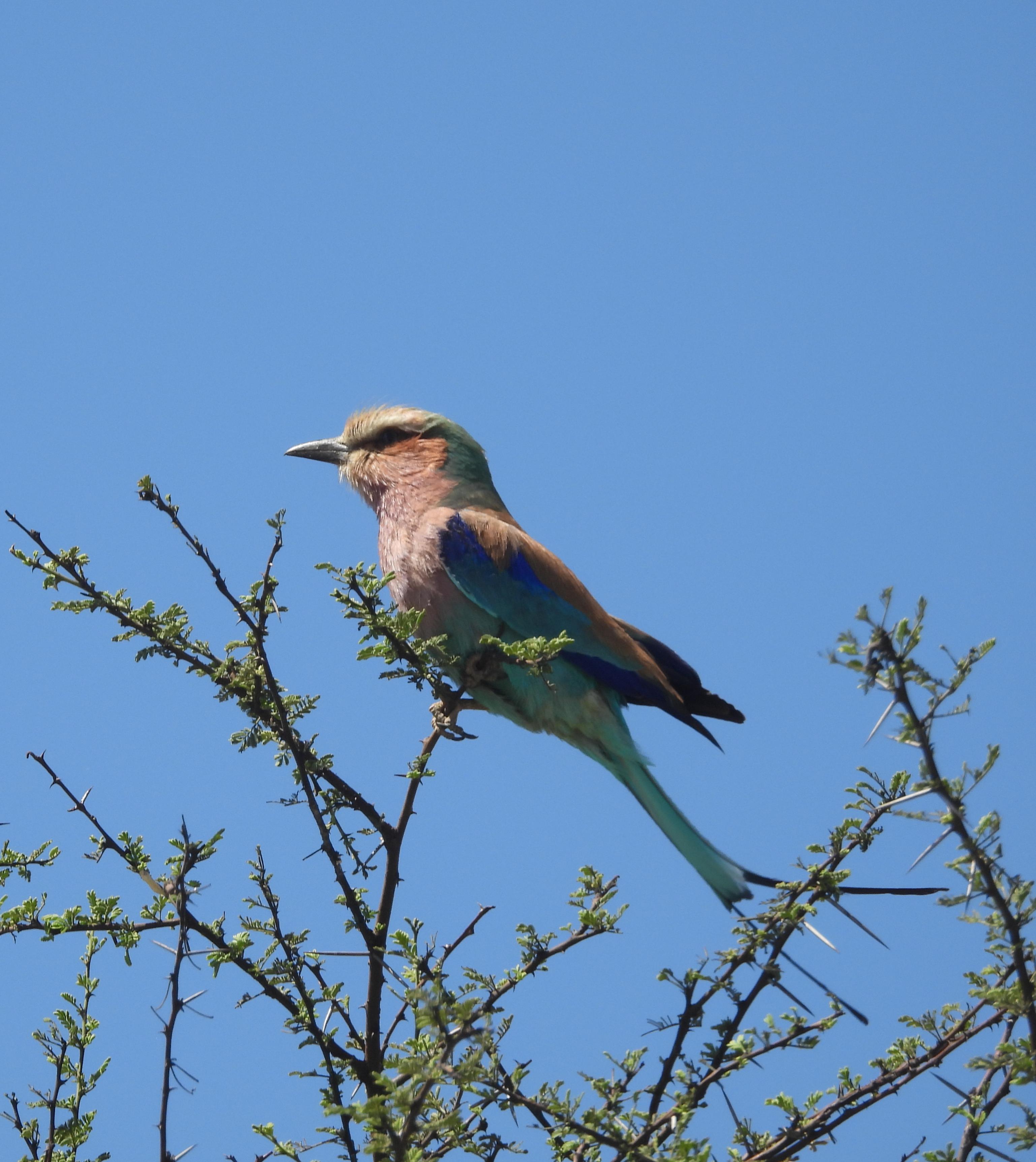
 “You can see a sunset and believe you have witnessed the Hand of God. You watch the slow lope of a lioness and forget to breathe. You marvel at the tripod of a giraffe bent to water. In Africa, there are iridescent blues on the wings of birds that you do not see anywhere else in nature. In Africa, in the midday heat, you can see blisters in the atmosphere. When you are in Africa, you feel primordial, rocked in the cradle of the world.”
This quote by American author Jodi Picoult is exactly what I experience every time I go to Africa on Safari. My latest five-week trip included safaris in Etosha Park in Namibia, Pilanesberg National Park in South Africa, and the marvelous two-week Ultimate Africa trip with Overseas Adventure Travel. The OAT trip explores in depth the parks and wildlife in Zimbabwe, Zambia, and Botswana, including Hwange in Zimbabwe, Chobe in Botswana, and the Okavango Delta.
 The OAT trip was truly breathtaking from the outset, as we passed a pride of lions entering Hwange to get to our tented camp outside the park, about 6 hours from Victoria Falls. We first saw them at night, which was magnificent. They had the same behavior at night as we subsequently witnessed during the day, but it was probably because they had eaten and were on full stomachs. We learned that they don’t necessarily have to eat daily and can sometimes wait to eat every third day or so. They can also make a kill then take their prey into a hole to eat later if they have a good opportunity for a kill but aren’t ready to eat yet. I actually had observed this behavior once in the Serengeti but wasn’t aware what it was about.
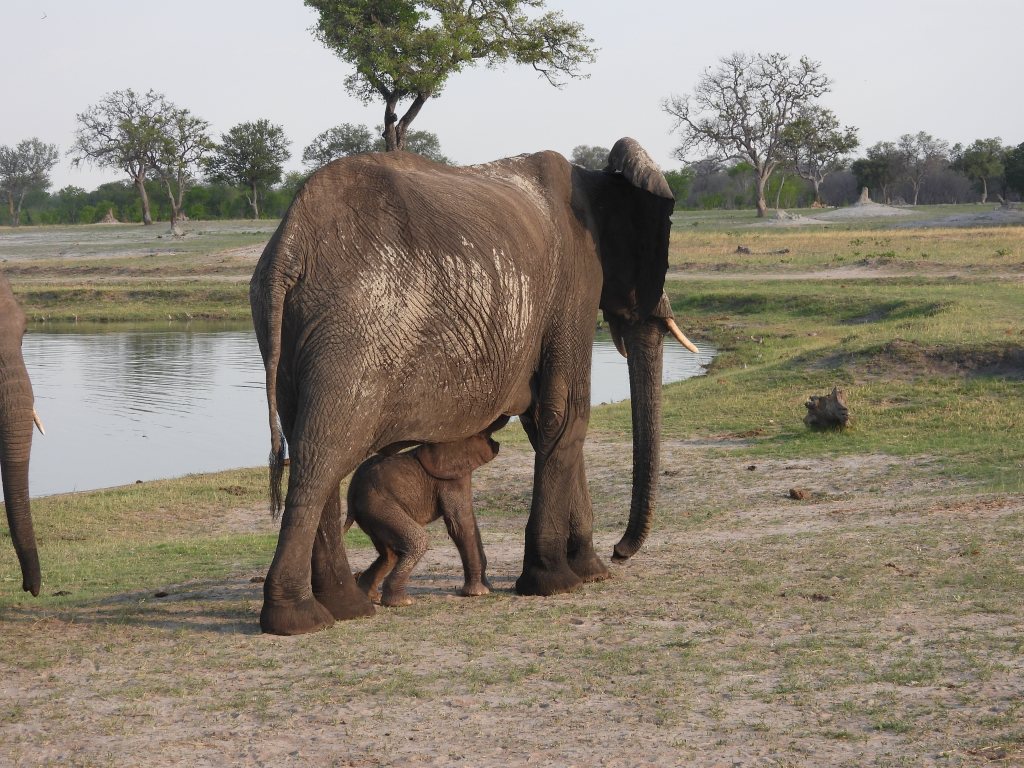
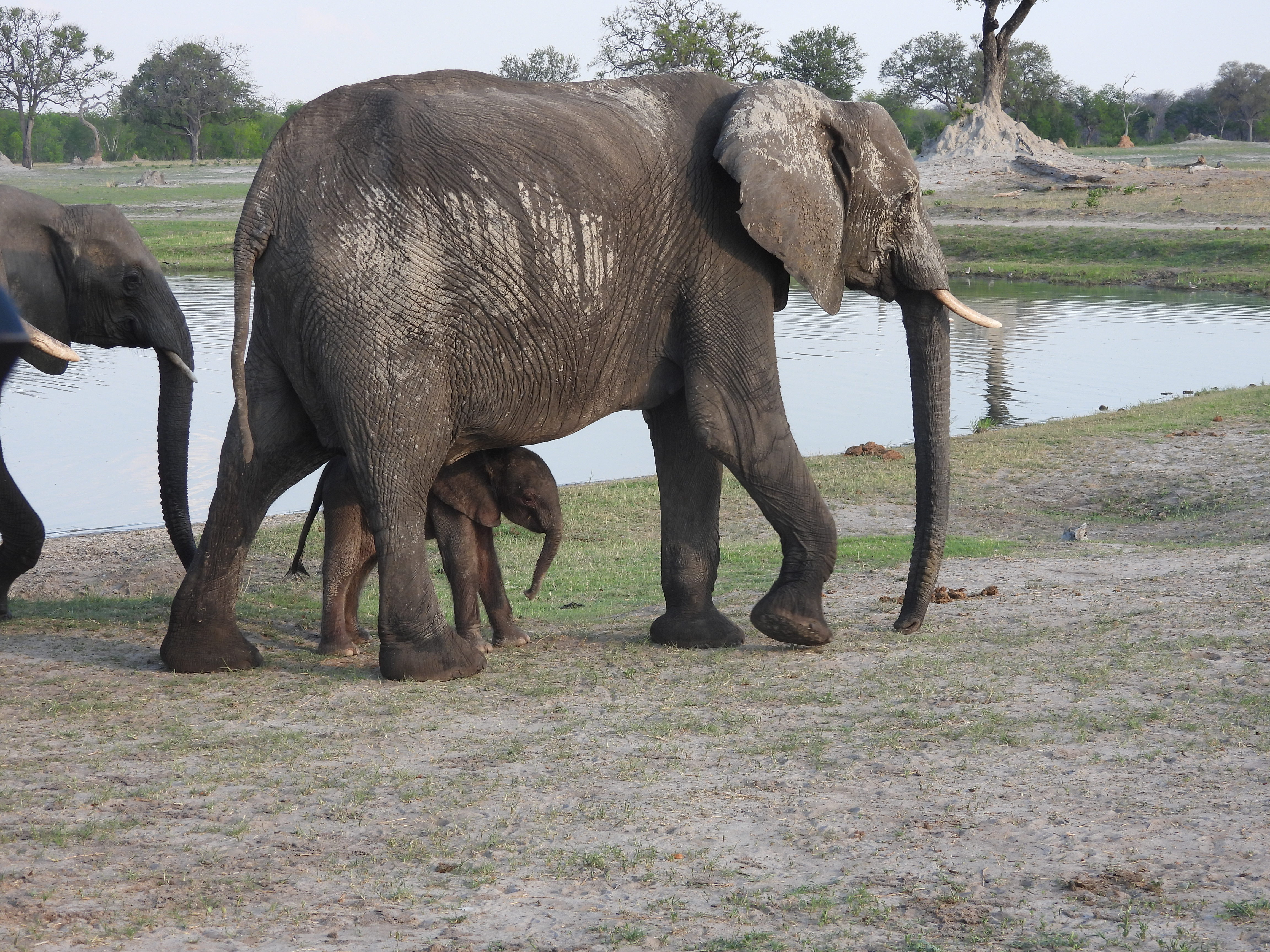 Hwange Park is well known for having over 65,000 elephants. Being Green season, we saw many babies. But the elephant highlights in terms of babies came during our first game drive the morning after our arrival. We saw four different herds coming from multiple directions to meet at the watering hole. One herd stood out, because a tiny newborn was learning to walk and kept getting stuck. The mother had to keep pushing her child along, even pushing the baby into the water to cool down in the extreme summer heat, then helping the little one back up again using her trunk. About three females helped hide the baby from the sun as well, which enabled the mother elephant to get cool in the watering hole while the baby was being tended to. Even after watching the baby elephant laying on the ground resting we were afraid the baby would end up as an appetizer for the pride of nearby waiting lions we saw on the way to the watering hole. It was high drama in the African Savannah, but the mother finally fed her baby after the various cooling down and resting methods, and the baby then continued on with the rest of the herd like a trooper. What an exhausting day for a newborn!




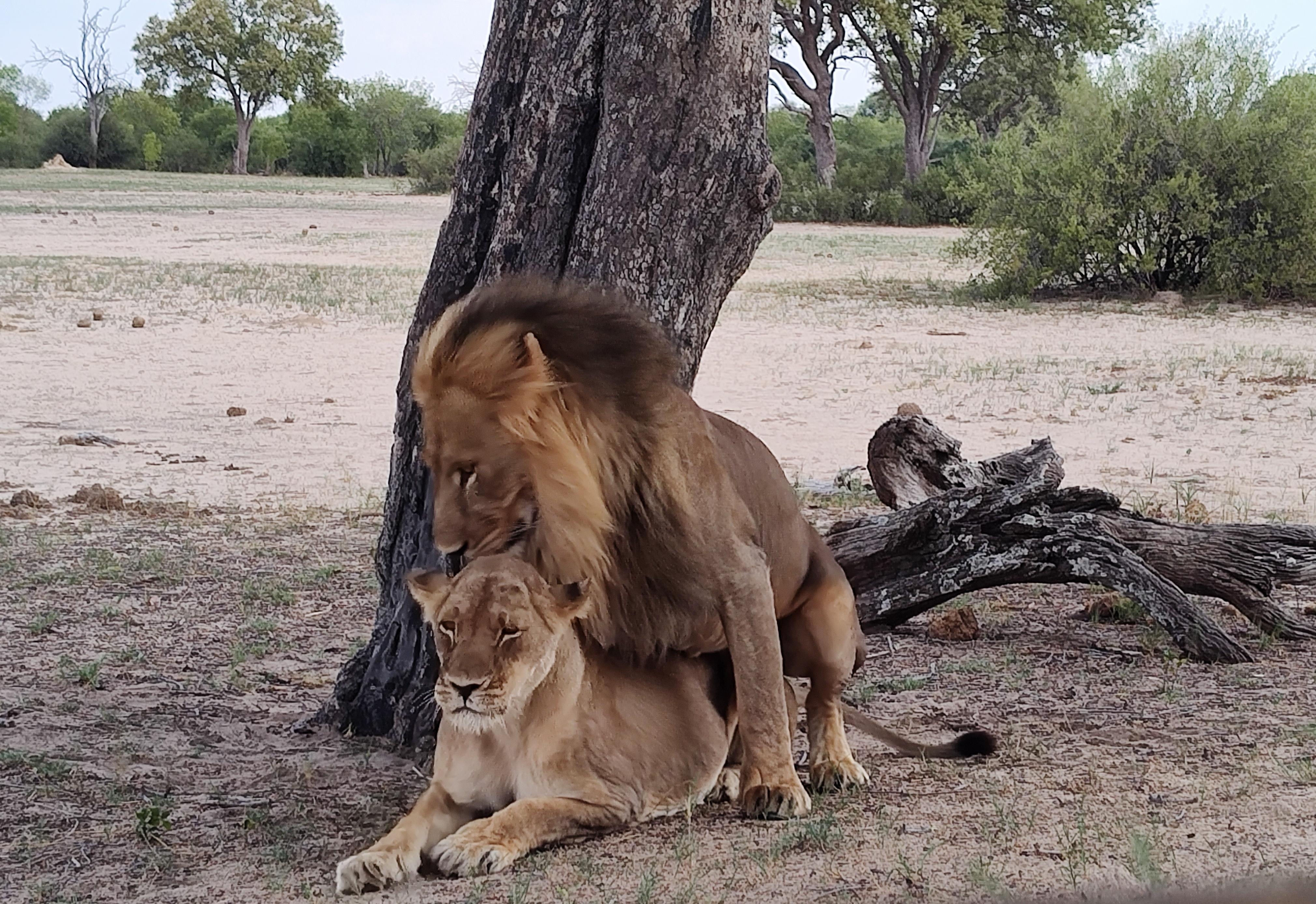 The nearby pride of lions which we saw daily, before during and after a kill, added drama to every animal encounter we had. On our last day in Hwange, we stopped by two mating lions who decided to mate while we were there. The male lion took the initiative quickly, with the female being playful before and afterwards. It hardly felt voyeuristic, since lions and other animals only see safari vehicles as an object. Only individuals stand out if they move or leave the vehicle. We’ were fortunate in being able to observe such a variety of animal behaviors on the trip. But it seemed we were constantly observing the various stagers of life, death, and survival.
In Botswana a lion entertained the thought of a meal with a porcupine, but the porcupine put out it’s prickly plume and the lion lost interest. It took both the lion and the porcupine a couple attempts at this dance for life, death and dinner, but the lion clearly decided it wasn’t worth it the second time and walked away, leaving the porcupine and its ability to survive with the sharp brittle exterior provided by Nature, intact. A sleeping porcupine wouldn’t survive the lion, but watching nature’s survival instincts in action was truly a miracle.
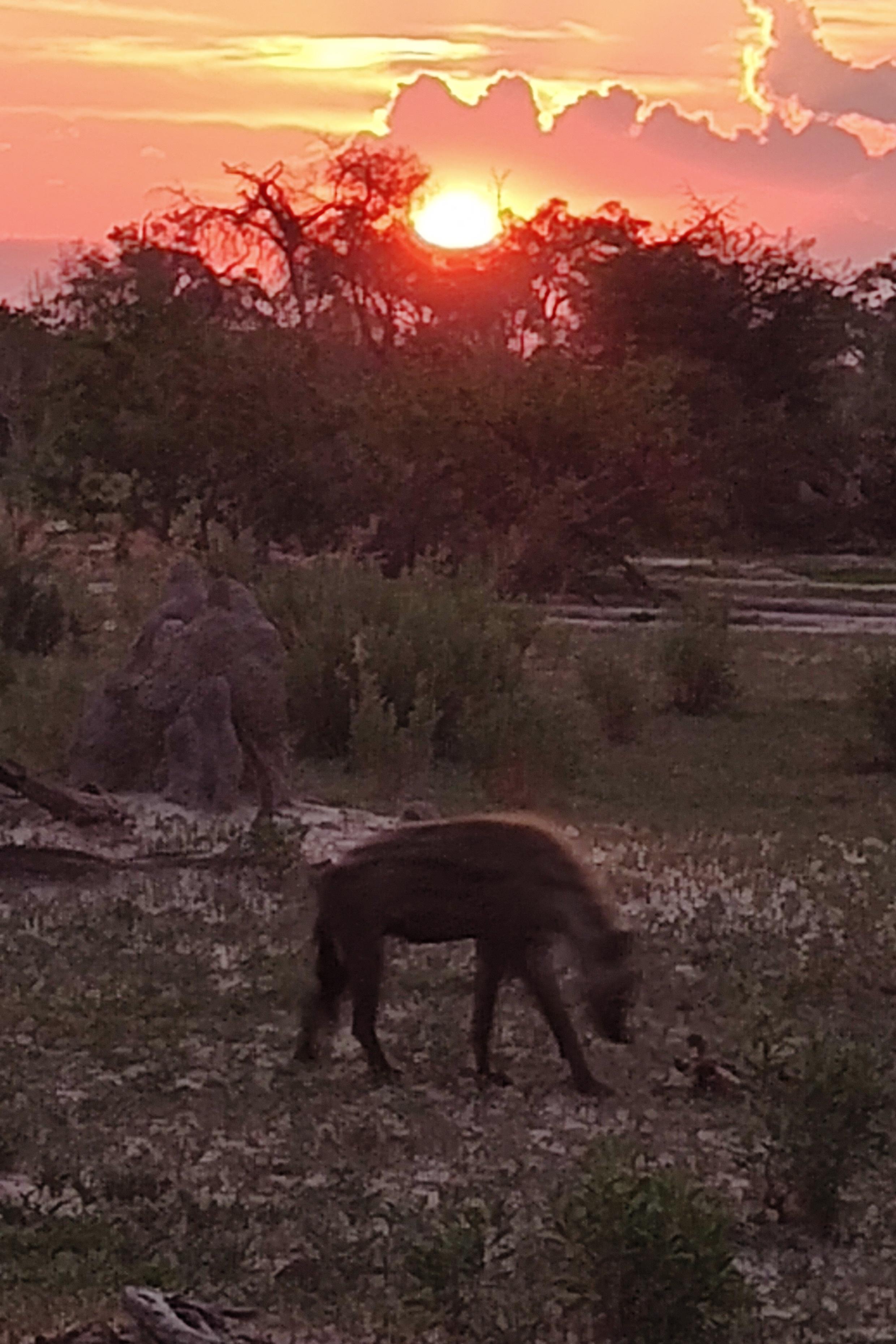
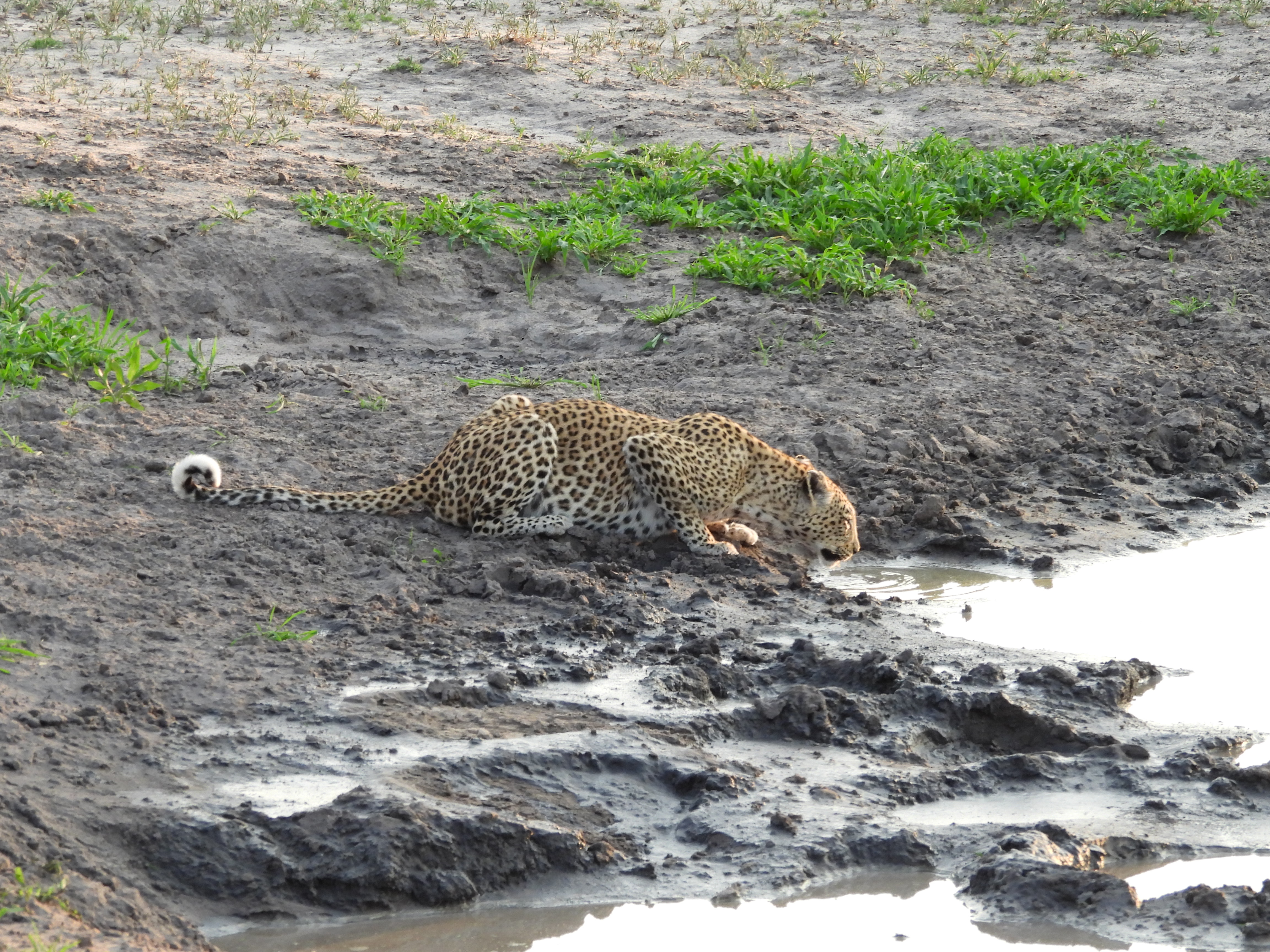
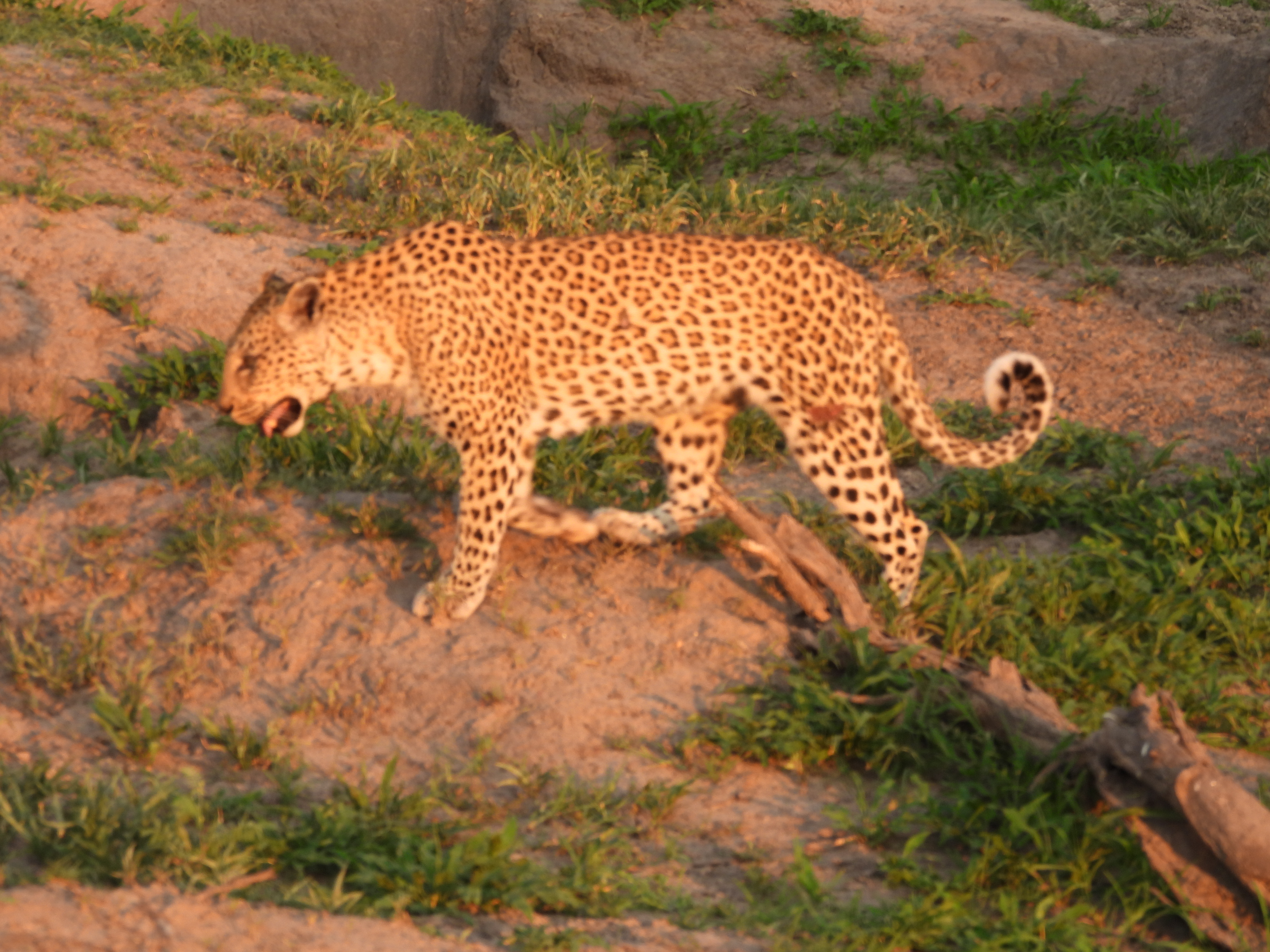 In Botswana’s Okavango Delta, we had the good fortune to spend between five and ten minutes observing a leopard despite all bets being off for seeing the spotted animal on the wild. On our final game drive, the safari drivers got word that one was around, and we were able to observe one for a generous amount of time. It was the last of the Big Five we hadn’t yet seen, and our safari drivers were adamant about finding them for us as we held on tightly to our unusually fast vehicles to get to the that part of the jungle in time to see the leopard. Leopards are usually up a tree, hidden, or go by very quickly in my experience, but this one took his time. I heard him growling before I saw him, and our guide saw his tracks, so we knew he was nearby. After racing to find this beautiful creature, he slowly emerged from the jungle and made his way to the watering hole where he spent a significant amount of time drinking in the midday heat. Then he stalked back into the jungle thicket and disappeared. Our guess was that he was out for a kill or had just had one, since vultures and hyenas were close by. The magnificent ending to our safari days only minutes afterwards was watching a spotted hyena eat leftover scavenged food as the blistering African sun was setting and this part of our African adventure was bidding us adieu.
 My entire five weeks was filled with days like these; an example of Nature’s majesty, with its pulsating, internal African Savannah magic and the uncovering of some of life’s birth and survival mysteries as only Nature can provide. But in the end, I think travelers can learn about themselves by observing nature. Who wouldn’t identify with the baby elephant, who gained strength by suckling its mother, then was able to walk proudly with the herd? Who doesn’t collapse in the strong heat of a summer day, lay down for a respite, and find comfort in the shade provided by others? And like the porcupine facing off with the lion, who doesn’t take a threat to their lives seriously and use all the tools at their disposal to overcome it?
 Ah, this is Africa! It’s not only a destination, but a state of mind abounding with feelings and reflections every day about each animal encounter.; a complete, world-class experience that will leave any traveler with the lingering taste for more, like a fine bottle of wine.
All photos by Jann Segal
 Travel the World with Passion