“The tango is really a combination of many cultures, though it eventually became the national music of Argentina.” Yo-Yo Ma
 I experienced many musical highlights when I went to South America recently with Overseas Adventure Travel. I took two trips back to back. On the Brazil on Depth trip, I learned about the Bosa Nova, and was thrilled to experience Rio de Janeiro on the beach at night in all its musical glory, Samba dancing and all. But on the second trip of that adventure, Northern Argentina and Chile: The Rugged North and Atacama Desert, I learned about the tango in Buenos Aires.
 I attended a wonderful professional tango show my first night in Buenos Aires. The bus picked me up at seven pm and dropped me off close to midnight, but the show was extremely entertaining, and I sat with a Canadian couple who travel as extensively as I do, and former musicians as well. So, we talked about travel and music, and the evening and our dinners went extremely fast with such good company and professional entertainment. The show also included a tribute to their much beloved Evita, with a beautiful rendition of Don’t Cry for me Argentina. While they showed footage of Eva’s life and her funeral, the waiters came out with Argentinian flags. It was a special moment to observe having been to her family grave earlier in the day in the Recoleta part of the city where our hotel was located. The tango continued after that special moment.
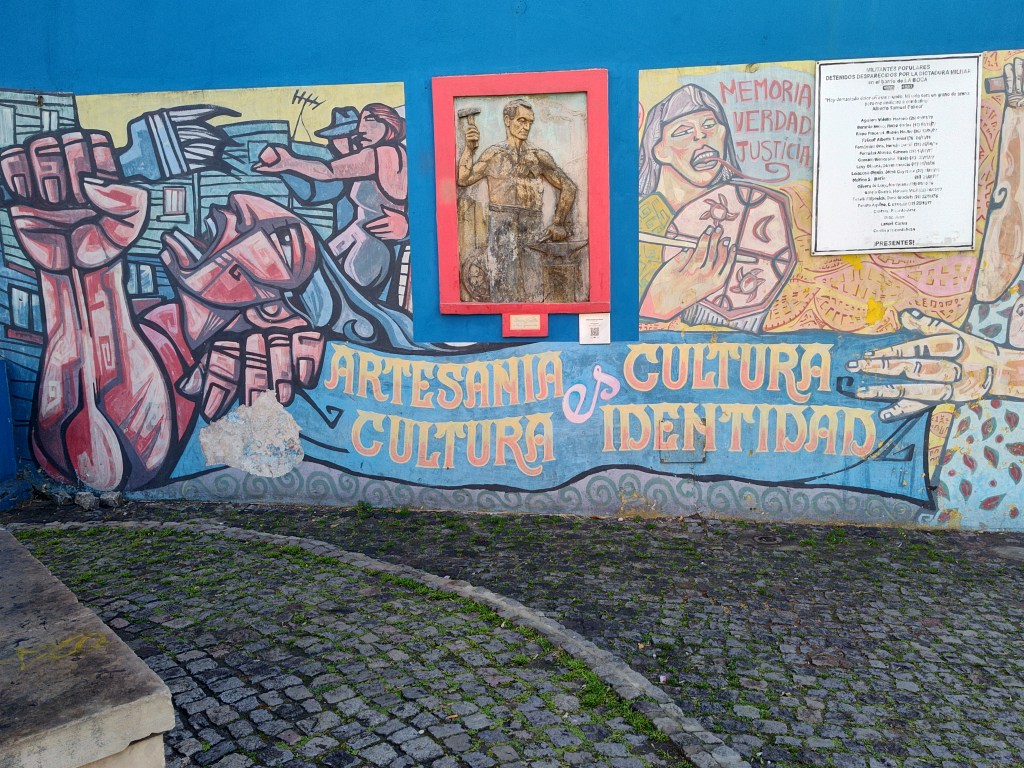
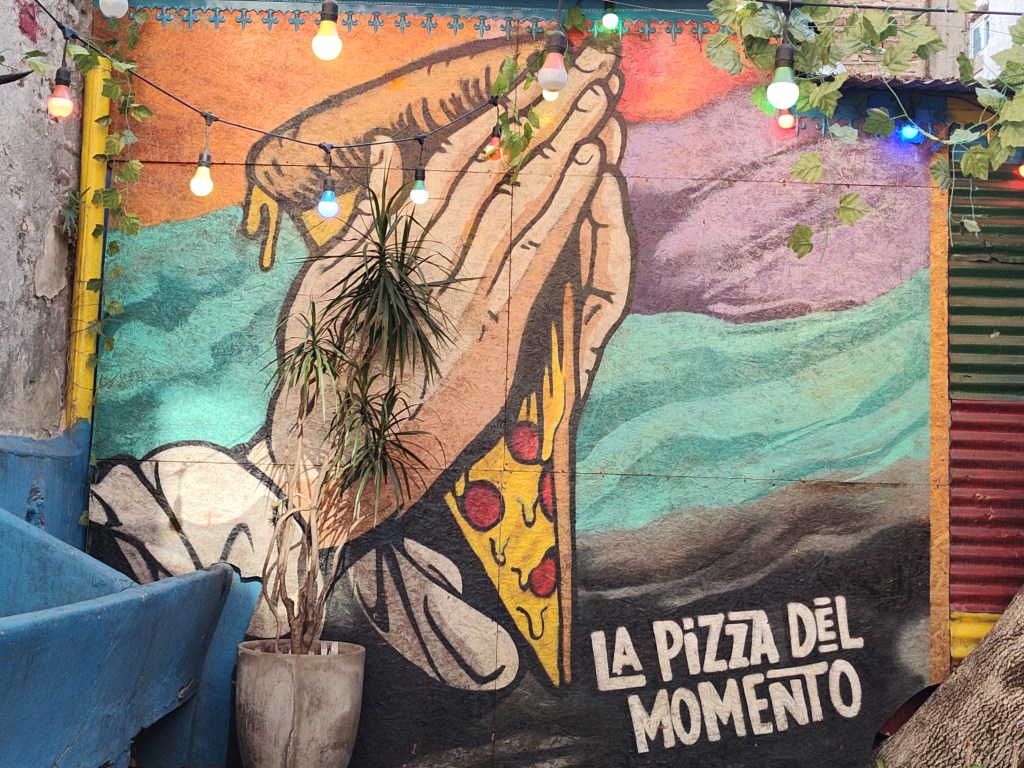
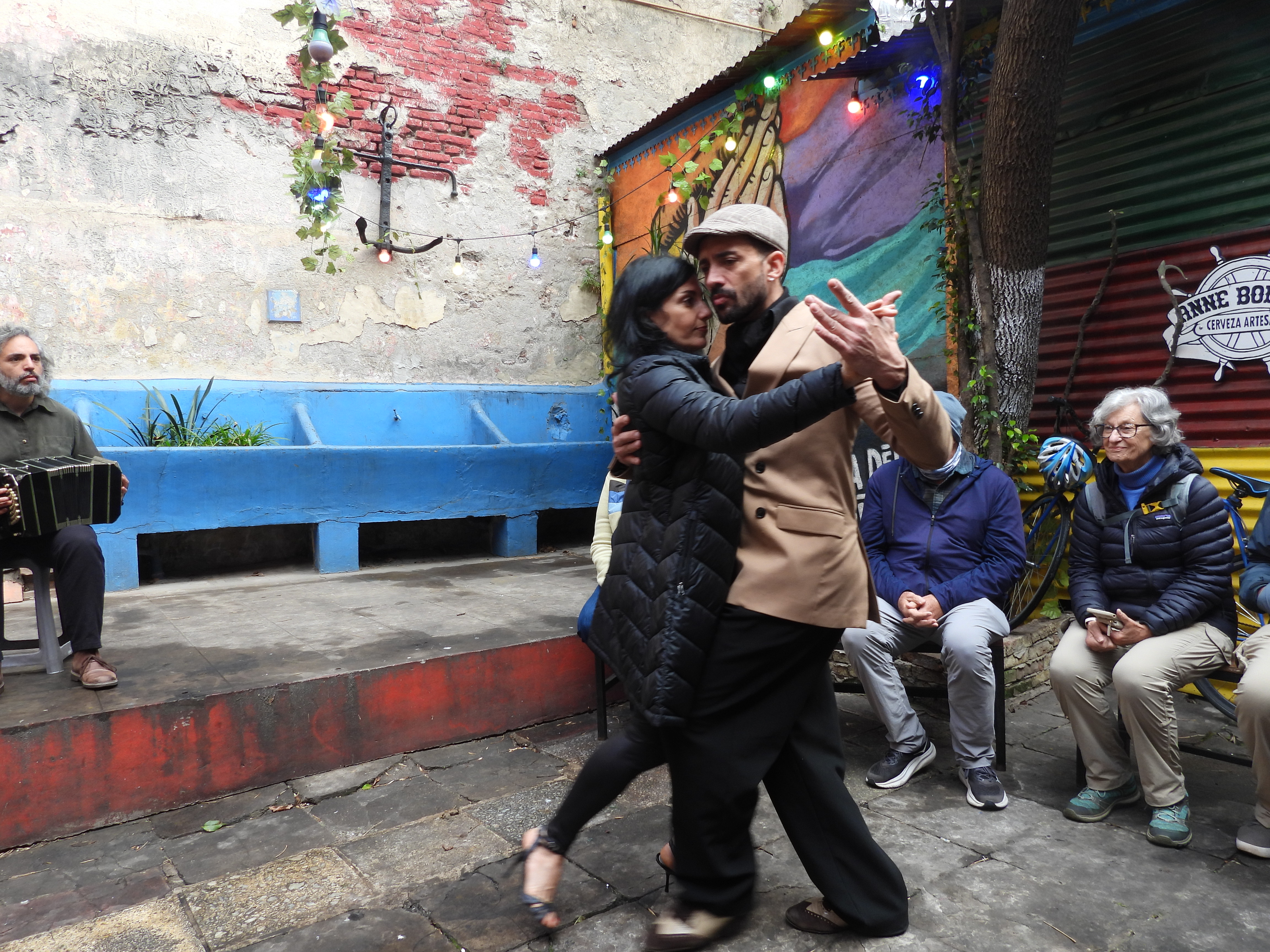 One of our first full days on the OAT tour was also about tango! Our trip leader’s wife is a tango instructor, so she and another dancer taught us how to do the steps in the colorful La Boca neighborhood. I didn’t see any spontaneous tango break out in the streets as I recalled from my last visit, where my photos show it had happened in Montevideo, Uruguay. La Boca is very touristy now, painted in colors of their football team, and selling tourist souvenirs. I recalled vivid colors, but not the big push on football I’d gotten in both Brazil and Argentina during this trip. I don’t recall all the tee shirts and other tourist items for sale, either. The La Boca area seemed overrun with it, but also sells traditional foods, has murals everywhere, and is as colorful an area as the paintings on the walls depict.
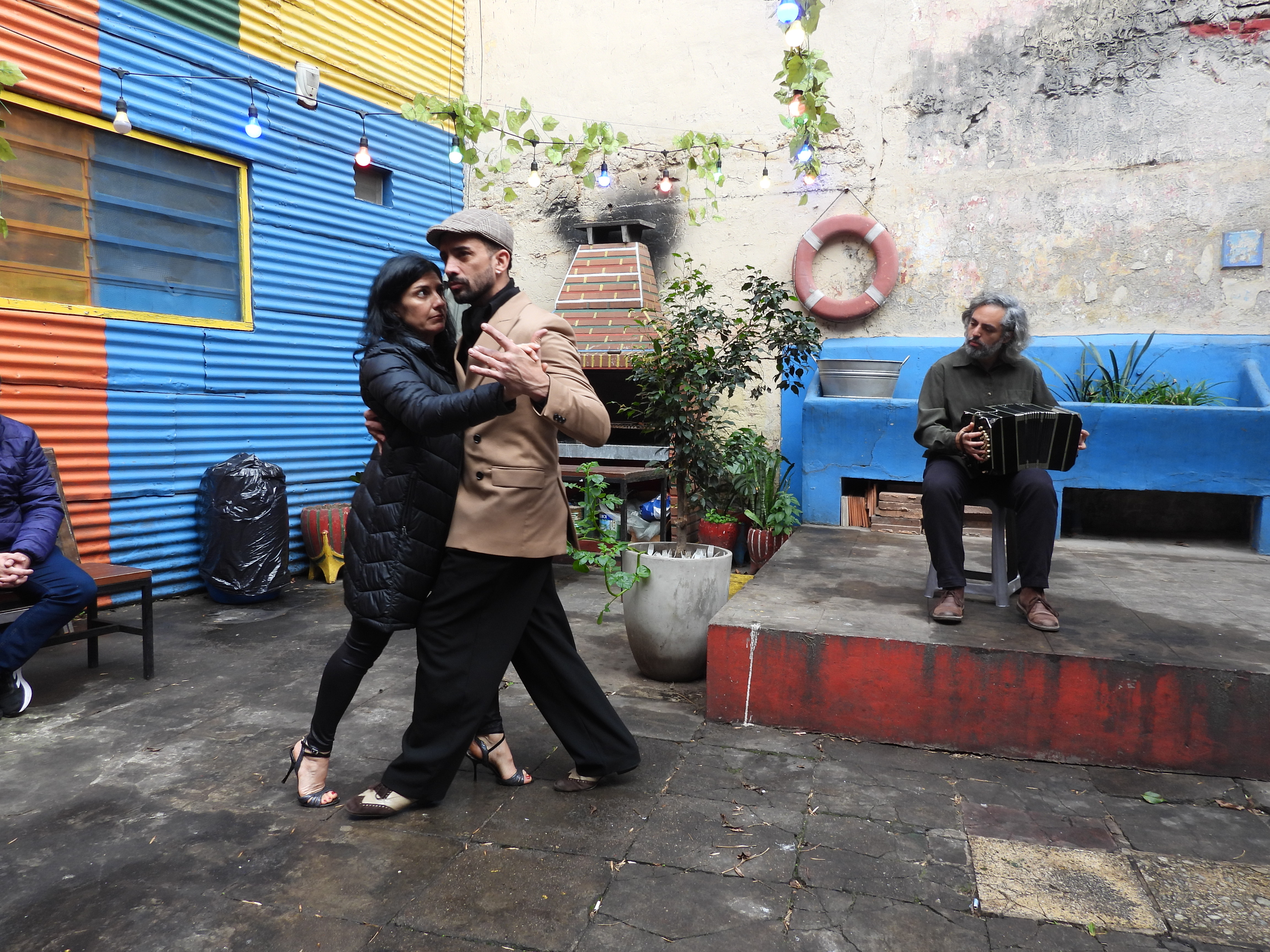 The tango itself is derived from both African and European influences. Former slaves helped shape the dance, which grew in popularity in both Buenos Aires and Montevideo, Uruguay, and some say originated there in the 1880s. It was born in impoverished neighborhoods in these countries and worked its way into brothels because of the suggestive nature of the dance steps, especially among the women. As its popularity spread around the world, it became a staple in both Argentina and Uruguay. In 2020 it was added to the UNESCO Intangible Cultural Heritage List. This is quite a boost from its lower-class origins with sexual connotations.
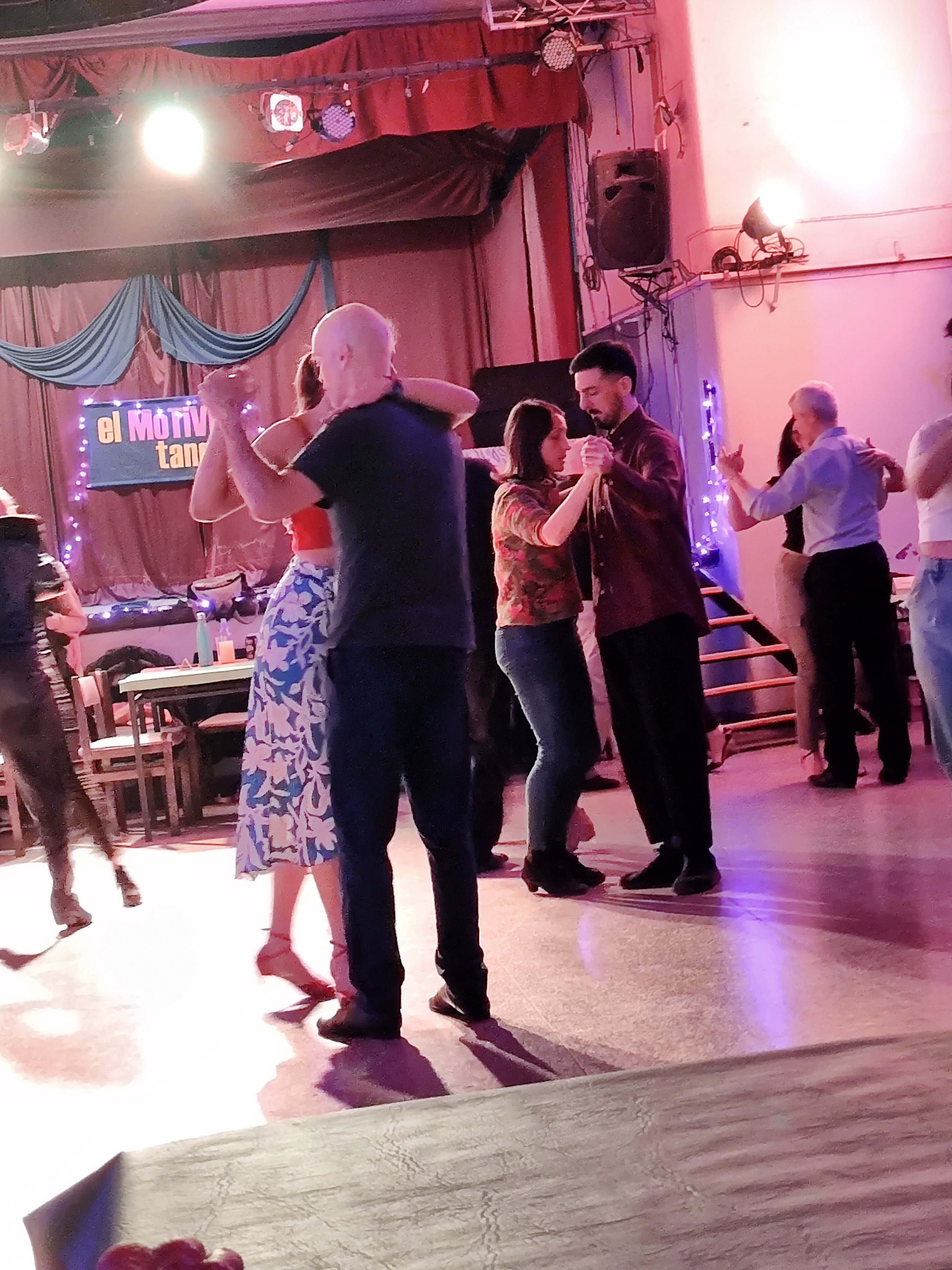 Although the tango declined in popularity during the Great Depression in 1929, another Argentinean depression in the 1950’s, and fell out of favor among dictatorships, today it remains popular all over Argentina as I saw in Buenos Aires. We went to one club at night filled with young people learning the steps, with women even taking the lead to show the men the steps, exactly the opposite of how the dance is performed. After having seen a professional tango show before the trip started and watching our trip leader’s wife perform with another professional, what we saw looked very much like a high school dance by comparison. However, we saw that as the evening progressed, the more knowledgeable and advanced tango dancers appeared, and the dancers just learning dropped off the floor. It’s a dance with a culture that goes late into the night and truly becomes the music of Argentina.

All Photos Jann Segal
 Travel the World with Passion