“Serenity is the balance between good and bad, life and death, horrors and pleasures. Life is, as it were, defined by death. If there wasn’t death of things, then there wouldn’t be any life to celebrate. “
Norman Davies , Historian
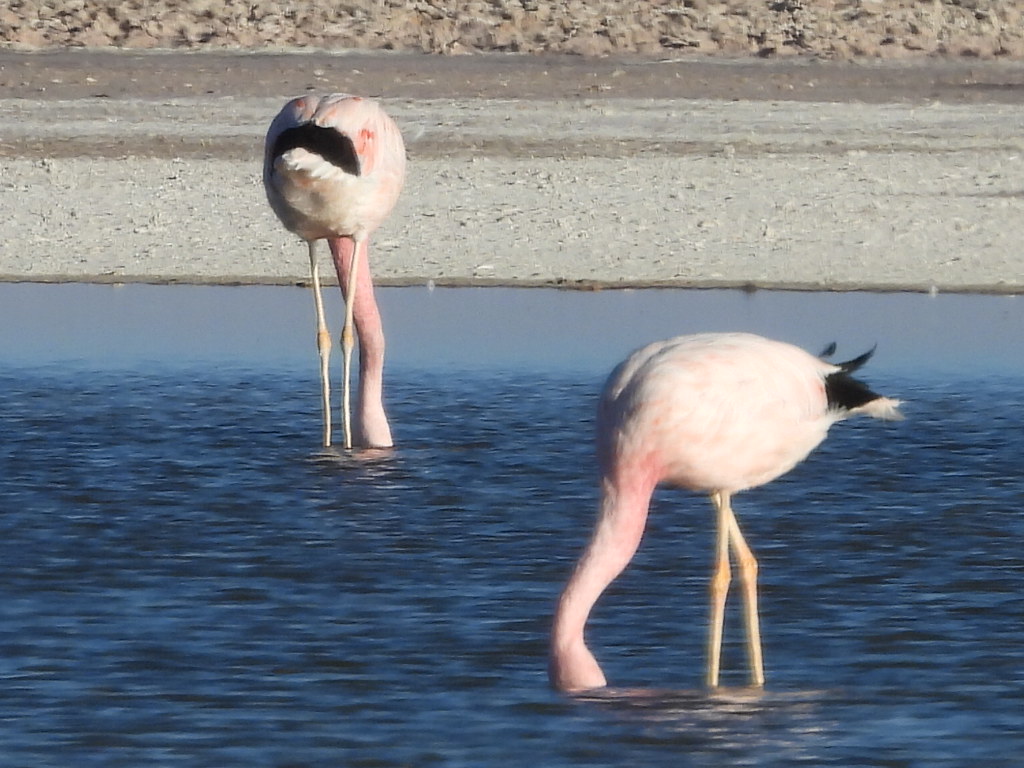
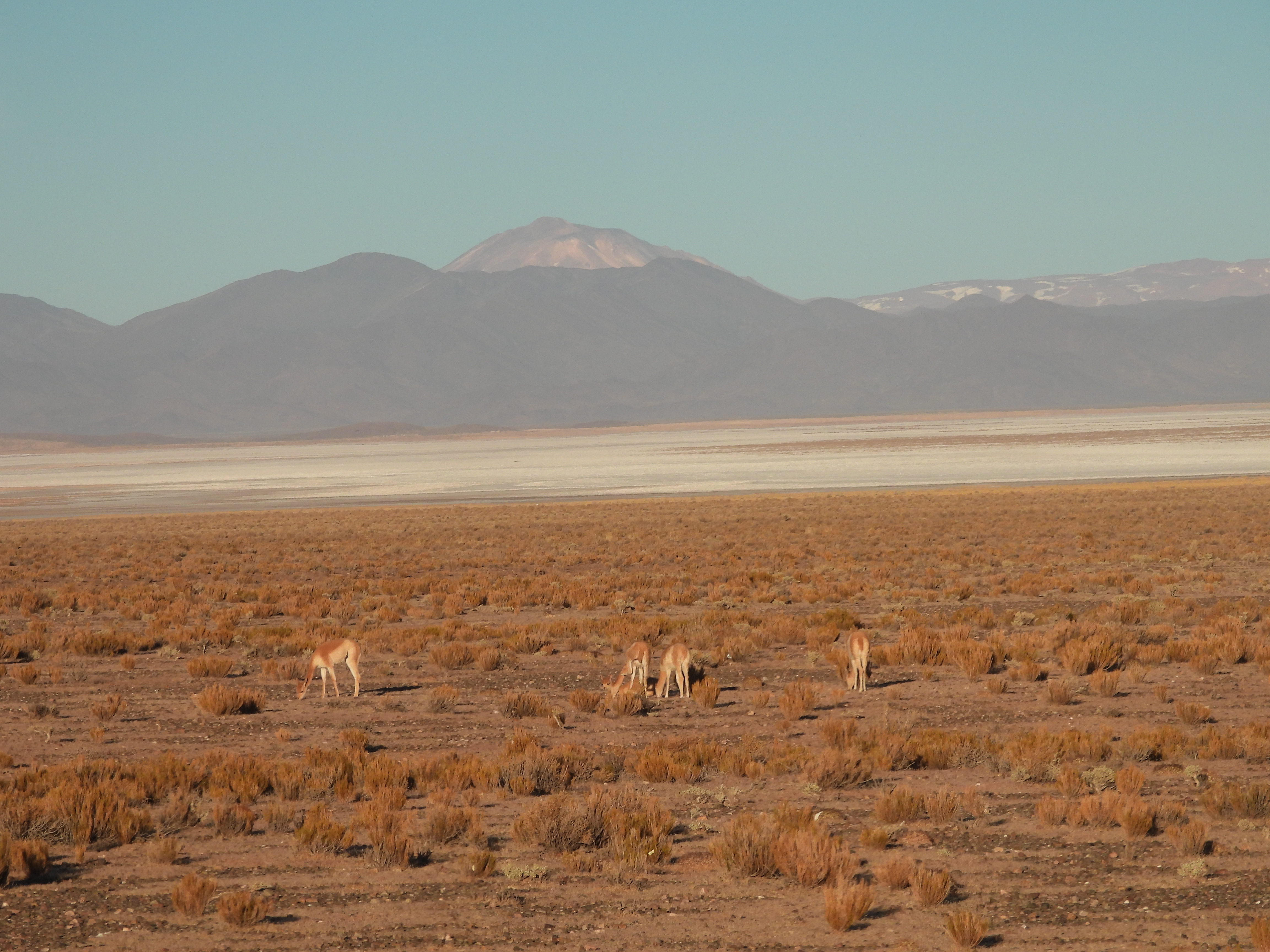 Tucked alongside the flamingos, the llama, their related furry friends, the beauty of minerals millions of years old that engulf the Andes, more cacti then I ever thought imaginable in one country, lies a land so dry, barren, desolate and unfertile, its hard to believe the indigenous people call it home until a traveler makes the effort to go there. The unforgiving cold of the high altitude Atacama salt flats and surrounding Andes, as well as the cruel, harsh distances between small towns and large cities in case of any emergences, gives one pause when absorbing it all. I thought about life and death in such a remote region, compared to the celebrations that these unpretentious people have and enjoy as frequently as they can.
 When I took the Overseas Adventure Travel trip Northern Argentine and Chile: The Rugged North and Atacama Desert, two things that jumped out at me in each country were the cemeteries we visited, and the celebrations we encountered along the way. They added special moments to an already outstanding trip and provided different but unique perspectives to the people of each country. We learned about the Gaucho culture of Argentina and the Andean Inka culture in Chile, but this didn’t necessarily reveal itself in the cemeteries and celebrations I was privileged to observe. The people buried in those cemeteries, along with those who were in the throngs of celebration, had certainly experienced life and its variety of characteristics, and all were familiar with how dearth enables us to celebrate all the more.
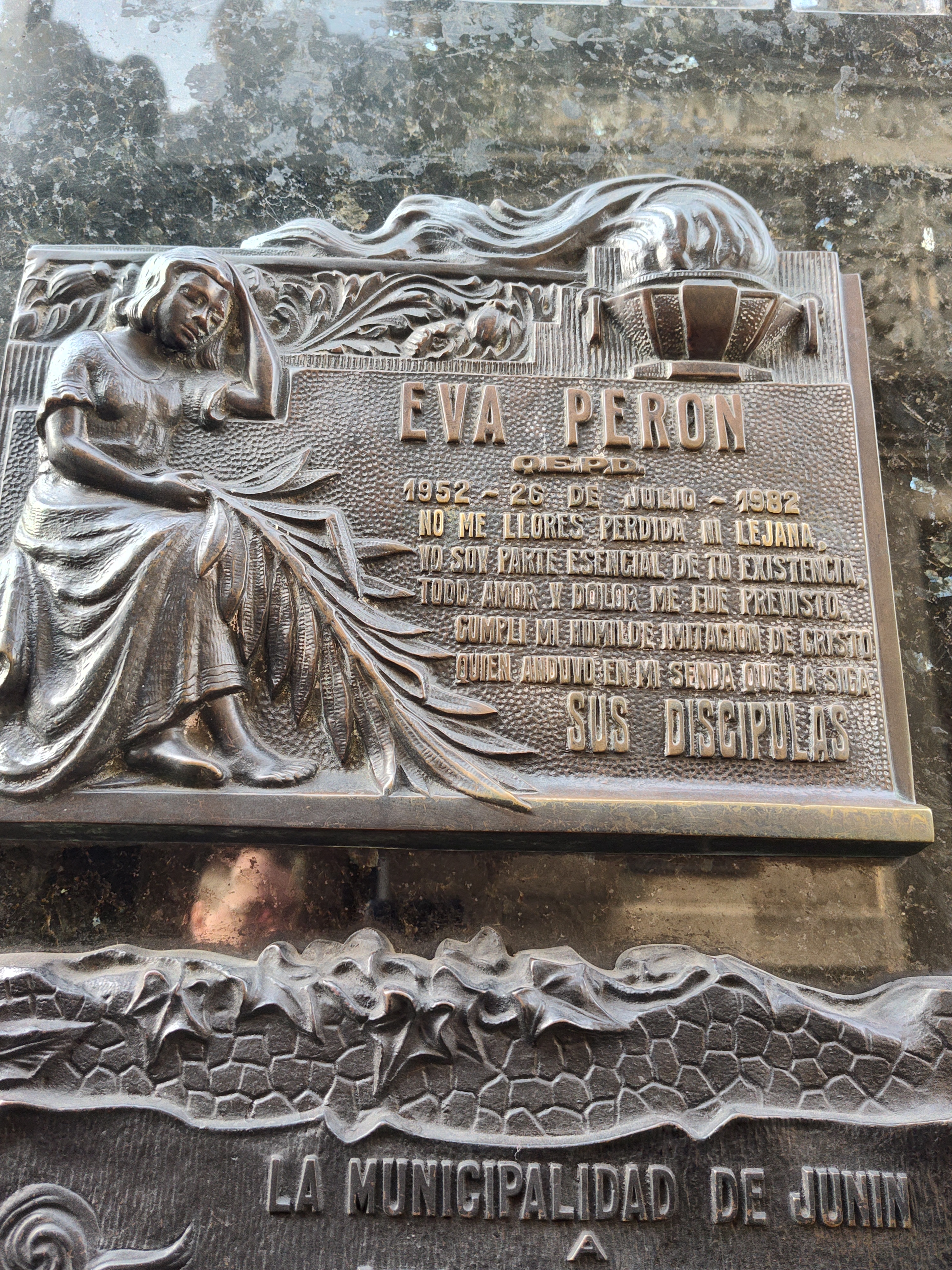 The first cemetery I encountered in the Recoleta part of Buenos Aires was the Recoleta Cemetery where Eva Peron is buried. It wasn’t part of the tour, but it was close to the hotel, so I had time to walk there myself. I knew very little about this former First Lady who wanted to turn politician, but she’s buried in a family tomb with only a small plaque to indicate she’s buried there. She died of cancer at age 33, but some reports show her death at age 30 because she wanted her birth year changed to make her younger. She’s buried with the Duarte family, who had initially abandoned her because she was illegitimate, so finding her tomb can be a bit misleading. Fortunately, they now have a sign that says simply Evita, and from there you must look for the tomb with the greatest number of visitors. Everything about the monuments in Recoleta Cemetery, the tombs, plaques and mausoleums, is in fact a celebration of life.
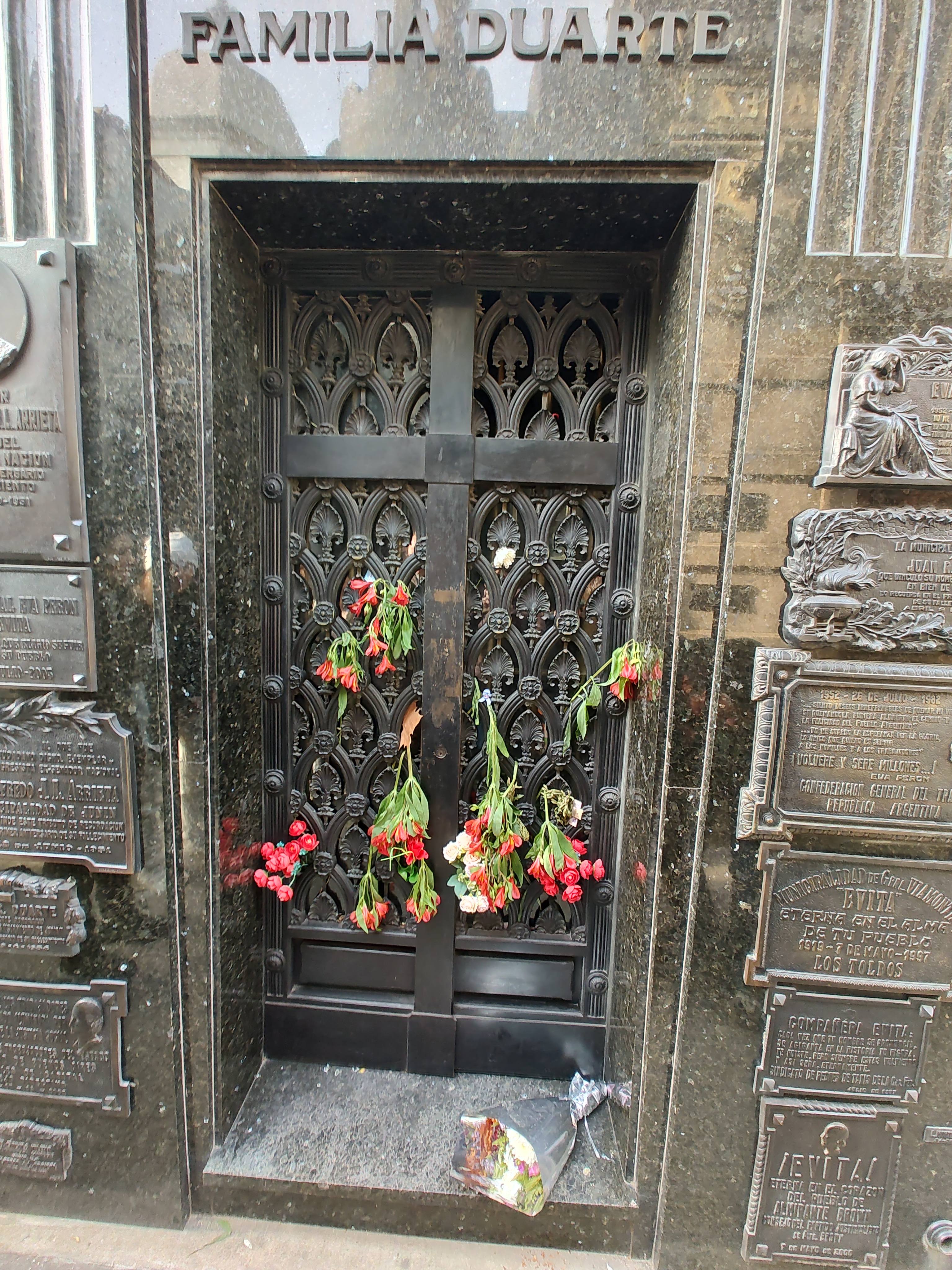 While it can be considered akin to the French cemetery Père Lachaise since many famous people are buried there, Evita’s was the only name I recognized. But the architecture of many of the tombs is quite stunning, so I appreciated it from that standpoint.
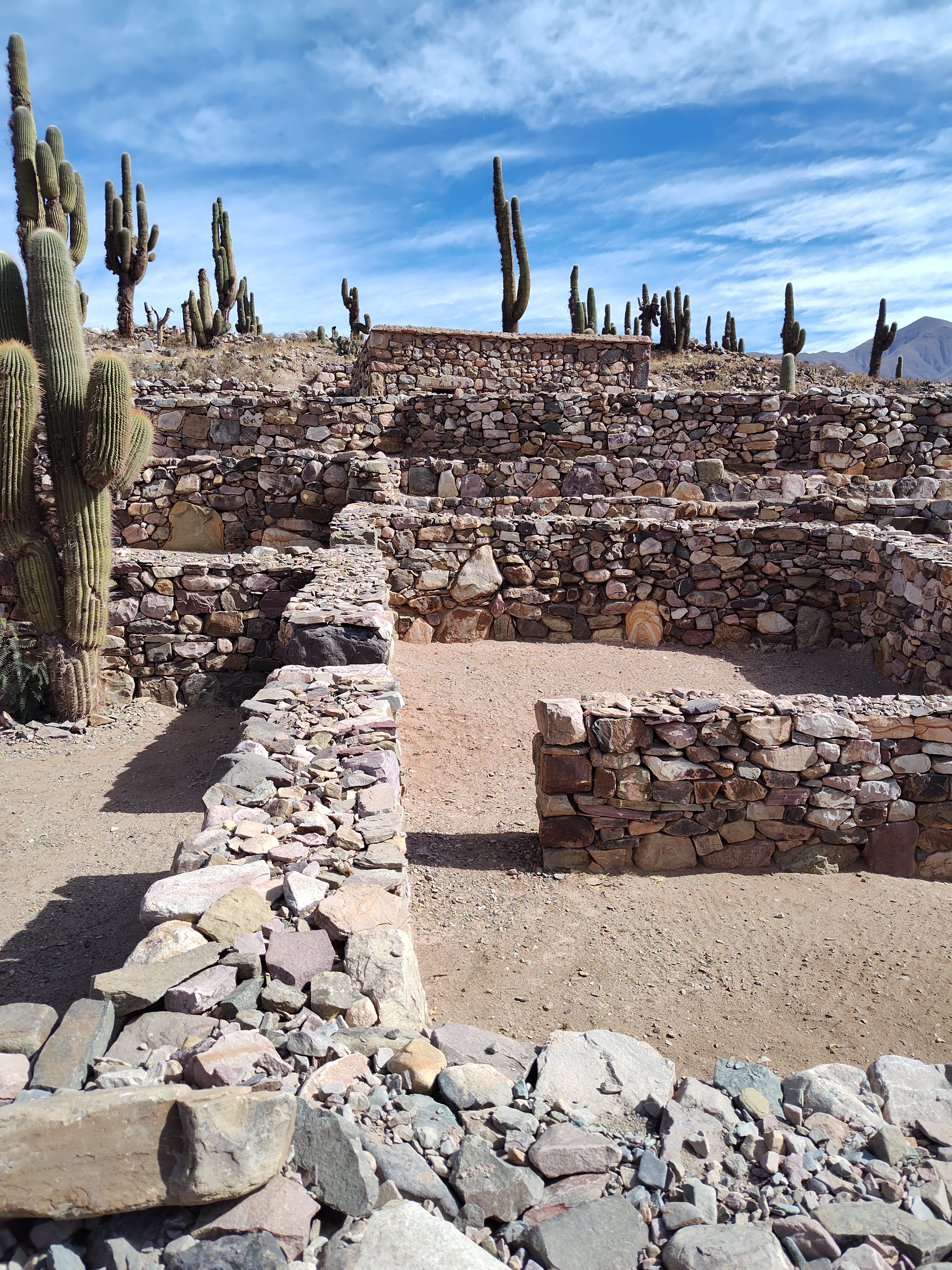 We visited two grave sites in our hikes after we left Salta, Argentina. One was in a former indigenous community in an archaeological site where they buried their dead twice and kept the original burial plot outside the home. The second burial a year later was to collect the bones and put them in an urn. This way the dead are considered looking after the family. Thus, death turns into life.
The more modern cemetery we saw during a second hike that day had mausoleums for entire families, and those spots were kept open until they were filled by a casket, then closed. They celebrate Day of the Dead first at home, then at the cemetery. Once again, the deceased is considered to be looking after the family. In some cases, they share meals with the body before they bury their loved ones. They do not embalm them.
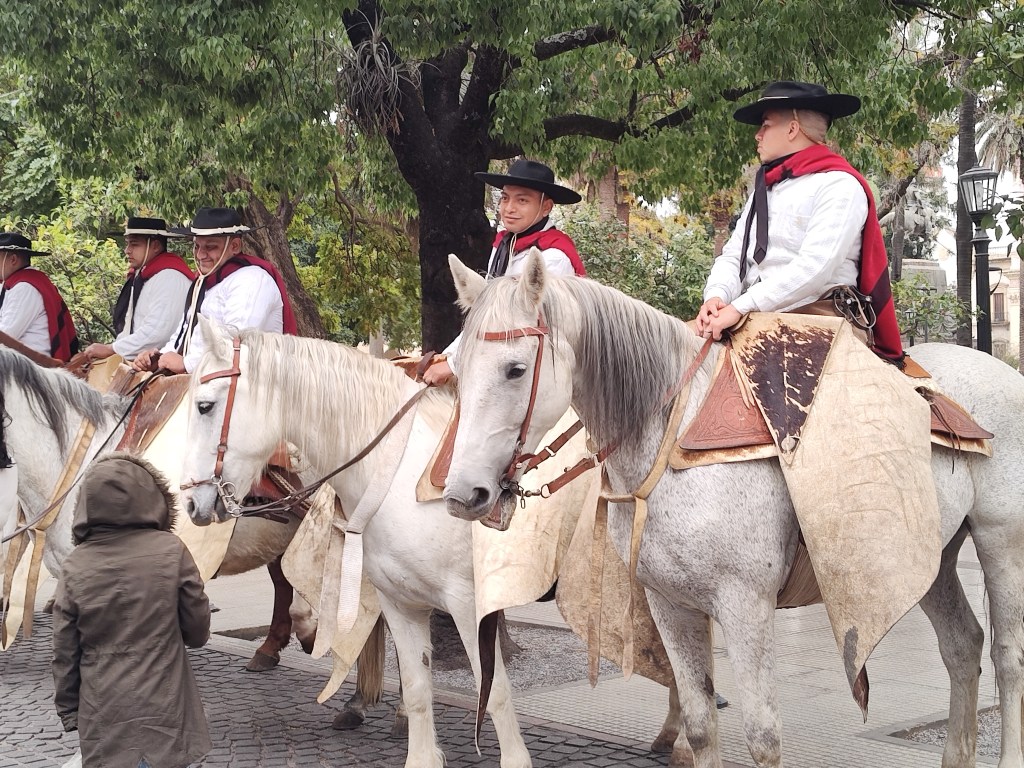
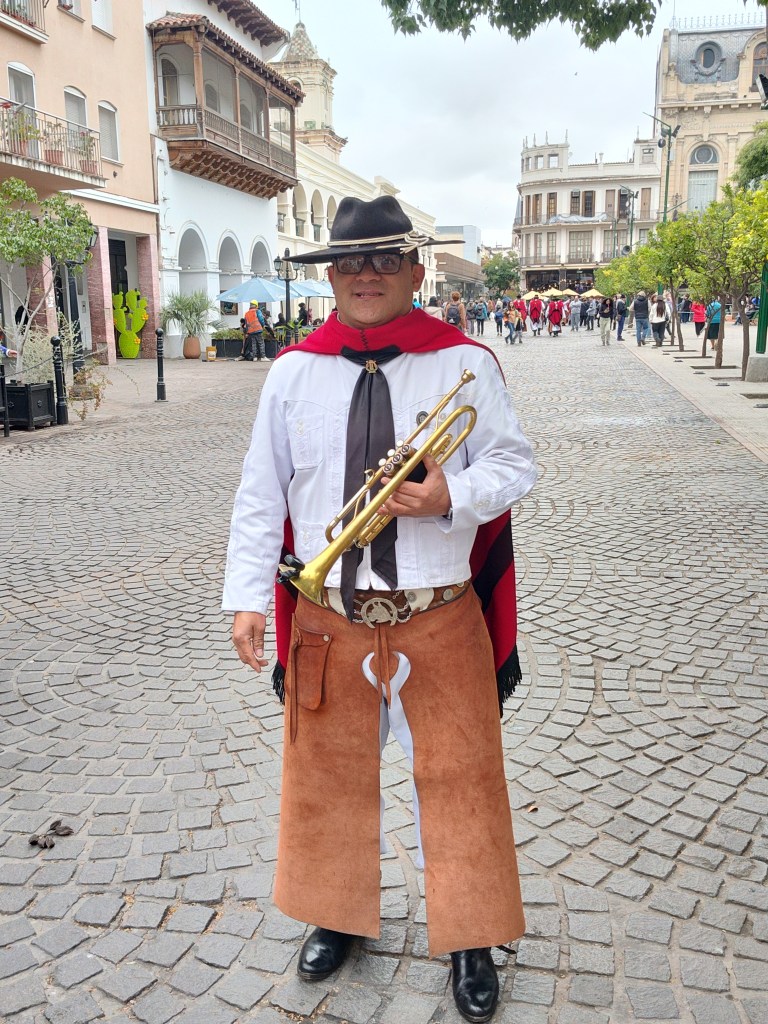
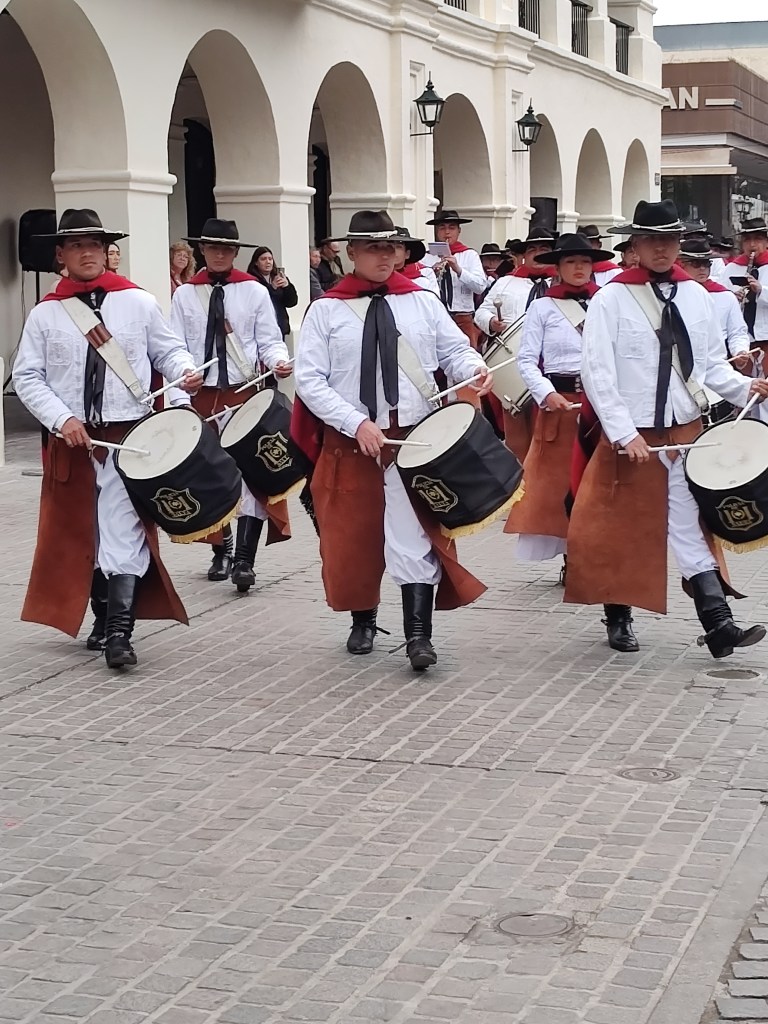
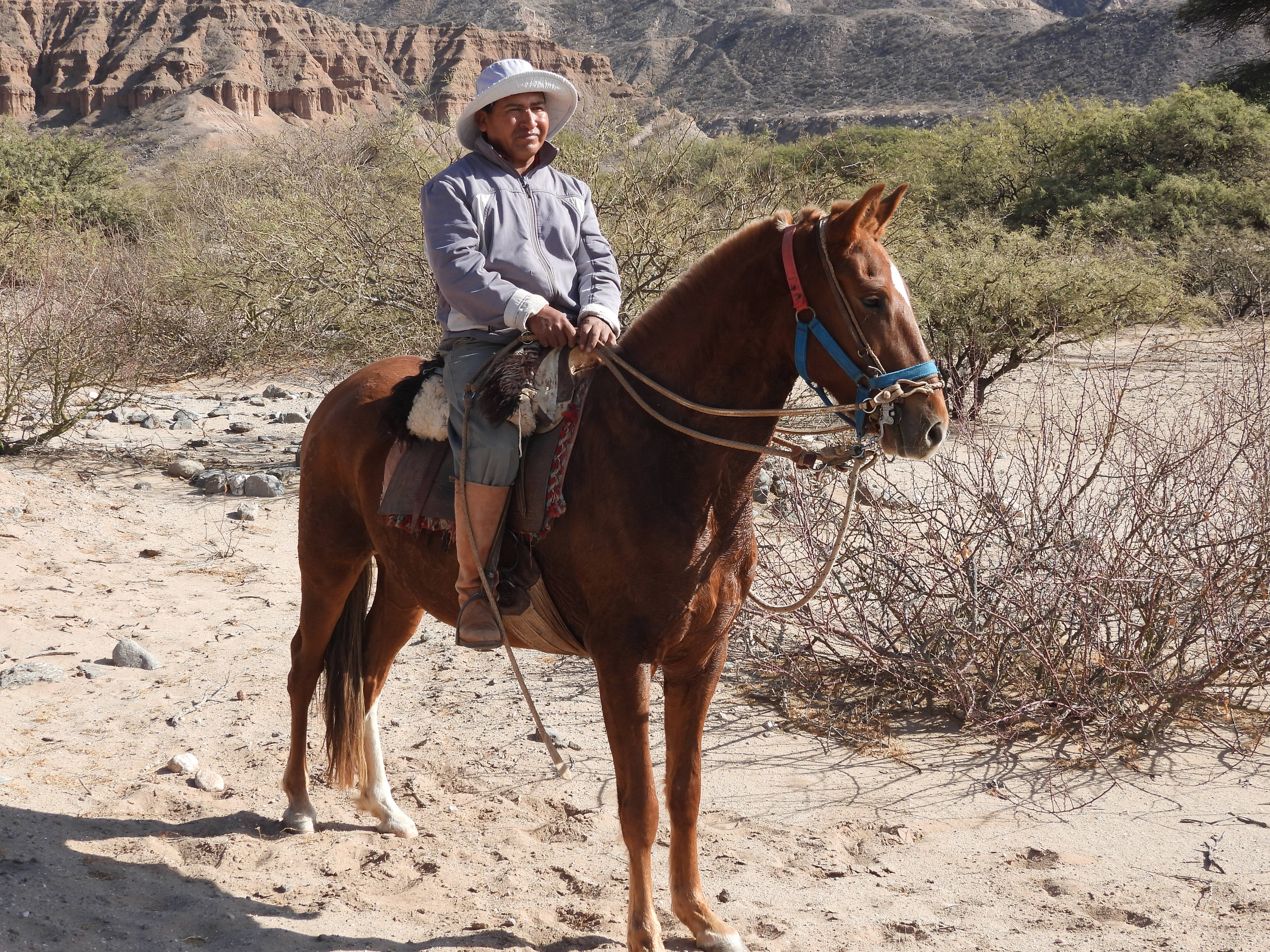 The gaucho influence is very strong in Salta, where we visited stores which sold gaucho clothing, hats, lassos and boots for them. This is hardly something I would see in the local shopping mall at home. When we went into the main plaza, we saw gauchos lined up on horses, in honor of a celebration for their July 9 Independence Day. We saw this in another city as well. We later saw them perform in marching band formation with their musical instruments. It was truly a unique experience, and very near their highly regarded High Altitude Museum which celebrates the Incan Andean Culture where three children died in the Andes. This celebration certainly had nothing to do with death, but as we learned from visiting the cemeteries, the death of this population turns into a way to protect their loved ones.
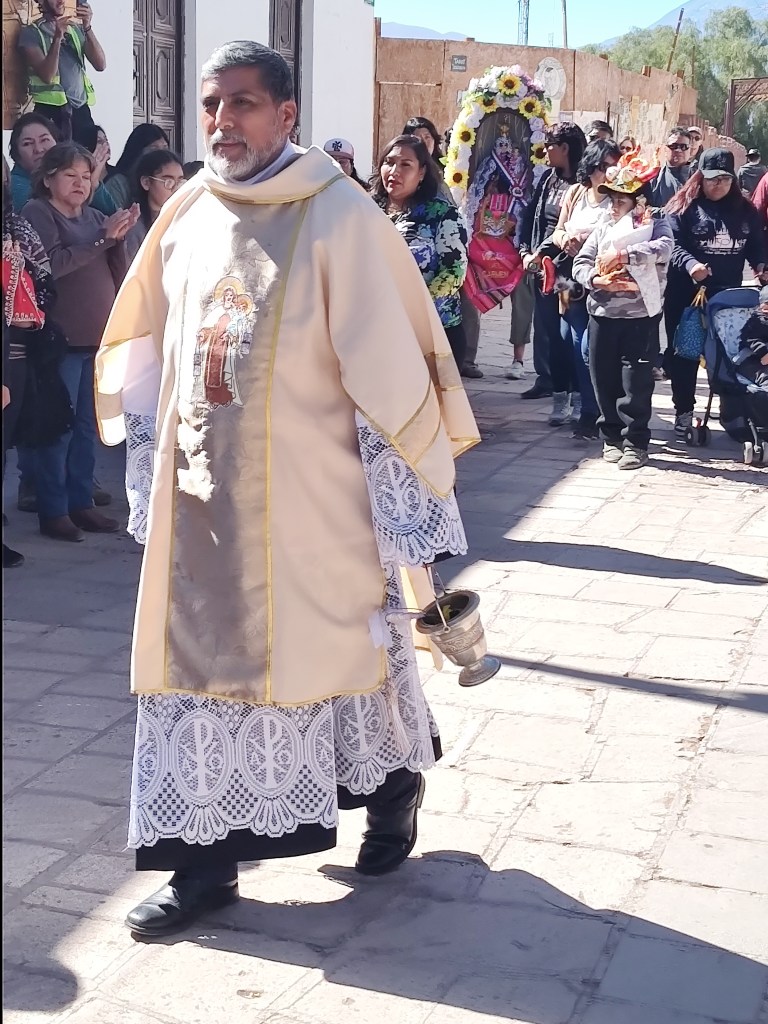
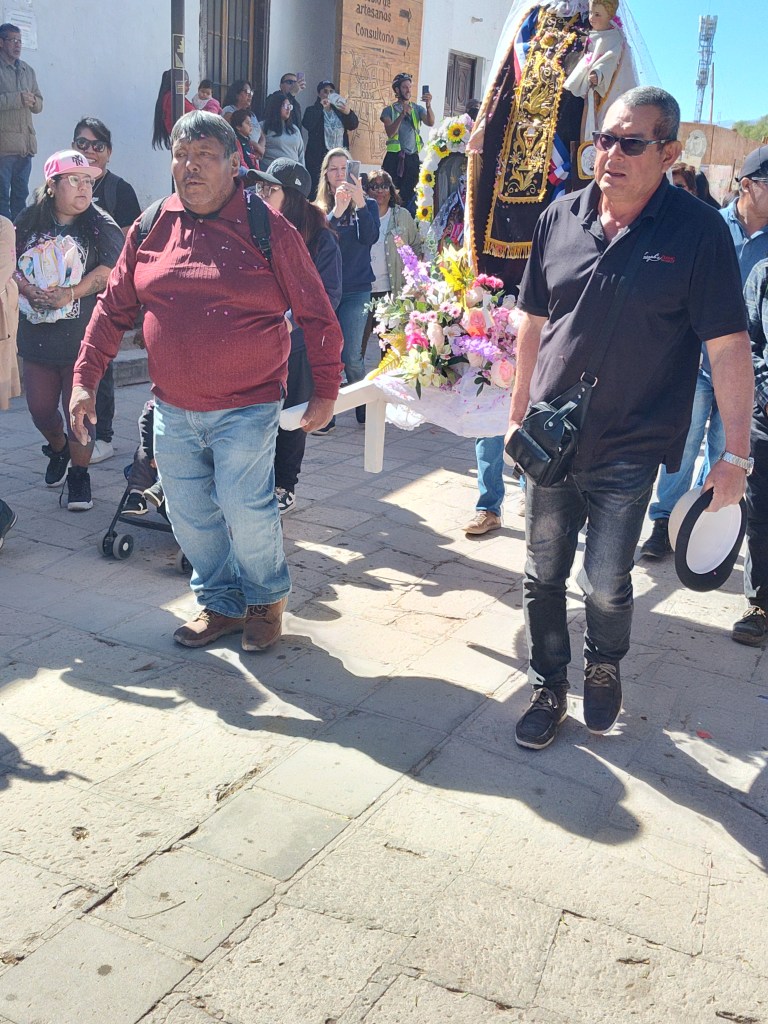
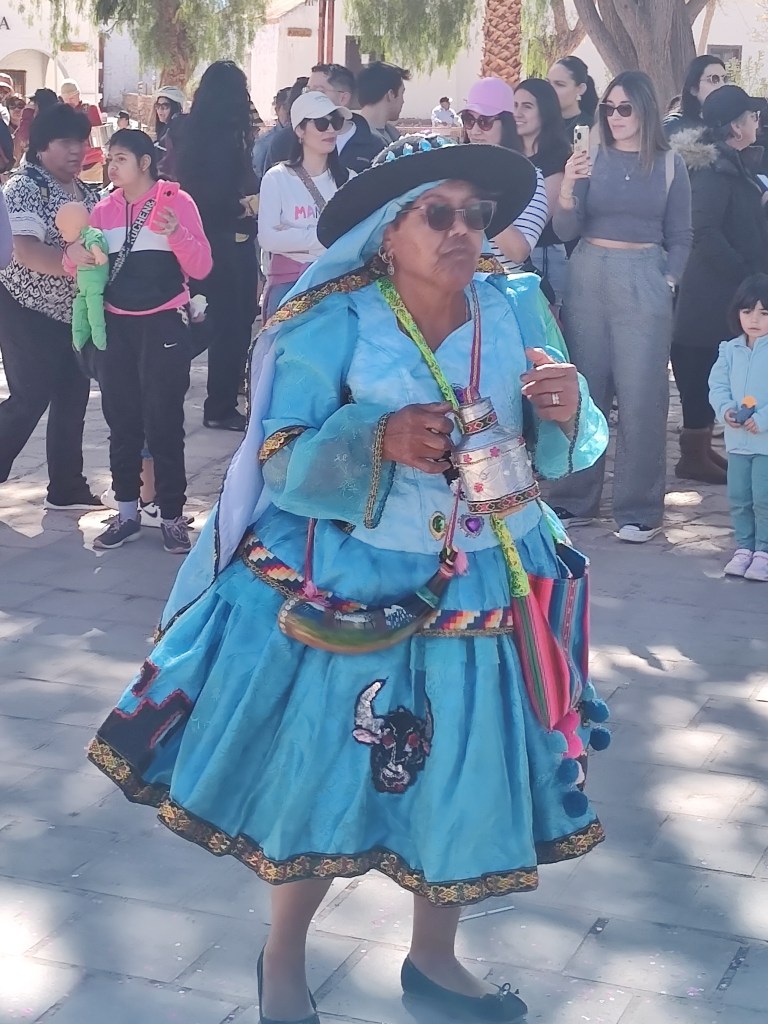
In San Pedro de Atacama, Chile, we took a walking tour and were able to observe the celebration of their nation’s patron saint, Carmen. It’s celebrated all over Chile, and we watched as the procession led by a priest threw out blessings to everyone. I got water splashed on my face and lots of confetti on my hair and clothes that my fellow travelers helped me remove at lunch. But hey! You can never have too many blessings! And this unique trip capped with small towns had become one big blessing, so patron Saint Carmen helped top it off.
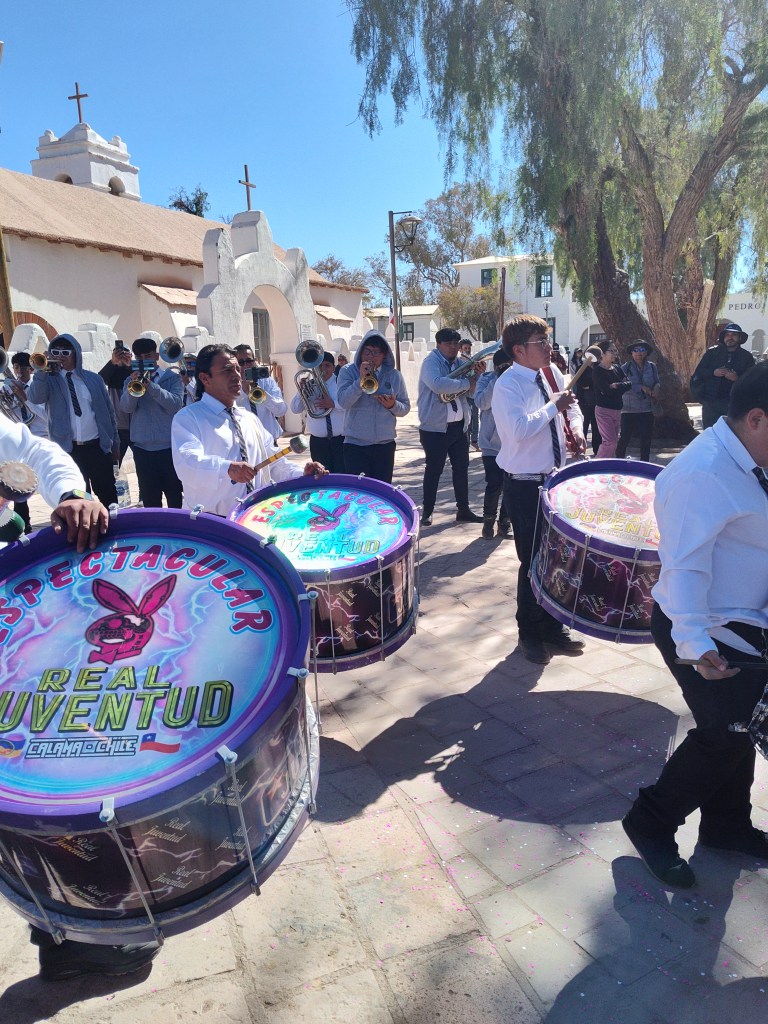
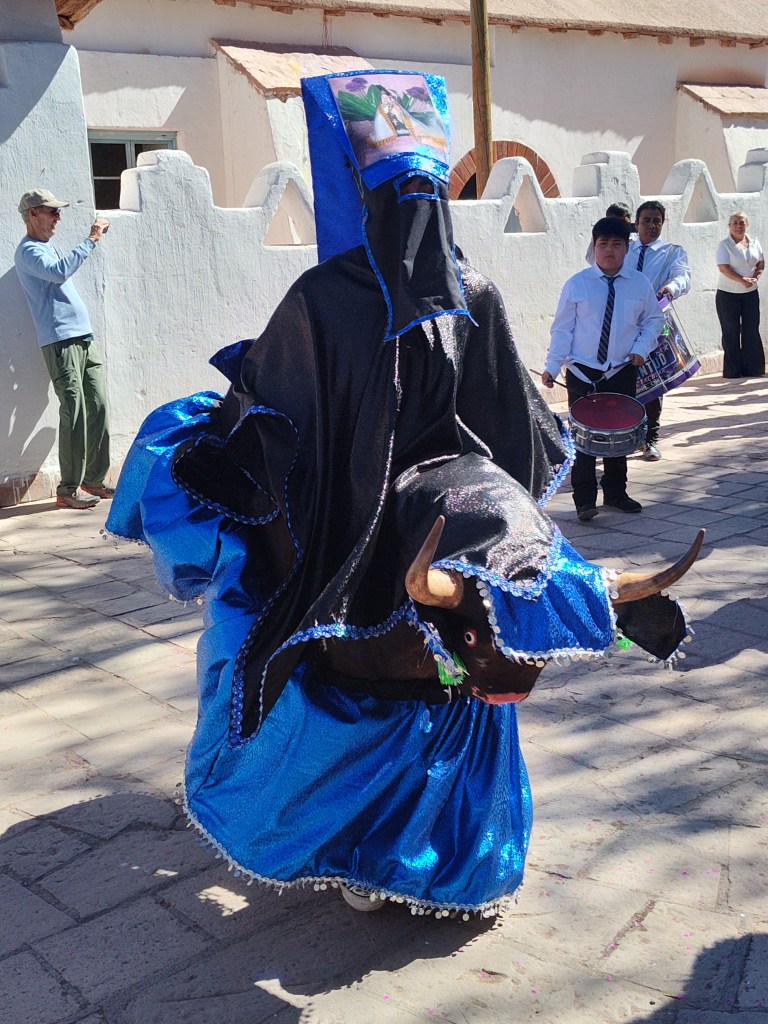
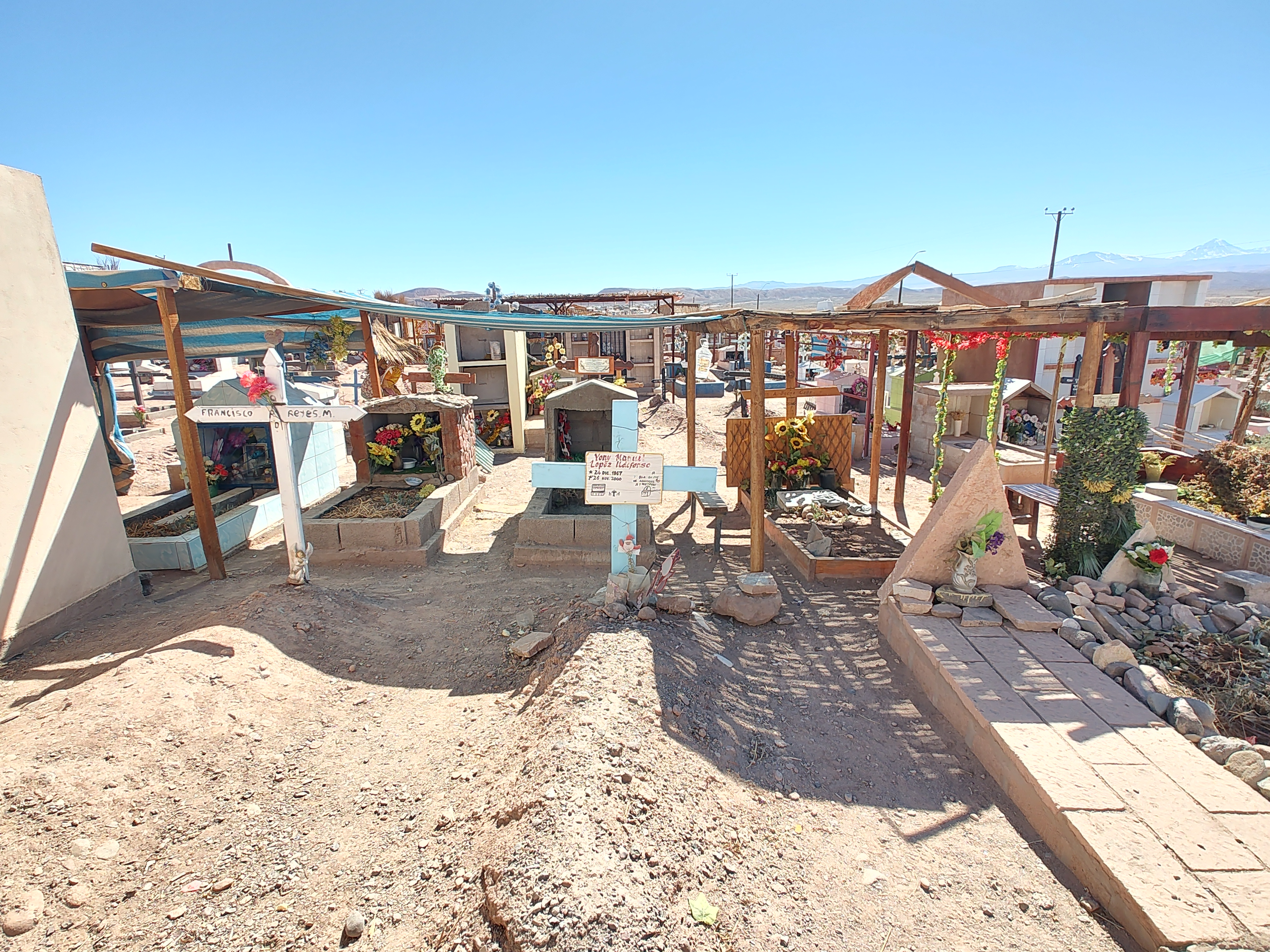 While in San Pedro de Atacama the following day, a few of us explored a cemetery close by. As it turns out, there was more than one in this remote area, one of which contained thousands of skulls of interest to archaeologists, We were struck by the humility this simple graveyard represented among such humble and unassuming people. Some graves were mounds coming out of the ground, sone were tiled tombs. Some were bright and colorful, and one even had a little plastic hummingbird circling around it. Hardly Evita back in Buenos Aires! We wanted to give a donation, but the cemetery workers weren’t interested in that. We had stumbled into a suburban area, and people strolled by with their llamas as we left the cemetery.
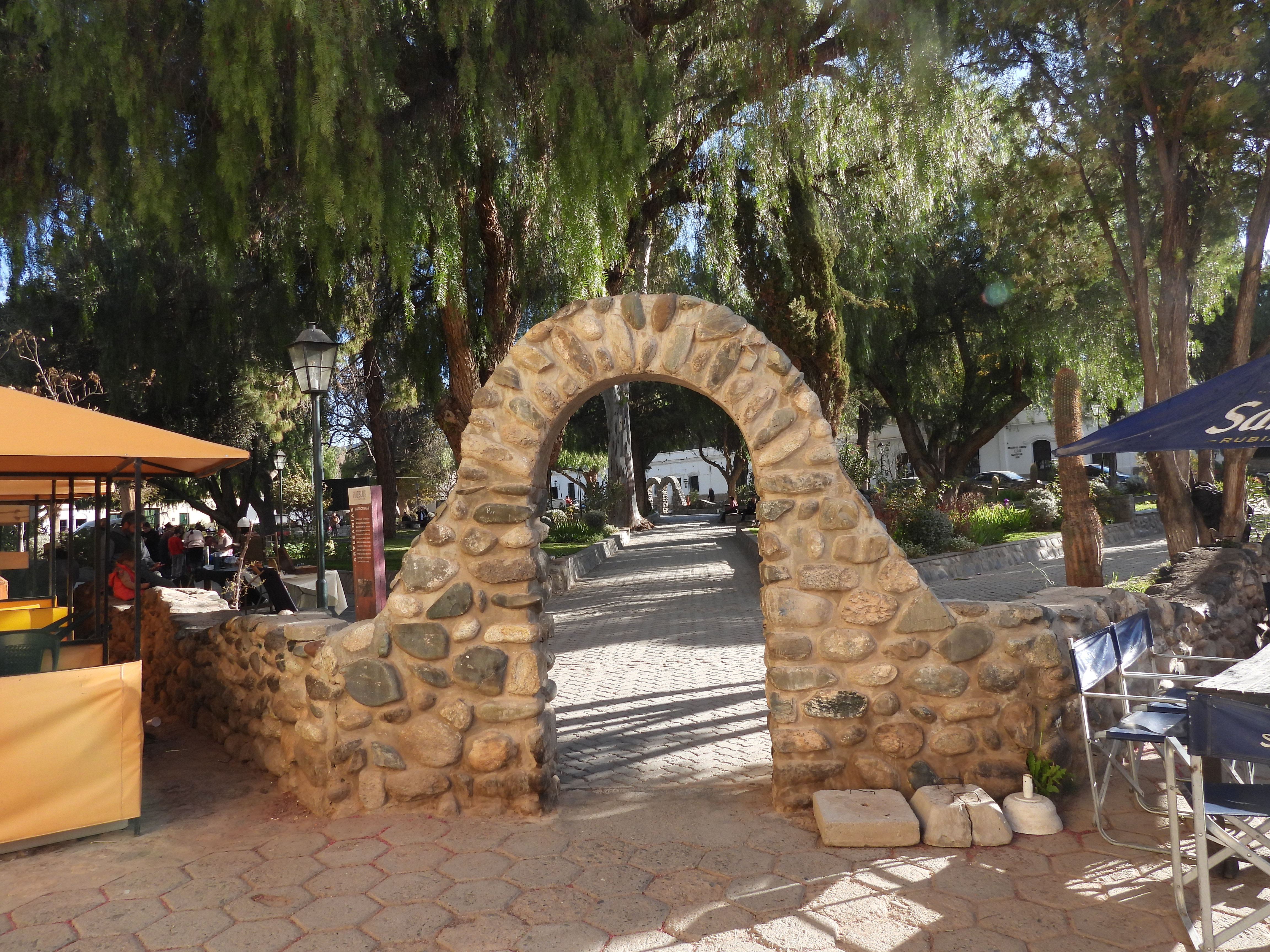 Visiting cemeteries can become an essential part of travel. Learning that the dead are in fact protecting the living in their culture adds a new dimension to such visits. And seeing as we did, celebrations with as unassuming and down-to-earth people as the Gauchos and Andean Incas are, made me as a traveler appreciate that these indigenous people were appreciating life amidst the barren surroundings that engulfed them and at times overwhelmed me. But perhaps for them, it brought serenity and comfort.
All Photos Jann Segal
 Travel the World with Passion