“How can anyone govern a nation that has two hundred and forty-six different kinds of cheese?” ~ Charles de Gaulle
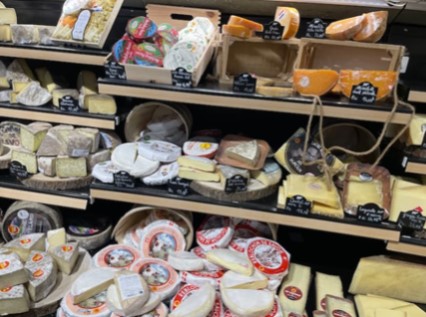 While I certainly agree with Charles de Gaulle about French cheeses (although some would argue the number of cheeses is much higher), I learned that the multi-layered city of Lyon, France is a masterpiece. There is a beauty to it that transcends the rest of France. It’s also a foodie capital, was the capital of the Free France French Resistance movement led by former president Charles de Gaulle during the second World War, and historically has roots in silk production as well as the printing press. I learned all this during my French Impressions trip with Overseas Adventure Travel.
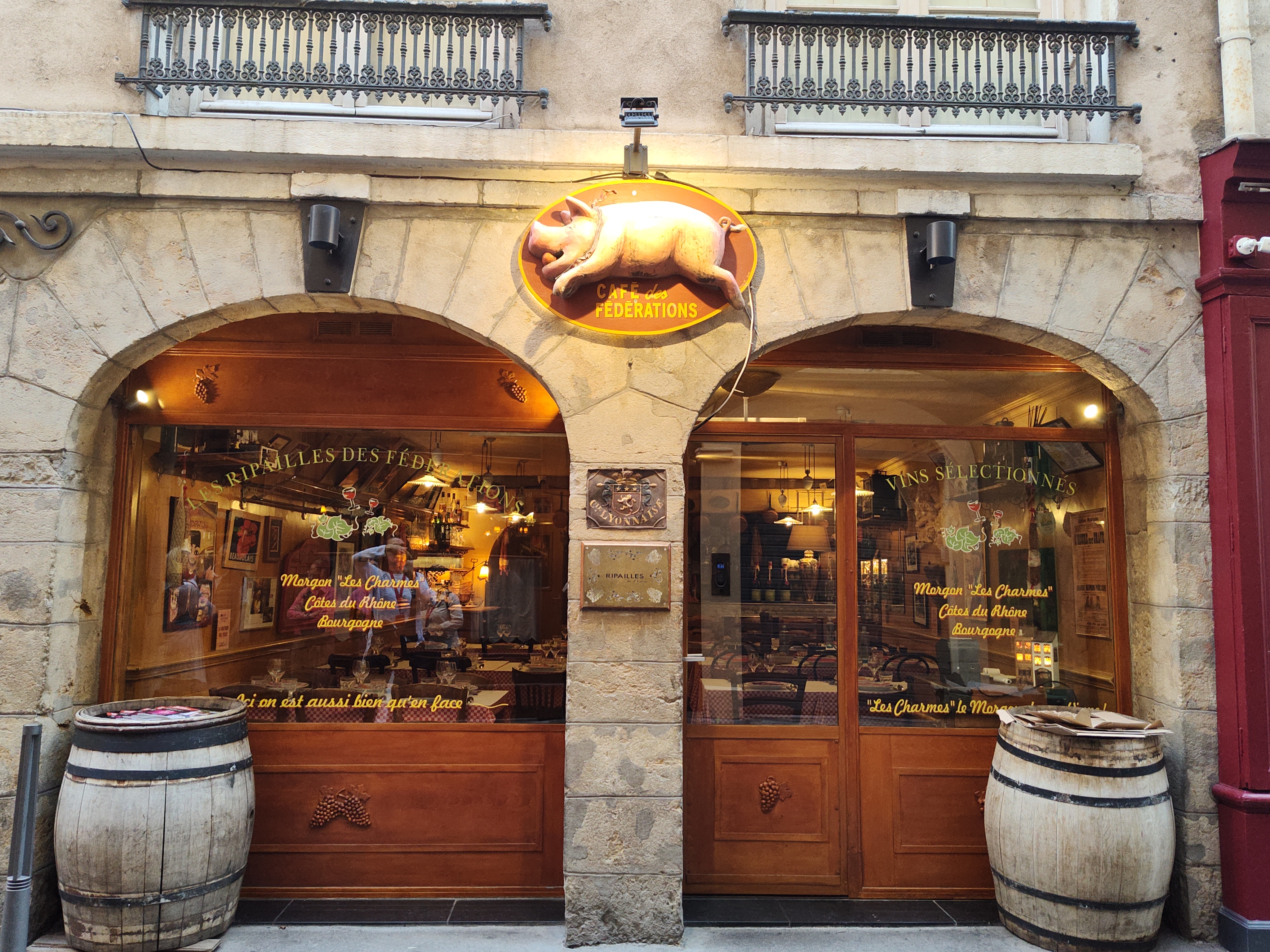 Primarily, of course, was the food. Wonderful soft cheeses for breakfast, and cheese which for me was to die for, became a hallmark of Lyon during this trip. We had a food walking tour where we were told that a charcuterie board is all meat, and mostly pork products. I have usually seen meat and cheese together on charcuterie boards, but not here. Of course, we had meat with bread and an astounding array of cheeses. Goat cheese with fig inside the slices. Pureed cottage cheese with garlic. And soft cheeses became a breakfast revelation for me when I wasn’t eating fresh Lox for breakfast, of course.
This foodie capital became so thanks ot two middle class women who worked as cooks in the 19th century and created a new Lyonnaise food tradition, at a time when it had been dominated by men. They became known as the “Mothers of Lyon.” Many more women joined the original “mothers” and were employed by wealthy households during the Great Depression after they had lost their jobs due to the plunging economy. The food tradition preceded them, however, with the Romans having bought olive oil into Lyon centuries prior, and the famous bouchons having gotten their start in Lyon around 16th century. But the Mothers of Lyon either worked in these bouchons or headed them up when they needed work, creating hearty classic foods for which Lyon is now famous. We passed numerous bouchons, saw meat hanging in the window, stores that sell cooking and cutlery, and ate in one which served hearty pork and sausage dishes. Even the salads in Lyon are terrific, with a “Caesar salad” including either duck or pork.
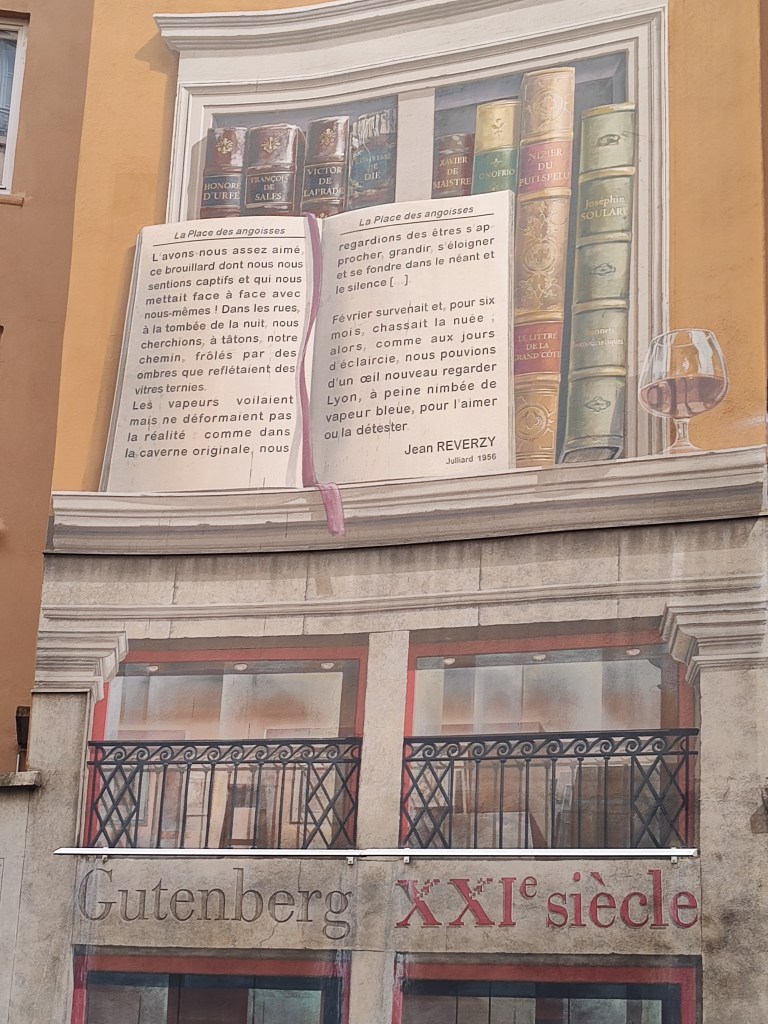
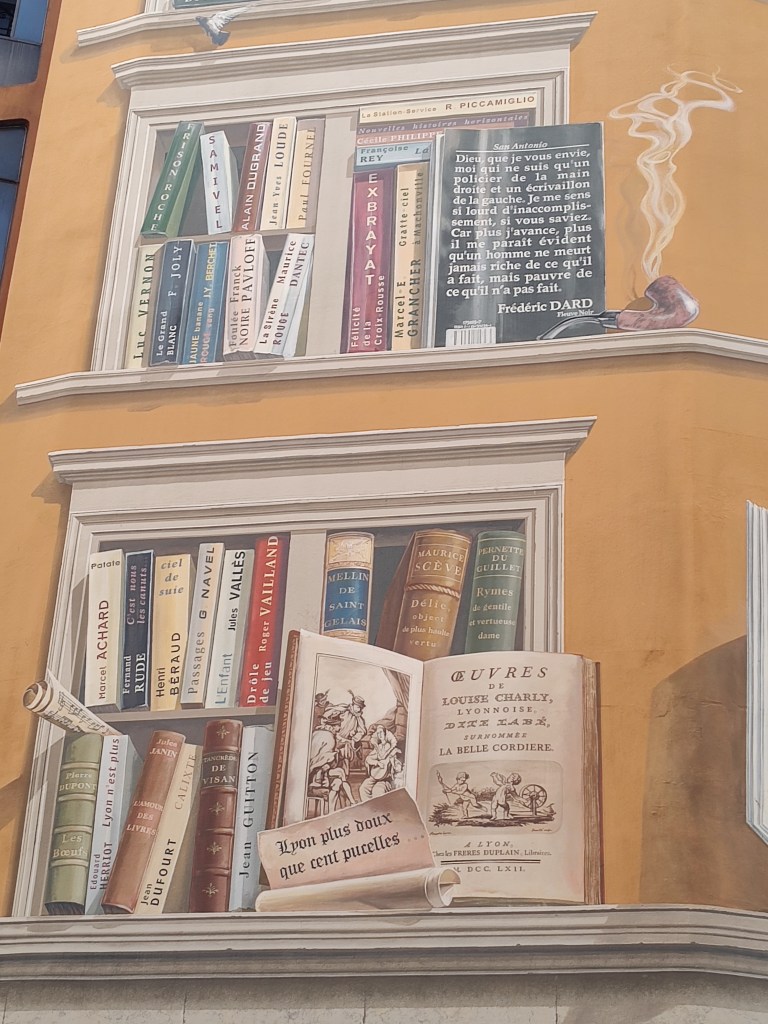
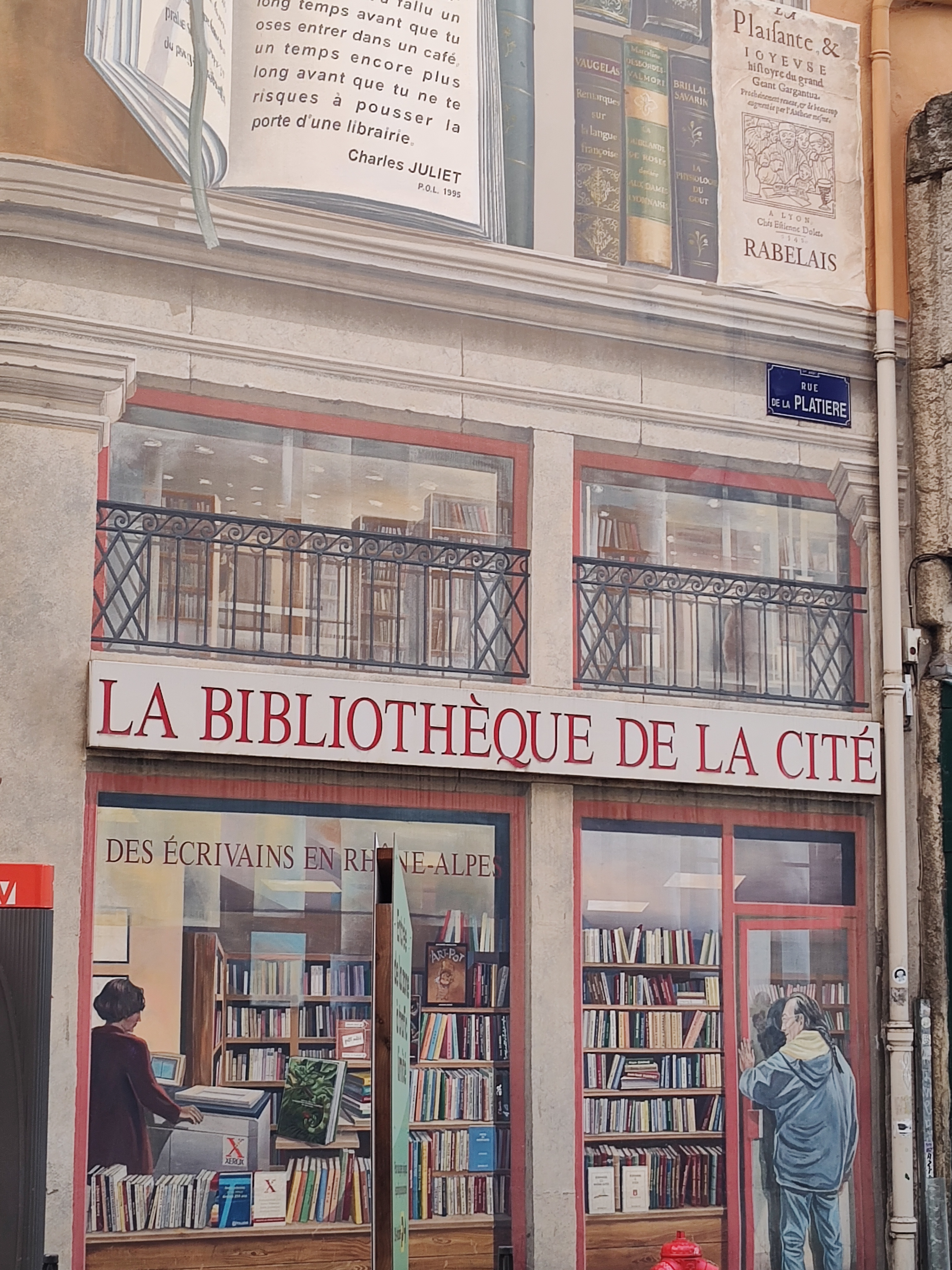 The whole of Lyon is impactful, with two rivers which run through it, the Rhone and the Saone. Where they come together is known simply as The Confluence. Aside from the copious amounts of green space in the city, I was overcome by the myriad art murals everywhere. I loved them all, including two buildings depicting a library or bibliotic with beautiful paintings of books right near our hotel. One paid tribute to its printing history by including a reference to the Guttenberg press as part of the artwork.
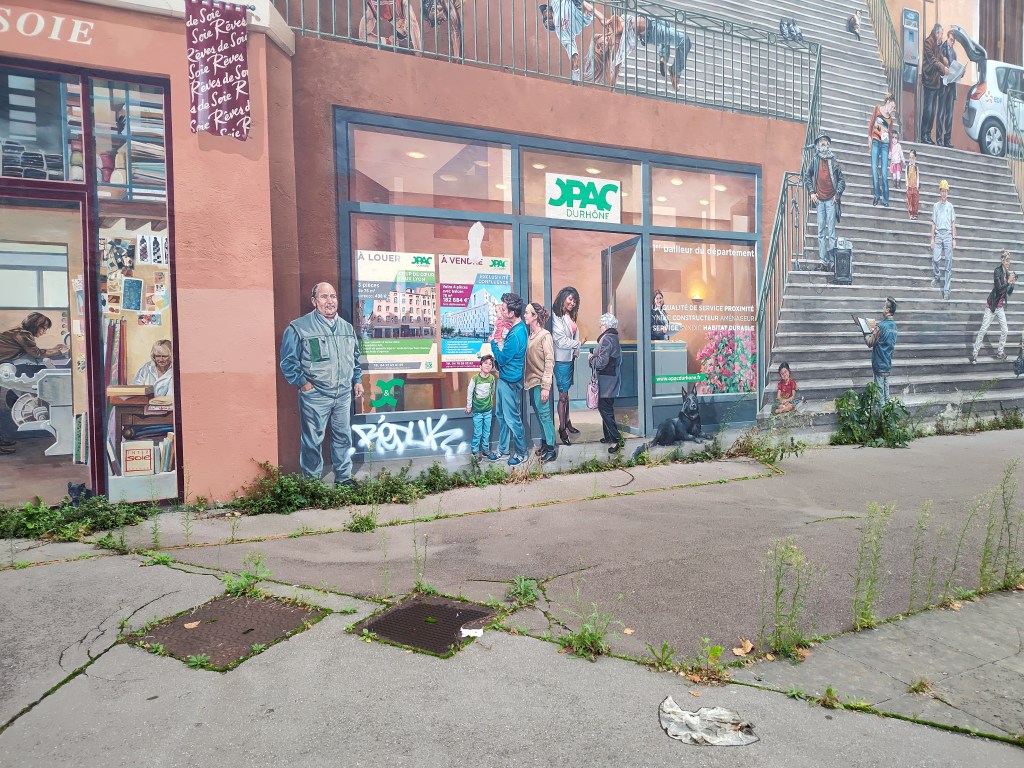
One mural is considered the largest in Europe and can really fool the eye. In fact, the style is a fresco called “trompe – l’oeil,” which means “fool the eye”. I thought only one part of what I saw was a mural, but the entire 1200 meters of it was a mural (that looked like buildings) of life in Lyon including a silk factory, a bank, customers, and daily life, We had a photo stop there and I had to take a video of it all but missed some because it was so lifelike It took up the whole building and the upper part of it as well. It is called “Le Mur des Canuts” or the “Weavers of Silk,” and it has been updated twice. It was originally created in 1987, then updated in 1997 then again in 2003 to keep up with how the neighborhood has changed over time.

While Lyon was home to the French Resistance during World War Two. Lyon was also the home of Klaus Barbie, the Butcher of Lyon, a German perpetrator against the Jews during the Holocaust. We saw the building where his trial was held in the last part of the 20th century.
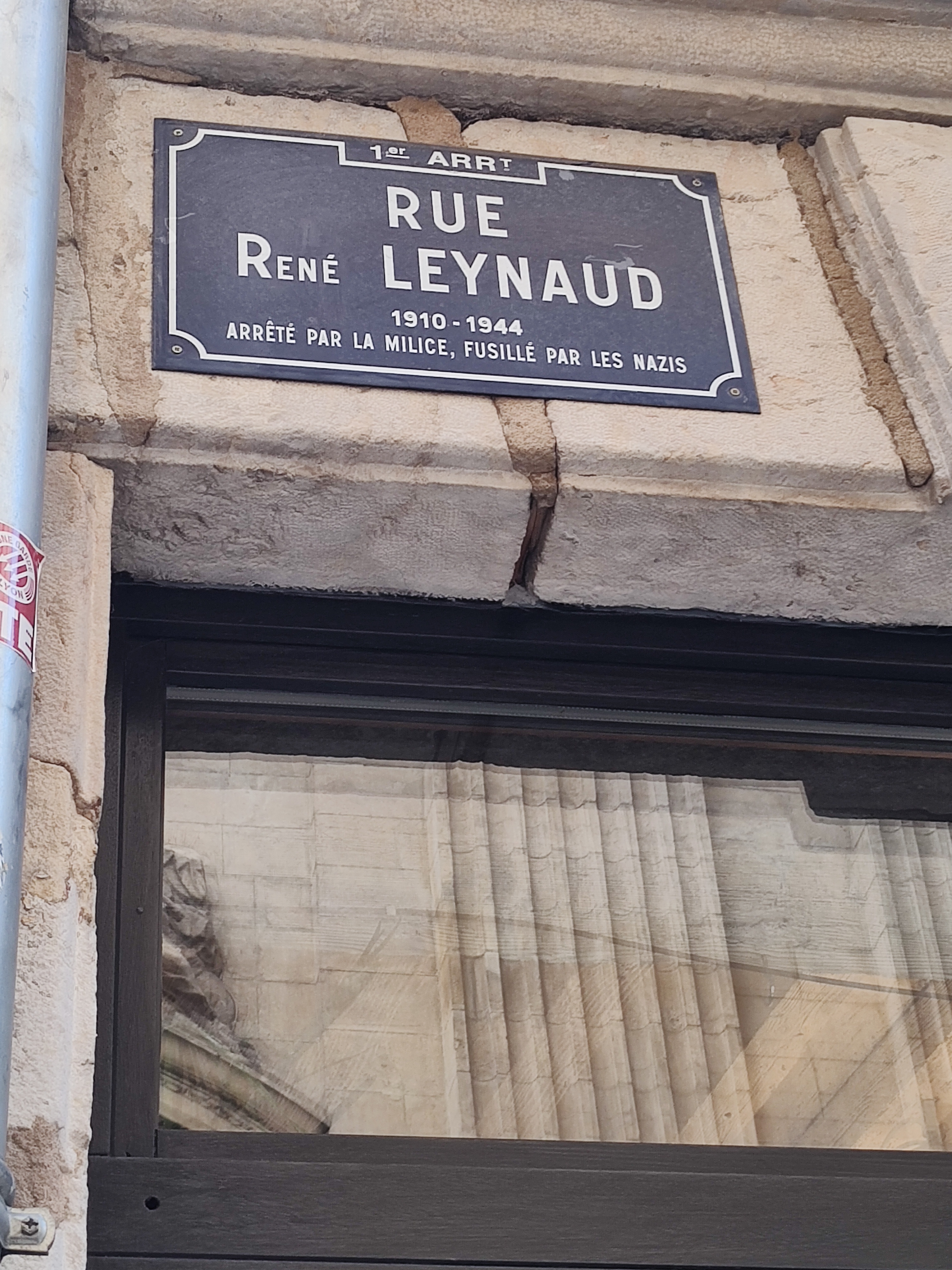 We had a specialist walk us around the part of the city where it was centralized for the French Resistance. She gave an extremely balanced presentation for two hours. We walked through a couple of passageways which were hidden at the time, and we saw houses with white plaques where those died who were part of the Resistance, shot in their own homes. Our local guide did not just talk about France’s role in the Resistance, but how the war impacted the Jewish population there as well. We heard a variety of stories along the way, about real incidents that occurred among the people, as we stood in front of where they once lived before the German SS killed them for resisting or hiding Jews.
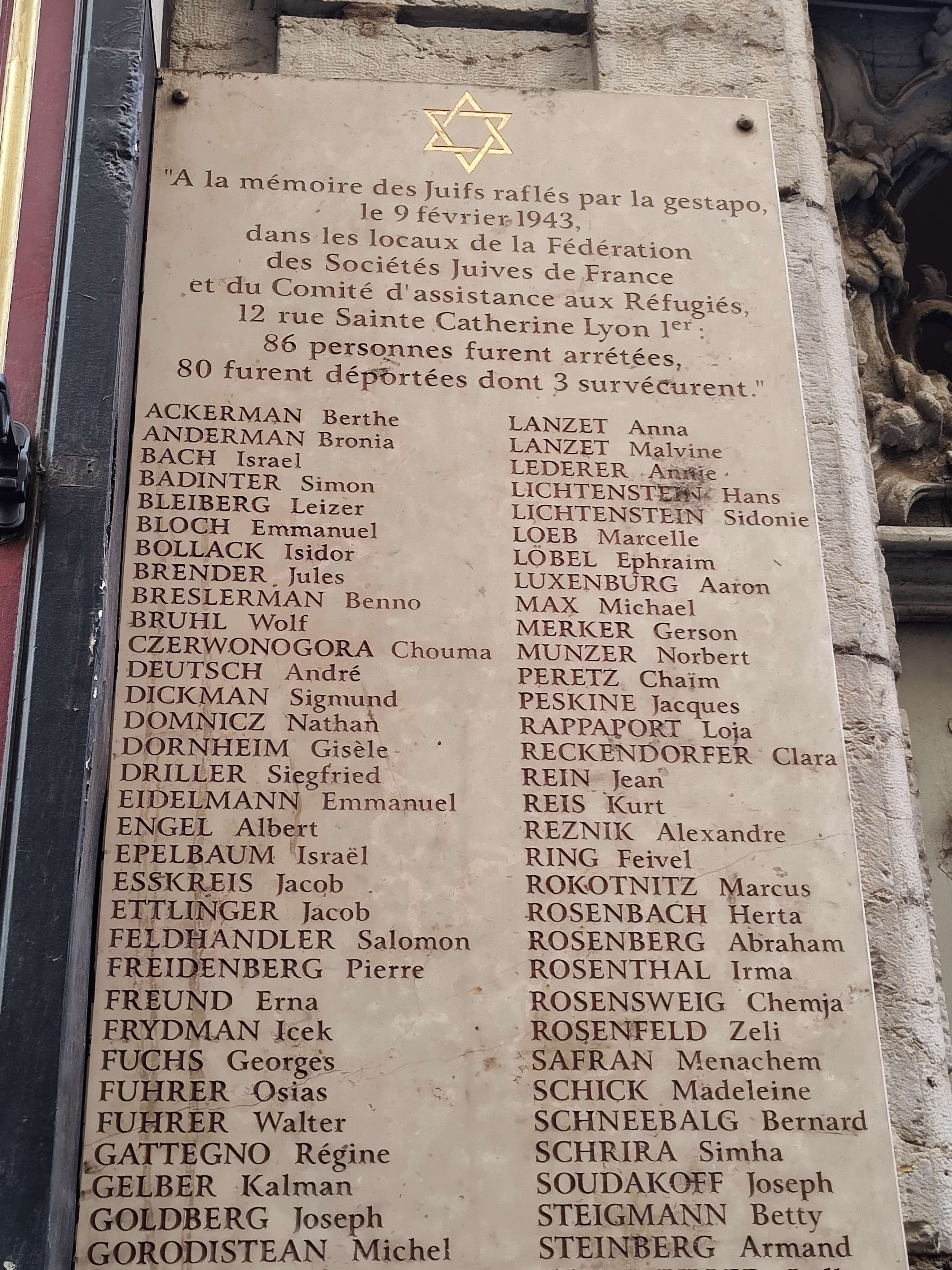 We also heard about how complicated the aftermath was when Jews came home who had survived. One Jewish woman tried to tell a former neighbor about her experience in the camps, and the neighbor said simply, ” You think you had it bad? All our windows got broken.” So, the two sides could not really discuss traumatic war time experiences as they tried to continue to live “normal” lives.
Charles de Gaulle is still revered in France for his Free France activities, even though the government arrested him, wanted to execute him, and heads of state didn’t care for him. Free France was the name of the French Resistance movement as well as the part of France that was free from the Nazi government and was centered in Vichy, although it was really a puppet government. There were different factions of the Free France movement, but de Gaulle’s was the most successful even though at first it only consisted of one or two percent of the population.
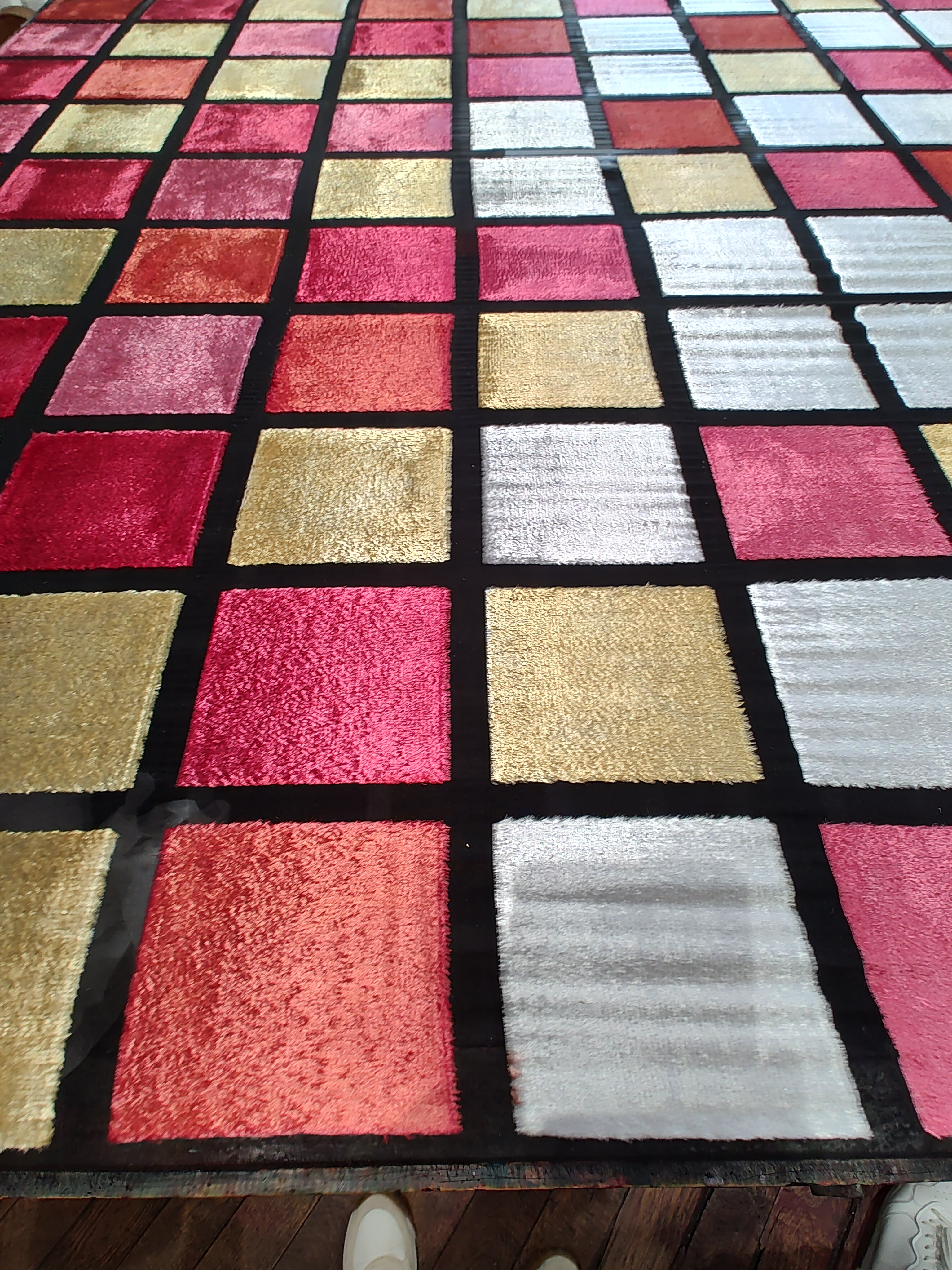 This multifaceted city continued to enchant as we visited one of the remaining silk productions factories and saw a demonstration of how the silk was hand painted. Silk production in Lyon goes back as far as the 15th century but declined in the 20th century because of the production of synthetics. It flourished in the 17th century under Louis X1V and Napolean, with over 1,000 looms in operation.
For those interested in this trip, please watch this YouTube video which also shows a video of the enormous street art we saw as we entered Lyon, and a video in the silk factory. There was plenty of unique and beautiful shopping at the silk factory, but I left for more art. Lyon is also home to a fine arts museum that is considered second only to the Louve. For lovers of French gourmet food, art, and history, nothing is better than Lyon. Well, except for Paris of course!
All photos Jann Segal
 Travel the World with Passion