Every time I tried to think of a memorable event in the charming Renaissance city of Sarlat, France (formally known as Sarlat-La-Caneda) I got stuck. I’m not sure why, because the entire Dordogne region really impressed me when I took the Overseas Adventure Travel trip French Impressions. But when I took the word “Impressions” and flipped it around to ” expressions,” I stumbled onto the key. Because one of the expressions that defines pretty much any region of France is ” art de vivre,” or ” joy of living.” And that simple reminder of what the region – and the whole country – stood for was pivotal, as I happily recalled the moments which really stood out.
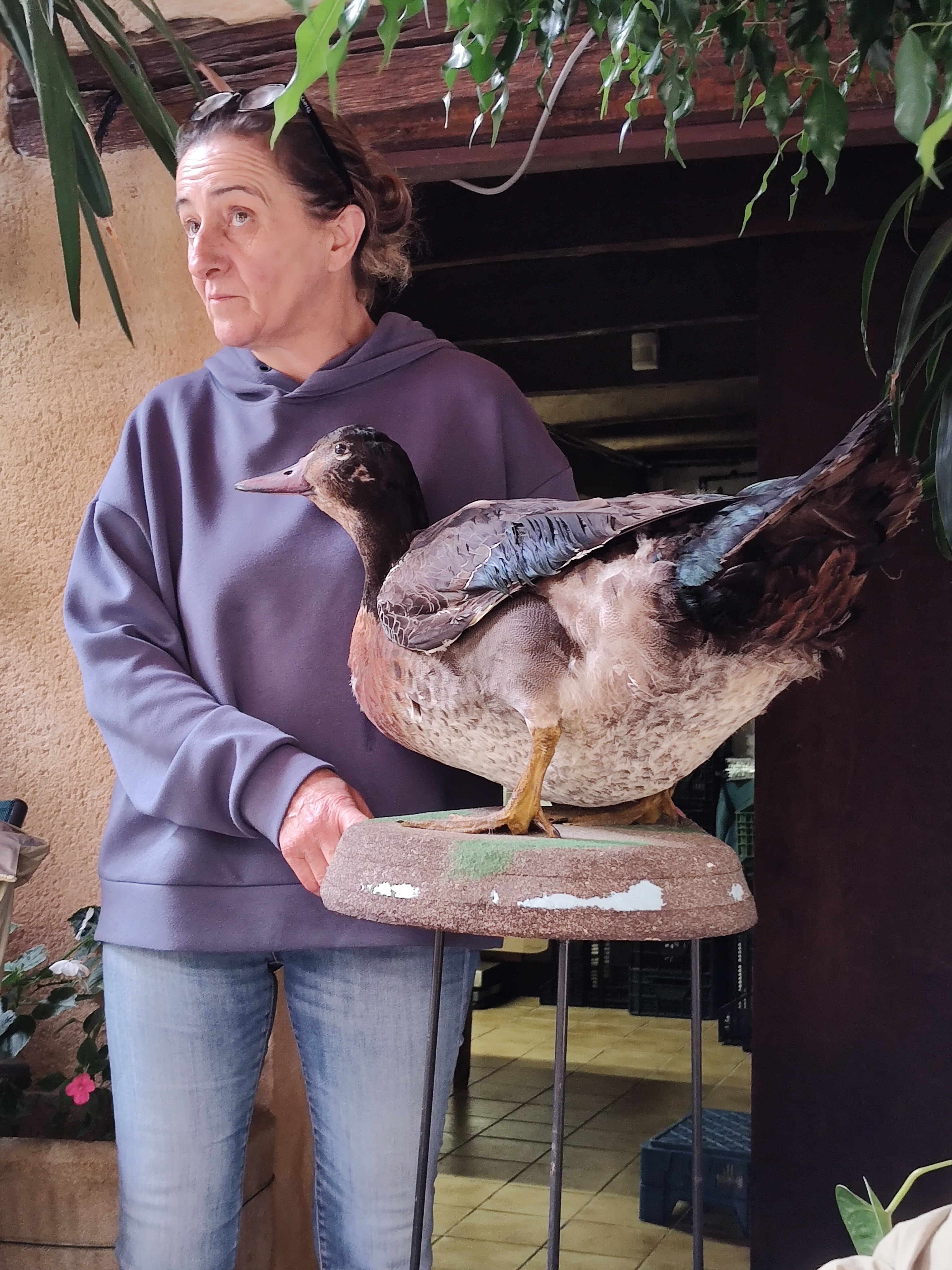 But what exactly reached out to me? What brought me that artful joy? The unique honey-colored buildings with the red tile roofs. Drinking walnut wine in the middle of the busy Sarlat market that overtook the center of the historic city as it does twice a week. And I mean 16 proof wine so tasty, that for me it was literally a quick but delicious bottoms up before moving on. But Sarlat is especially known for its French cooking and duck in a variety of forms, like Cunard confit de Sarlat. That’s curled duck legs cooked in salt and garlic and which simmers for hours in its own fat. And of course, I can never forget pate Fois Gras in its different varieties which I got to taste at a duck farm, and which others know simply as pate. We enjoyed it with a Rosette wine.
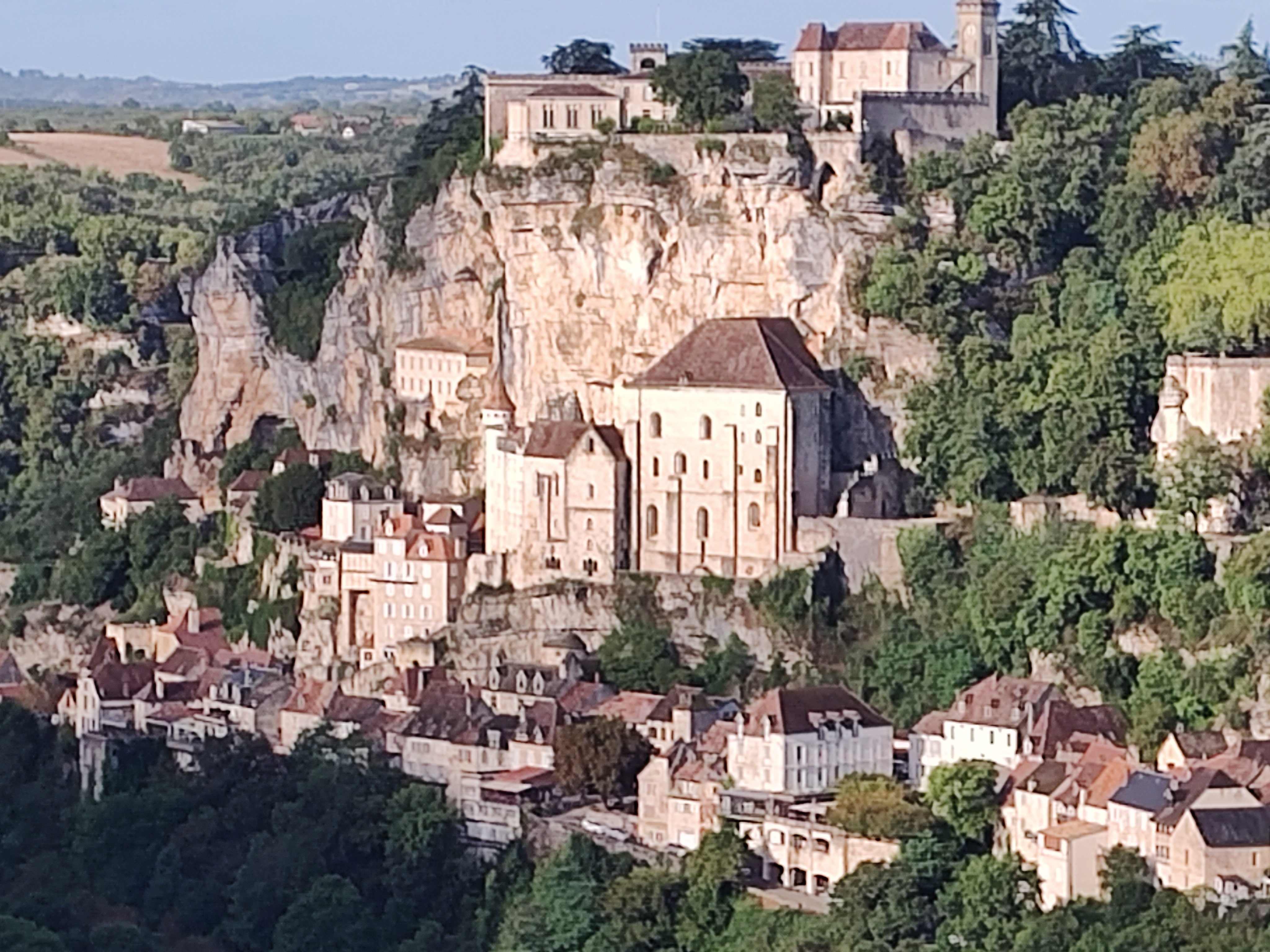 Aside from the food, there was also a unique side trip to Rocamadour with its Black Madonna, it’s 212 stairs that felt more like about 50, and the drive itself, dotted with chateaux centuries old. Part of the French portion of the Camino de Santiago goes through this unique hillside town, which we walked throughout. I wasn’t into the religion of it, but it was a beautiful, verdant and bucolic walk, and I made the visit to the Black Madonna meaningful for myself by lighting a candle in memory of my parents while we were in the church.
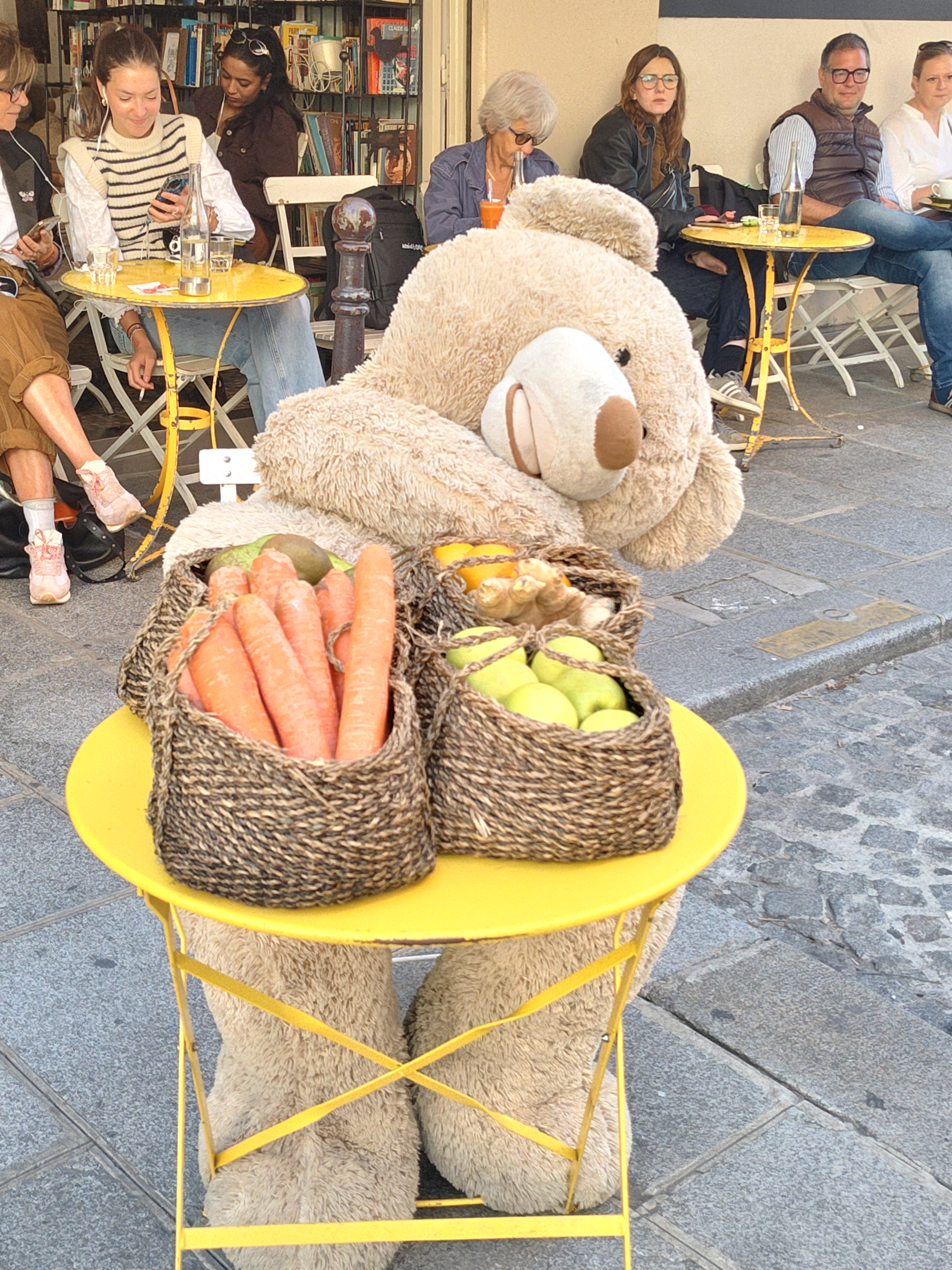 France, I have come to discover, is like a finely cultured book, each town and region having many unique and finely textured chapters. Every chapter tells a different story in the country’s history, and no two are alike. Aside from Sarlat and other charming country cousins we visited like Limosin and Limoges, everything about France continued in this journey to be artful, best enjoyed when I stood back to admire it. The joy for me in just strolling down a city street where I’m unexpectedly having a life changing meal followed by tiramisu to die for in an unassuming corner cafe will long be remembered. Lyon is Paris’ second cousin, a masterpiece unto itself, with an entire chapter in gastronomy and silk. In all of Paris and Lyon, Sarlat, Limoges, Angers and Carcassonne, a meal becomes a memory. That part of my joy wasn’t just confined to the Dordogne region.
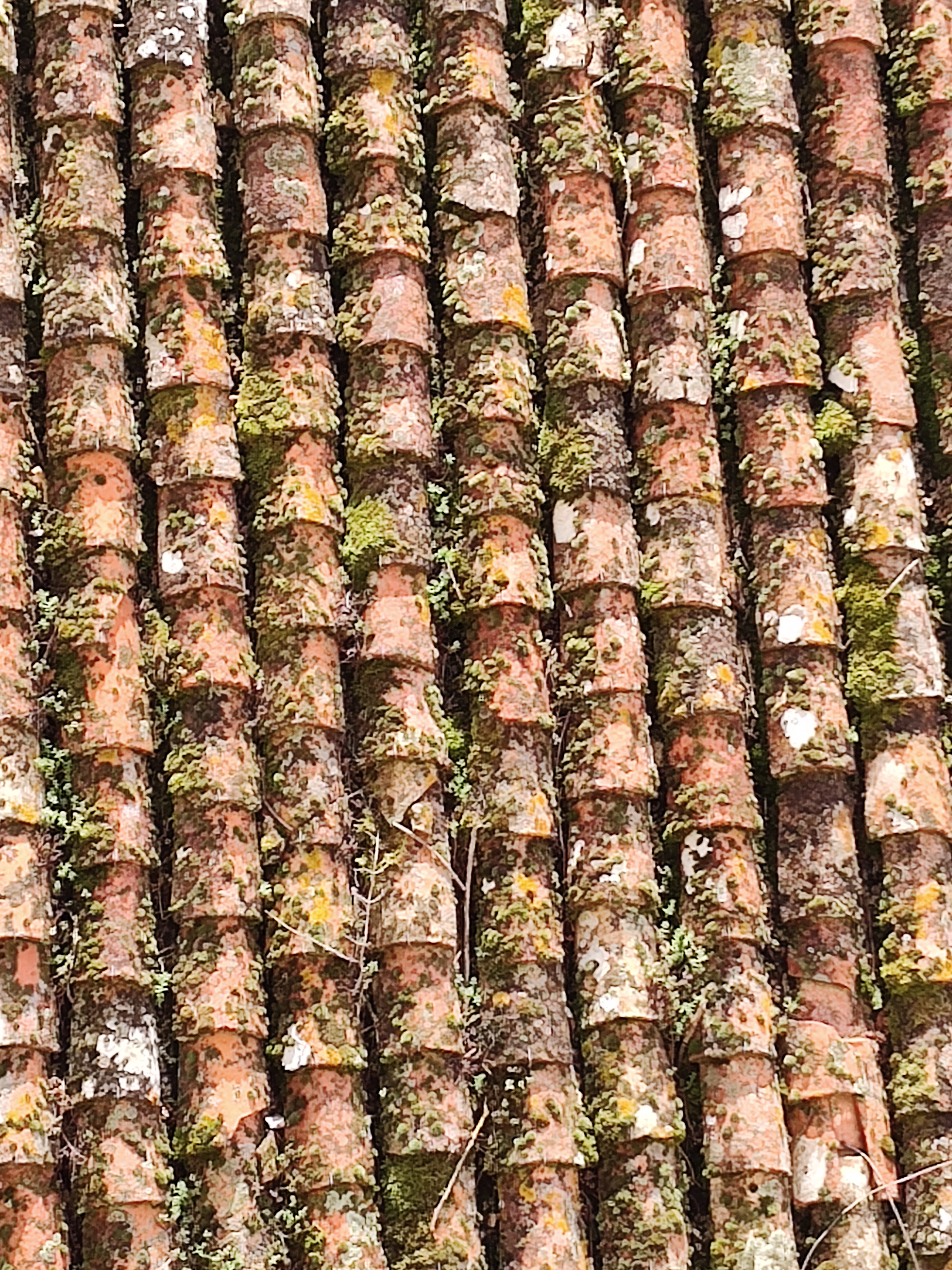 The Dordogne itself is department 24 in the Nouvelle Aquitaine region, and named after the Dordogne River which flows through this southwest part of the country. It came into existence as we know it during the French Revolution, and with over 1500 chateaux, it’s known as ” the other chateaux country,” the Loire Valley being the first. It was also the battleground of the 100 Year War.
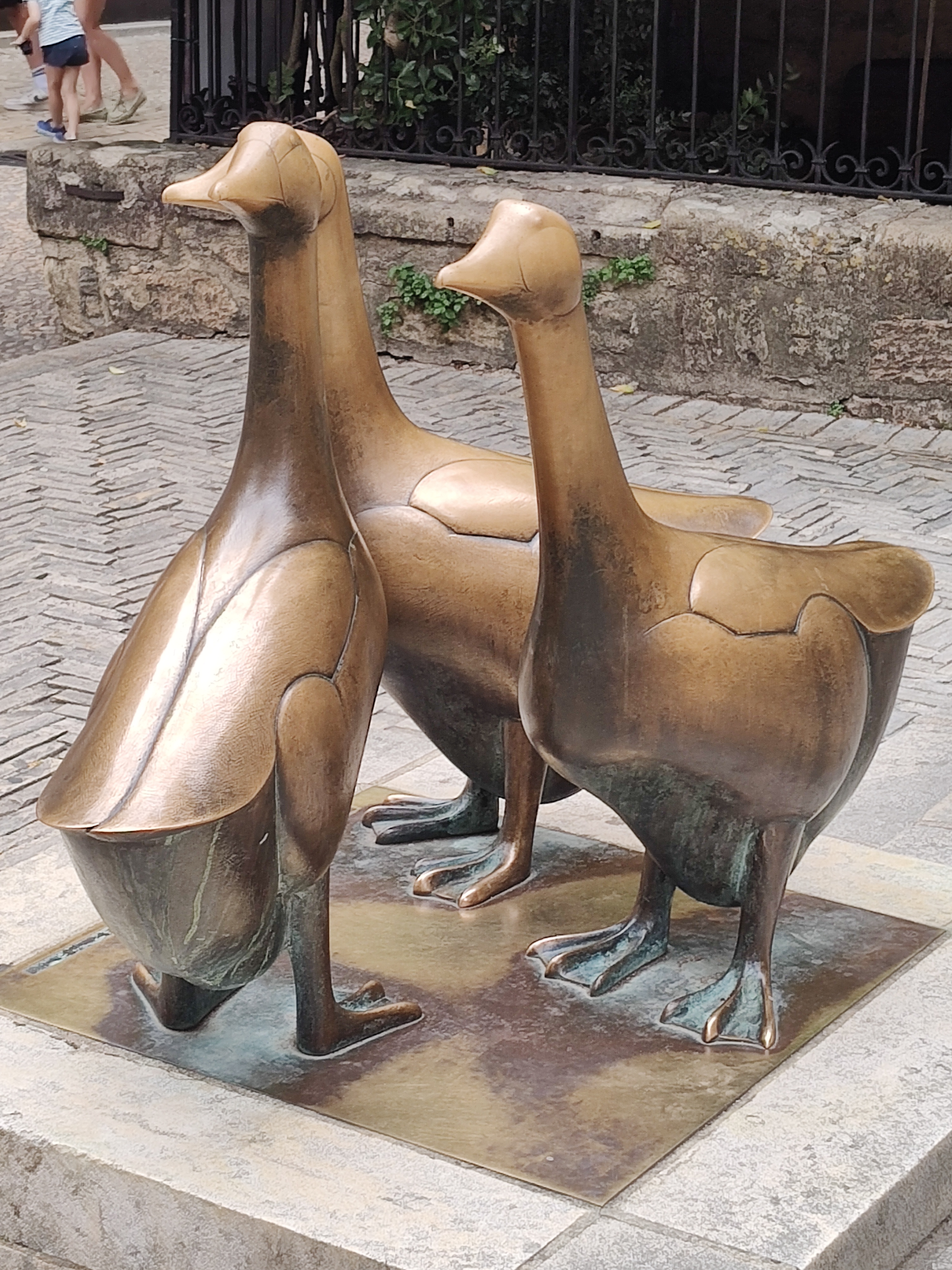
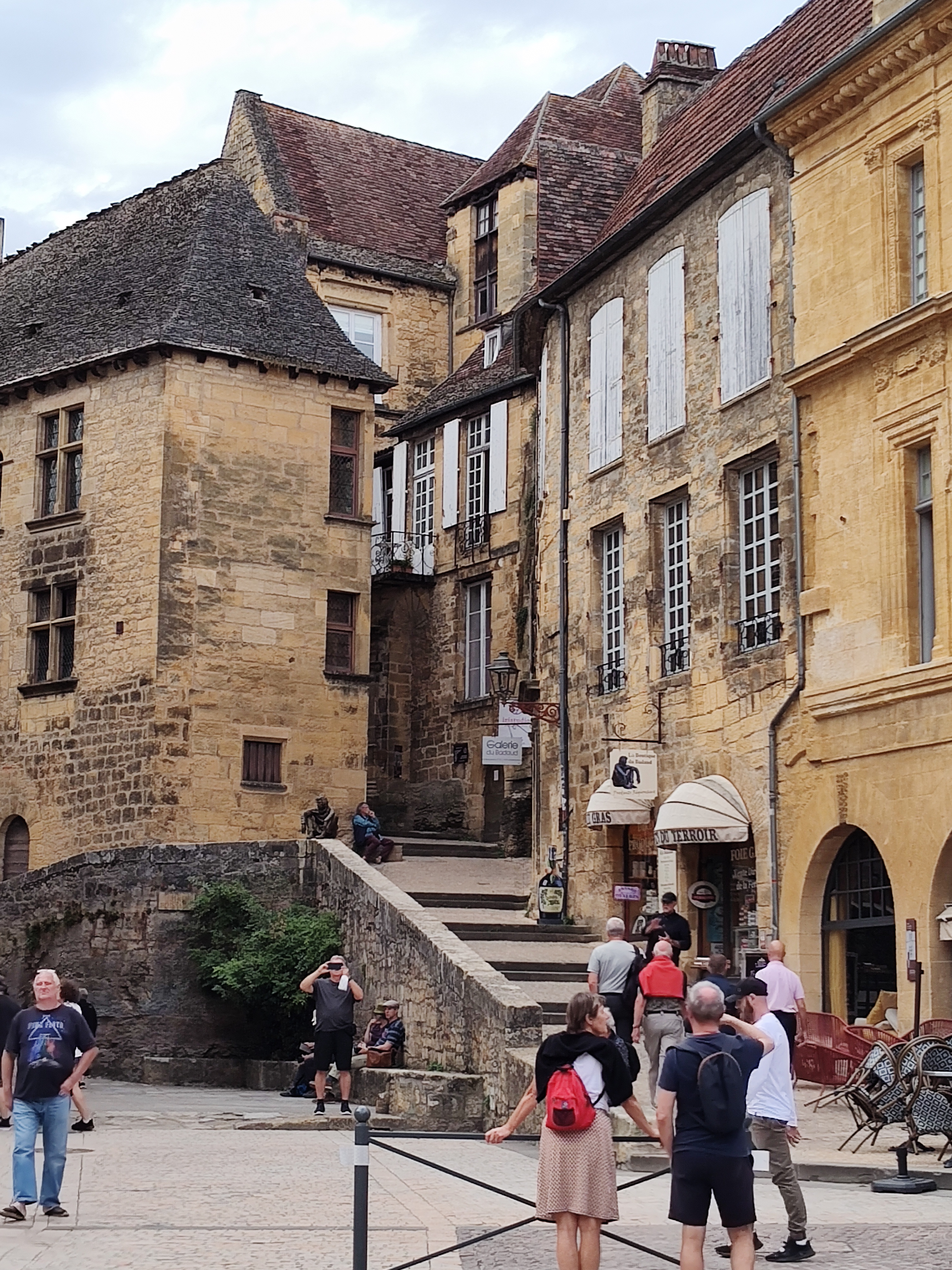 Medieval Sarlat has kept its 14th century charm, where history appears to have passed it by. Appearing to be long forgotten is one of its most endearing attributes. The Benedictine Abbey itself, around which Sarlat was built, dates back to 1081, and ultimately became a Cathedral in the 20th century. A traditional goose market once stood in the historic city center, which is today replaced by a sculpture of three bronze geese, and of course restaurants and eateries galore line the streets and bring modern times into this shrine of a city from the past. A modern sound and light show are now part of this Abbey turned Cathedral.
 And perhaps my time travel into the past with food and drink enough to keep a 14th century wench in high spirits was my ultimate joy in this part of France. Long after returning home, and even after other subsequent travels, Sarlat has stayed with me, lingering along with one more can of Fois Gras purchased on the trip yet to be opened and consumed, and me still in search of walnut wine here at home. Ultimately, there can only be an artful joy in living when these are the things we long for as we go about our daily lives and reminisce about travel. And that’s perhaps the best souvenir a traveler can take home. Viva Sarlat!
 Travel the World with Passion