One of the unexpected delights when I visited Serbia with Overseas Adventure Travel, was discovering how much art and cultural influence was everywhere. Serbia is the pre-trip to The Eastern Balkans: Bulgaria and Romania. Our first stop on the pre-trip was Novi Sad.
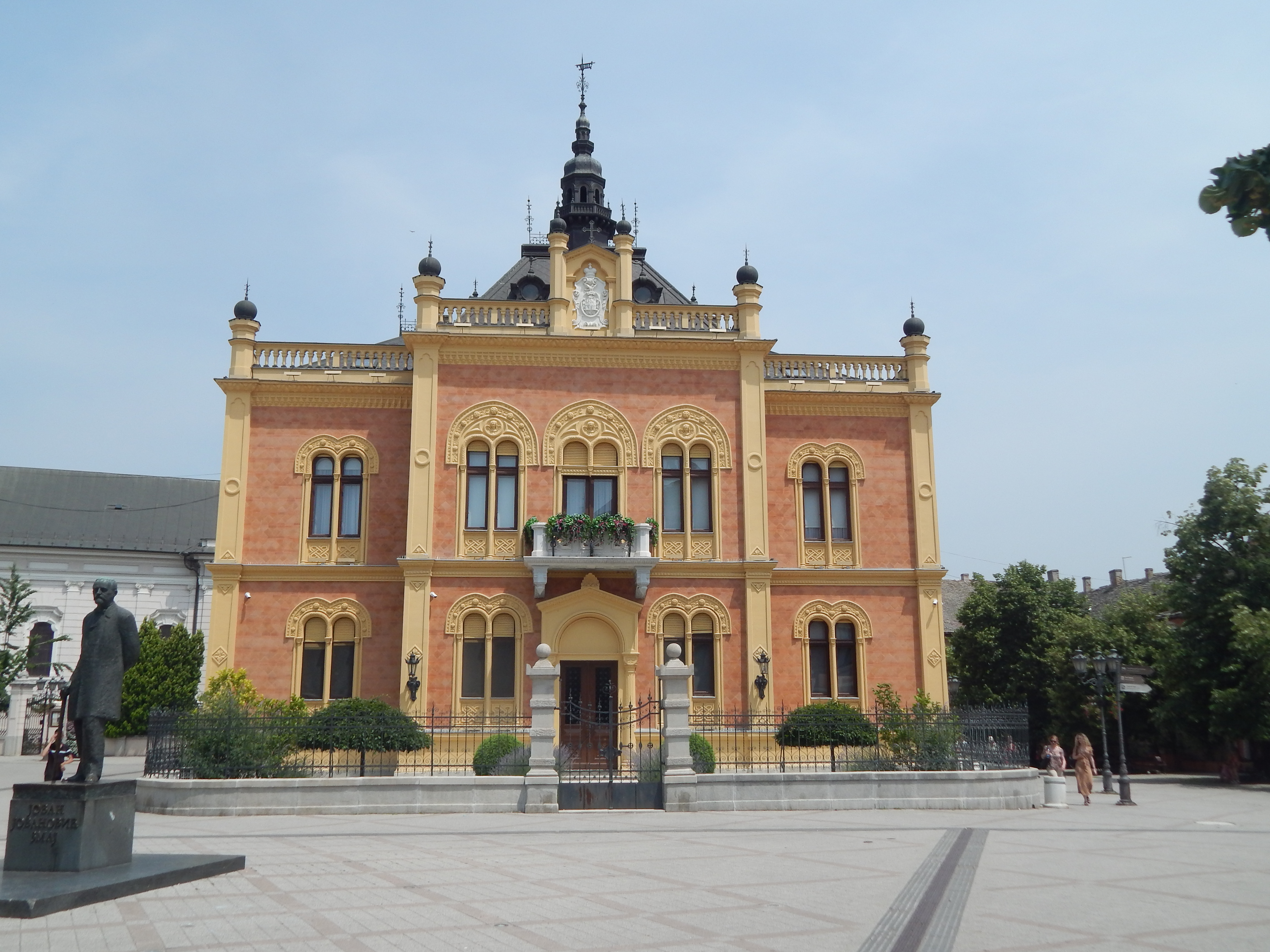 Novi Sad is really a beautiful city, teeming with life and looking like life. It’s compact and straight forward, in a country with a long and tortured history. It seems to have attracted players from many of the wrong sides of history, such as the Romans, the Ottoman Turks, the Austro – Hungarian empire, the Nazis, the communists, and finally, independence from the former Yugoslavia.
There is a surprising amount of art to see there. I guess when a county has a history of such darkness, the people need to let in some light. And the light is where the wisdom is allowed to come in, to paraphrase the late Leonard Cohen. I saw tributes to both art and literature during my week there.
My trip leader helped me find the museums that I was interested in during free time, and they were very close to the hotel. That area is known as Gallery Square. I always try to take in a museum or two on every trip, since it typically sets the stage for what I am about to see if I make a museum visit at the start. If I go at the end, I often enjoy artistic renderings of what I’ve already been exposed to. Either way, it’s a great punctuation to any trip.
The Pavel Beljanski Memorial Collection in the heart of Novi Sad is unusual, in that Pavel Beljanski was a collector of fine art and liked to help support the artists. His collection is of various Serbian artists. He used to go to Paris as well trying to help them get famous. The works looked primarily impressionist, but I did see some expressionist art as well. I noticed pianos in one gallery. It was mentioned that he liked his art to build up to a crescendo like a fine piece of music. So he was more interested in building an artistic crescendo, so to speak, than in collecting for any social or historical significance. I never figured out which piece was the highest form of art to him, but I appreciated the musical reference.
The museum right next door featured the art and furniture collection of two famous Serbs, one a renowned architect. He designed the spectacular post office in Belgrade which we saw while there at the end of the trip. I adored looking at the fine furniture. All the art and furniture I saw in both museums were created and collected during the Inter War period between the two world wars.
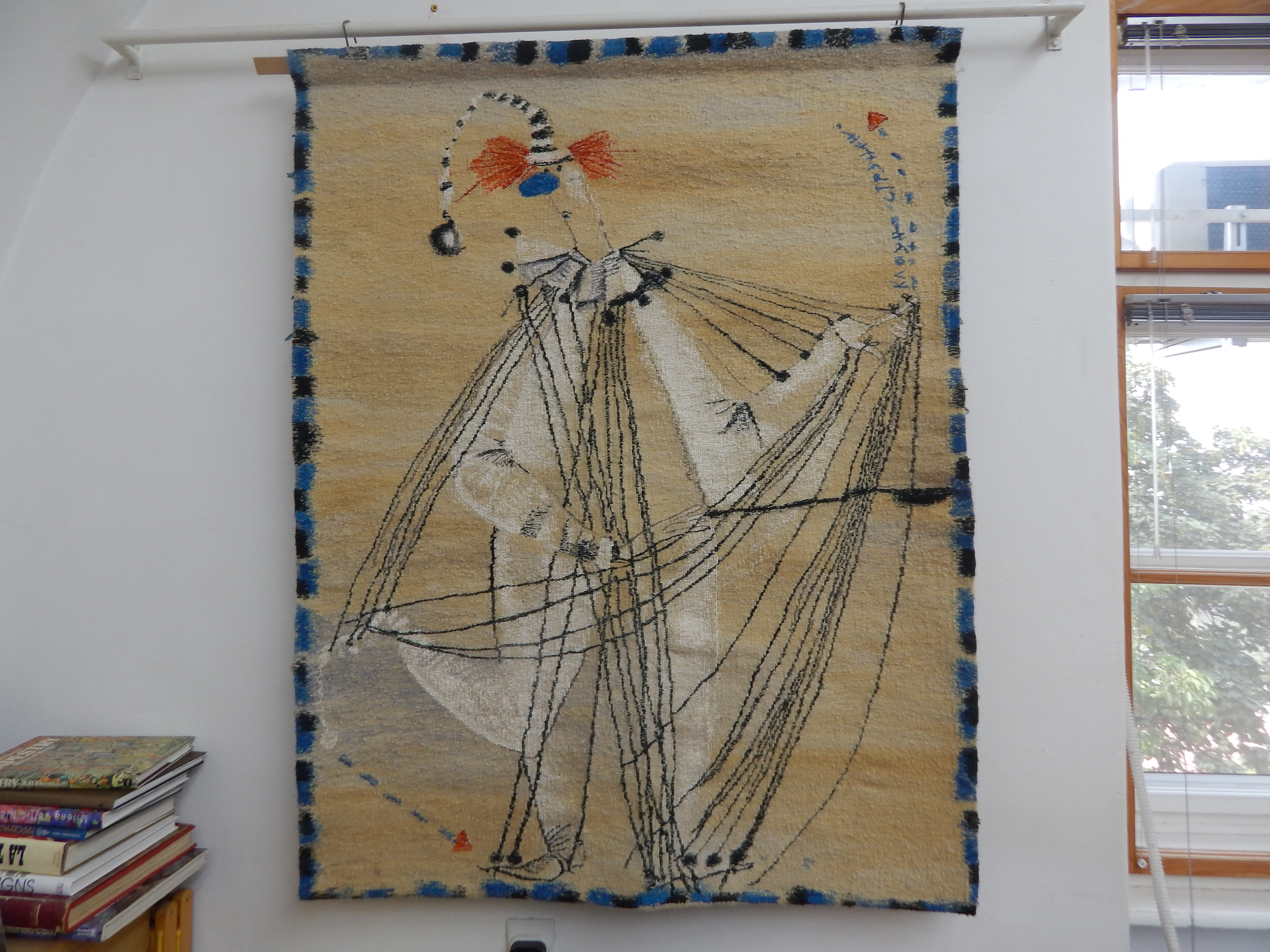
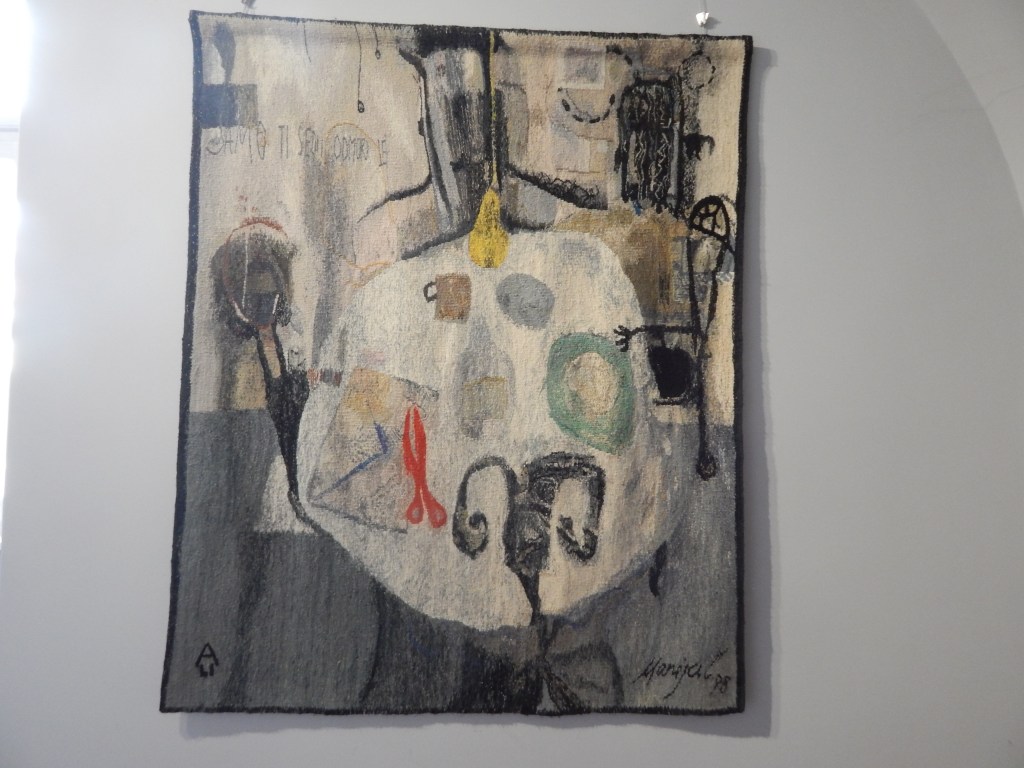
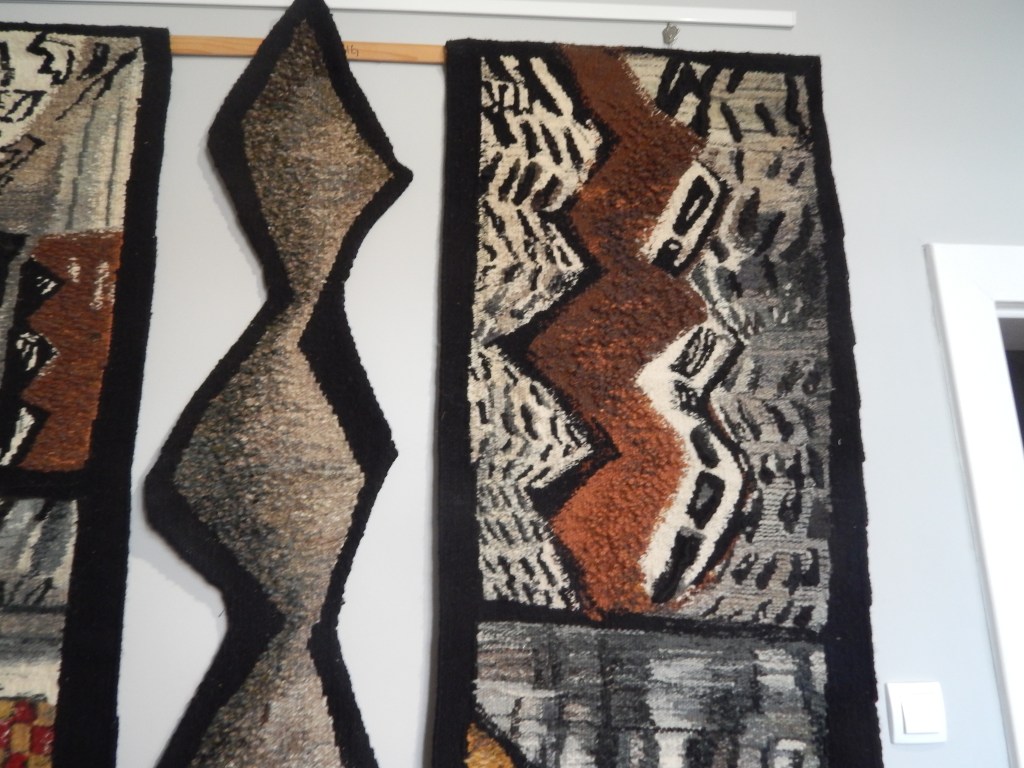
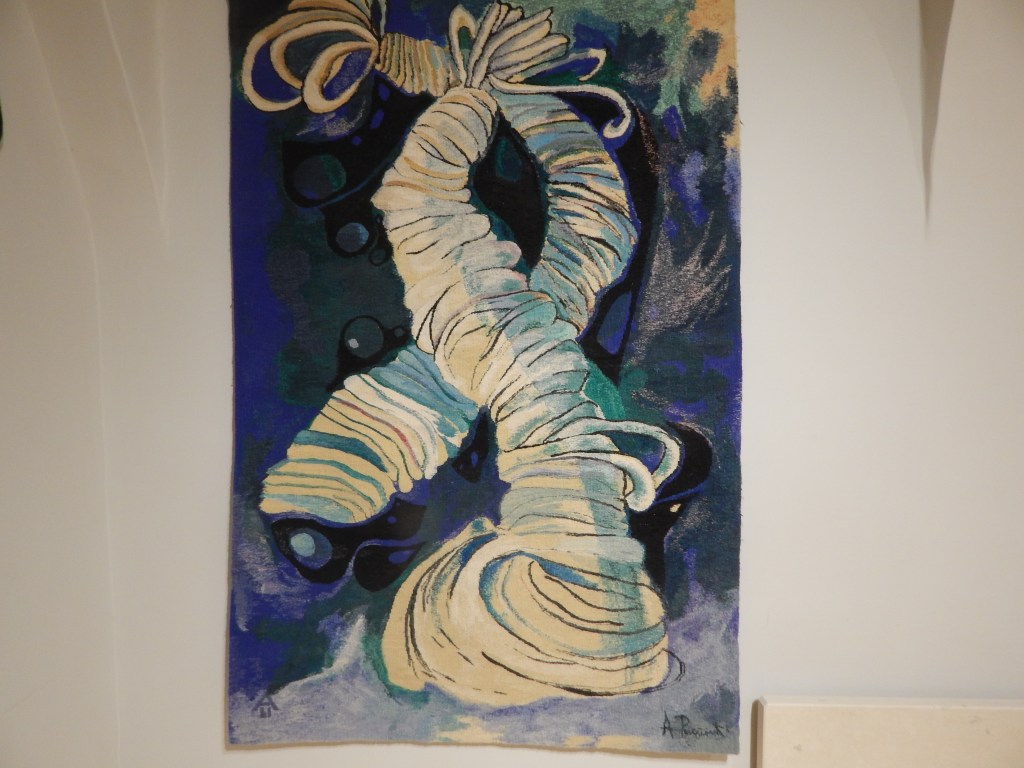
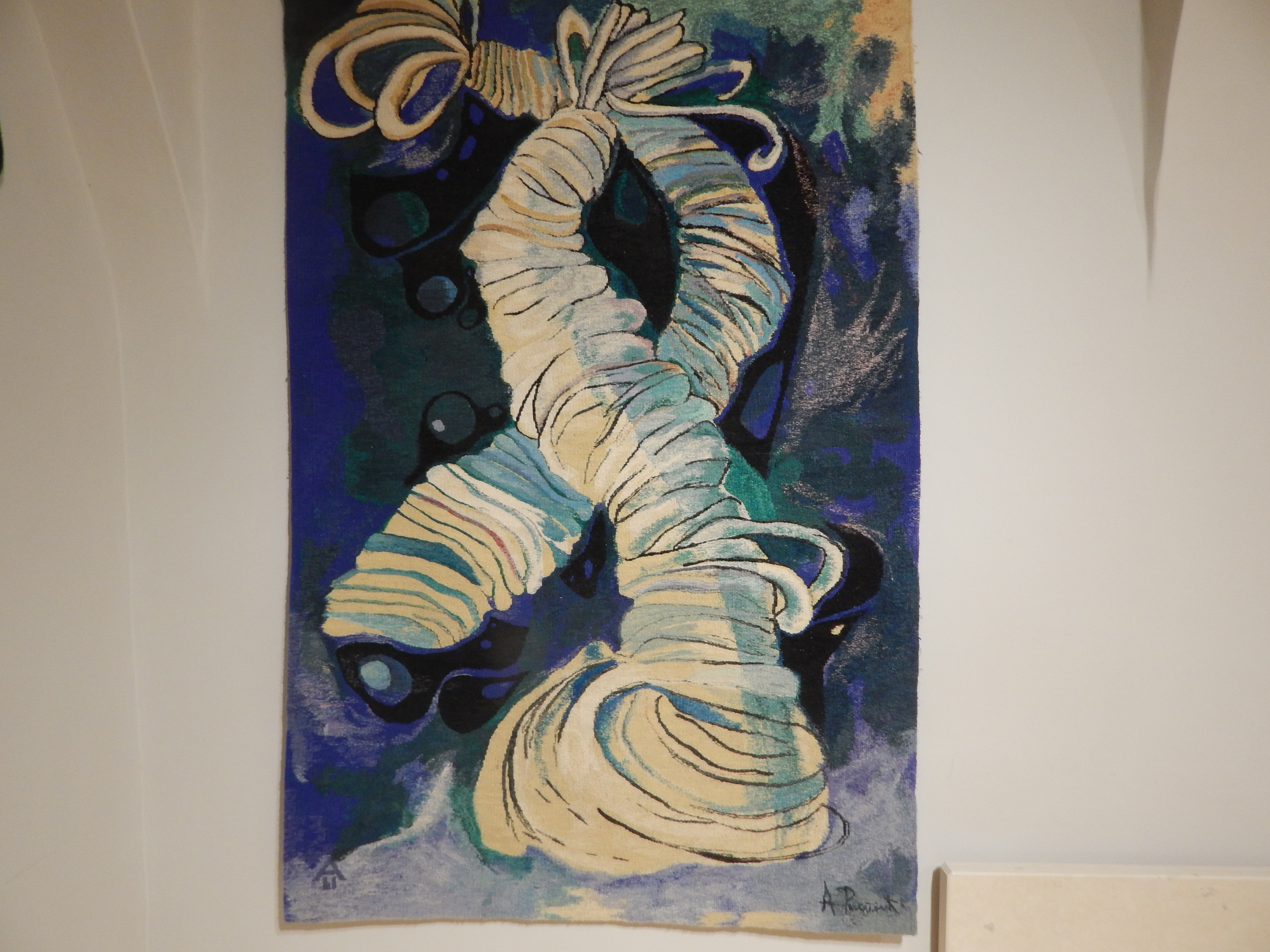 Novi Sad is a hopping place at night with people sitting in the center square amid music which we listened to while we had our after-dinner gelatos. But there continued to be more art the following day when we went to see some artistic weavers at work. Artistic because the designs had been laid out for them by artists, and the women doing the weaving followed the patterns of designs to create some of the most beautiful woven wall hangings I have ever seen. In some cases, the original can’t be sold, but if additional woven hangings are made using the same design, those can be sold. We saw many scraps of remnants which were used for further decorating.
 We also saw many sculpted horses in the area which was close to the Danube. Horses were of course vital for transportation, to deliver goods for sale. Since we spent our day along the Danube, I compared the importance of horses in the area to the importance of the river in helping Novi Sad grow.
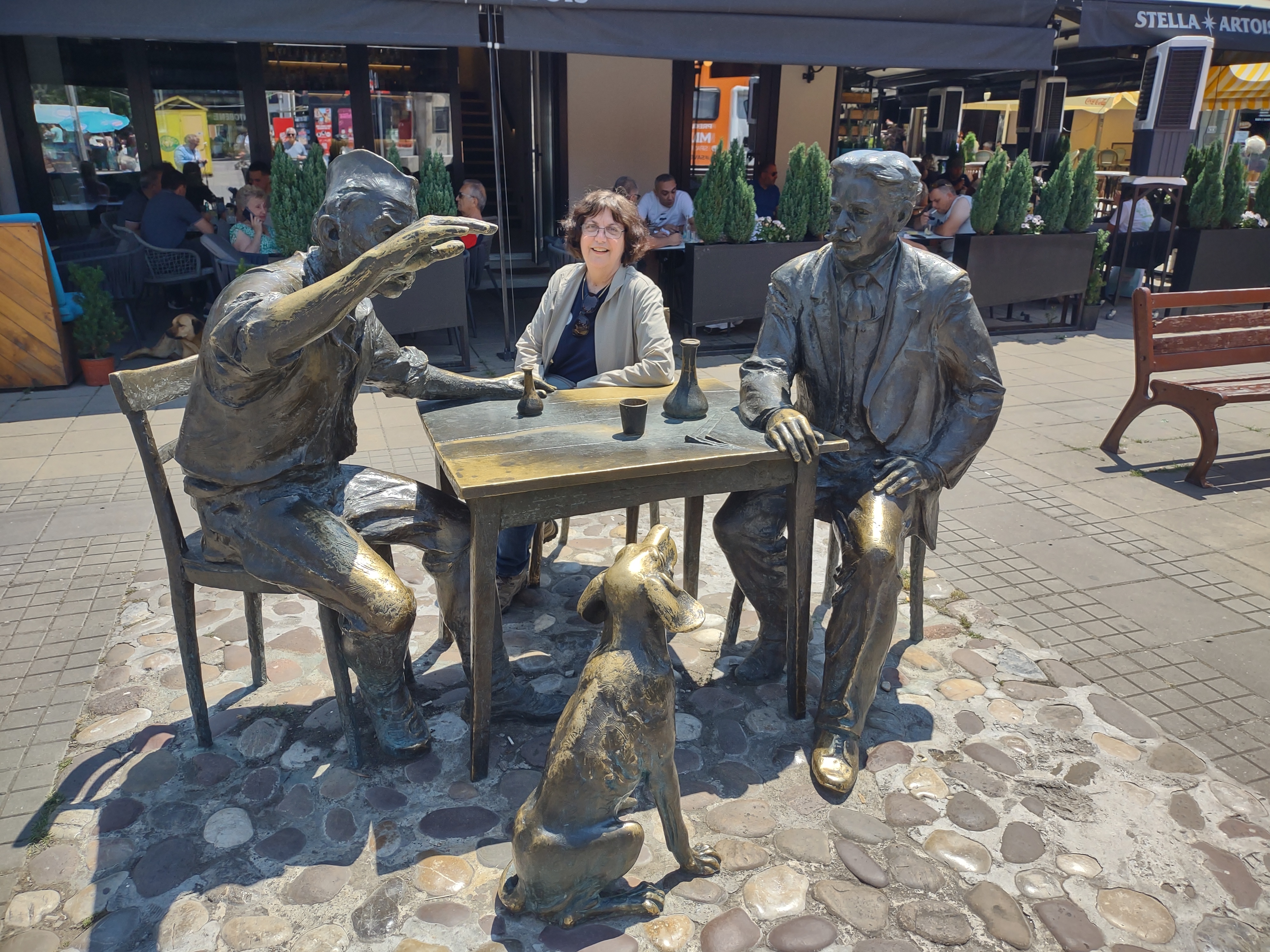 I saw a delightful sculpture to writers in the town of Nis before heading off to Sophia, Bulgaria for the man trip, where I saw even more sculptures ot writers. I learned during the trip that writers, especially the monks, were revered because they taught other members of the general population how to write. And during times of upheaval, such as was experienced in this region desiring so much social and political change over the centuries, writing was important to help educate and express their desire for freedom. The sculpture of the writers in Nis was of Stephan Sremac, a Serbian comedy writer and realist. He was politically active and motivated to help change the country, so his comedy writing was often satire.
 For this adventure traveler, there is never too much history, art, or literature to learn about while traveling the world. Author Issac Bashevis Singer claimed that “The greatness of art is not to find what is common, but what is unique.” The fine artistic, architectural and folk-art stylings and representations I observed while in Serbia were about as unique as it gets, and came as a delightful surprise.
 Travel the World with Passion