“Here we go round the prickly pear, prickly pear, prickly pear/Here we go round the prickly pear/At five o’clock in the morning.” TS Eliott
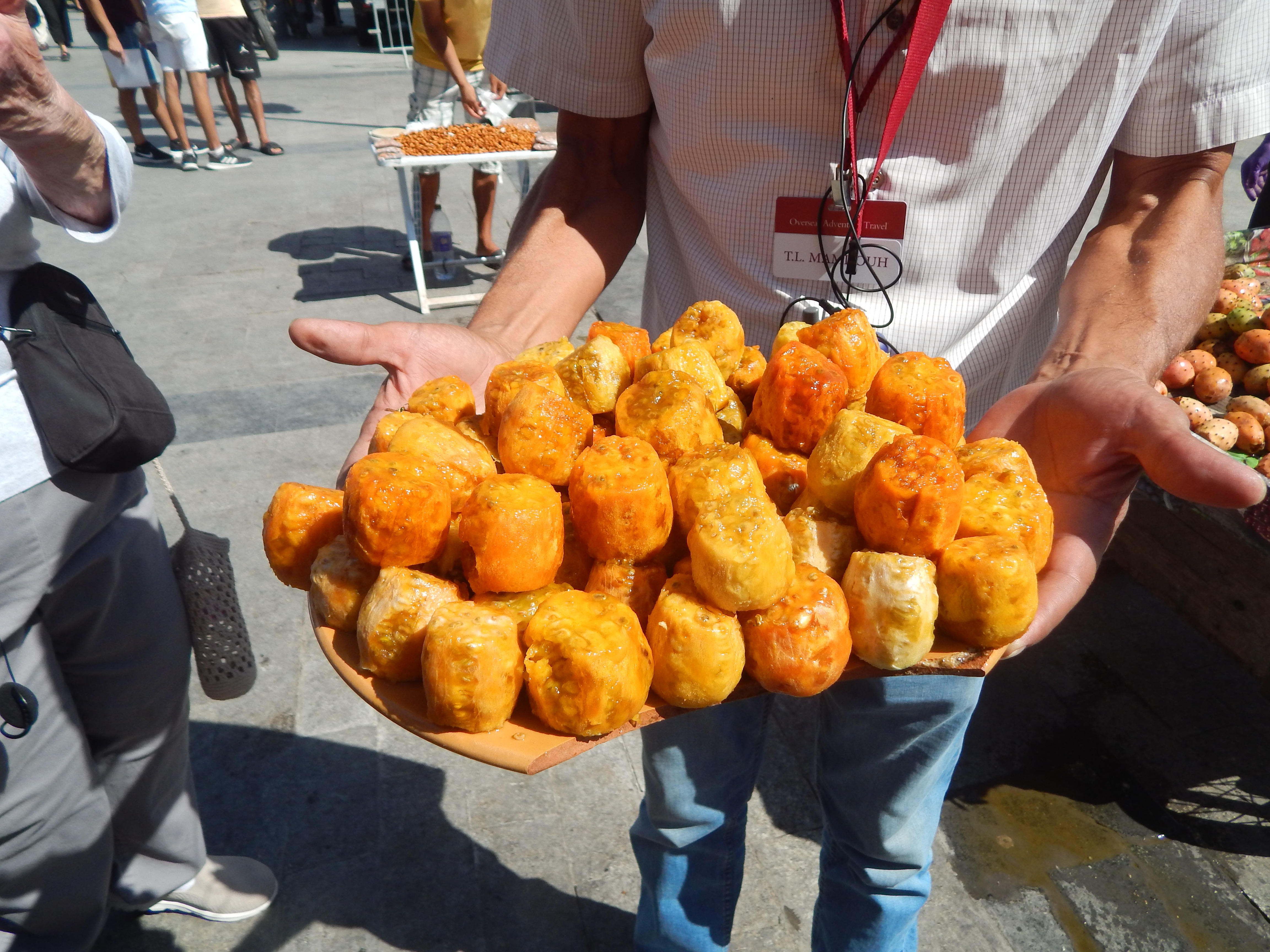 Many people know this as a child’s nursery rhyme that mentions a mulberry bush, not a prickly pear. Poet TS Eliot must have gone to Tunisia or some other North African country and camped out in the Sahara where getting up at five AM to see the sunrise among the cactus plants and Sahara dunes can be a common occurrence, as I experienced when I went on the Overseas Adventure Travel trip, Tunisia: From the Sahara to the Mediterranean. And although his poem ends with the now famous line, “Not with a bang, but with a whimper,” that is hardly what I think of when I think of Tunisia and the prickly pear product I purchased there. I thought it was salad oil when we made a quick stop in a store for ice cream in 100 degree weather. Little did I realize (until I put my glasses on and researched it once I got home) that it was a beauty product and considered a natural age defying product like Botox.
 Like the pomegranate oil I purchased in Turkey, and the Argan oil I purchased in Morocco, Prickly Pear Oil has antioxidant properties which makes it a fabulous beauty product on either your skin or hair. It is rich in both vitamin C and E, and can cast a nice glow on your skin, lighten darker pigmentation that comes with aging, and even reduce wrinkles.
The cactus fruit prickly pear is often sold in Tunis and other parts of Tunisia by street vendors and has a sweet taste. I had seen pomegranates for sale in the markets, and was looking for more pomegranate seed oil condiments for cooking, which I had run out of at home. I had enough Argan oil. So, while no pomegranate seed oil was forthcoming in Tunisia, I erroneously thought the prickly pear oil would be nice on salads. However, my face is loving it as the beauty product that it is.
Prickly pears grow all over the world, including North America. There are multiple species, but the one prevalent in North Africa among other locations, is O Stricta. It came to Europe in the16th century and is common in the Mediterranean regions of Europe and North Africa, although it’s also been grown in the Caribbean and South America, the latter of which introduced them to South Africa.
While it’s always advantageous to purchase souvenirs while traveling which have a positive effect on how old we look, the real age defying product for this writer is travel. I feel so young and alive experiencing new cultures and both unusual and unexpected geography, foods, and sites, which was certainly the case in Tunisia, not to mention the warm and friendly people. I honestly believe that travel helps keep us young and healthy, as well providing the added glow of a positive attitude. This is especially true for adventure travel, which requires me to stay in shape so I can keep up with hikes and other activities that are not sedentary, but which add to the overall experience of the country. In Tunisia we hiked among the Roman ruins in weather that was challenging, to say the least.
So next time you are traveling and make a stop to buy an ice cream, look at what else is available for purchase. Like the gift of travel itself, that souvenir could be additionally life enhancing,
 Travel the World with Passion
wow!! 81Exploring the Surprises of Ulaanbaatar
LikeLike