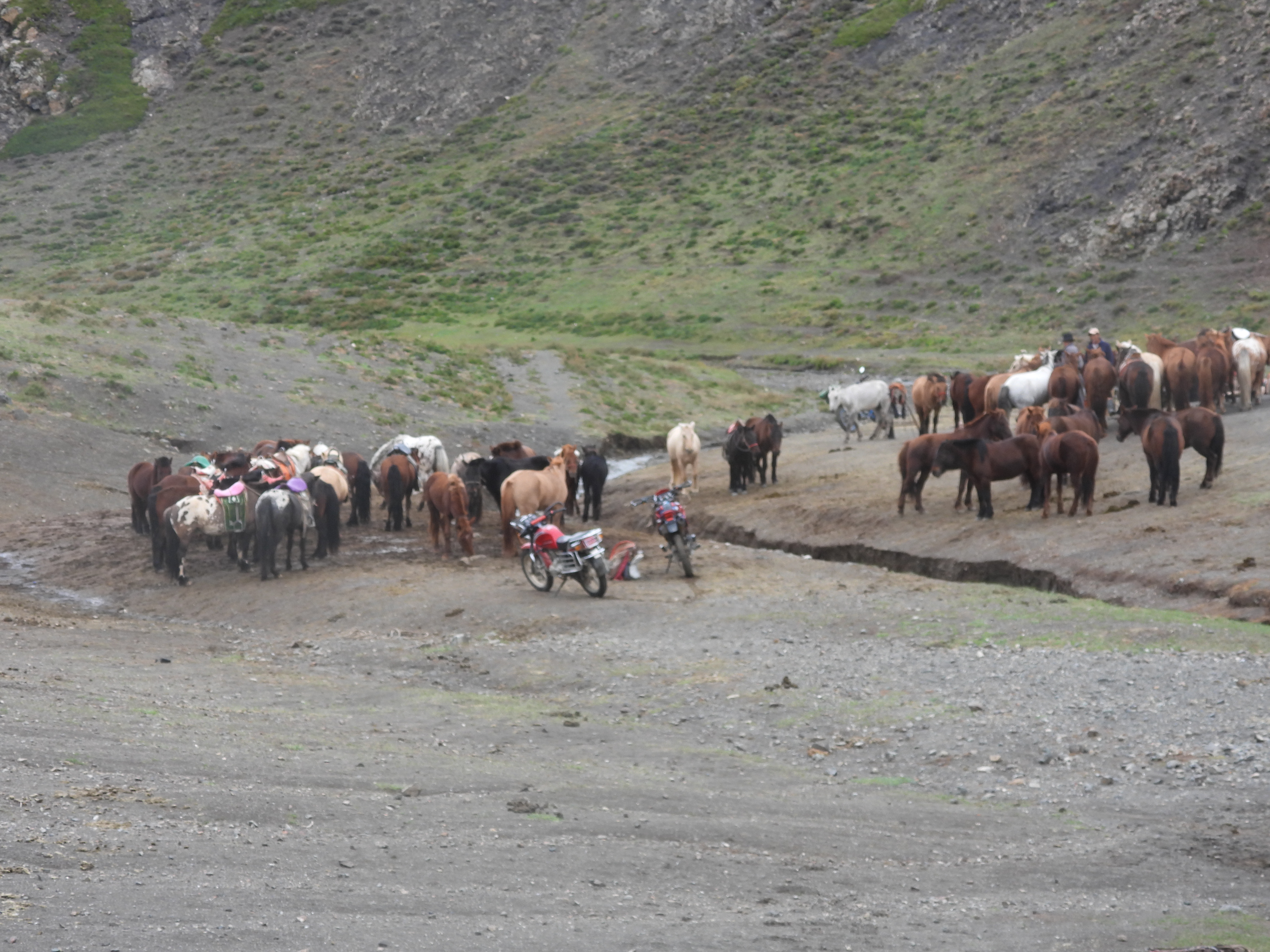
 On my recent trip to Mongolia and the Gobi Desert with Overseas Adventure Travel, one day scored high on the wow scale, and there were many terrific days. The day was packed with two hikes due to rain the prior day. The first hike in the Gobi Desert was in the hilly and fauna filled green Yol Valley. The hike itself was flat, slightly mountainous and hilly, with streams of water and several bridges surrounding us. The hike ended when we reached a stream that required boulder hopping to cross over the stream. But it was delightful to see so many escorted horses riding by with tourists on their backs as we hiked and enjoyed the scenery. Many more horses were drinking from another one of the streams we passed as we returned to our starting point. It was a joy to see some of those horses roam freely in the nearby hills.
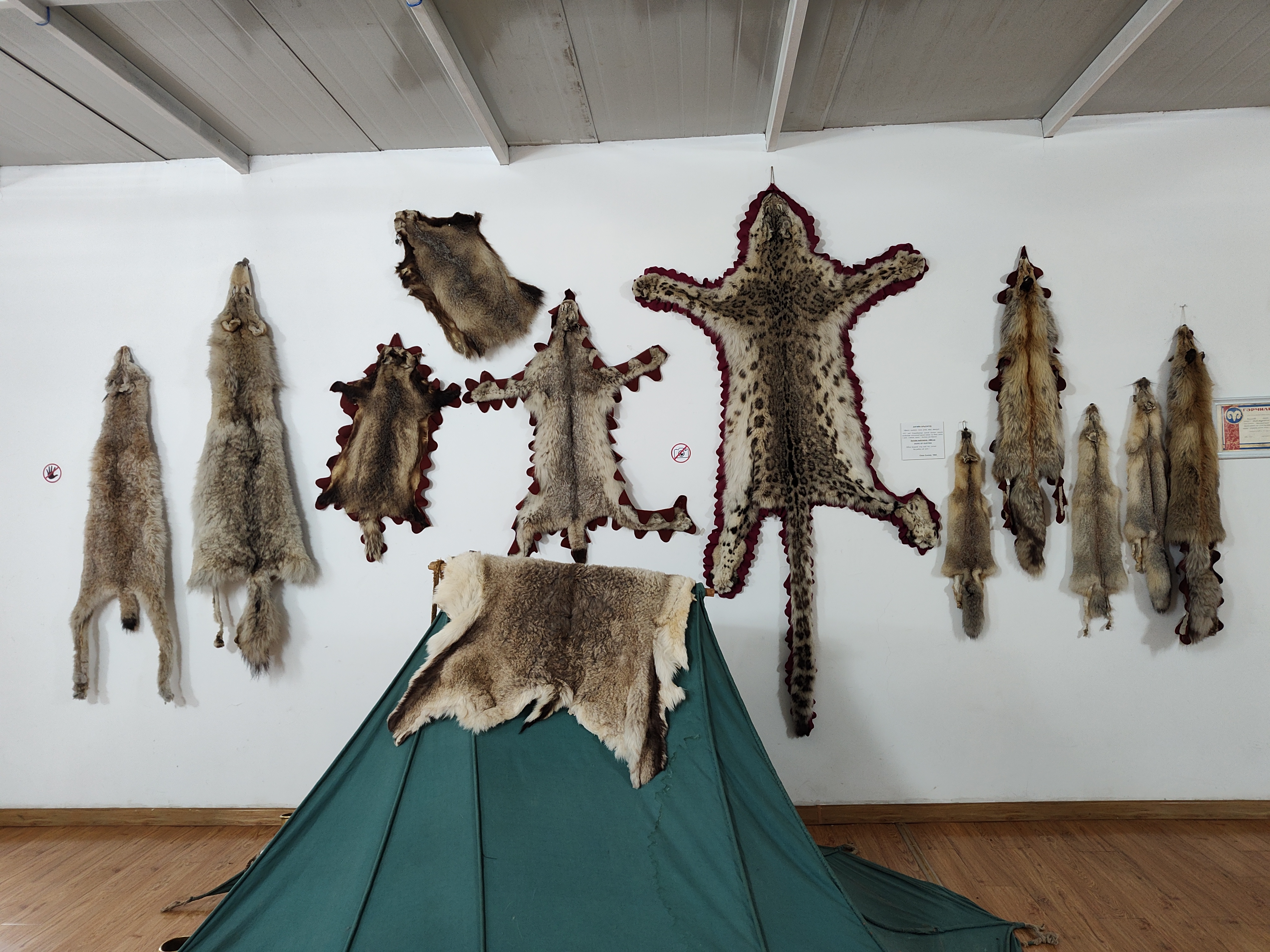
 After the hike we visited a small and local paleontology museum which really gave us the sense of the paleontology history of the Gobi Desert. I especially enjoyed seeing animal furs preserved from centuries gone by and skeletons of local dinosaurs. The very first dinosaur eggs were found in the Gobi Desert at the Flaming Cliffs. We saw them at a museum back in Ulaanbaatar. But during our afternoon hike at the Flaming Cliffs, we stood at the exact spot where they were discovered. We watched a movie between the two hikes that day and learned that the archeology expedition in which they were unexpectedly discovered started around 1922 and ended in 1925. Watching those archeologists return from the Gobi Desert with their precious findings and hanging onto 1920s vintage vehicles as though they might fall out, was a testament to their dedication and perseverance. Other important fossils were also discovered in the area, but the dinosaur eggs are by far the most well-known.
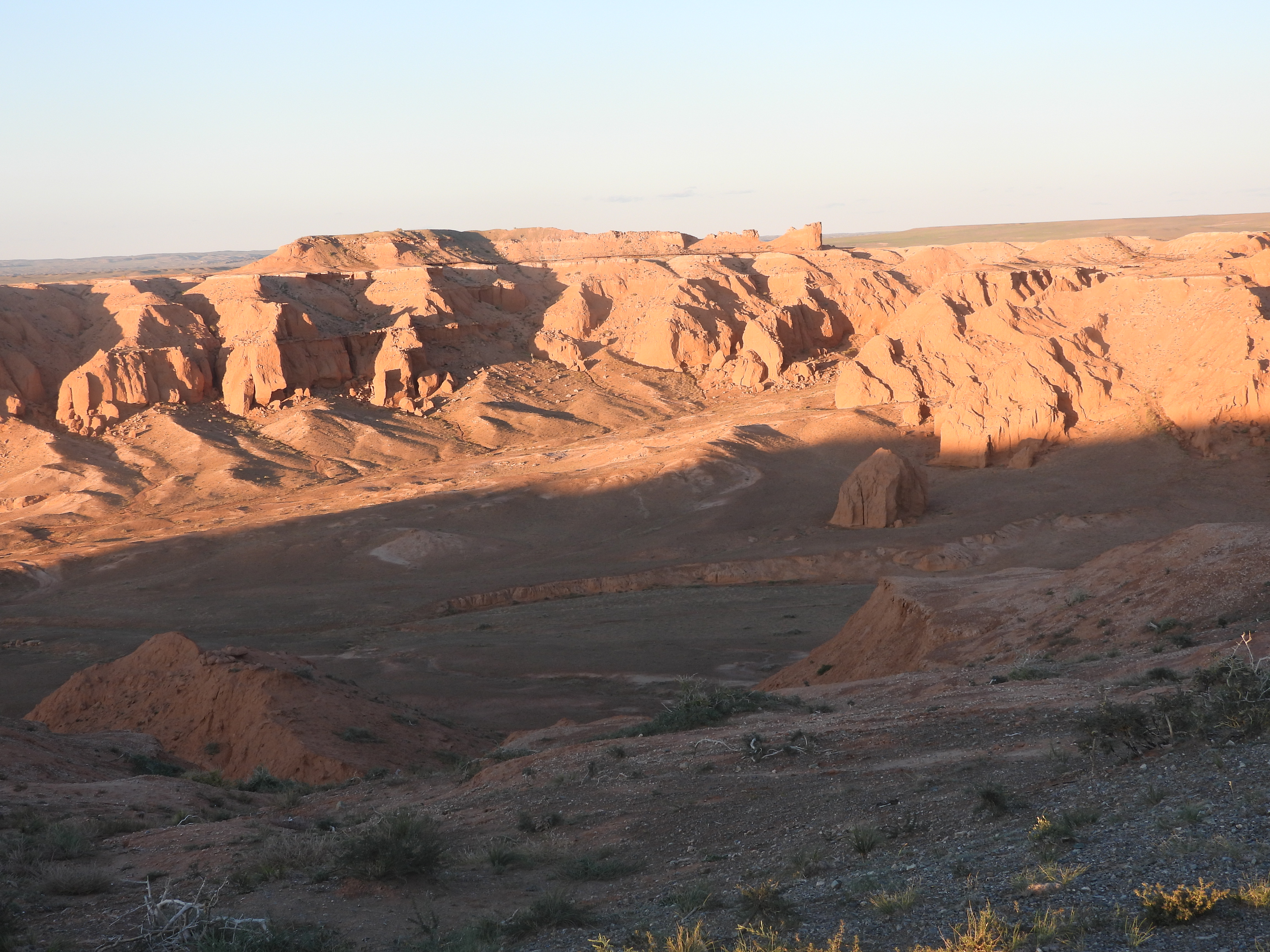 Since this discovery, the Flaming Cliffs were closed to the West until 1993 when some of the most important fossilized discoveries were additionally made in the area by a paleontologist and professor of natural history, Michael Novacek, who brought a team on a dinosaur expedition. The Gobi Desert is considered the richest fossilized area in the world, and archeologists today still routinely scour the area for additional finds. They are still richly rewarded.
 The Flaming Cliffs aren’t as bright in red rock as it sounds, and not at all as rich in color as the American Southwest such as Northern Arizona and Southern Utah. But they are beautiful with a fabulous history of paleontology to go with them, which makes them all the more intriguing. During our hike I didn’t hike as far into the cliffs as others, because I was enjoying the sheer solitude of where I found myself, enjoyed the beauty, and appreciated the quiet of nature. After the hike we watched the sunset at the Flaming Cliffs with a sundowner and continued to enjoy the uniqueness of where we were, with a large set of camel statues nearby. For as large as they were , at certain vantage points we saw how small they really were in the vast open plains of the Gobi Desert.
 Paleontologist Charles Dolittle Walcott once said that, “Nature has a habit of putting her most attractive treasures in places where it is difficult to locate and obtain them.” That surely describes the dinosaur eggs and the fossilized richness in the heart of the Gobi Desert. And it makes it all the more compelling for any traveler to visit.
All photos Jann Segal


Very interesting reading your report because the paleontologist museum was closed for us. We did visit in UB a scientific center where we saw dinosaur eggs and bones. Did you go there? We actually got to touch a leg of a dinosaur
LikeLike