“I was awestruck by Rio – the way the ocean, city and emerald mountains merged into each other and held hands.”
Dana Da Silva
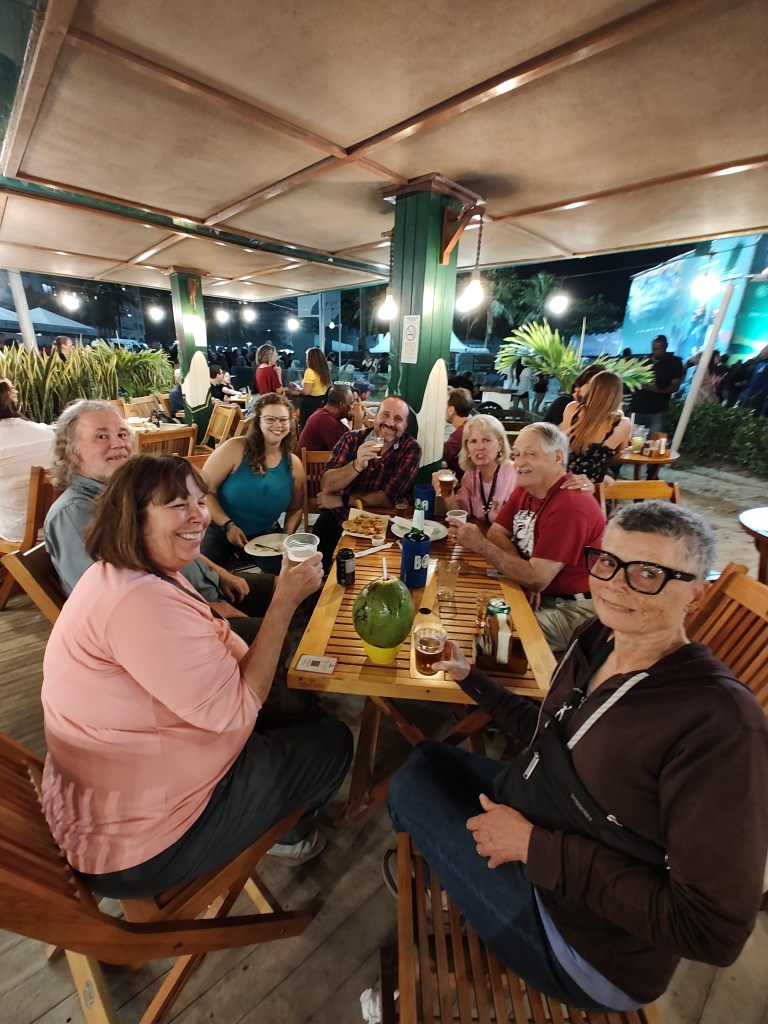
 The above quote is exactly why I wanted to be an ambassador for visiting Rio de Janeiro. The city emerges from the Atlantic in Copacabana Beach, and the vibe couldn’t be more special. It’s a city filled with sun, art, culture, world class beauty, and above all, music so special they renamed their airport after the most well-known creator of the bossa nova, Antonio Carlos Jobim. We were even treated to some bossa nova at Bottles Bar across from our hotel, one of the bars and clubs where the Bossa Nova was first performed.
After I arrived and got settled three days before my tour Brazil in Depth started with Overseas Adventure Travel, I enjoyed a stroll across the street on Copacabana Beach, then visited two museums, both only presented exhibits in Portuguese. The fine arts museum there is permanently closed, so I went to their modern art museum which is near a science and technology museum called Museum of Tomorrow. The latter seemed more geared towards the youth, the former was five stories of wonderful art, but I had no clue about the artists or the paintings since everything was in Portuguese. If you’re over 60, all museums are free with identification, so it was an adventure out in a beautiful city, easily accessible by Uber.. Only 1 to 3 percent of the population speaks English, so some of the tourism cen be a bit challenging.
Following are some of the many things to see in Rio de Janeiro:
Rio Botanical Garden -. This is a great way to spend half the day, and it’s easy to get there and back via Uber .It is over 130 acres large, with 6500 plant species, but its not as well signposted as it appears. It’s a great way to spend a few hours, walk into the various greenhouses and gardens of all varieties including a Japanese garden, and even one for orchids. Did you know the vanilla plant originated as an orchid? It’s also a great place to take a load off and enjoy a refreshing drink on a hot day. If over 60, admission is half price with identification.
 Christ the Redeemer Statue – When we went to the Christ the Redeemer statue, it was so packed with people I was glad to get my photos and leave There’s a chapel on the premises, and some were there dressed for church, it seemed. The locals took it very seriously, and while I was respectful of that, the stunning views of Sugarloaf Mountain and the Atlantic dotted with non-volcanic mountain structures, caught my attention the most. Such beauty resides amongst one of the wonders of the modern world, which took only 5 years to erect, but it’s is over touristed even early in the morning.
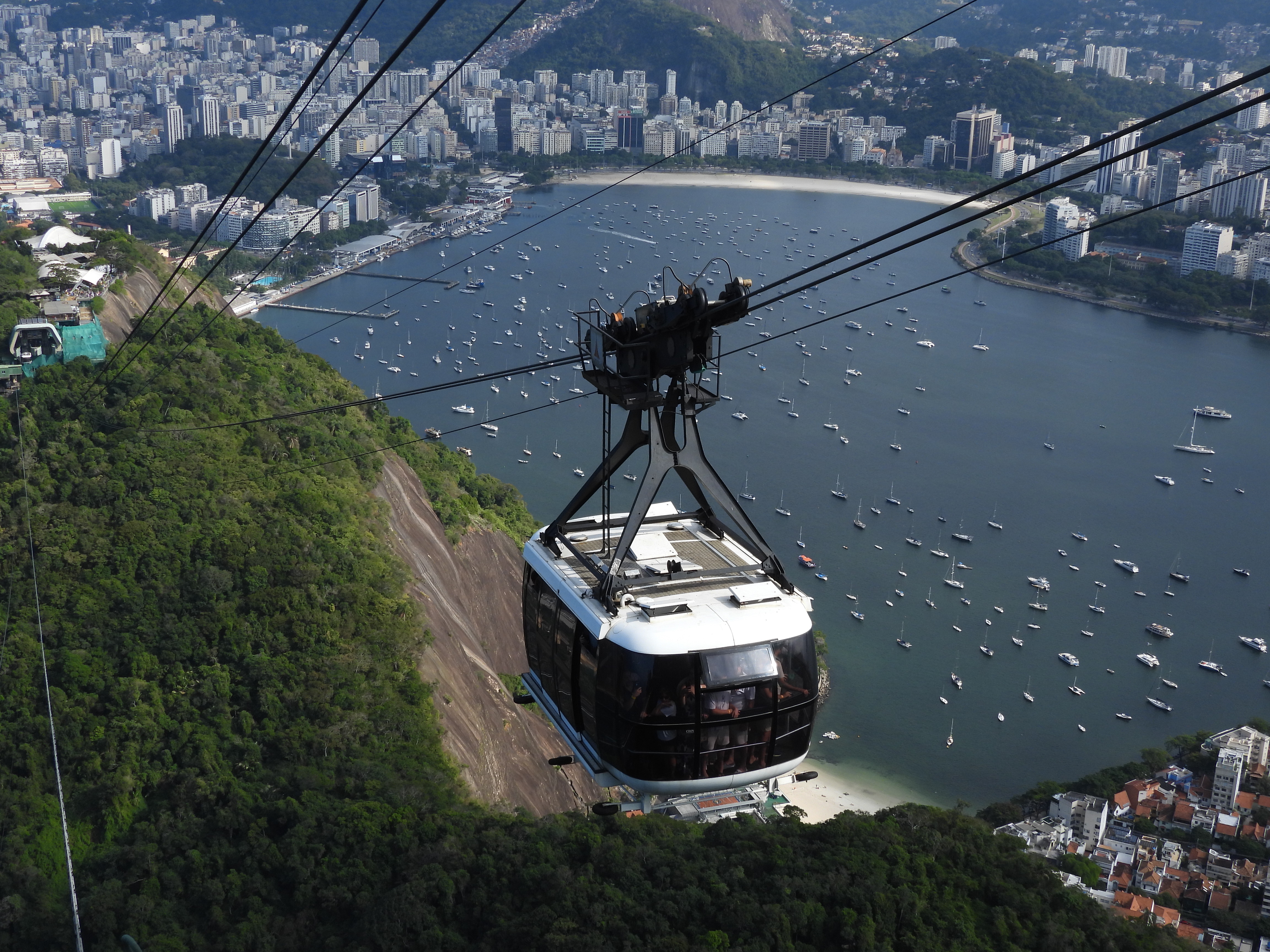 Sugarloaf Mountain – This Brazilian landmark is so named because of the sugar trade between the Portuguese and Goa, India, where cone shaped sugar was transported, much in the shape of the mountain in Rio. There are others with the same name in Brazil, but the one we took the cable car ride to is the most famous because of the cable car and of course the location in Rio. I think the sugar trade with Goa goes back to the 16th century. The original cable car is there for viewing, as well as a statue of the man whose idea it was to have a cable car so others could enjoy the mountain and the views.
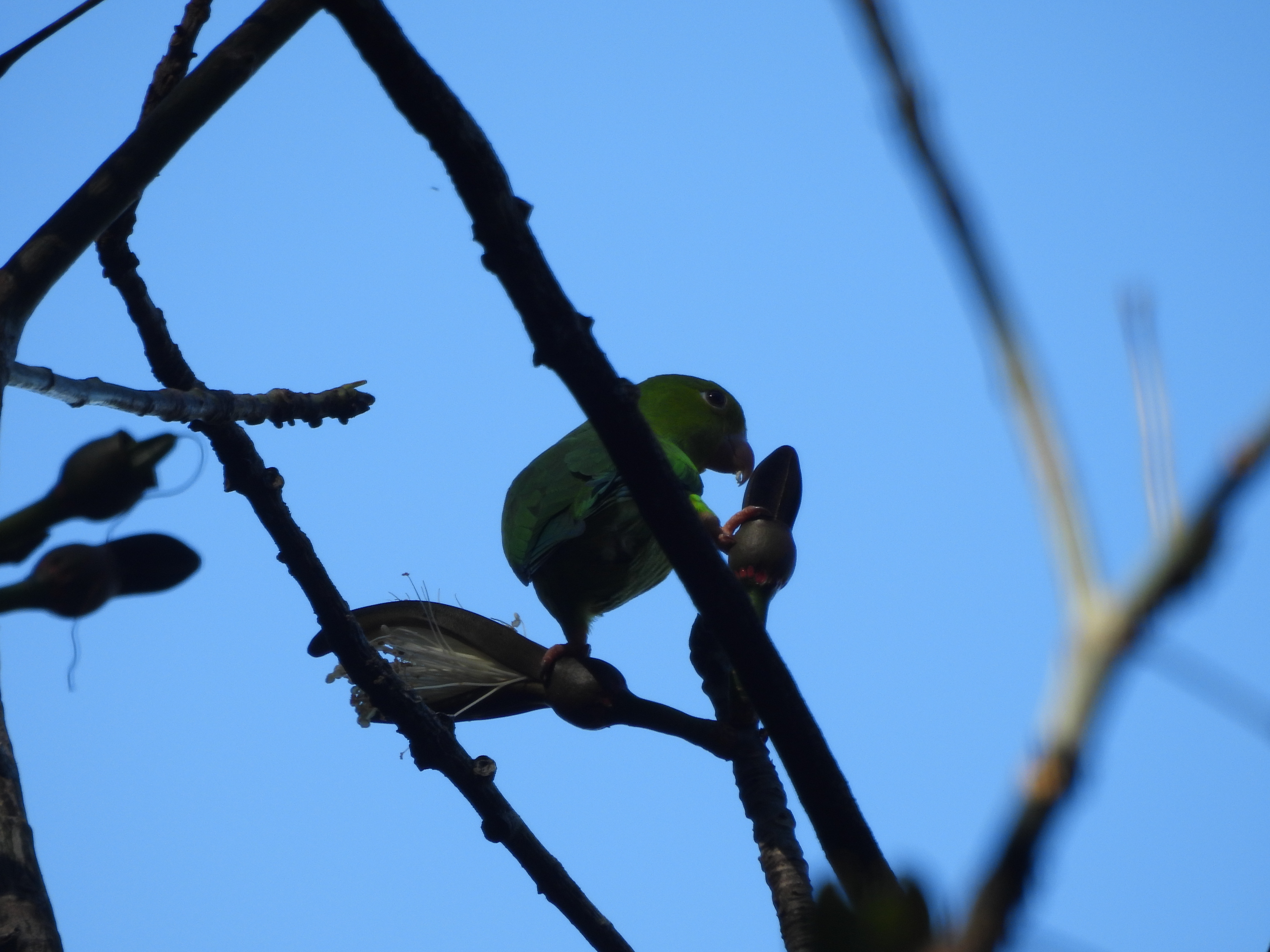 Birding tour – I had booked a private birding tour on Viator for one of my independent travel days. We went to a beautiful rainforest not that far outside of Rio. Mother nature intervened and in the 4 hours we were hiking to look for birds, not that many showed up, or if they did it wasn’t for very long. My guide said there were 32 different species out that day, but he typically sees at least twice as many. The birds have a great defense system. They are fast, they are small, and many blend in with nature. I saw a green parakeet in a green tree! I couldn’t take many good photos of the birds at all because of the challenges in seeing them. But it was a beautiful half day in the rainforest, so I was happy in spite of the lack of birding photos.
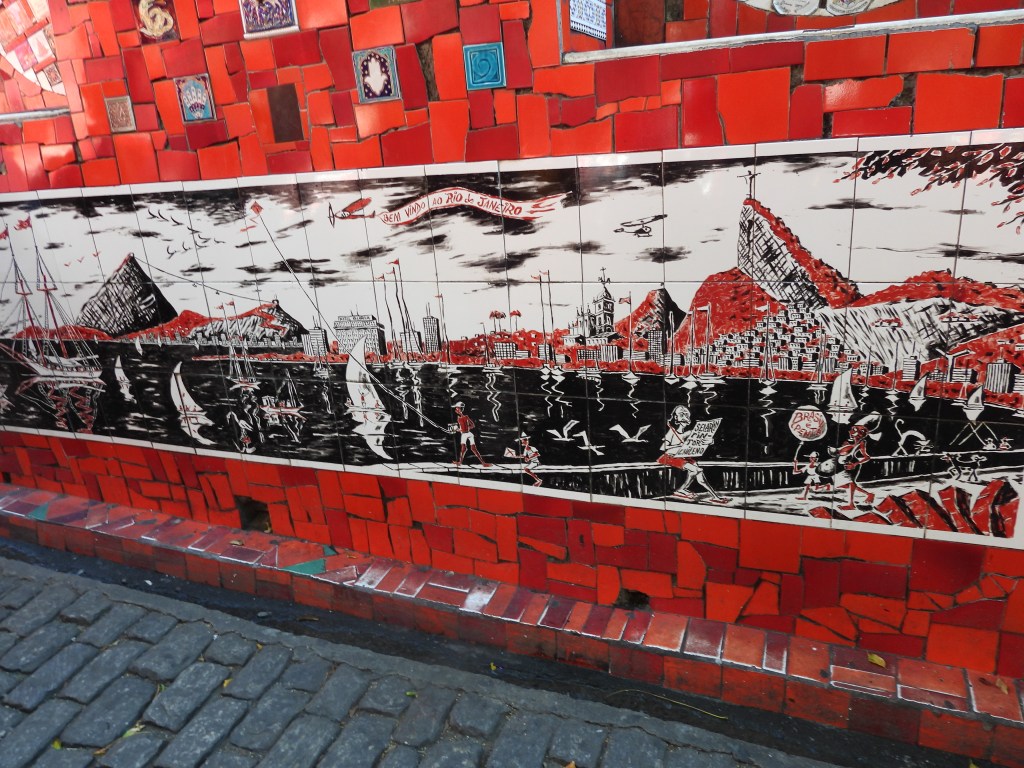
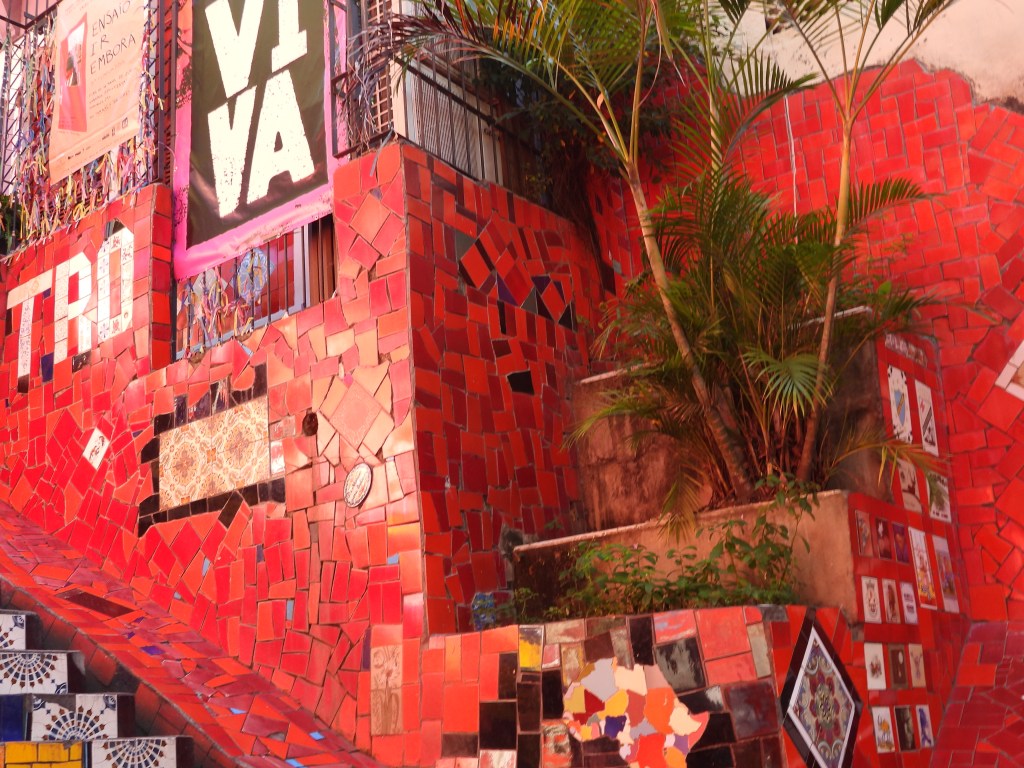
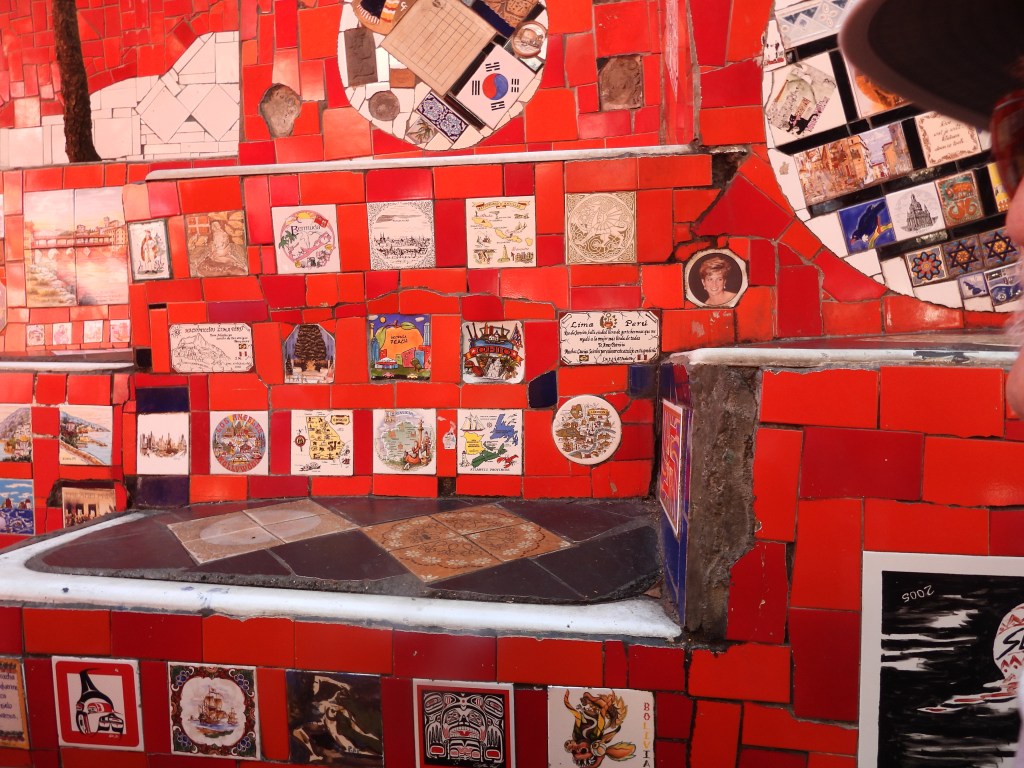
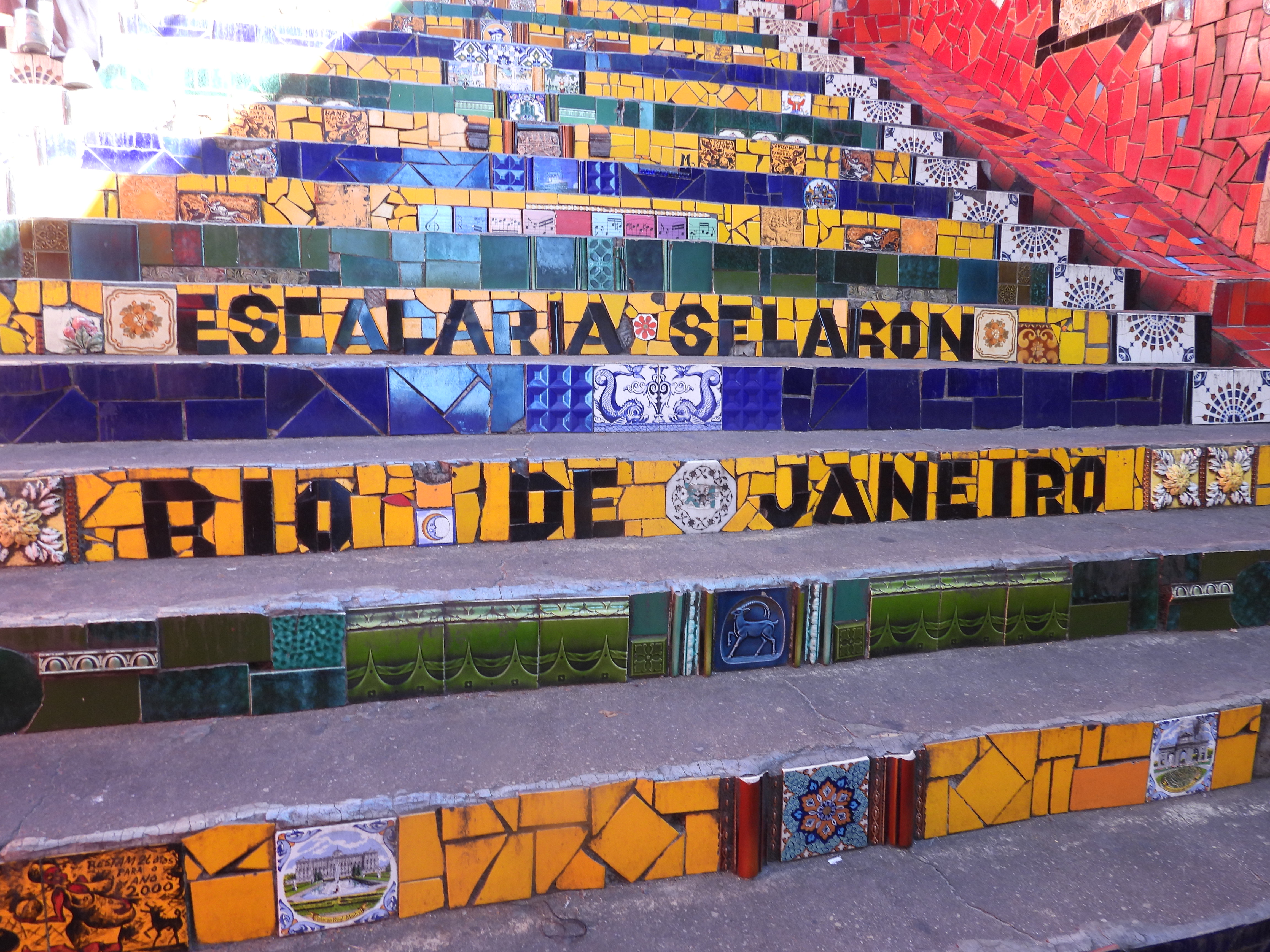 Saleron Steps – These famous steps are really an environmental art installation which many come to Rio to see, by Chilean artist Jorge Saleron. He created and installed tiles on and around steps, about 2000 in total. Some tiles have been sent from various parts of the world and added to the steps. There are also many street murals on the way to the vibrantly colored stairs known as the Selaron. As with other parts of Rio, it was too crowded by far, but I gloried in the vibrancy of it all.

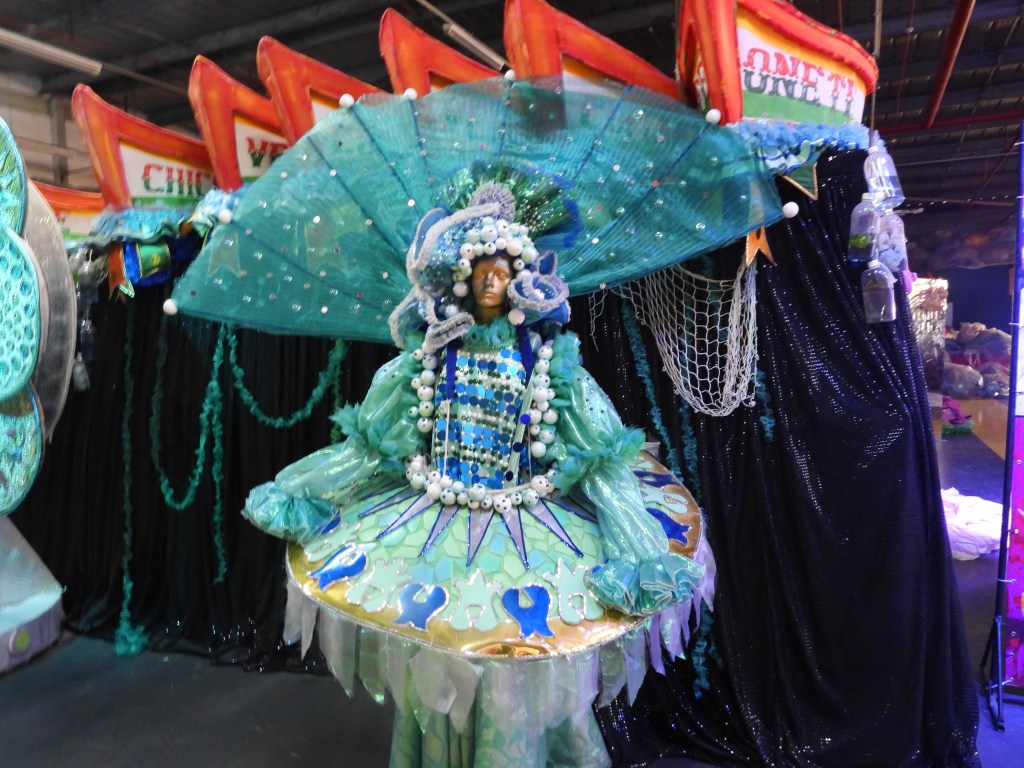
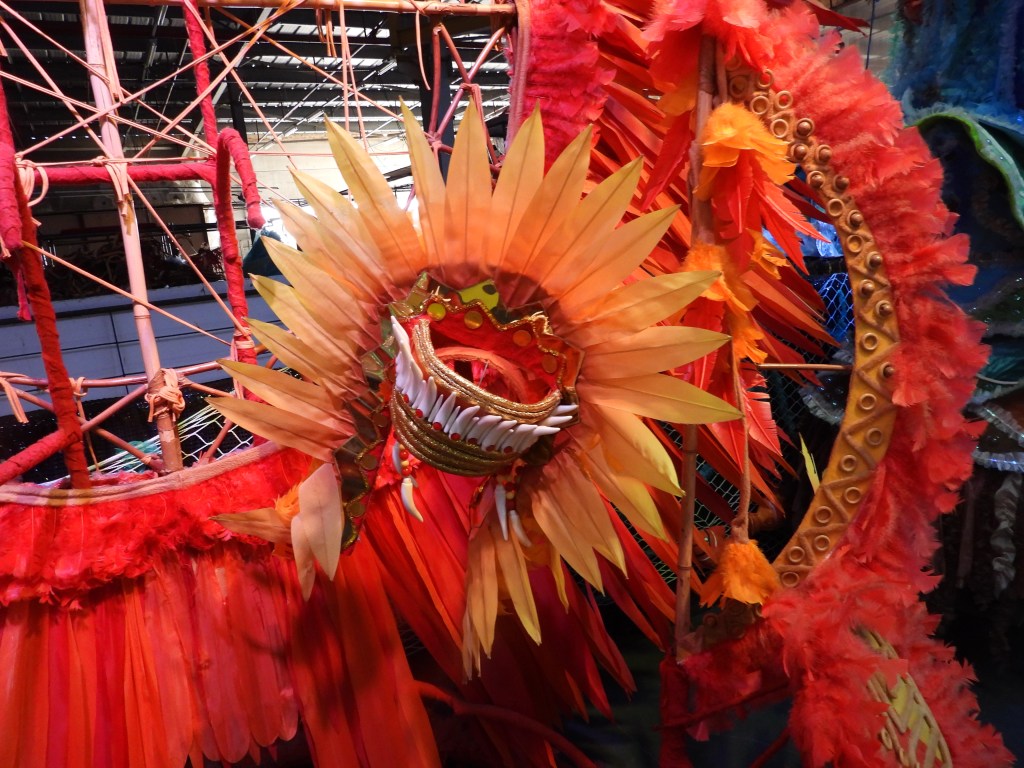
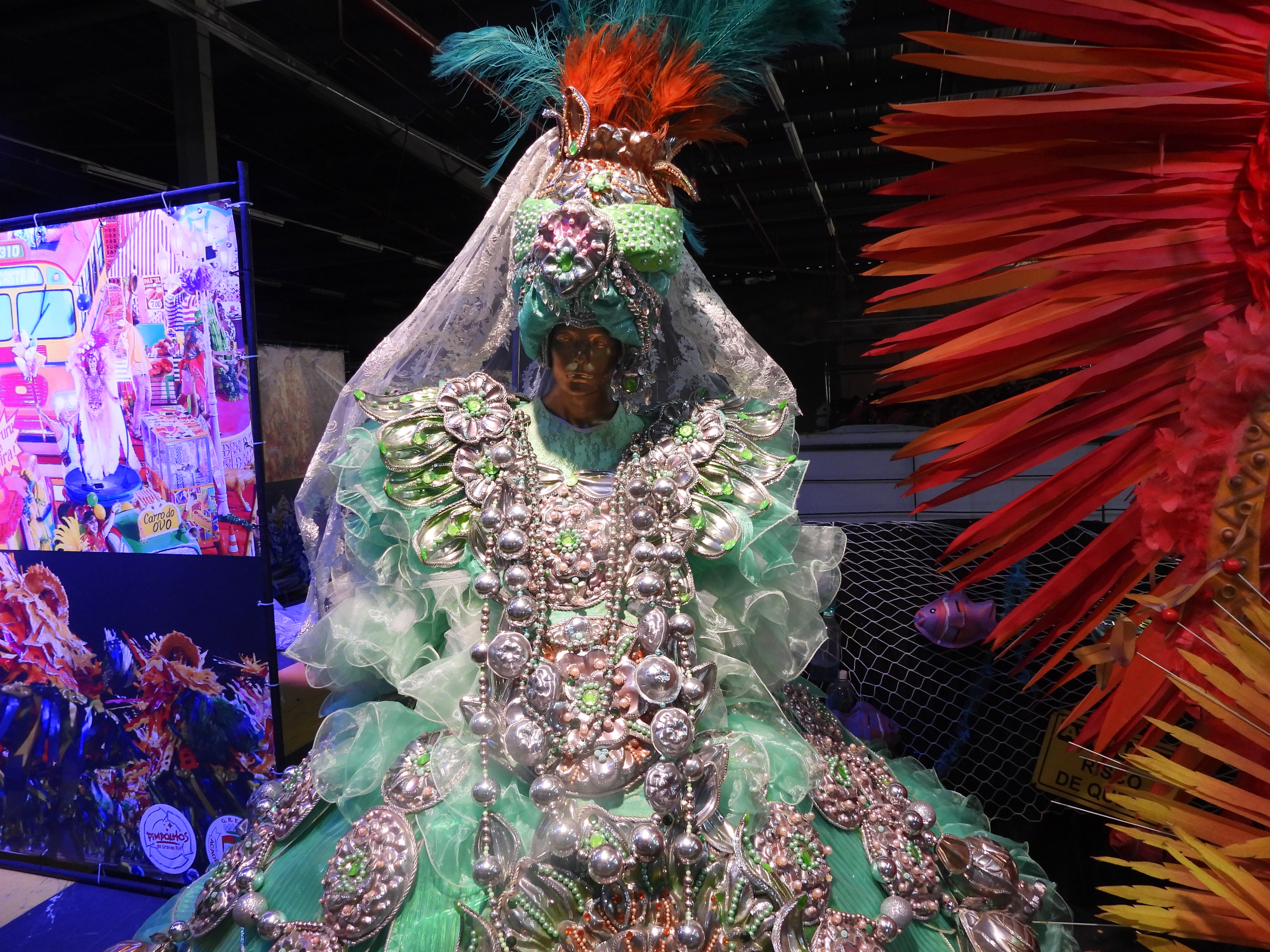 Carnival Floats- The vibrant colors of this city continued to emerge as we went to the City of Samba, where they make the floats and some costumes for Carnival. Carnival preparations and celebrations overtake the entire city about 45 days before Lent, and visitors to the warehouse are allowed to try on a costume after the presentation on the history of Carnival, and a live performance with Samba musicians and dancers. It’s a huge and enjoyable part of their culture to learn about. There are multiple samba schools that participate in Carnival, and multiple Carnival warehouses for the floats both before and after Carnival. Those who chose to, can enter a contest during Carnival for the best costume if they have made it themselves. However, once they have entered the contest, that same costume cannot be used for another year’s costume contest.

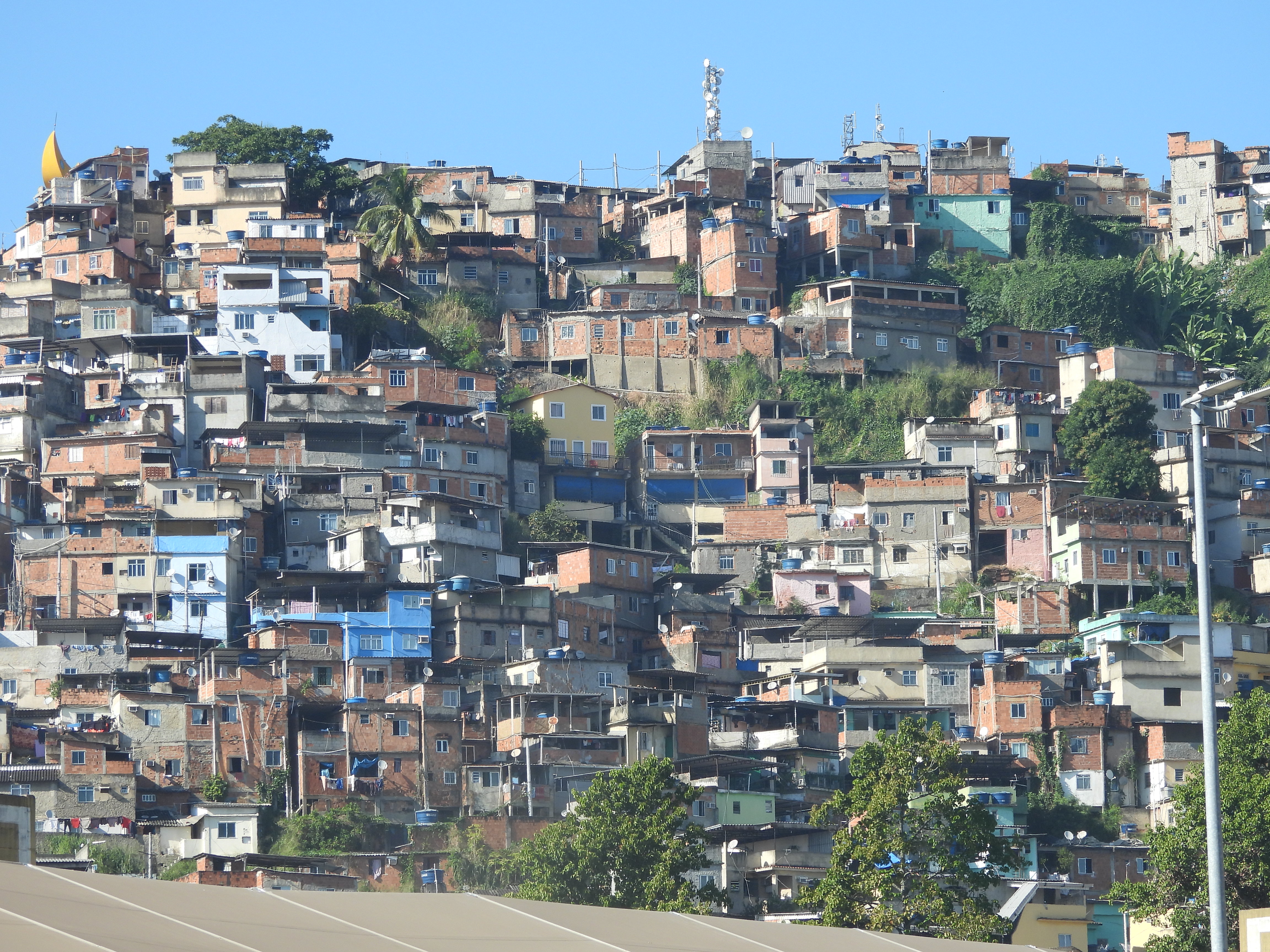 Favela – this area is a series of neighborhoods which total about eight percent of the country’s population, but there are many of them in Brazil. It’s really a slum area, basically run by drug lords, but it’s surrounded by many larger homes which are owned by the wealthy. The residents pay for regular services there, and a portion of that money goes to the drug cartel. The homes in the Favela are densely populated on a hillside in Rio. Favelas originated in the late 19th century as a place for migrants and laborers to live. They also provided a home to free slaves after 1888, and gradually became a part of the local community, even though the neighborhoods are set apart. A recent count had over 12 thousand favelas and urban communities of similar socio- economic status, with over 16 million residents.
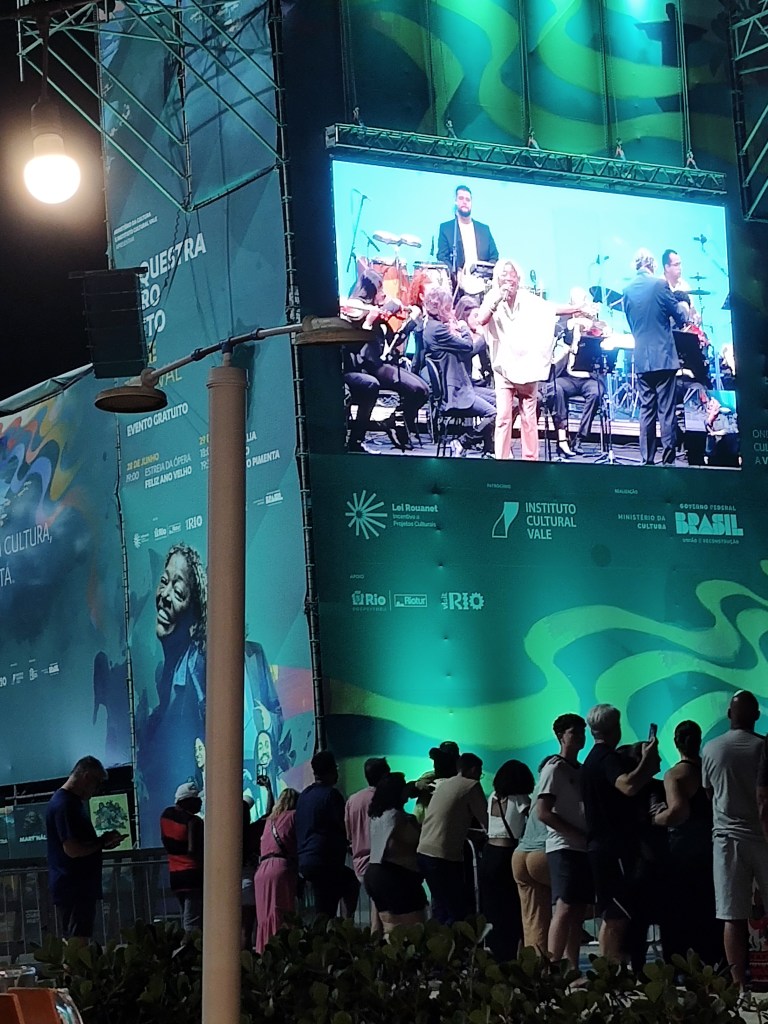
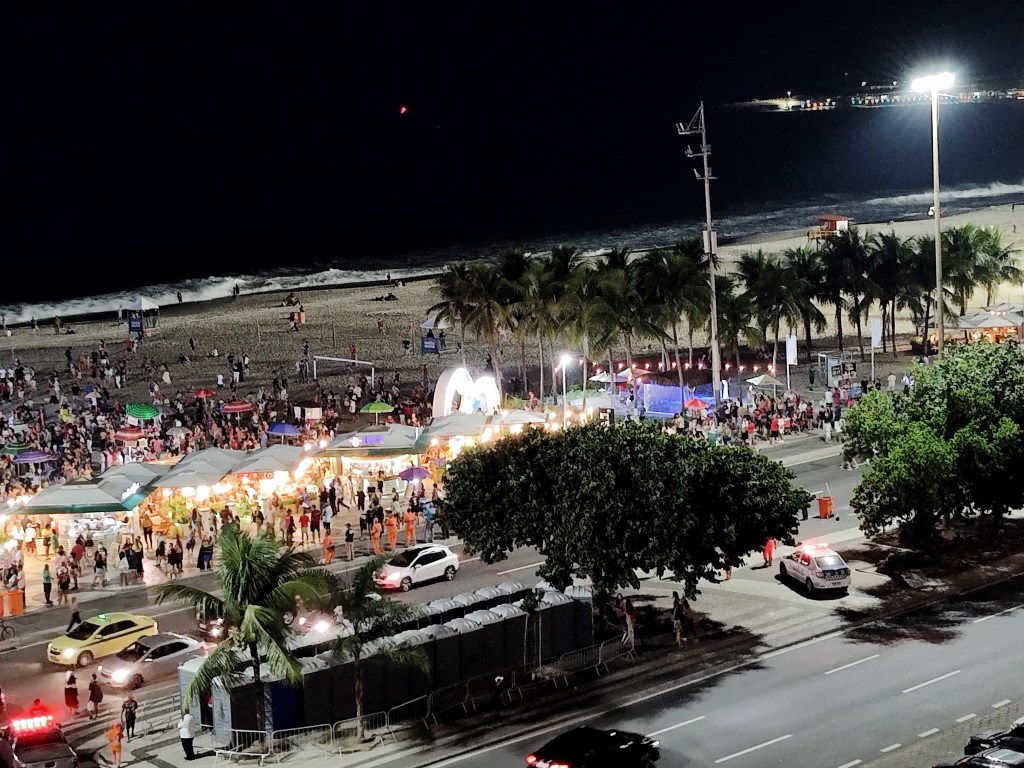
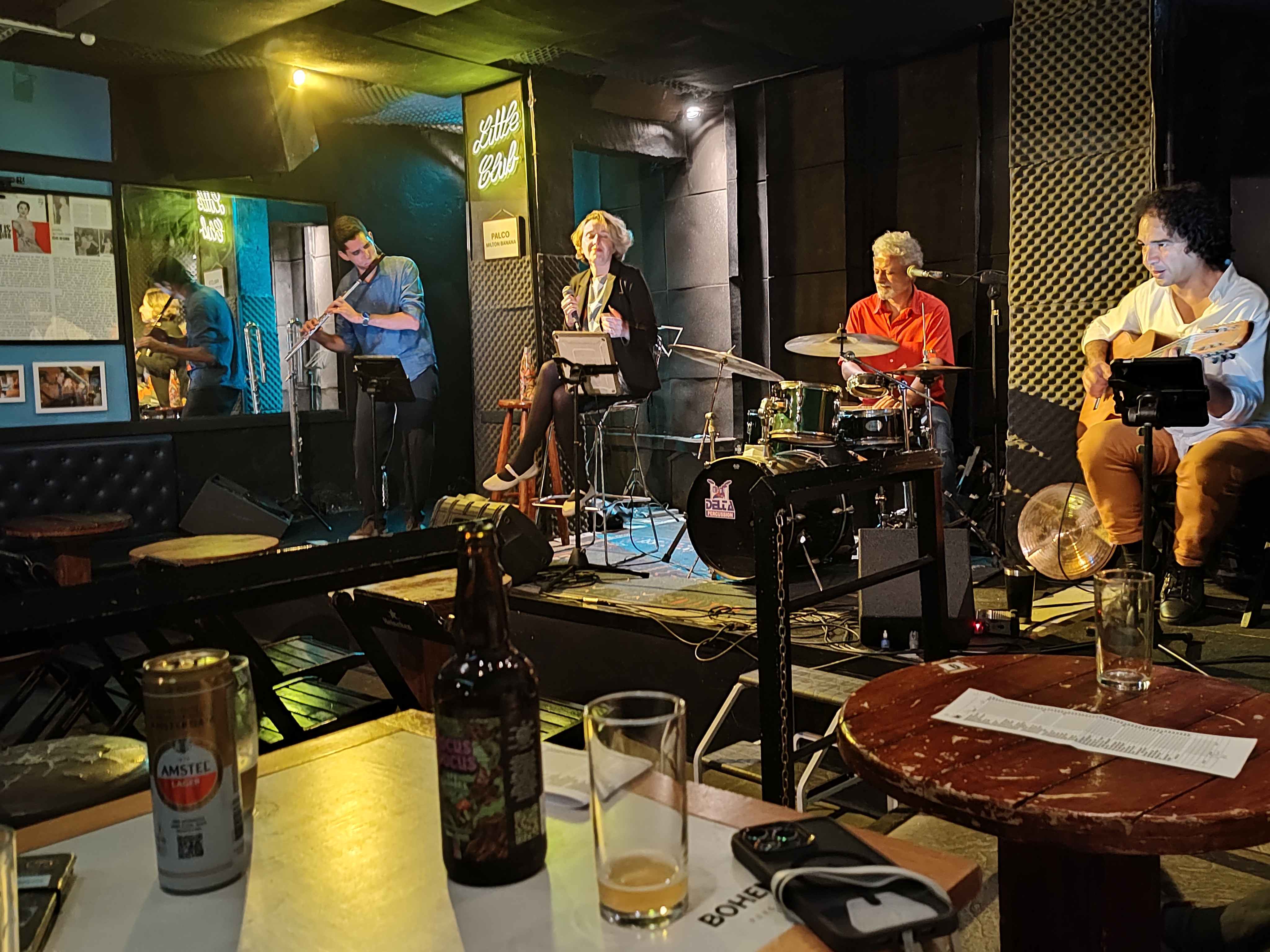 Aside from going to Bottles Bar for Bossa Nova, we were treated to a musical event across the street from our hotel on Copacabana Beach that was very Carnival -like in atmosphere. We heard live samba, sone Bossa Nova, and a Beatles tribute group called Sargent Peppers. They performed in both English and Portuguese. I really enjoyed the spirit of Copacabana, the Brazilian people, and their seemingly never-ending desire to party hearty.
Rio and Copacabana as I experienced it with its musical flair is the kind of city you think about when you think of Rio de Janeiro. There is an unexpected richness to this sun filled city and it’s passionately multi- colored sites that lingers with the traveler long after having enjoyed what the city has to offer.
All Photos Jann Segal
 Travel the World with Passion