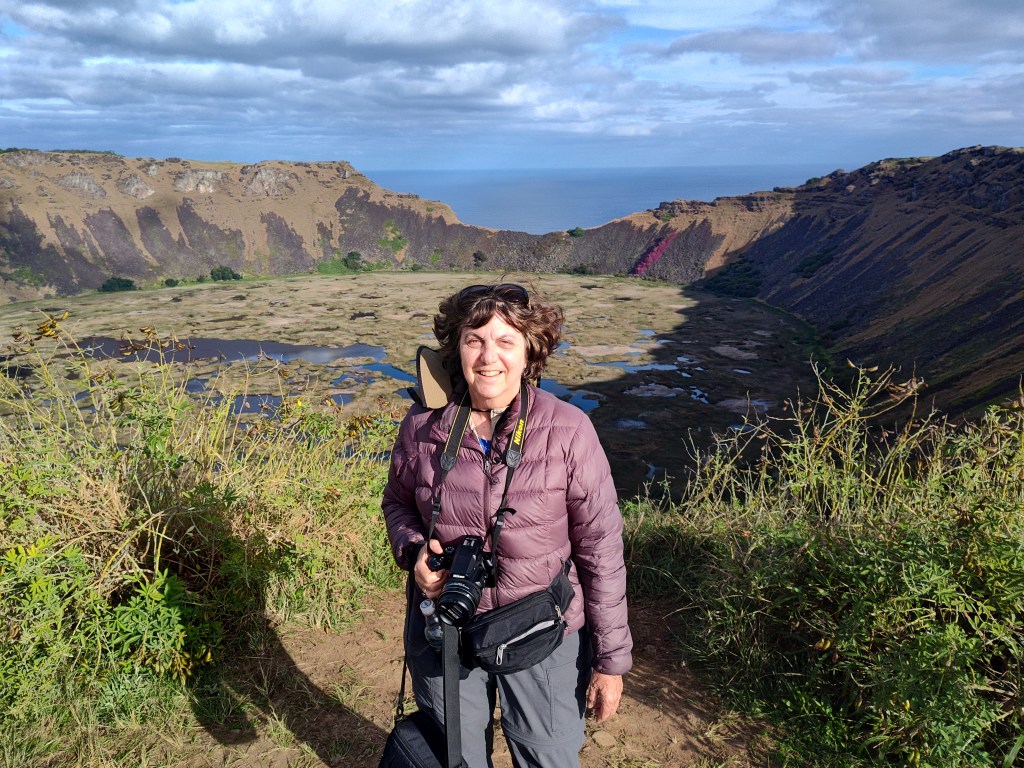
“Whether an island such as Easter Island can be considered remote is simply a matter of perspective. Those who live there, the Rapa Nui, call their homeland Te Pito Te Henua, ‘the navel of the world’. Any point on the infinite globe of the Earth can become a centre.”
― Judith Schalansk, Author
The above quote reminds me of a time I was on the island of Lanzarote, one of the Canary Islands. I was driven to a home in a field of lava encrusted rocks, nothing more, and the home I visited had been transformed into a restaurant featuring guitar music from the supposed grandson of Gypsy jazz violist Django Reinhardt. I asked the charming German host if it was easy to get back to my hotel from the middle of nowhere. Her response? It can be viewed as the middle of nowhere or the center of everything.
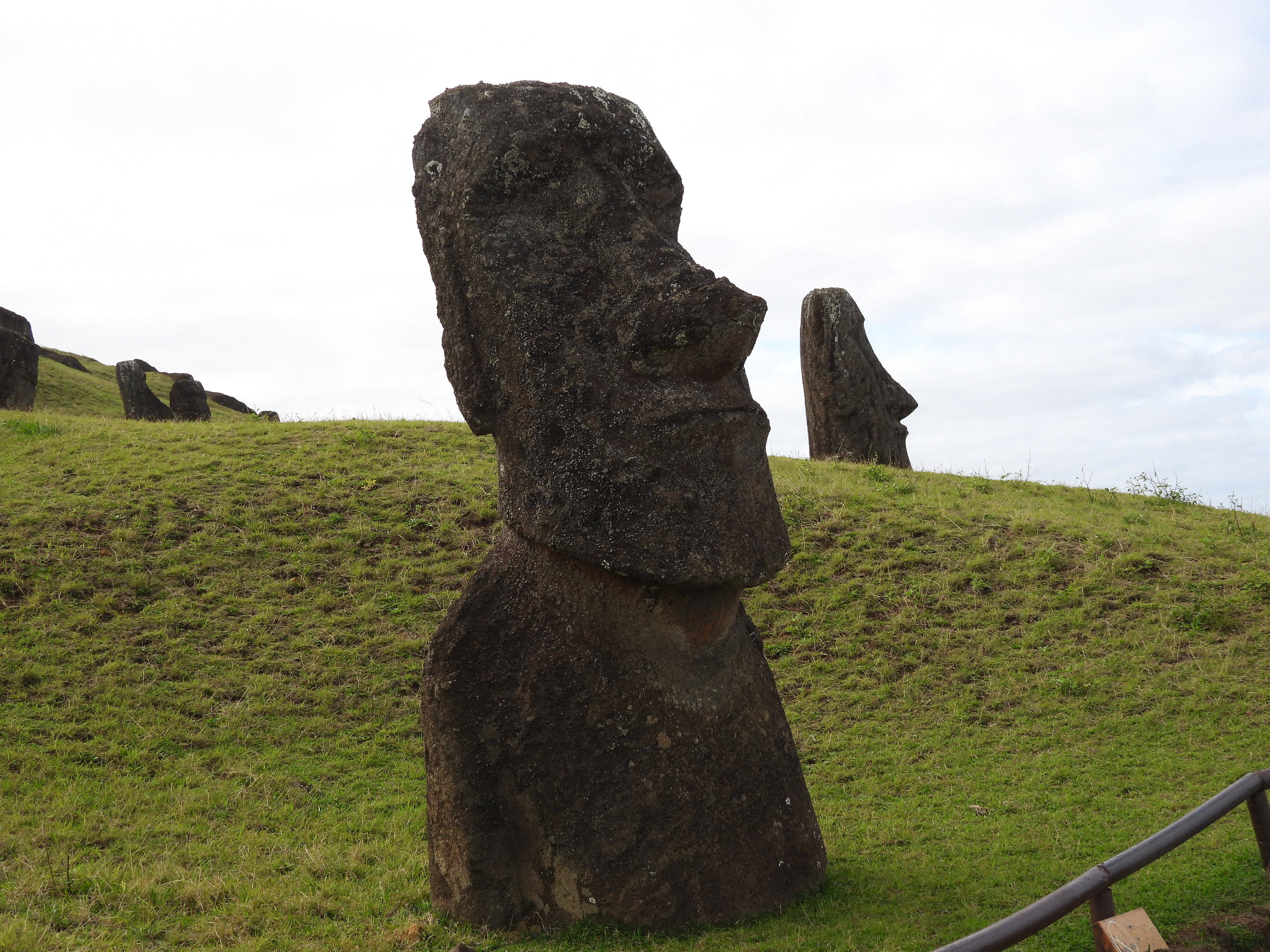 And so it is in Easter Island (Rapa Nui to the locals), part of the Polynesian Triangle, New Zealand and Hawaii bring the other part of the triangle. It’s also considered part of the “continent” of Oceania. It is however, shrouded in mystery, as one of the most remote populated islands in the South Pacific, and one with an uncertain and largely lost history.
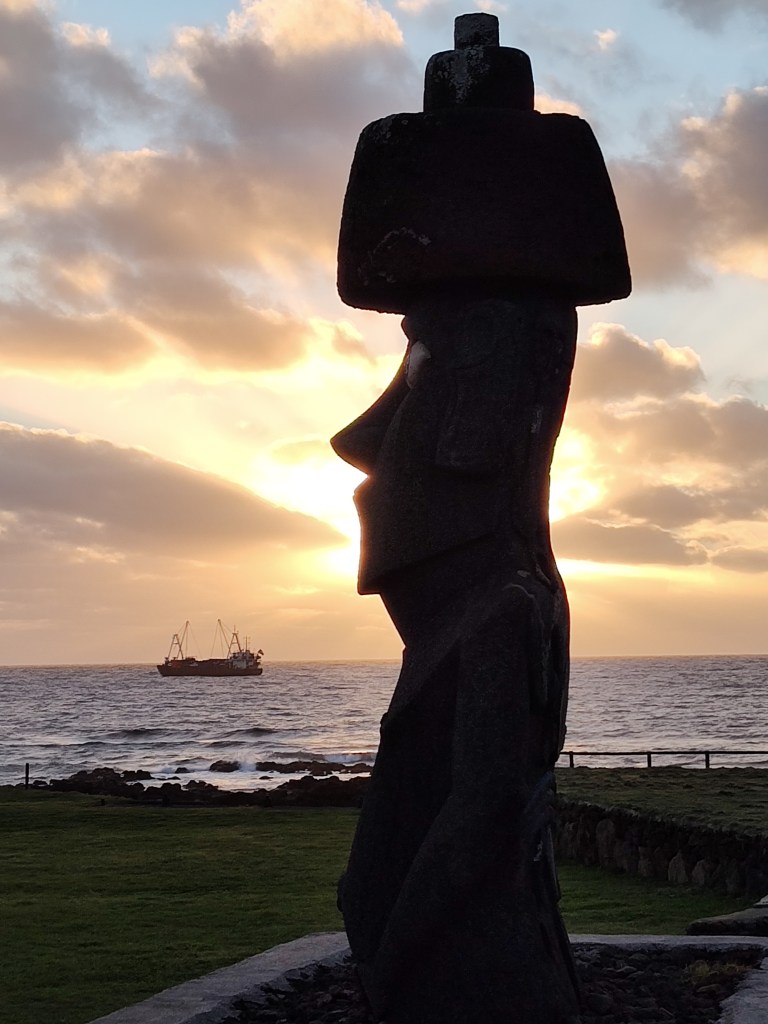
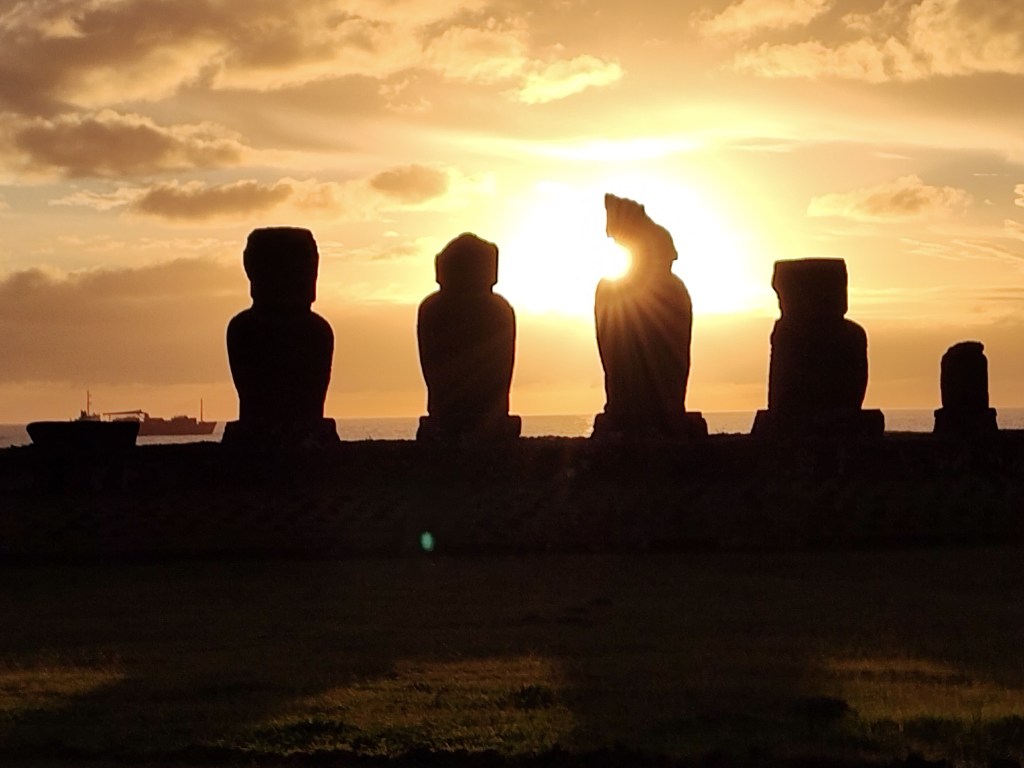
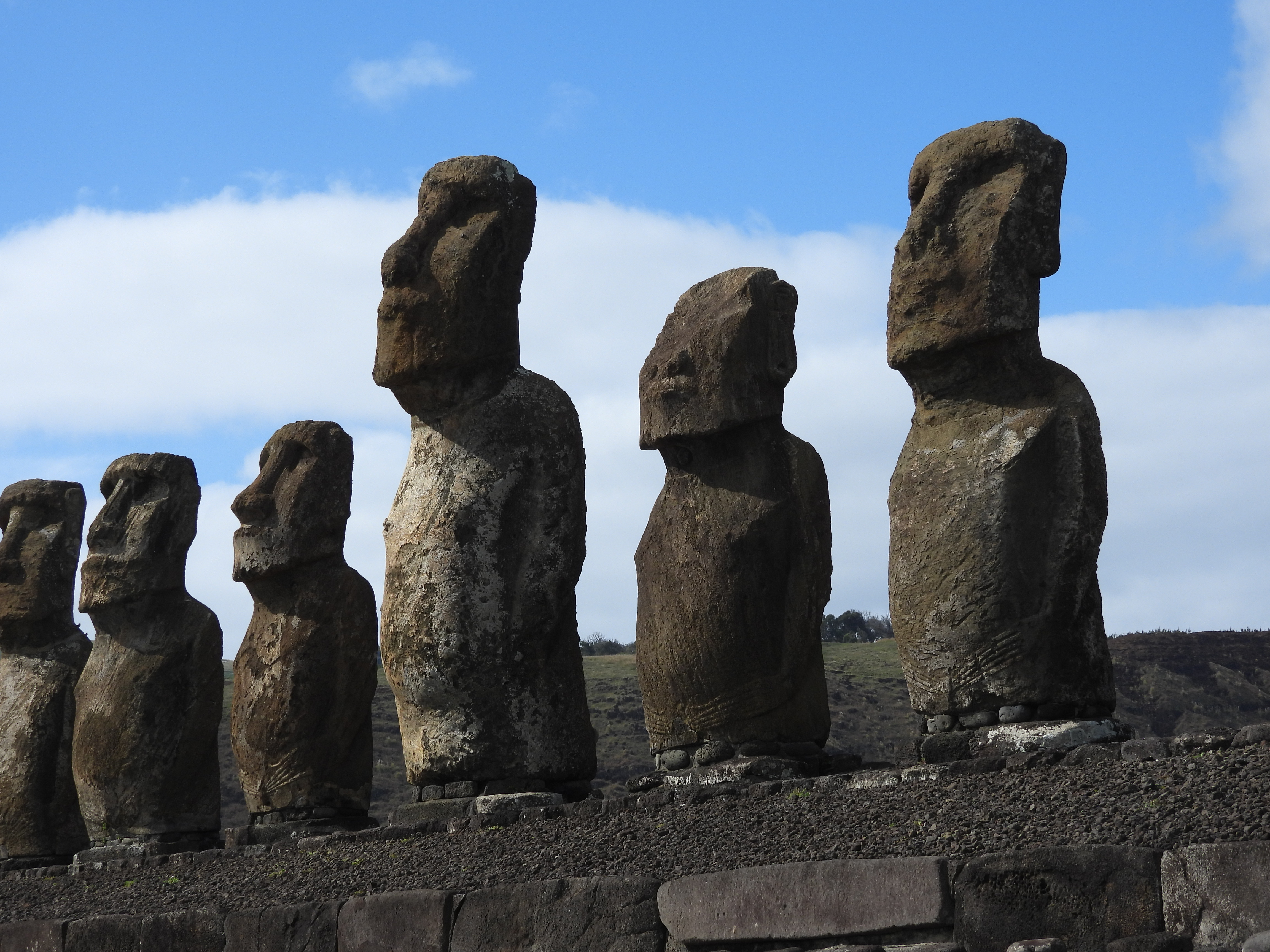 My three days in Rapa Nui were magnificent as a post trip to the Oversees Adventure Travel trip Northern Argentina and Chile’s Atacama Desert. Our island days were filled with sunrises, sunsets, many views of the remaining 900 moai (about 100 more are in various parts of the world including the British museum), ancient villages where the twelve tribes once lived, magnificent food including some of the best tuna I’ve ever eaten, and a unique Polynesian culture.
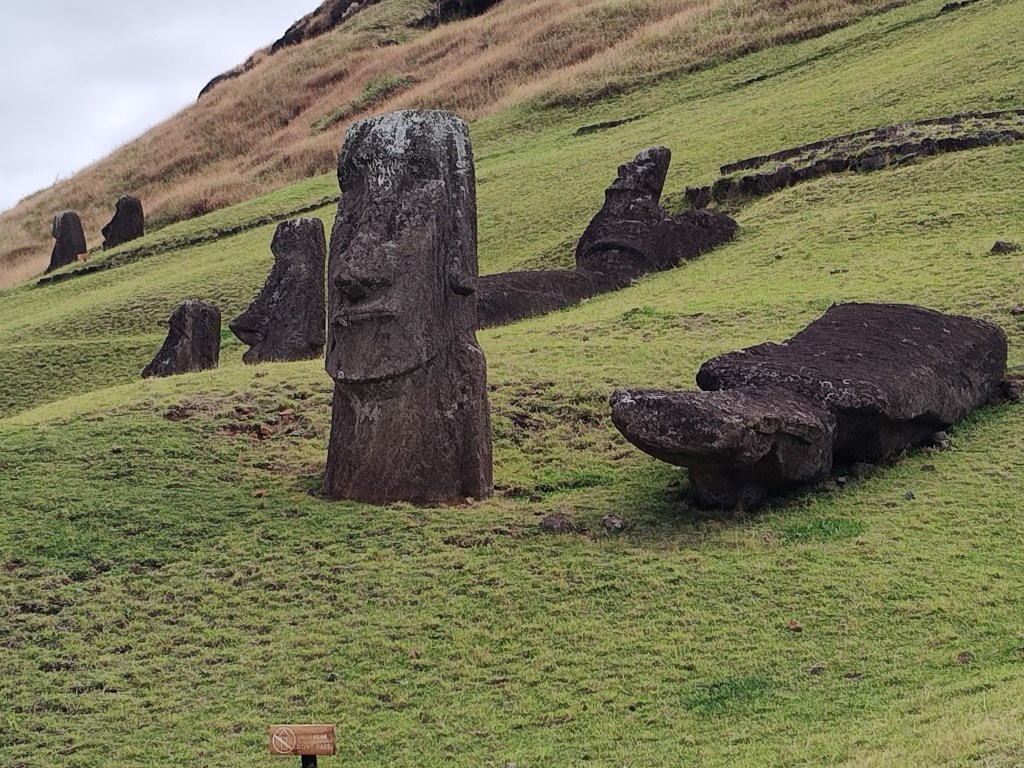
We were told Rapa Nui was originally discovered by the French Polynesians, but subsequent research indicated they were Cook Islanders. Back then, it could have all been one giant Polynesia. In 1722 Dutch explorers arrived on Easter Sunday, thus the name of the island. The moai they discovered are famous for their eyes, since they were both burial sites and protectors among the twelve tribes who lived there. Oral tradition indicates they also represented the heads of the tribes and other significant tribe members. Some of the tribes were warring factions we were told, although that theory is a bit controversial since there are no signs of cannibalism, fortresses or human remains. However, the theory of the warring factions accounts for why some moai are still standing tall because they were never attacked, and some have no eyes because they were or were broken in half for the same reason.
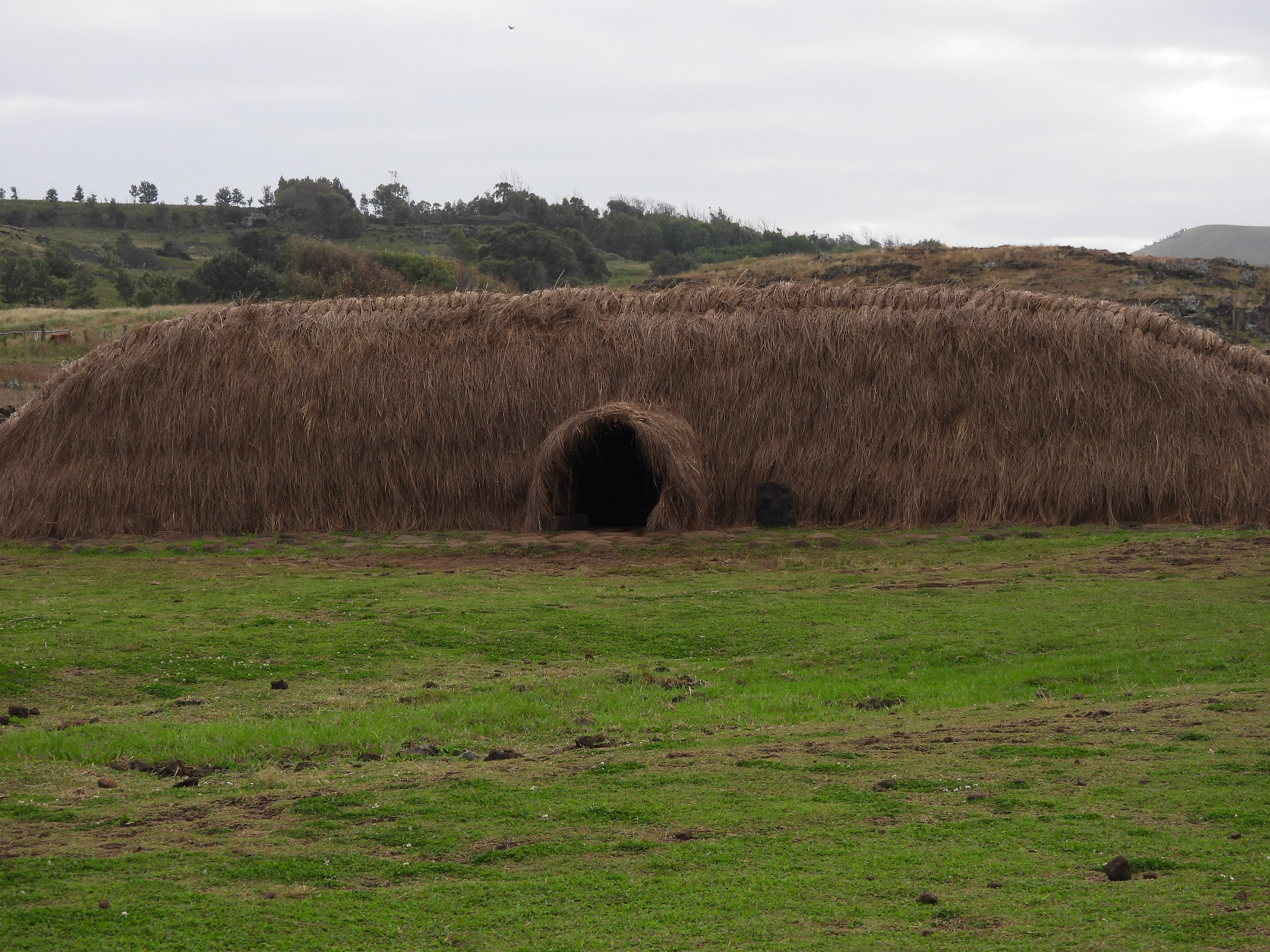 We visited ancient villages where the dwellings were in the shape of the boats they used. In some cases, they simply turned the large boats upside down and created the space for a dwelling which they later filled with stones. The frame for their large boats became the frame for their homes.
Chile annexed Easter Island in 1888 – the only Polynesian island to speak Spanish – and its considered part of the county of Valparaiso, The flight to Rapa Nui is about 5 hours from Santiago, a little shorter on the return because of the tail winds. We had hiked every day to see the sites. There were over 400 moai in one area alone which also has the largest moai on the island if you hike up to see it. I took a pass on that hike, since I just wanted to appreciate what was surrounding me. Many of the other groups of moai faced the sea directly.
Nobody knows for certain which people made these moai or exactly when, just that a puller and levy method was used for moving the large stones. It is estimated they were built along with the platforms on which the standing moai remain, around 800 CE. Carbon dating and other research has recently concluded that the year might be 1200 CE rather than 800 CE.
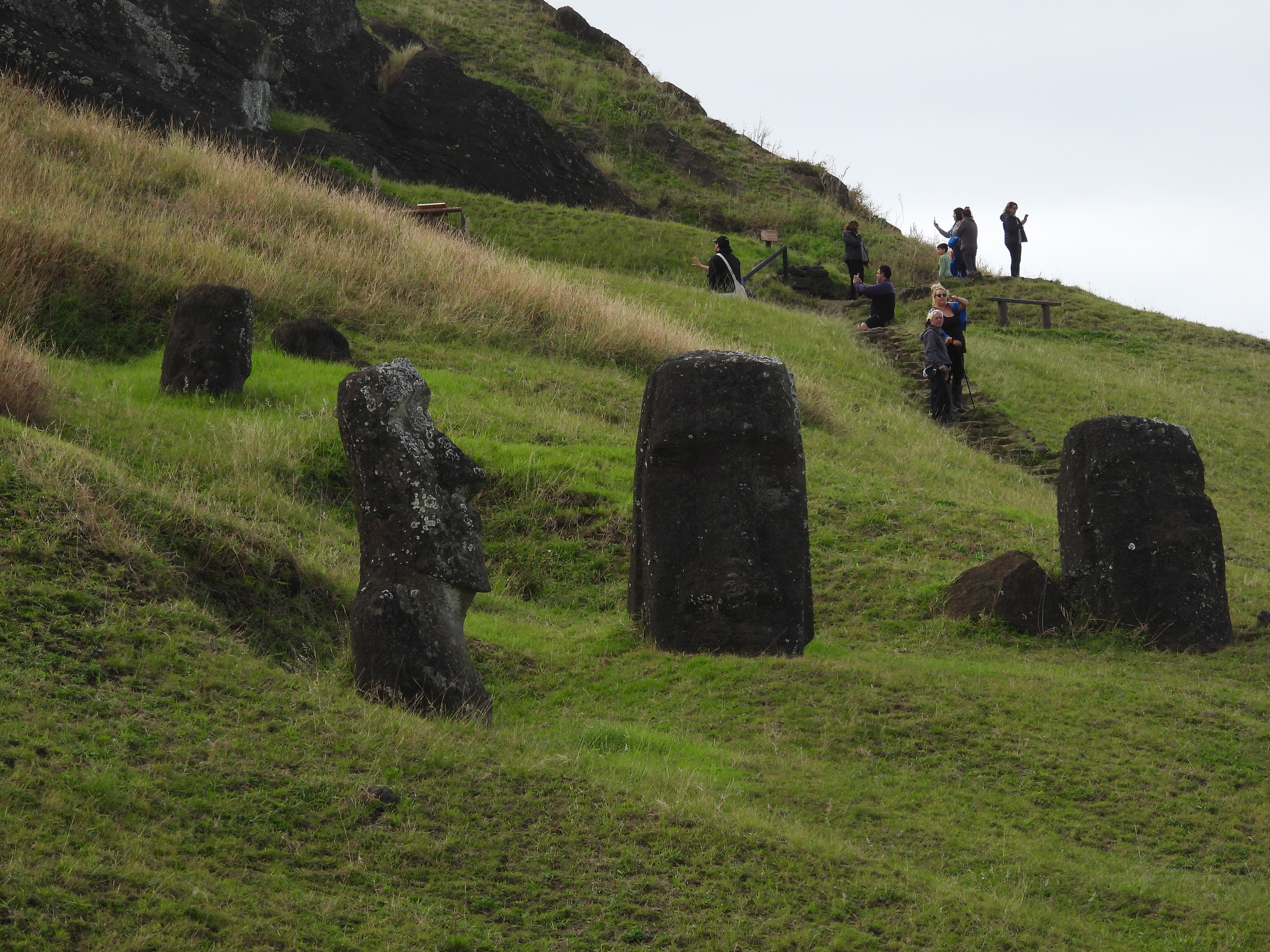 Only 8,000 people live on the Island today, significantly higher than the 2,000 to 3,000 who formed the twelve tribes. However, those 3,000 were considered a thriving community with an ever-increasing population, until many left for other parts of Polynesia, such as Tahiti. By the 1500s two social groups on the island fought for control and a warrior class took over. After a Spanish visit in 1770, the toppling of the statues started in an attempt to eliminate the spiritual power the statues had on the population. A number of illnesses were brought to Rapa Nui by the European explorers who visited, and by the 1800’s only about 100 Rapa Nui were left. Disease, death, and migration to other parts of the South Pacific had taken their toll on the population.
But for those who stayed and grew the island to the tuna fishing haven it is today, life continues normally, with the work of Christian missionaries who visited in past years fully on display in the form of several churches. There are only primary and secondary schools on the island today (two of each). To attend college, students must go to Santiago or some other part of Chile. However, many return to Rapa Nui afterwards and work in tourism.
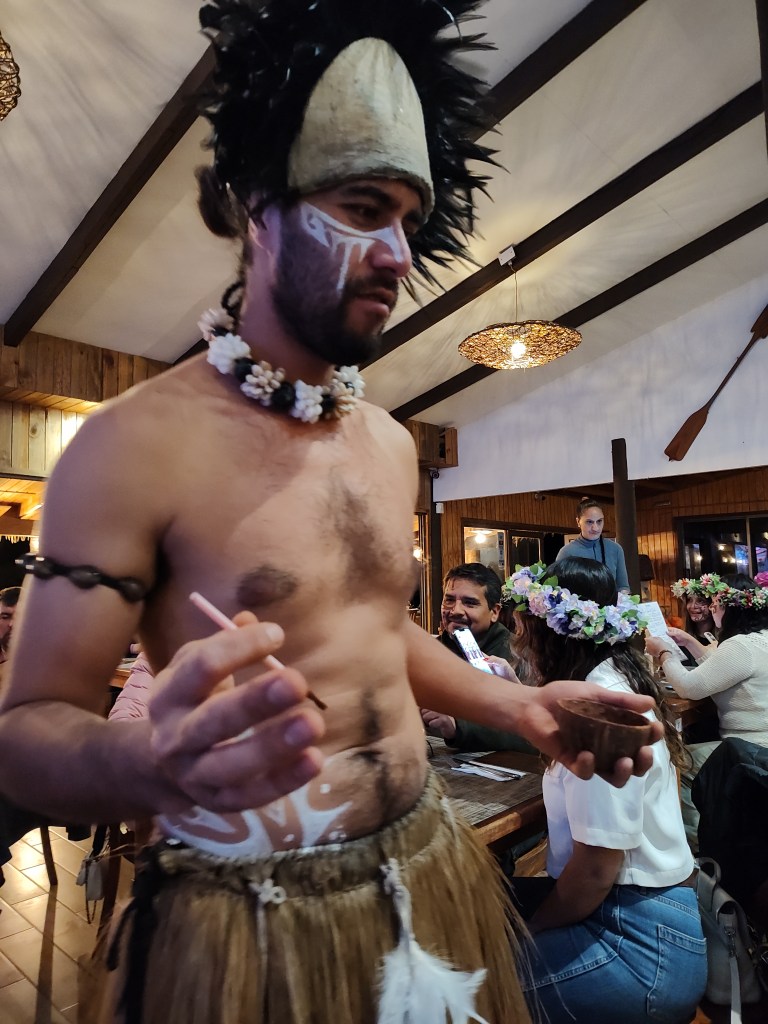
We saw an enjoyable musical and dance performance at the hotel on our last night. It was an entertaining 90 minutes amid a unique Polynesian backdrop since there were designs of the moai in the background.
This post-trip is a must-see for those who want to travel further afield and to a truly unique destination. We were able to share drinks and snacks at our last moai siting as the sun was setting, and it was a wonderful last memory. Several Overseas Adventure Travel South American trips include Easter Island as an extension, so check out Overseas Adventure Travel for more information.
Is Rapa Nui the middle of nowhere or the center of everything? Or does its unique history determine the answer? Visit the island yourself and reach your own conclusion.
All Photos Jann Segal