“There’s an opposite to déjà vu. They call it jamais vu. It’s when you meet the same people or visit places, again and again, but each time is the first. Everybody is always a stranger. Nothing is ever familiar.” Author Chuck Palahniuk
 Every time I travel with Overseas Adventure Travel, the itinerary includes meeting local people and interacting with them. Sometimes it’s not my favorite part of the trip, and it can feel the same from country to country. But of course, people being as unique as they are, it’s not, and in some cases it’s the most memorable part of the trip. When I took the OAT trip Inside Vietnam ten years ago, the oldest daughter at the home we visited told me she wished she could live my life. The people we meet can change our lives, as well as enabling us to be an inspiration for them. That was obviously a memorable personal experience for me since I’ve never forgotten it .
This was also the case when I took the OAT trip Baltic Capitals. We met Ukrainians as part of our journey, but most unexpectedly were the people we met outside Klaipeda, Lithuania. But Ukraine played a huge part in my understanding the people in Lithuania, Latvia, and Estonia.
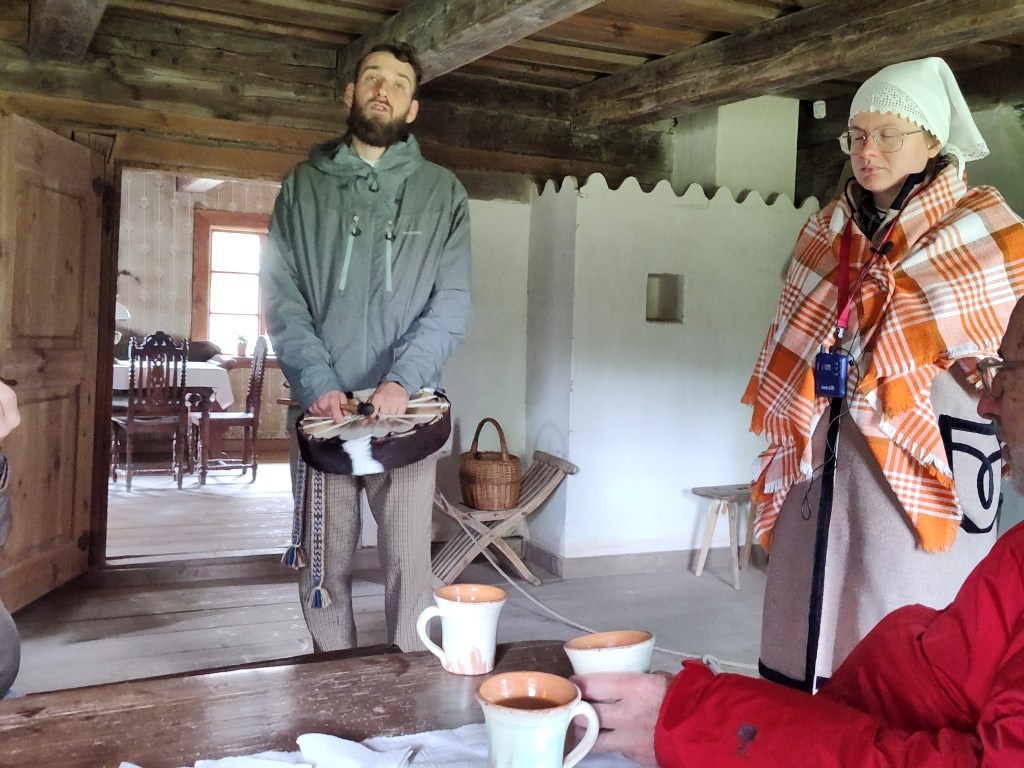
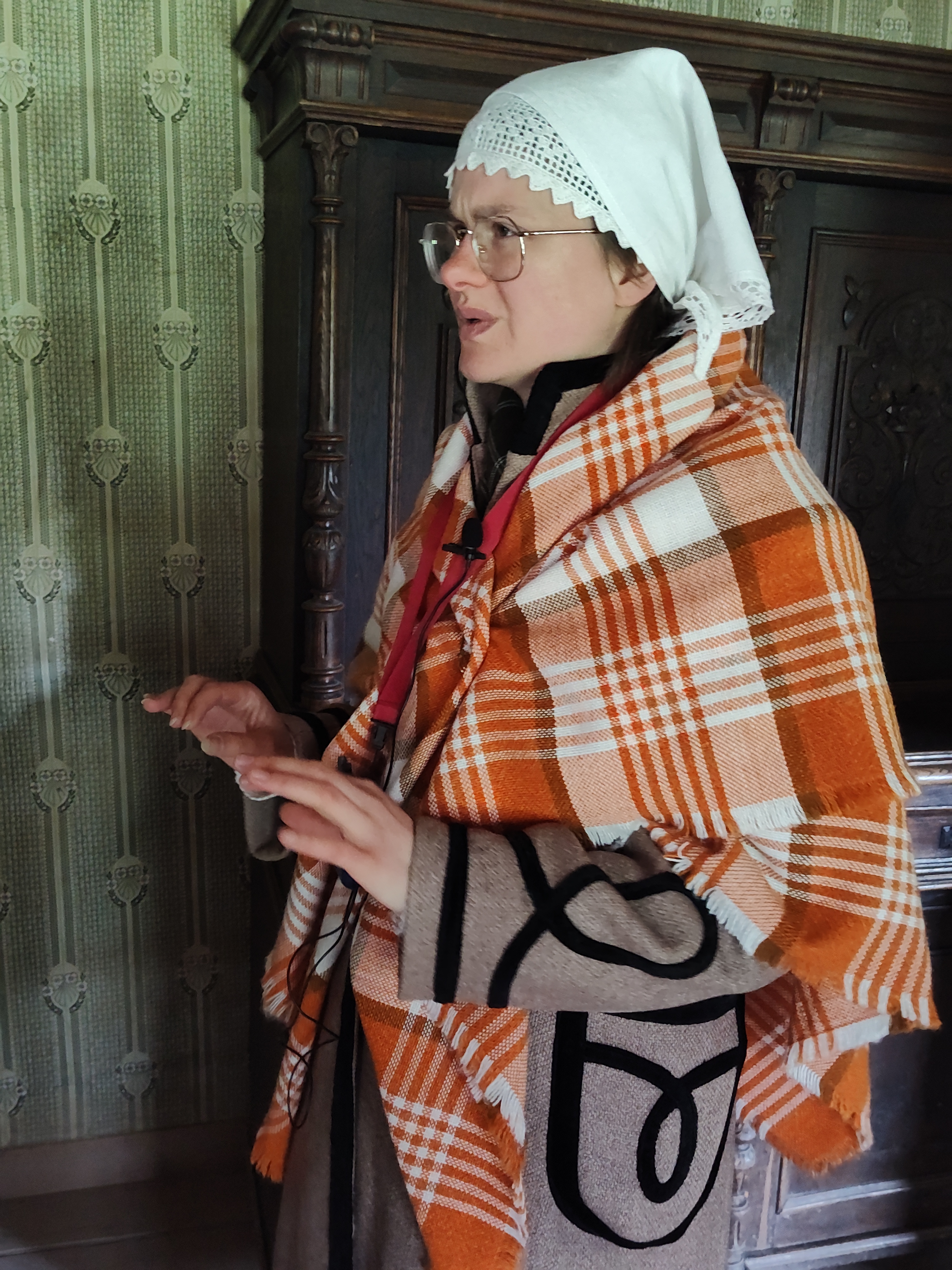 But before we step into the present day, I must mention that we made a trip into the past when we made a unique stop and met some locals dressed according to local t radition at the ethnographic Open-Air Museum. It had both indoor and outdoor opportunities for us to see how they once lived, set on approximately 600 acres. We saw old wooden homes from centuries ago. We got a real taste ( literally with their black currant jam) of what life was like between the 18th and early 20th centuries in regions close to Klaipeda, and that included the folk music of the time. What an unexpected treat!
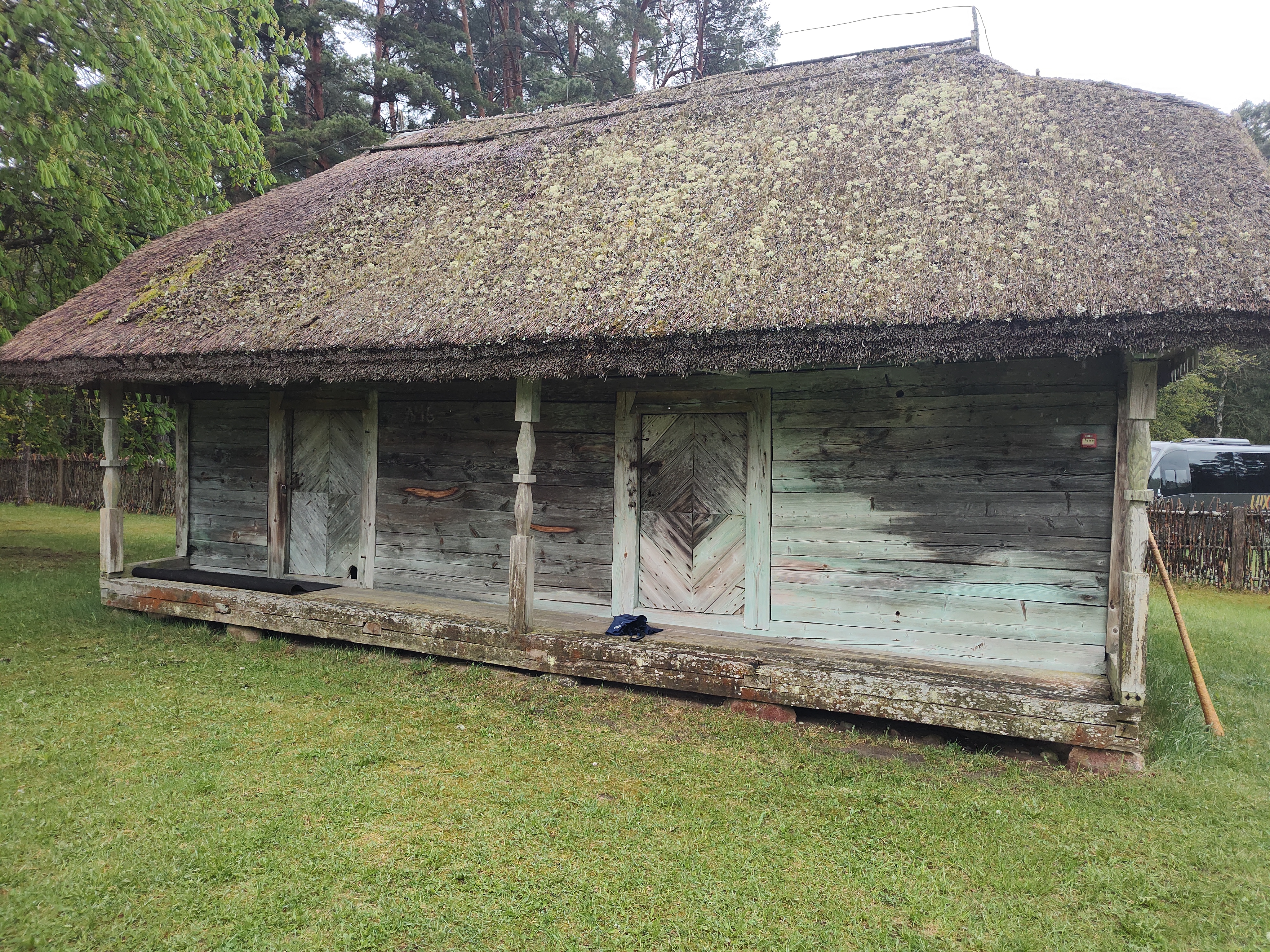 Wooden homes, some with ceramic roofs, seem to be very common there. It was so pleasant to see, with a built-in comfort I don’t usually feel while traveling. Maybe it’s my own Ukrainian roots feeling at home, which I also experienced in Krakow years ago. And the food? I loved every single meal in the area. My mother and her mother made stuffed cabbage like what we had for lunch that day. So, meeting the people, eating sweets with their spectacular black currant jam, and being taught the words to songs while they played local instruments and sang with us, was hardly a typical experience meeting locals. But it was memorable indeed.
Per the museum’s website, “The exhibitions at the museum are intended to introduce the ethnographic regions of Lithuania, i. e. Dzūkija (Dainava), Aukštaitija (Highlands), Suvalkija (Sudovia), Žemaitija (Samogitia) and Lithuania Minor, as they looked at the end of the 18th century and the first half of the 20th century.”
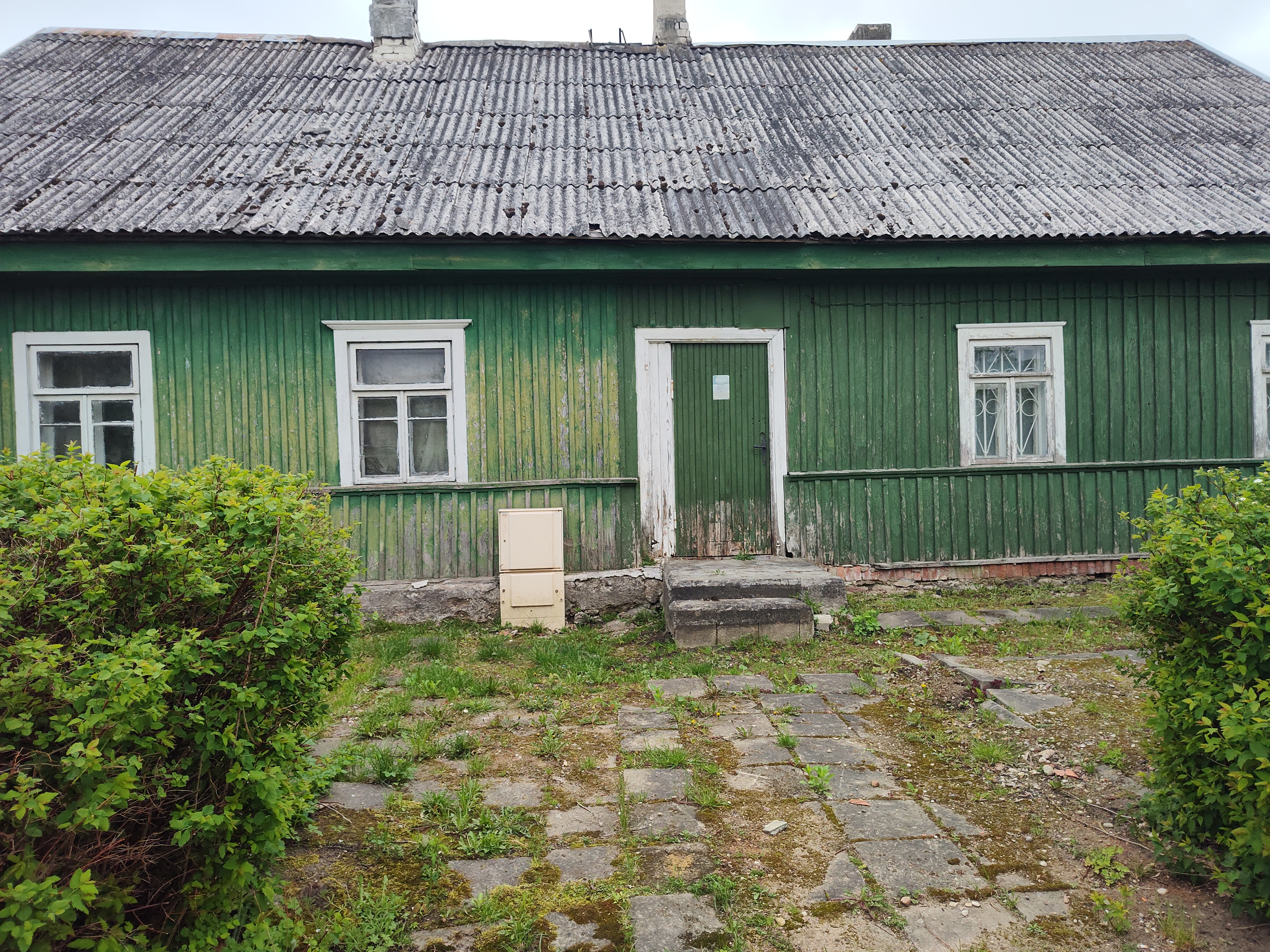 We also went to a town called Trakai. There we met a small group of people who follow Jewish traditions but claim not to be Jewish. They even survived Hitler’s Holocaust because of this claim. I had never heard of them before. They never used to assimilate but now they have, and only 190 of them live in Lithuania now. They observe religious services on Saturday but don’t call it Sabbath. They have a day of atonement in September but don’t call it Yom Kippur. I’ve rarely met such uniquely different people, whose customs continued to add a special ” non sameness” to this trip. They claim to be followers of Karaite Judaism but have independent traditions distinct from Judaism as we know it. But I couldn’t help but notice some of the similarities.
The people themselves are a distinct Turkic – speaking religious minority from 14th century Crimea. They were once castle guards and tradesmen, but today they are famous for their wooden architecture and meat filled, crescent shaped pastries called kibinai. We both ate and helped cook them in one of the wooden homes where we got to experience how they lived, cooked, ate, and dressed. This group known as Keralites were relocated to Lithuania in the late 1390s. Today they live in their own Trakai Settlement, which is their cultural heart.
After we visited these unique people, we walked in the rain down Karaimų Street. The shops with hand made goods representative of their culture were a great way to get out of the rain and pass even more historic wooden houses. There is also their preserved wooden prayer house, the Trakai Kenesa Culture & Cuisine. They have even preserved their unique, endangered Crimean Karaites language.
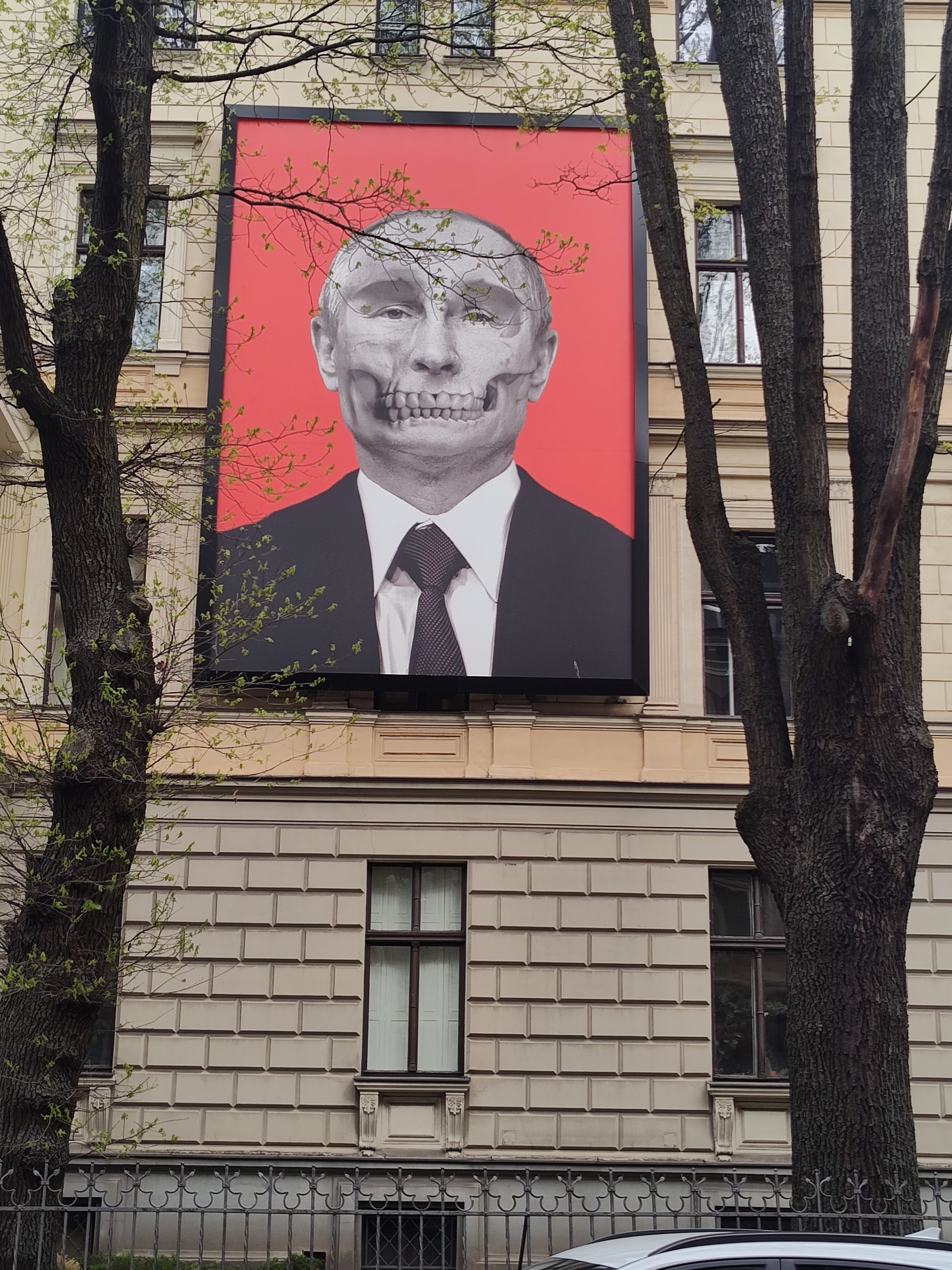
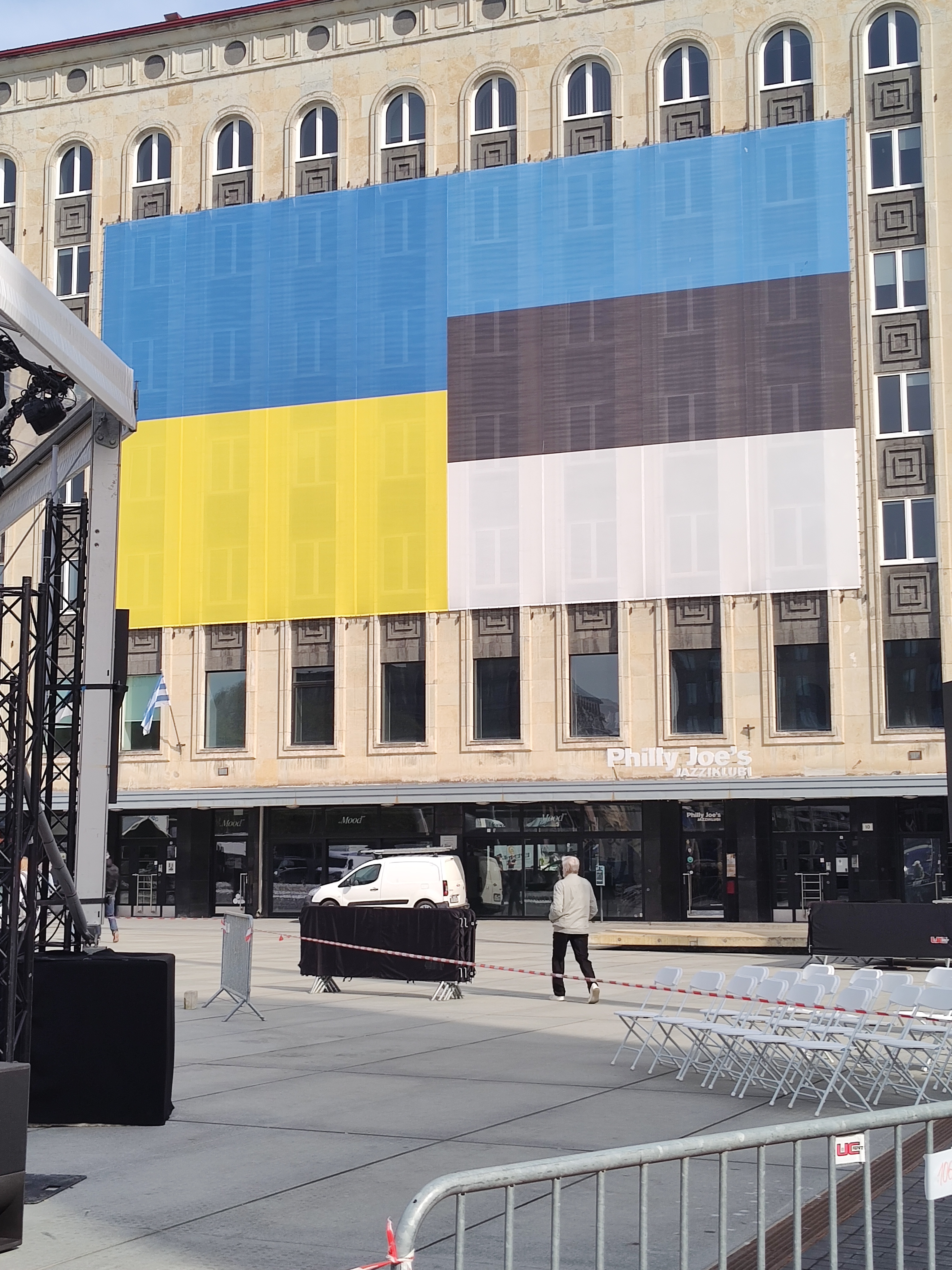
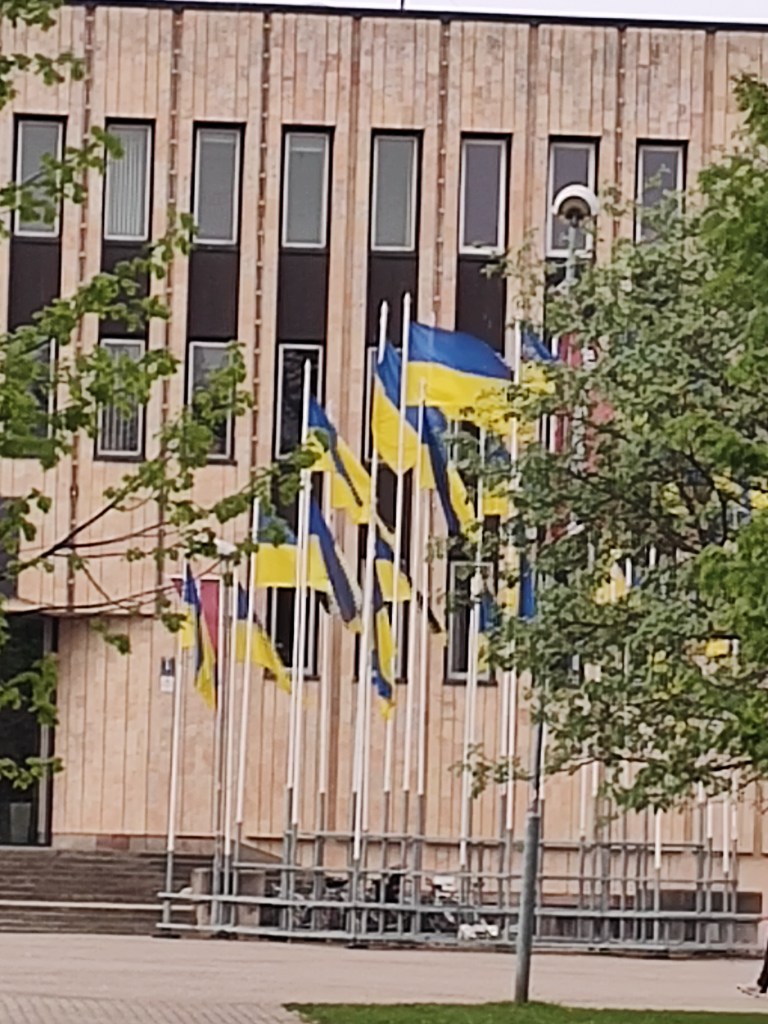
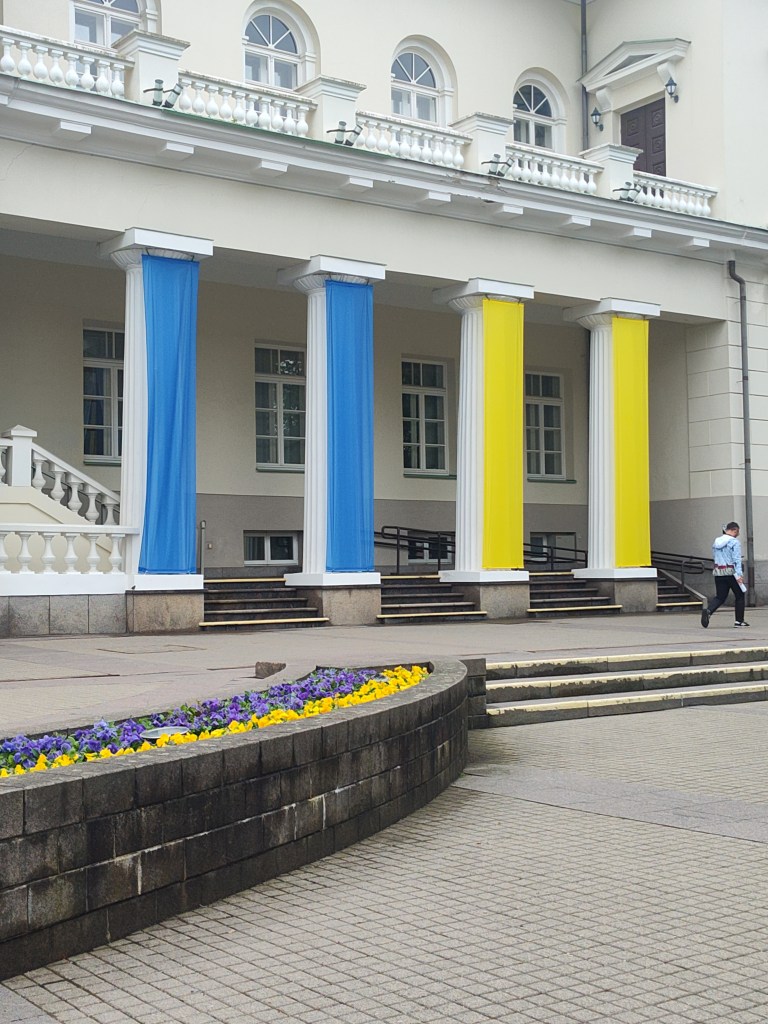
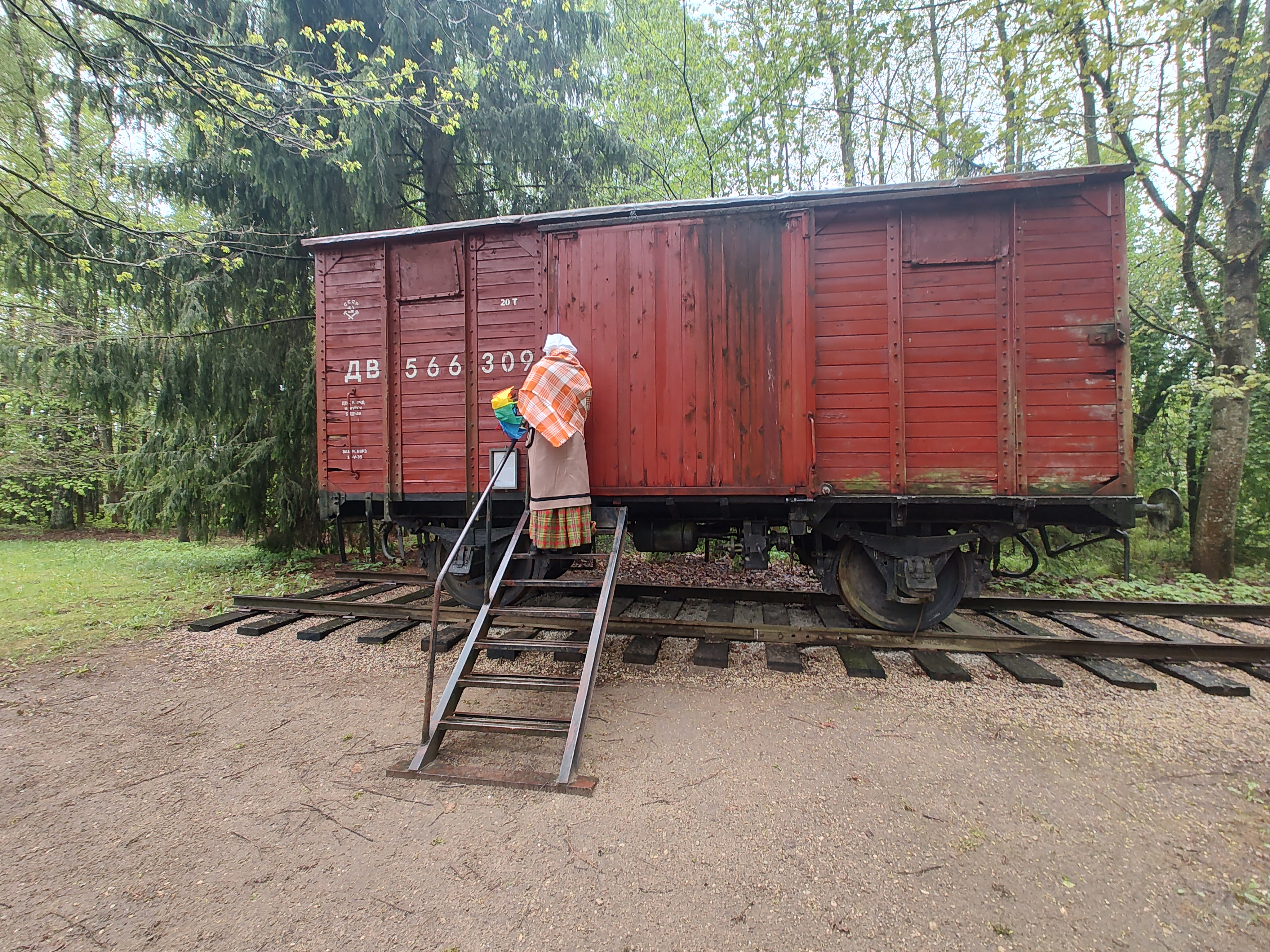 But these two groups of people have preserved part of their past. People in the present day were very much a part of the trip, as they recalled the deportations to Siberia at the hands of the Russians, and of course their daily current fear of Russian aggression. One of the locals enabled us to enter a preserved train car that was representative of the box cars used to deport Lithuanians, Latvians, and Estonians into Siberia,(and often their death) In the 1940s So the unspoken fear of Russian aggression was everywhere in all three countries, with a loud voice of resistance against Russia. And observing the people in the manner of constant support for Ukraine flying in the face of the Russian embassy no less, was perhaps the most powerful sign of engagement we had on the trip. For this traveler, seeing Ukrainian flags, an enormous painted mural of a skeletal face of Vladmir Putin, even the street renamed after Ukraine and all for the Russian Embassy to see, was a wailing shriek in the dark from the current Baltic citizens, hardly a faint whisper. Not to mention the graves we visited as we exited the train car once headed to Siberia and certain torture and death for the citizens .
 Everyone’s lives can be revealed with unexpected surprises from people. On the OAT Tunisia trip, our trip leader took us to meet his family, which included his parents and married sister. I took photos of those encounters, and of him with each of them. I sent him the photos, which had more value to him personally than I realized. He shared those photos with his family, and when his father subsequently passed away, he posted the photo I had taken of him with his father on Facebook. A small act of kindness made a difference to a family in Tunisia who I assume had no current family photos. To this day we are in touch, and I practice my French in my emails with him.
 As Overseas Adventure Travel constantly reminds us, these human interactions are the most powerful form of transformation a traveler can achieve on any trip, in any country, at any time. Keep your ears open and you might hear a whisper from the past, or a rumble from the present. Keep your eyes open as you engage, and it could just change your life and that of others. At the very least, this steadfast and powerful dynamic in the art of travel will definitely enrich it.
All photos and original content by Jann Segal


We’re on the trip now and just arrived in Helsinki. I was also struck by the history and traditions of the Karaites. As a Jew, I noticed several customs and symbols that I could relate to but the Karaite woman who spoke with us did not “appreciate” my comparisons. They seem to want to be unique and self-contained but the similarities were apparent (at least to me).
LikeLike