“No matter how bleak or menacing a situation may appear, it does not entirely own us. It can’t take away our freedom to respond, our power to take action.”
― Ryder Carroll
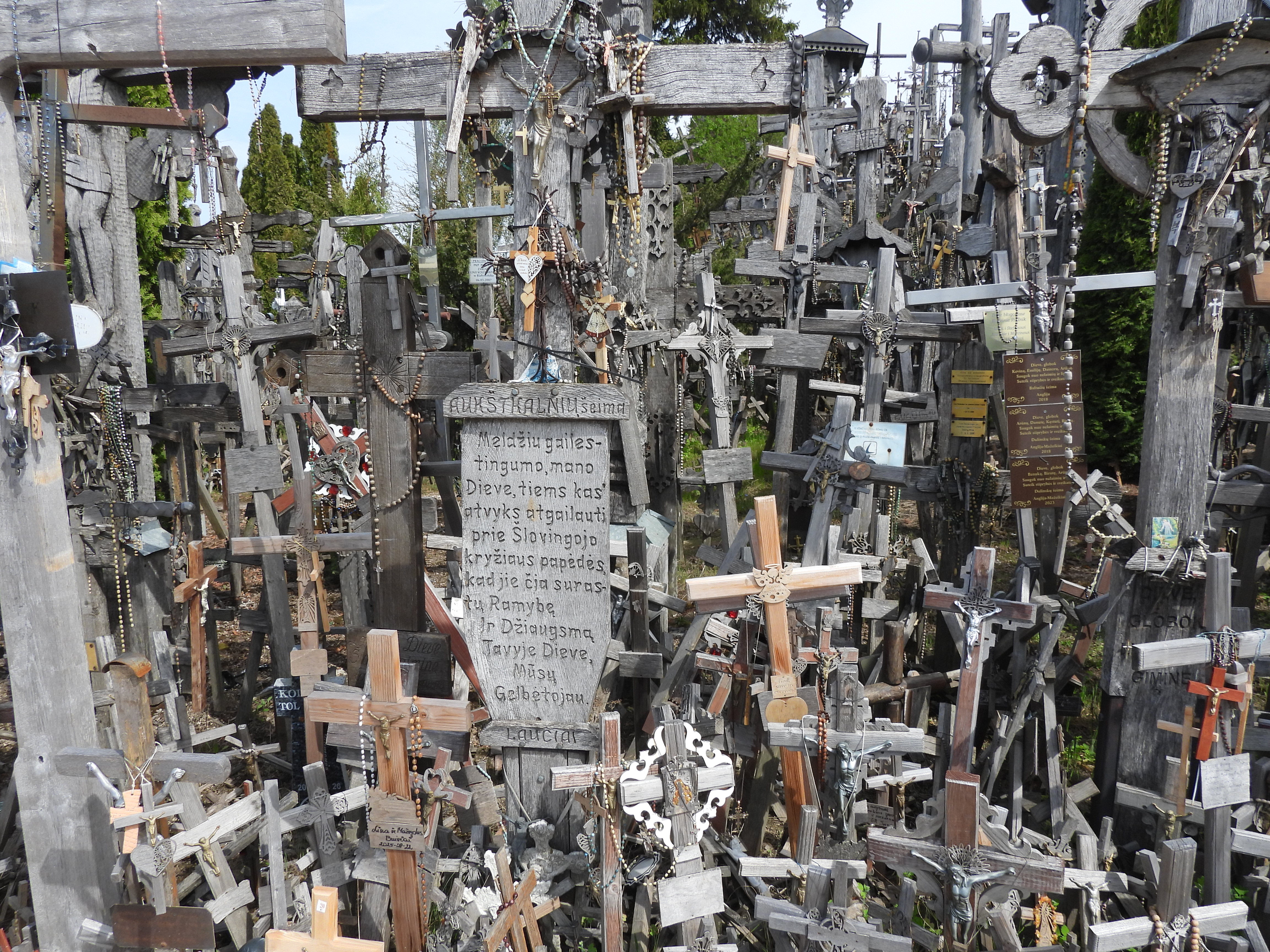 The above quote may have very well been written about Russian aggression in Lithuania and the resilient people who struggle with it. Resilience was hardly a word that came to mind as I purchased a cross on a trip in Israel, knowing I would be taking the Overseas Adventure Travel trip Baltic Capitals, and visiting the Hill of Crosses on that trip.
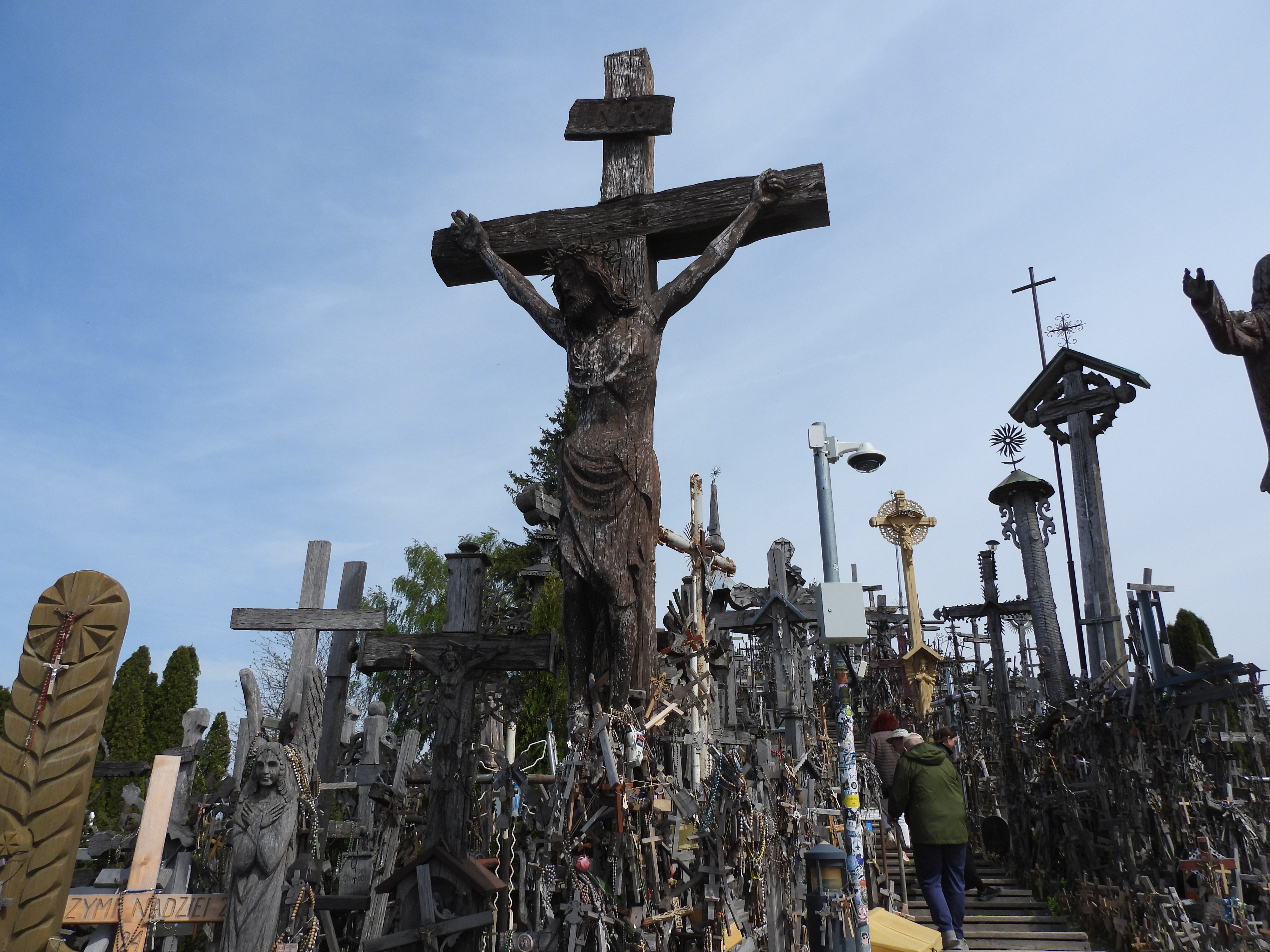 A n OAT traveler placed a cross there for me several years before, when I was worried about possibly having a serious medical condition. So, he did it as an act of kindness, well wishes in my name, and a sense of devotion to his faith. Devotion was what I associated with this area that has an unknown number of crosses, probably hundreds of thousands. That also includes rosaries and other religious ornaments that have been left there, even a few Stars of David.
Devotion is in fact what the Hill of Crosses is about, but it’s more the devotion to the country and the Lithuanian desire to keep their freedom. It’s a devotion to resistance.
Šiauliai is 12 km South of the Hill of Crosses, a barren area off the highway with nothing around it but the central area of hundreds of thousands of crosses, rosaries, and literally every monument to Christianity imaginable . There is literally nothing else but a walkway and some steps to be able to pass through all the crosses.
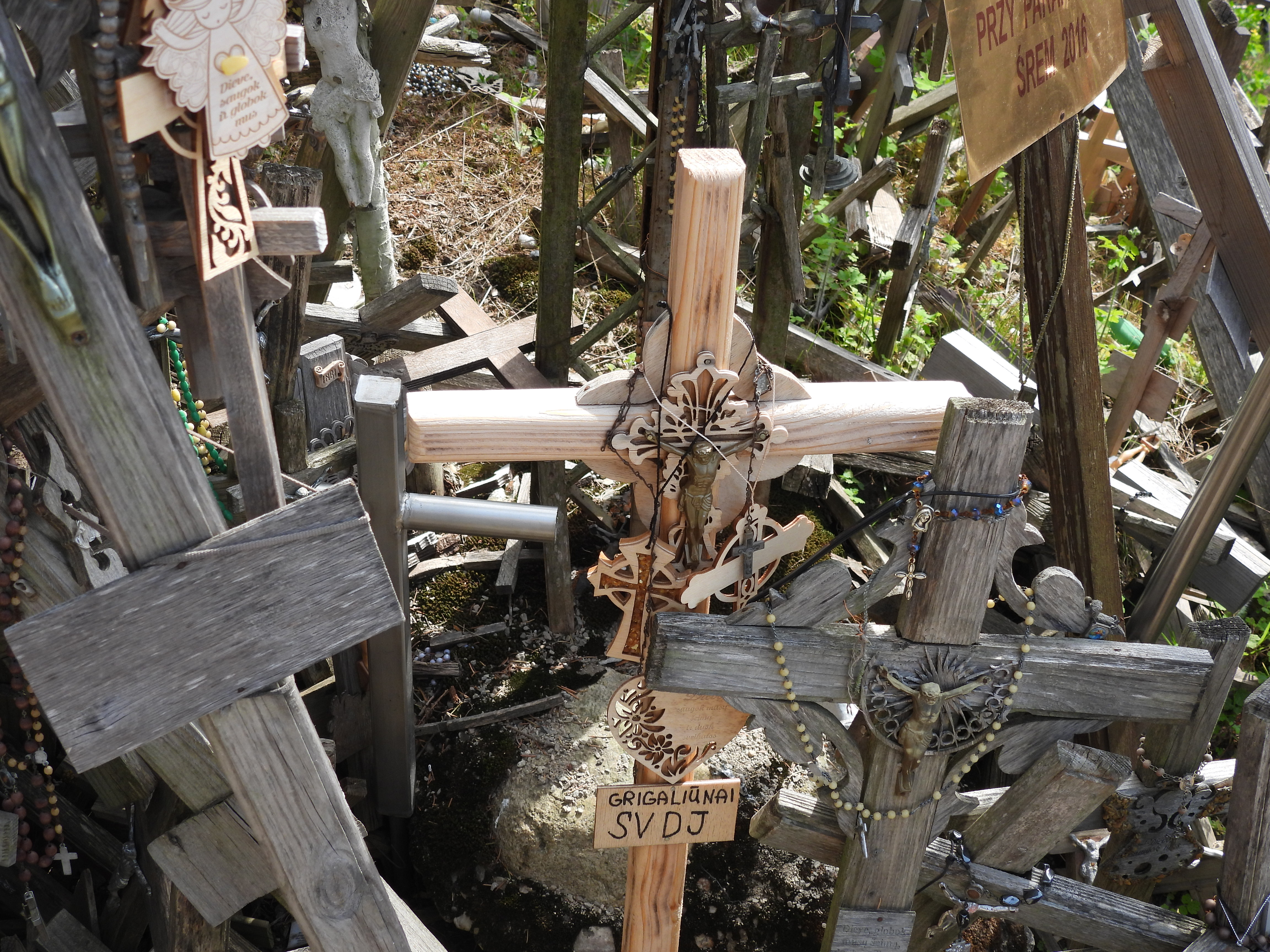 But why crosses and why do they symbolize resistance? Nobody really knows when this custom – that became a monument to resistance – began, but some believe it dated back to the 14th century, and the nearby town itself, around 1237. It was run by a German Catholic order called Teutonic Knights, and their mission was to ban paganism by installing large black crosses in the area.
In the 1700s, the Russian Orthodox Church entered the area, with a Russian Czar as head of the Church. Since the people had become predominantly Catholic, there was resistance to Christianity. So, the defiance began, and by the 1800s there were 150 crosses on the hill, all placed as an act of protest against the Christian Church.
The hill endured multiple changes over time, with the Nazis taking over in the 1940s, then the Russians once again in the 1960s, before finally being part of Lithuanian independence after 1991. This also meant that three times in our lifetime the hill was burned or bulldozed down by governing forces (1963, 1971, and 1975). Each time, people arrived with more crosses as a sign of rebellion.
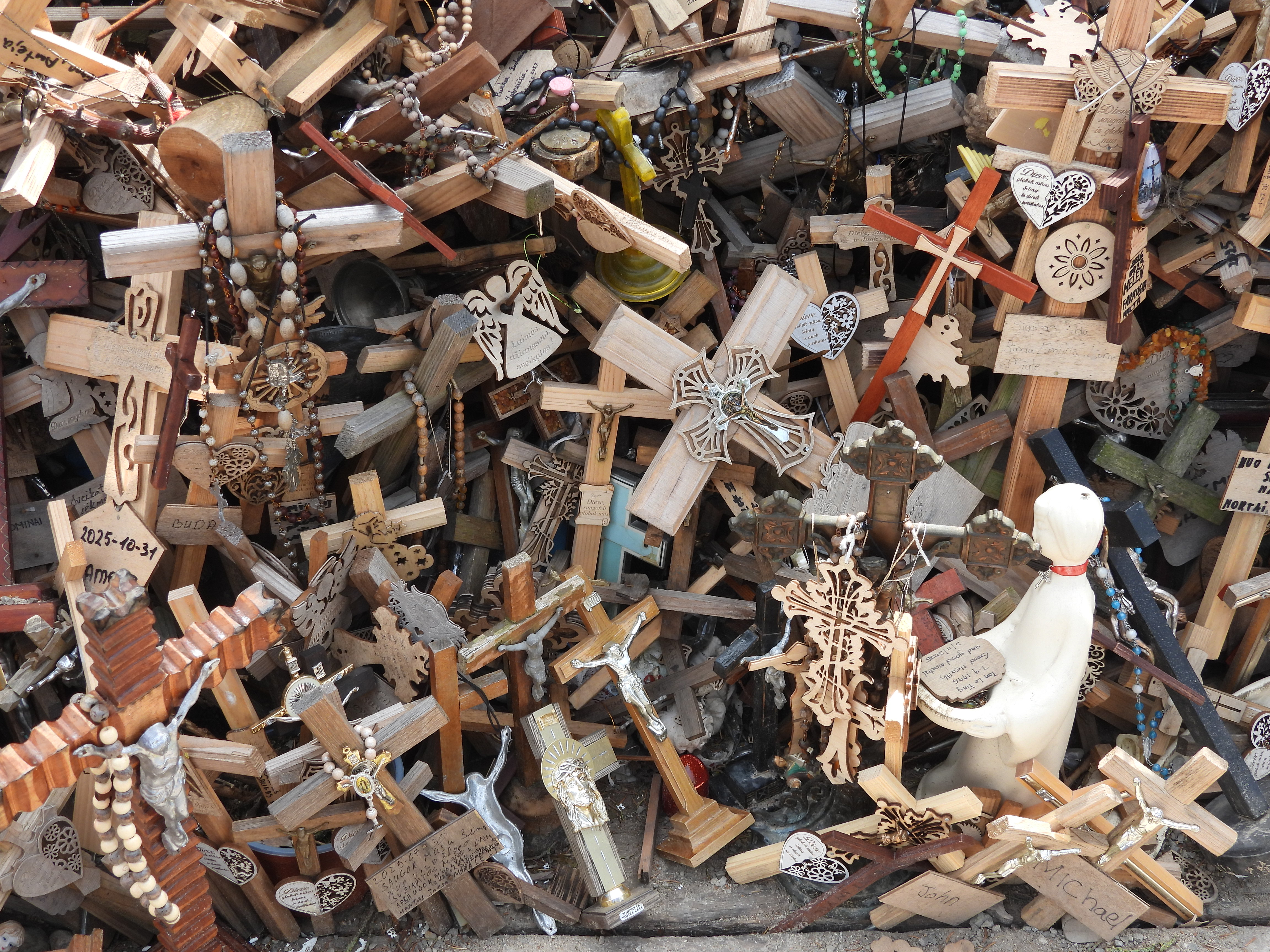
Today, people arrive with crosses as a sign of respect for the Lithuanian people. When I was on the OAT small yacht trip in Egypt prior to visiting Israel, we visited a monastery, where I received a small cross and a plaque with Christian ornamentation. I saved them for the trip to Hill or Crosses, even though Covid and the war between Russia and Ukraine kept requiring me to rebook the trip. But like the Lithuanian people, I persisted until I was finally able to place these crosses in their intended spot.
I was traveling with a friend who is Christian but had no cross. This Jewish kid had three! So, I gave her the one I had purchased in Nazareth, knowing it would be meaningful for her. We walked separately to examine the hill and all the crosses, and of course with hundreds of thousands on the hill I never found the one that the OAT traveler had placed for me. But as we got into the bus, my friend told me that as she was finding a place to put her cross, she passed the section of crosses where I had laid mine along with the religious plaque from the Egyptian monastery!
 One doesn’t need to be of any faith to appreciate the indominable spirit of the people who created the Hill of Crosses, and their desire to show not only resistance along with their devotion, but persistence in the face of intolerance. Biblical history is filled with several stories about travelers. But my favorite among them is about the Good Samaritan traveler who helps a person in need along the way. I like to think that all travelers help each other in need and those in countries we visit along the way. As writer Anton Chekov put it. “In all the universe nothing remains permanent and unchanged but the spirit.” In Lithuanian Hill of Crosses, I saw that to be true.
For more information on the history of the Hill of Crosses click here and here.
All photos and original content by Jann Segal

