“How often I dream of the Hebrides! How I long to be walking on some solitary distant shore, with a gull or two, sandhills and a rising moon or setting sun…” Virginia Wolf
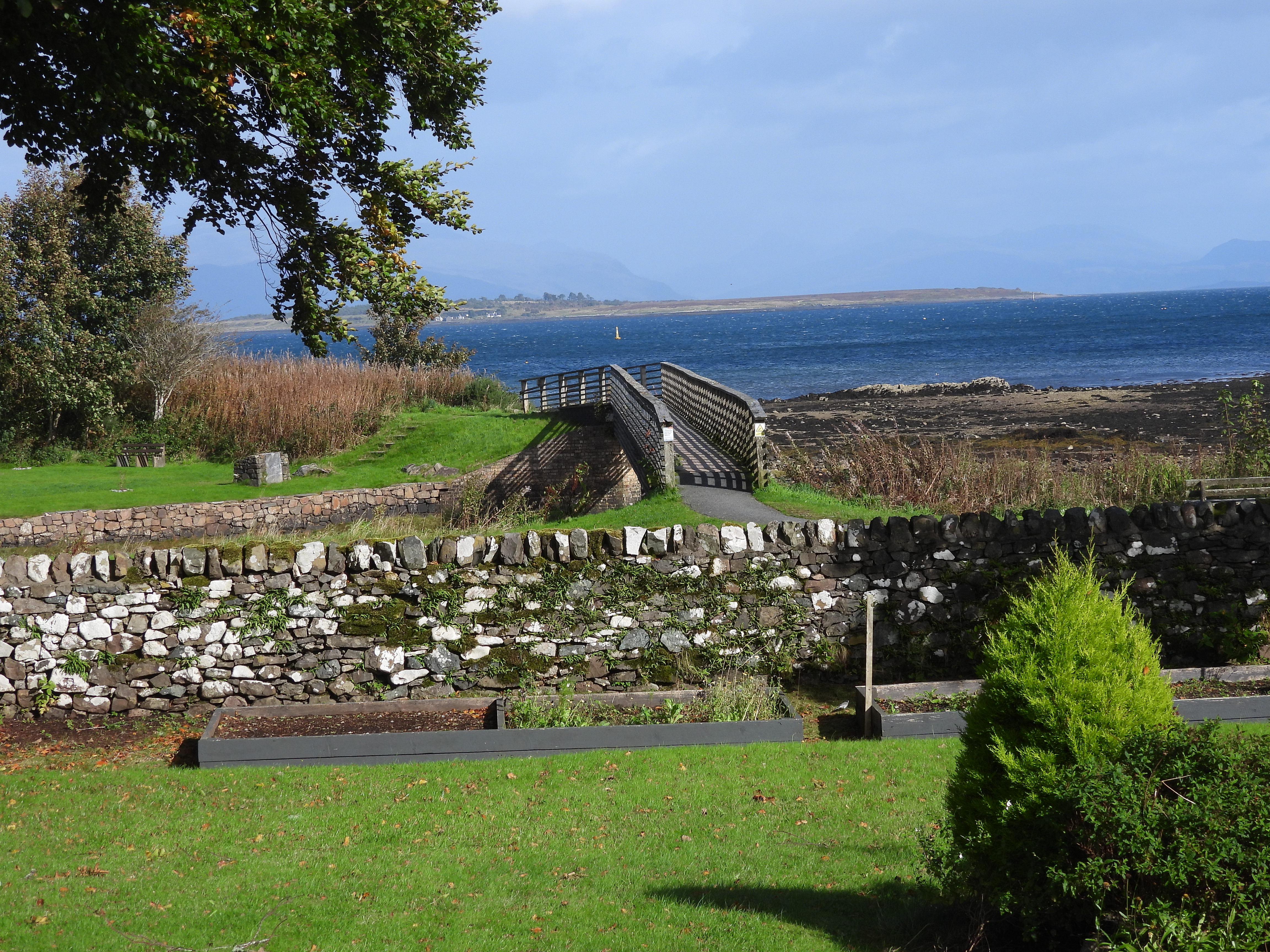 I had not been to Scotland in over 50 years, so when I saw that Overseas Adventure Travel was offering a trip to Scotland called Scotland Revealed which Included a pre-trip to the Hebrides Islands, I was instantly intrigued. I knew there were Islands off the coast of Scotland but never knew what they were called or what was on them. So, Scotland Revealed it was!
The pre trip to the Hebrides went to the Isle of Skye in the Inner Hebrides, and the Isle of Harris and Lewis, which is the same as North and South, and that’s in the Outer Hebrides. On the base trip we drove through one more island on the Inner Hebrides, the Island of Mull. From there we went to a smaller island, Iona, which is where Christianity was brought to Scotland.
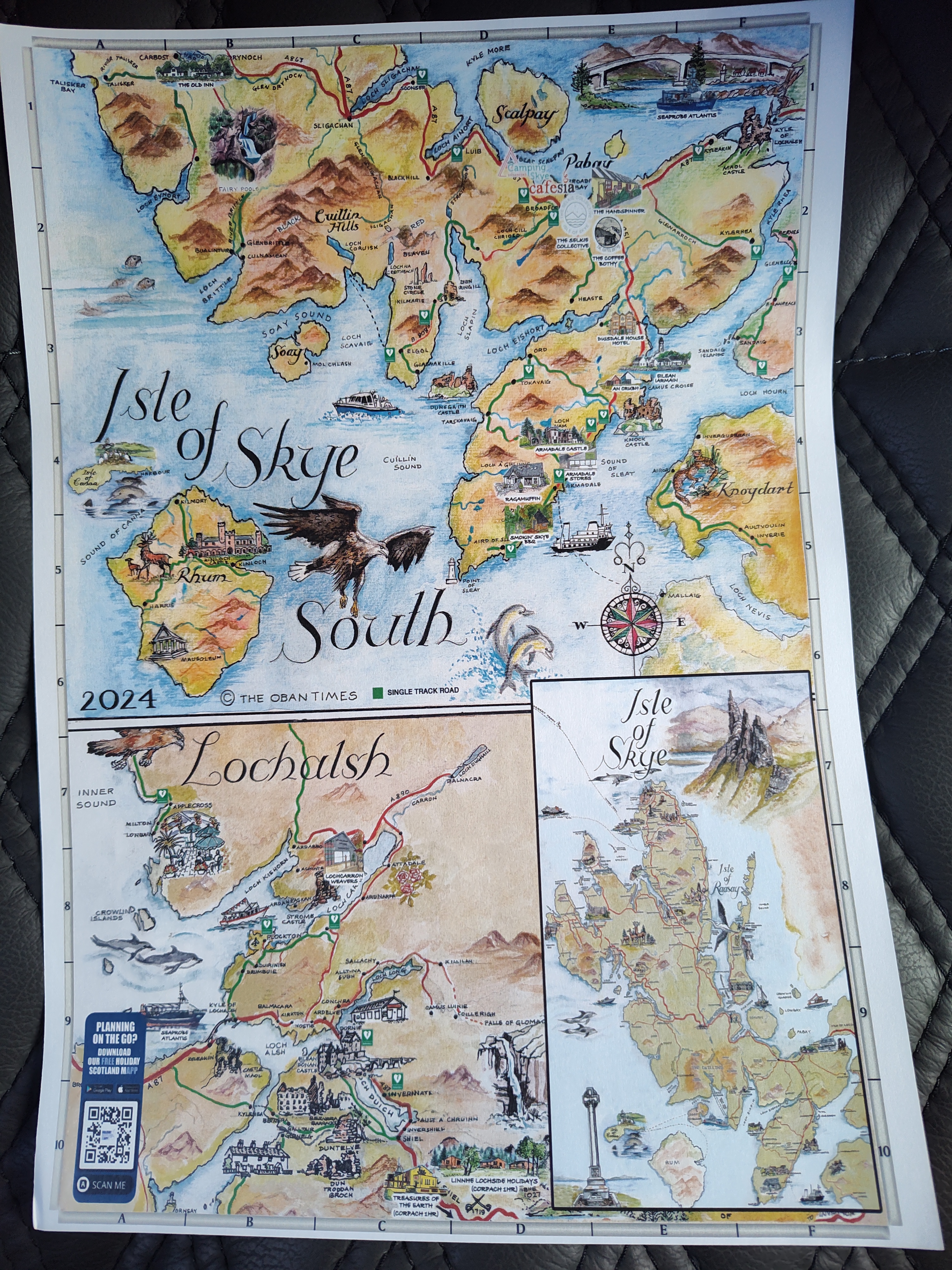 The Isle of Skye is in fact unique. The Southern part of the Isle is shaped like a lobster claw; a nearby island by ferry is called Scallop. Even the fishing boats we saw in the water are not used that much for fishing any more. Linguistically, Scotland is fascinating with its mixture of English, Gaelic, and the many variations of Celtic . This extends to the north of France as well, where they speak Breton. These are not just dialectical differences, but whole languages. Unlike in the Virginia Wolf quote above, I was mystified by the barren landscape of the Hebrides, although it’s beauty, the ocean vistas with boats, and gulls winging overhead, eventually caught up with me.
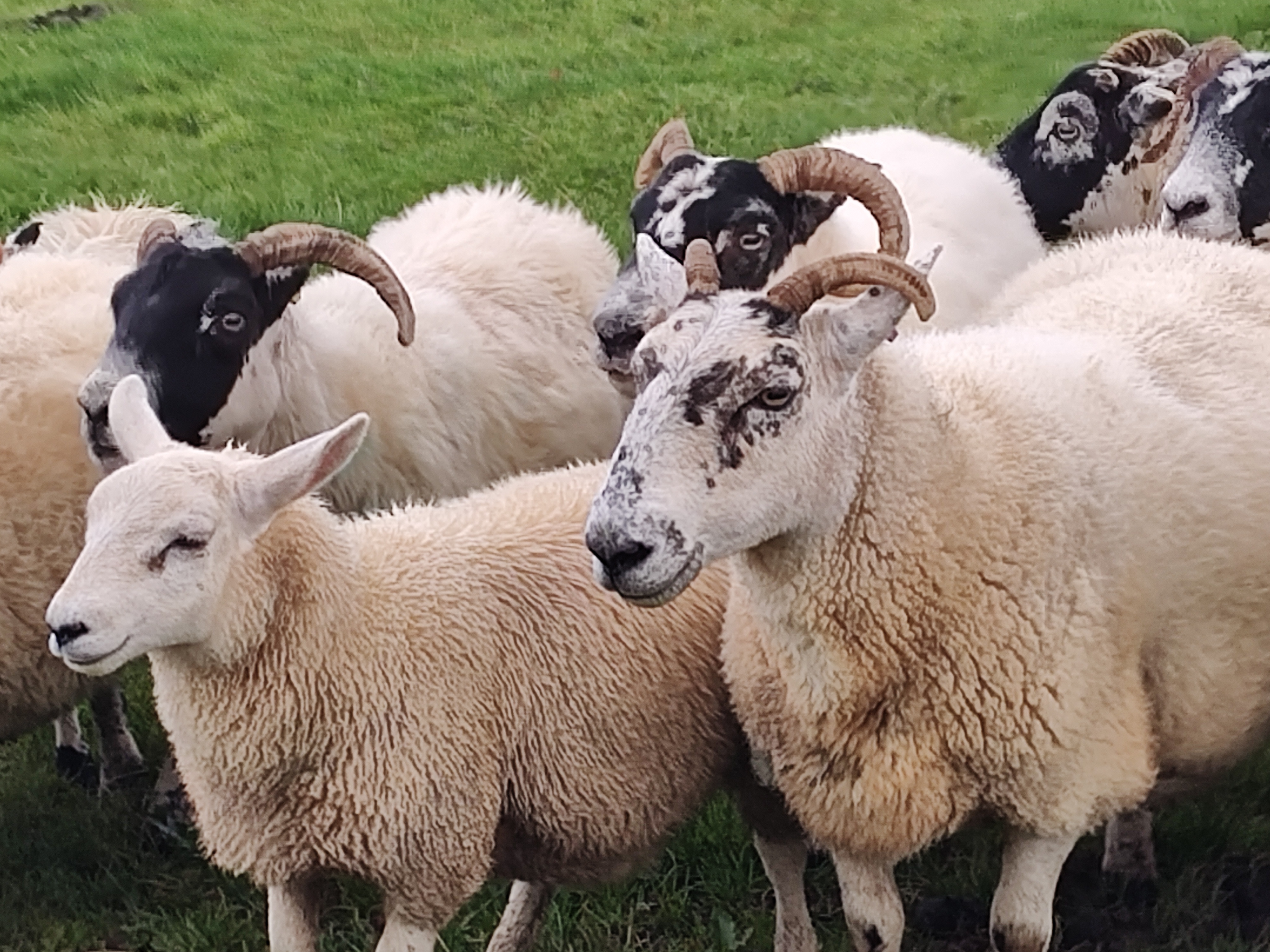 Unexpected fun in Skye arrived in the form of a man who had trained sheep dogs, and sheep herding has been in his family for centuries. He has three crofts, or strips of land. He explained it is cheaper to rent them than to buy them, but he uses as many as seven for his sheep ranching. His sheep all have a blue brand to indicate they are his and also have an electronic chip. His three herding dogs are female. I had a meaningful but muddy interaction with one of them, with muddy paws on my lap and all.
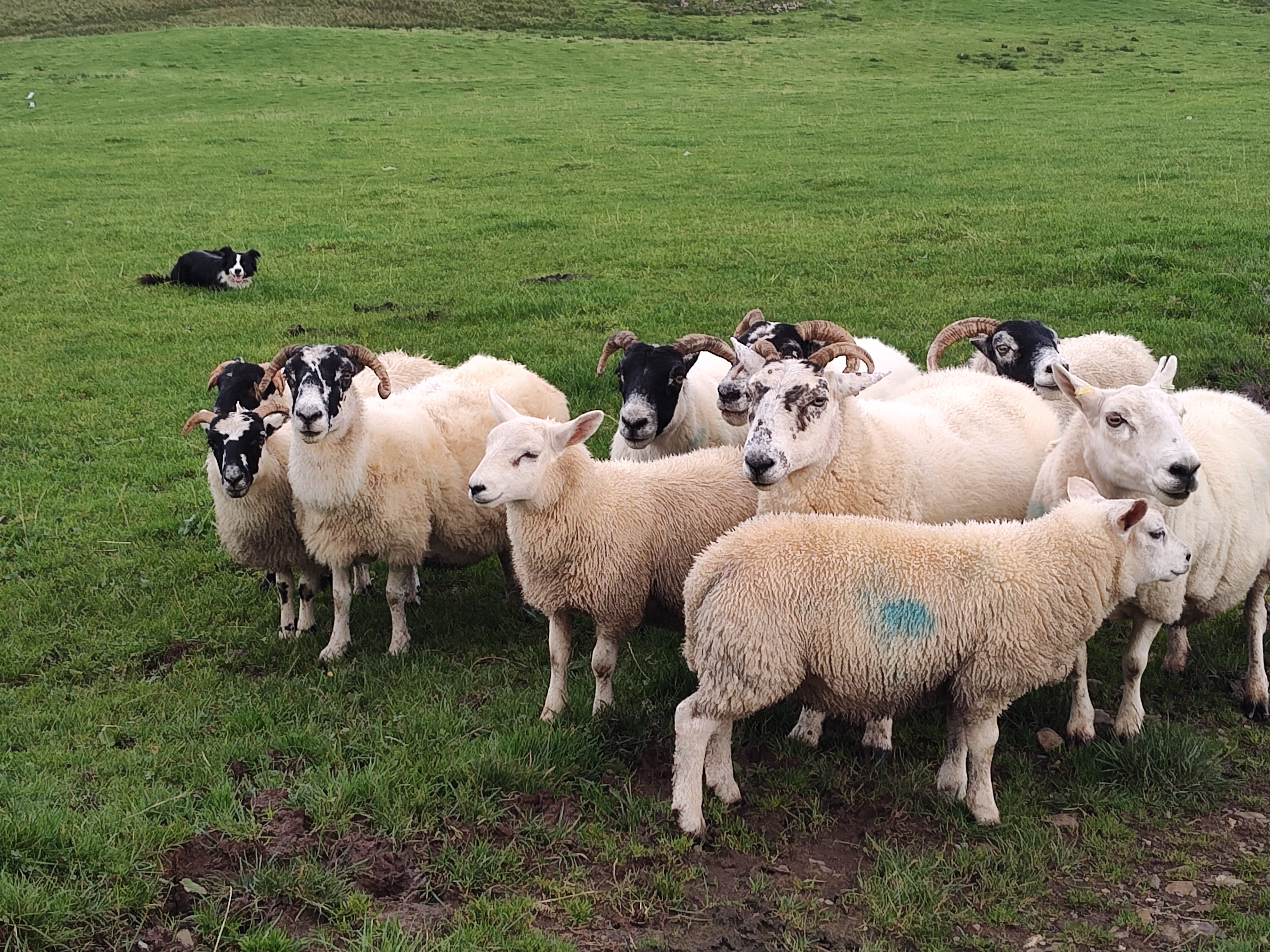 We watched how the dogs heralded the sheep from farther down the croft of land to bring them to us, and the sheep ended up posing for us. The dogs lay down behind the sheep which is how the sheep knew to stay in place or to move. It provided a glimpse into the sheep herding tradition with working dogs.
Sheep wool is not the commodity anymore, but their meat is. Many who lived on crofts of land that were the most fertile for sheep ranching were moved off onto other crofts so profitable sheep ranching could take place.
Herding dogs can be quite valuable. They have professional contests for these animals, and the most prized is worth 30,000 pounds. Our trip leader heard of a camel worth just under 2 million, and that camel had been given Botox!
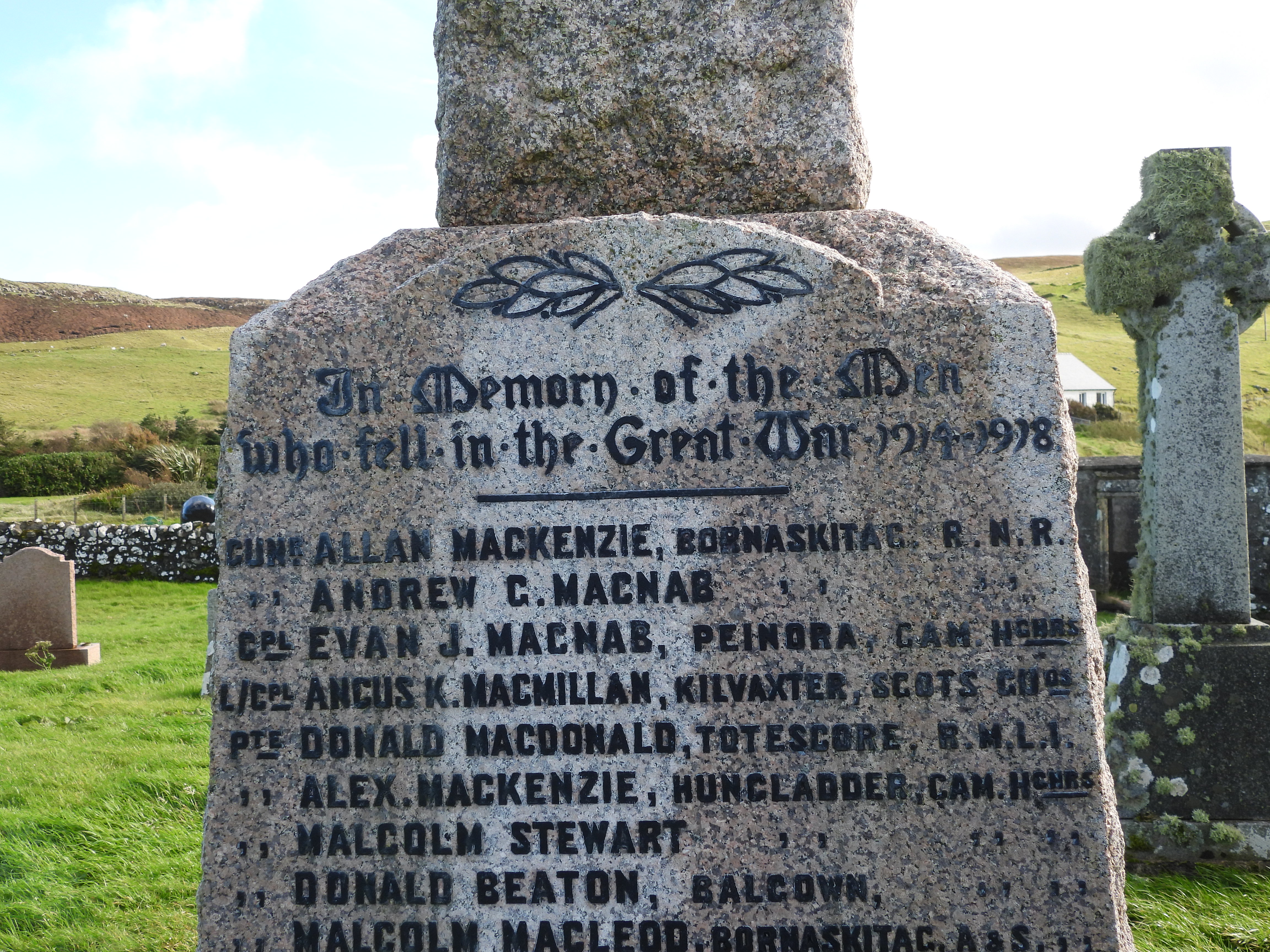 We spent two nights in Portree, a small town on the Isle of Skye. Amid strong gusts of wind, we took a hike to an old cemetery which looked like not many were buried there. In fact, there were quite a few, but time and weather took away the headstones. After that we went to two other cemeteries, one very old, the other more modern, both with spectacular views of the coastline which looks like the Irish Cliffs of Mohar. All the cemeteries have a sign Commonwealth War Graves that indicate some of the dead buried there died in one of the world wars. At one cemetery we saw a whole monument to a group of men who died during WW1, including some from Canada.
On the isle of Lewis and Harris in the Outer Hebrides, we stayed in Stornoway in Harris. It is really one island with two parts: the southernmost is Harris, named after a King Harold, most likely in the 17th century. Only 12,000 people live there. The wind gusts were so strong it felt like man against nature on this remote island, which is fundamentalist Calvinist in the Church of Scotland. The northernmost part of the island is Lewis.
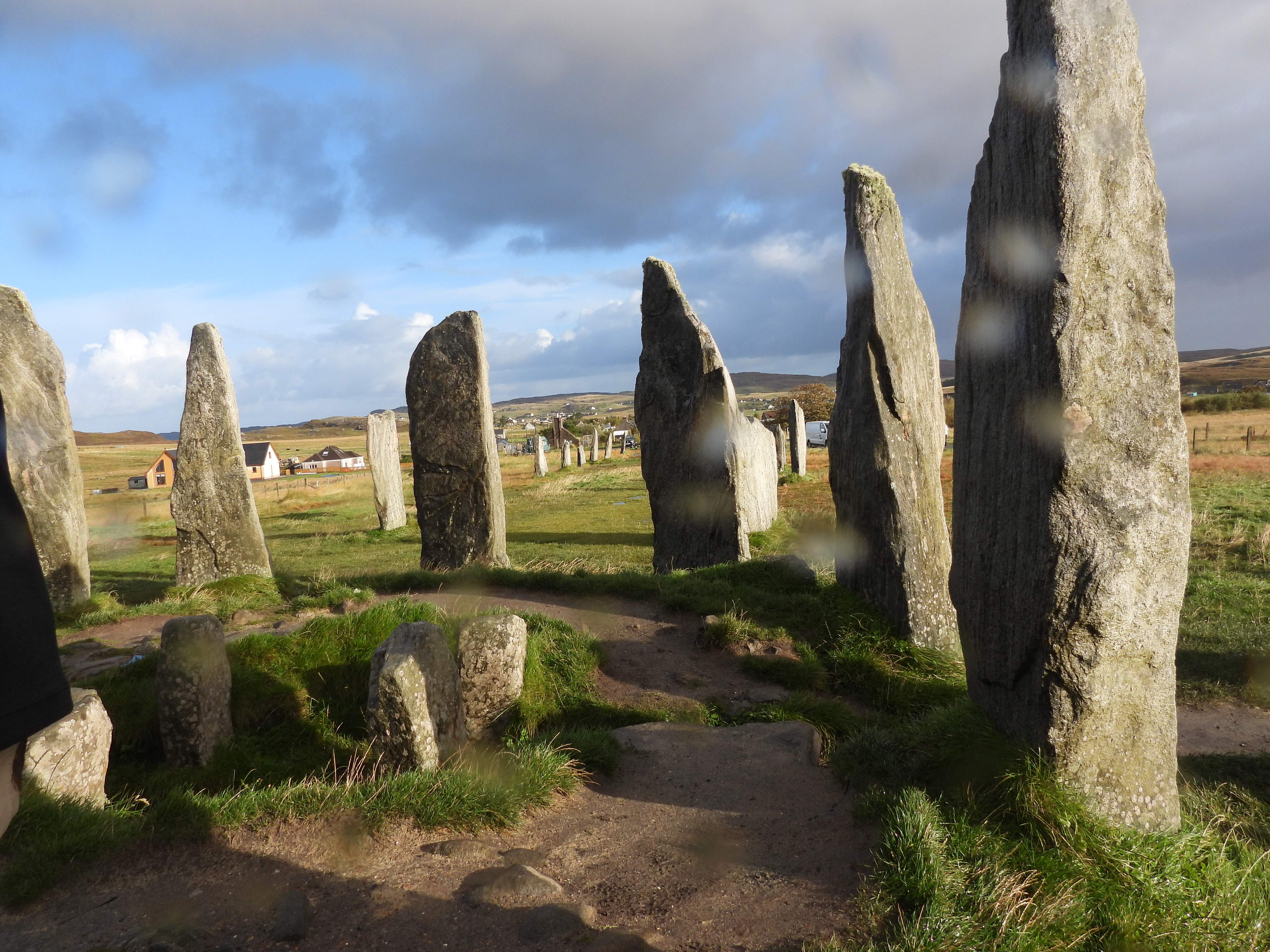 We visited two important monuments in Lewis, the first being their famous Standing Stone,1500 years older than Stonehenge. It was quite a site and of course is a Neolithic nod to astronomy. These monuments are called Callinish Standing Stones and are over 5,000 years old.
From there we hiked to an ancient broch, Dun Carloway, which was both a fortress near the sea as well as a shelter from punishing winds. It is one of the best preserved Iron Age brochs in Scotland This broch was used as a refuge by the Morrison Clan in the 1500s until they lost it to another clan. It was placed under state protection and preservation control in the 19th Century.
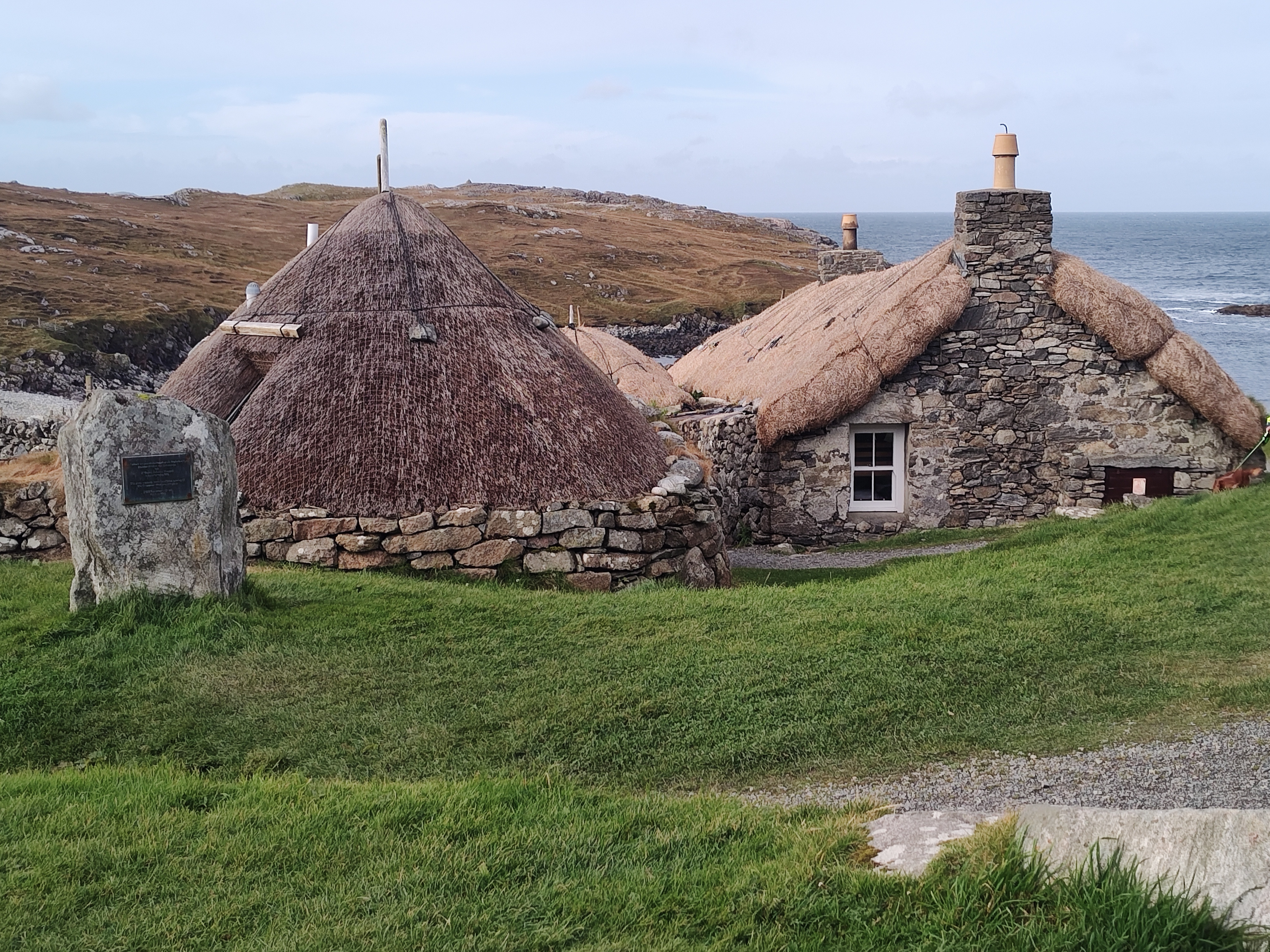 These brochs as well as the black houses we visited after (today an outdoor museum overlooking the ocean) relied heavily on peat for heating, a decomposed moss. We learned about peat bogs and their current resurgence in use since Covid. We saw them everywhere, and in Scotland the country has about 20% peat bogs. One part of the country has become a UNESCO World Heritage Site because of them. so they aren’t contained strictly to the Hebrides.
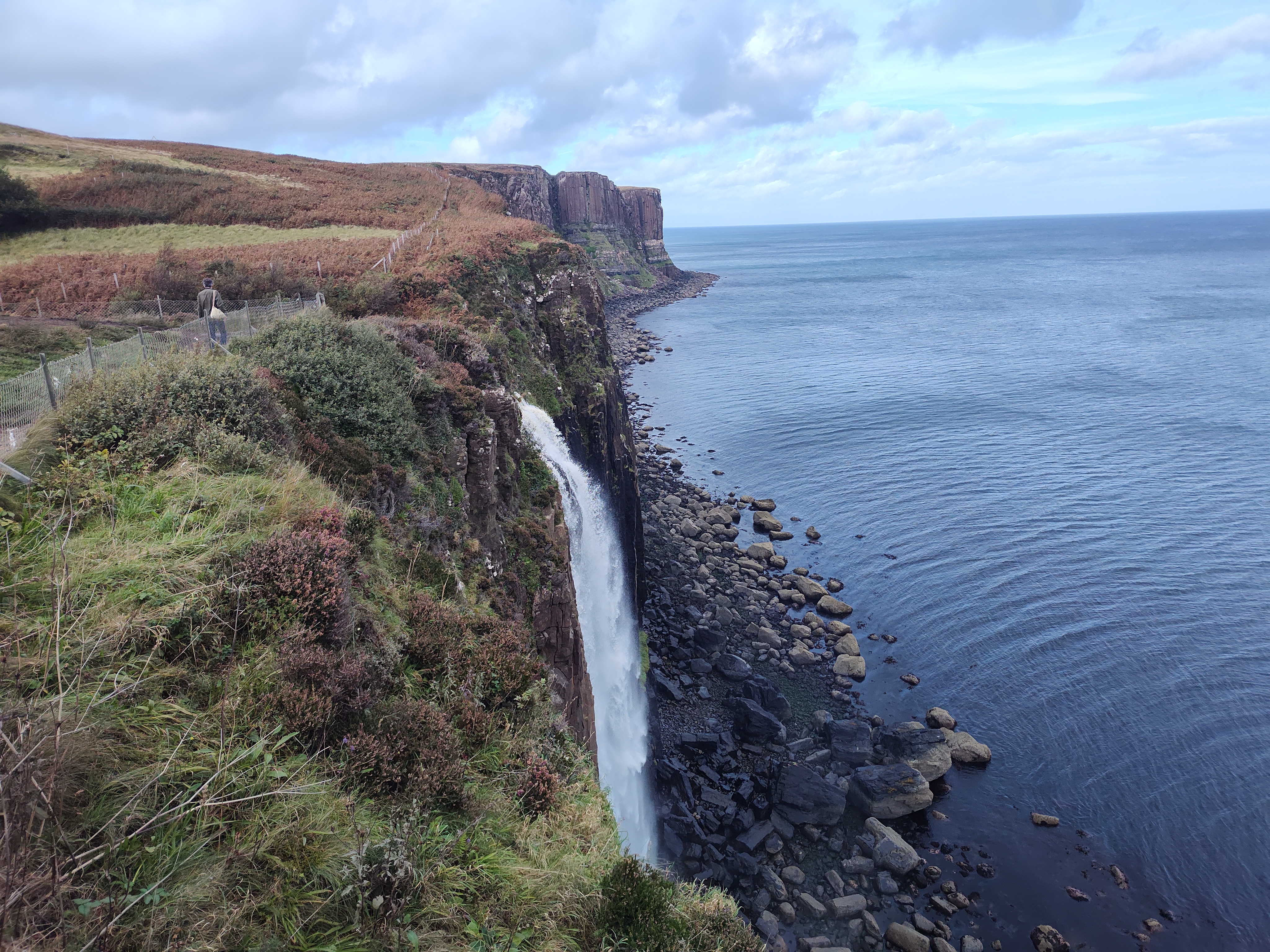 The coastline is of course beautiful. But the punishing winds and near constant rain we experienced all throughout our six days in the Hebrides, as well as the ashen (and sometimes blue) skies and volcanic earth and rocks lent an otherworldly uniqueness to the barren nature of the islands and all they represented. The geography alone reminded me of the simple rewards we are afforded when we travel. It is more than learning about a camel with Botox, or dogs worth 30,000 because of how they can herd sheep. Virginia Wolf described the Hebrides well when she wrote this about Skye; “Skye is often raining, but also fine: hardly embodied; semi-transparent; like living in a jelly fish lit up with green light. Remote as Samoa; deserted; prehistoric.”
All original content and photos by Jann Segal

